

I had wanted to visit Matobo National Park for years. The strange, balancing granite boulders and stories of ancient rock art had lodged themselves in my imagination long before I finally made it there. When I did, the experience turned out to be more complicated than the dreamy photos.
Parts of the park were magical and deeply moving. Other aspects were frustrating, shabby or simply not what I expected. If you are weighing whether Matobo is worth slotting into a Zimbabwe itinerary that probably already includes Hwange, Victoria Falls or Mana Pools, my experience might help you decide.
First Impressions: Getting There From Bulawayo
I based myself in Bulawayo and did Matobo as a combination of guided outings and independent driving. On paper, it is an easy destination: about 35 to 50 kilometers from Bulawayo depending on where you enter the park, mostly along a decent tarred road before splitting onto narrower paved and gravel roads. In reality, the logistics felt more messy than that neat description suggests.
Leaving Bulawayo, the first stretch was straightforward. Traffic thinned out quickly and I started to see the outlines of the Matobo Hills on the horizon, those whaleback granite domes that look almost alive. The closer I got, the more rural the landscape became. Road signs are quite limited, and between competing GPS pins and hand-painted local signs, I missed my intended turnoff once and had to backtrack along a potholed section. It was not dramatic, but it was a reminder that you should not rely entirely on your phone for navigation here, especially if you are driving yourself in a rental car.
The approach to the National Park gate felt slightly underwhelming after so much anticipation. The entry station is functional but tired, with peeling paint and basic facilities. Still, the staff were polite, if a little slow. I paid the conservation fee in US dollars at the newly adjusted rates, which for international visitors now sit around 15 dollars per person per day, plus a small vehicle fee. The process was not complicated, but it was manual and inefficient enough that I had to wait behind just two cars for close to 20 minutes while details were written into ledgers.
First Encounters With the Landscape
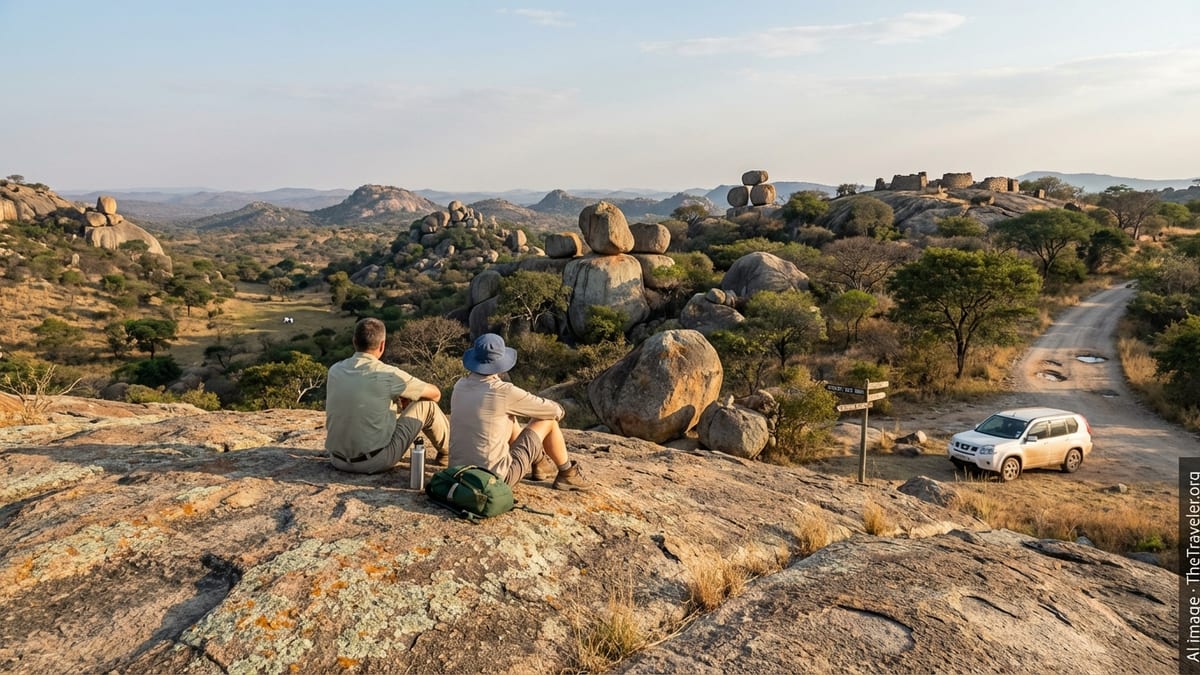
Once I cleared the gate, the scenery changed quickly and dramatically. The Matobo Hills are one of those landscapes that photos fail to fully convey. Giant granite kopjes, some smooth and domed, others jagged and splintered, rise from a rolling sea of woodland and farmland. Boulders stack improbably on top of each other. In the late afternoon, everything turns a warm, dusty gold. Driving through that landscape was the moment when I felt my expectations align with reality.
That said, Matobo’s beauty is oddly subtle. It is not like Victoria Falls where the spectacle punches you in the face the moment you arrive. Much of the park feels quiet and empty, and large stretches do not have obvious viewpoints or signage. I had imagined a series of marked lookouts and interpretive stops; instead there were long, plain drives punctuated by sudden, stunning panoramas. When I climbed my first kopje on a short scramble near a picnic site, I finally had a 360-degree view that made everything click, but it took initiative and some trial and error to get there.
The lack of clear, consistent signage is a theme across the park. Some junctions are well marked with sturdy boards showing directions to graves, caves and viewpoints. Others have faded arrows, missing signs or nothing at all. I found myself occasionally guessing and relying on my guide’s knowledge on the first day. On the day I self-drove, I had to accept that I would not find every cave or rock art site I had circled on my offline map.
Rhinos, Wildlife and the Reality of Safaris Here
One of the reasons I was drawn to Matobo was its reputation as one of the best places in Zimbabwe to see both white and black rhinoceros. On that front, the park delivered, but with important caveats. I booked a guided rhino tracking activity, which is almost essential if you want a realistic chance of sightings. The park’s own dehorned rhinos are heavily protected, and the guides work closely with rangers who have a general idea of where the animals have been moving.
We started with a game drive in an open vehicle along dusty tracks, scanning clearings and ridgelines. The rest of the wildlife was modest compared with what I saw in Hwange. I spotted some zebra, impala, kudu and warthog, plus a few interesting birds of prey. There are no elephants or large predators inside the main game-viewing sections I visited, so the atmosphere is much calmer. If a classic big-five safari is what you are after, Matobo will probably disappoint you. It is not that kind of park.
The rhino experience itself was powerful. After about an hour of driving, the guide got a call and we parked under a tree. We continued on foot in single file, staying quiet as the guide checked the wind direction and scanned the bush. When we finally saw them, two white rhinos grazing with a calf, the sense of privilege was undeniable. The animals were dehorned, which looks jarring if you are not expecting it, but I understood the protection logic given Zimbabwe’s history with poaching. Watching them moving silently through the scrubby woodland, so large yet so gentle, justified the early start and the cost of the activity.
Still, I came away with mixed feelings. As a “safari” day, Matobo felt more constrained and orchestrated than wild. There was very little of the surprise and abundance that you feel in Hwange or the Zambezi valley. Rhinos aside, the rest of the wildlife was sparse and nervous, partly due to the human pressure around the park. I enjoyed the experience, but if I had gone purely for game viewing, I would have judged it underwhelming and expensive for what I got.
Rhodes’ Grave, Worldviews and Uneasy History
Almost every description of Matobo mentions Cecil John Rhodes and his grave at a site known as World’s View. I was skeptical about visiting what is essentially a colonial monument, but it is one of the park’s main focal points and the views are significant, so I decided to go and make up my own mind.
The drive up to World’s View is scenic, weaving among immense granite domes before climbing steeply to a parking area just below the summit. From there, it is a short walk across bare rock to the top. The wind hit me immediately, and in every direction the landscape rolled out in layered hills and boulders. In terms of pure panorama, it is one of the most striking viewpoints I have seen in Southern Africa, especially in late-afternoon light when shadows lengthen across the granite.
The grave itself is a different story. It is a low stone rectangle set into the rock, marked by a simple inscription. My guide explained Rhodes’ wish to be buried here and how the site has been controversial, seen by many locals as a symbol of colonial arrogance in a place that is sacred to the Ndebele and Shona peoples. Standing there, I felt an odd dissonance. The view was breathtaking, the air felt almost sacred, and yet the narrative is dominated by a figure whose legacy is deeply problematic. There is very little on-site interpretation of African spiritual connections to the hills or of how local communities see the site today.
Practically, visiting World’s View involves an additional fee payable near the top. The fee was modest, but the system felt disorganized. I paid in cash to a staff member who wrote my name and amount in a notebook. No receipt, no formal ticket. While I never felt unsafe, it contributed to the sense that Matobo’s management and presentation are still trying to catch up with modern expectations of transparency and professionalism.
Rock Art, Sacred Sites and Cultural Depth
For me, the rock art was the most emotionally resonant part of Matobo. The hills are dotted with caves and overhangs that shelter paintings going back thousands of years. I joined a half-day excursion to several of the more accessible sites, each requiring a short walk or scramble. Here again, having a guide made the difference between glancing at faded shapes and understanding something of their meaning.
The first cave we visited involved a steep but manageable climb across smooth granite. Inside, my eyes took a few minutes to adjust before the images crystallized: elegant giraffes, antelope, human figures in movement. The paintings are still remarkably vivid in places, though sections have clearly suffered from water damage and, more frustratingly, from graffiti and careless touching. There are low barriers and “no touching” signs, but enforcement seems minimal.
My guide explained how some of the scenes are interpreted as spiritual or trance-related rather than simple hunting narratives. That context transformed the experience. I was no longer just looking at “art” but at the remains of a belief system rooted in the same landscape I had been admiring from the hilltops. It was one of the rare moments when I felt Matobo’s cultural and natural heritage fuse into something genuinely profound.
At the same time, the presentation could be much better. Some caves have basic explanatory boards that are weathered and difficult to read. Others have nothing at all, leaving you dependent on whatever guide you happen to have hired. Paths are not always clearly marked, and in a couple of places I watched visitors scramble up awkward routes that seemed to have developed purely from repeated foot traffic rather than thoughtful trail design. If you have mobility issues or travel with small children, this is something to consider carefully.
Accommodation, Food and On-the-Ground Comforts
On this trip I split my stay between a mid-range lodge just outside the park and one night in basic National Parks accommodation inside the park boundary. Both options had pros and cons, and neither matched the romantic mental image I had built up before arriving.
The private lodge outside the park sat on a hillside with lovely views and its own cluster of boulders. My room was comfortable, with a good bed, functioning hot shower and reliable solar power, though Wi-Fi was intermittent. Meals were hearty rather than gourmet, with a predictable pattern of soup, meat, starch and vegetables. Drinks were extra and not cheap, especially wine. Transfers from Bulawayo cost significantly more than I expected per person, so unless you have your own vehicle, getting to and from the lodge can add a noticeable amount to your budget.
The National Parks lodges inside Matobo are more affordable but feel neglected. The structure I stayed in had a certain old-school charm, with solid stone walls and a rustic setting among trees, but the fixtures and fittings were tired. Cupboard doors did not close properly, some lights did not work, and the bathroom was clean but dated. Linen was fine, not luxurious, and the kitchen had basic utensils that had clearly seen better days. For the price, especially for international visitors paying in US dollars, I felt the value was borderline. It was not terrible, but I had the sense that a modest investment in maintenance and training could lift the whole experience considerably.
Food options within the park itself were limited. I was glad I had brought snacks and water, especially on the day I self-drove between viewpoints and caves. There are picnic sites where you can braai or unpack a packed lunch, but do not expect well-stocked shops or a range of dining choices. If you are staying outside the park, you will probably eat all your main meals at your lodge and treat Matobo itself as a day-visit destination.
Costs, Booking Hurdles and Practical Hassles
Matobo is not extortionate by global standards, but it is far from a budget destination once you add up all the individual components. The daily conservation fee for international visitors, vehicle entry charge, guide fees, rhino tracking activity and transfers from Bulawayo quickly stack up. If you stay at an upmarket lodge, the nightly rate can easily rival what you might pay in more famous safari destinations. National Parks accommodation is cheaper on paper but not necessarily great value if you are sensitive to standards.
Booking logistics were also less smooth than I had hoped. While some private lodges respond quickly via email and take card payments or international transfers, the process of reserving National Parks accommodation or confirming certain activities felt old-fashioned. I found myself dealing with slow replies, unclear rate structures and occasional discrepancies between what was advertised and what was actually being charged once updated 2025 tariffs came into effect. It was manageable but it required more patience and follow-up than booking comparable stays in neighboring countries.
Inside the park, I had to pay for certain activities such as rhino walks and guided cultural tours separately, often in cash. ATMs are limited in the area and not always reliable, so it is wise to carry enough US dollars in small denominations. Card facilities exist at some lodges, but at gates and smaller offices they are unreliable or absent. This reliance on cash is one of those nagging irritations that you only truly appreciate once you are in a queue behind someone arguing about change.
In terms of opening hours, the park gates keep roughly daylight-based schedules, with access from early morning to late afternoon, but the exact times posted at the gate can shift slightly with the season. I found that planning activities with a lodge or guide, rather than trying to show up ad hoc, made things smoother. On my self-drive day, I had to rush back sooner than I would have liked to avoid getting locked out, which shortened my sunset experience.
When Matobo Shines and When It Falls Short
Looking back, the strongest moments of my time in Matobo were almost all about atmosphere rather than checklists. Sitting on a warm rock at dusk watching the shadows pool in the valleys was unforgettable. Standing in a rock art cave in complete silence, trying to imagine the hands that painted those antelope, was quietly profound. Walking on foot near rhinos and feeling their weight through the ground was one of those rare encounters that cut through any cynicism I might have carried.
At the same time, I could not shake the feeling that Matobo is not quite living up to its potential as a visitor experience. The landscape is world-class, the cultural depth is extraordinary, and the rhinos are a major draw. Yet the infrastructure and interpretation feel patchy, the management presentation feels dated, and the cumulative cost is high relative to what you get in terms of polish and consistency. I often felt like I was glimpsing a truly great park through the lens of underfunding and uneven planning.
Expectations matter a lot here. If you arrive expecting another Hwange or Kruger, with abundant visible wildlife and slick visitor centers, you will almost certainly be disappointed. If you anticipate a more low-key, contemplative destination where you have to work a little harder for your rewards and accept rough edges, Matobo has a good chance of getting under your skin in the best way.
The Takeaway
So, is Matobo National Park worth visiting? For me, the answer is a qualified yes, with clear conditions. I do not regret going. In fact, some of my most enduring memories from Zimbabwe came from those days among the granite domes and rock paintings. But I also would not recommend Matobo to everyone, and I would not structure another trip around it in the same way.
If this is your first and possibly only visit to Zimbabwe and you have limited time, I would prioritize Hwange and Victoria Falls over Matobo, especially if your main goal is wildlife viewing or iconic scenery that requires minimal effort. Matobo makes more sense as a complementary stop for travelers who already have some safari experience and want something more introspective and historically layered, or for those based in Bulawayo who can visit without huge detours.
I would also be more deliberate about how I structured my time. On a return trip, I would probably stay at a comfortable lodge just outside the park and book one full day with a knowledgeable guide focused on rock art and cultural sites, plus one well-planned rhino tracking experience. I would skip trying to self-drive to every cave and view, and I would go in with a realistic sense of the costs and the need for cash. I would keep my expectations for National Parks accommodation modest and treat it as a functional base rather than a highlight in itself.
Matobo rewards patience, curiosity and a tolerance for imperfection. If you are the kind of traveler who enjoys landscapes that reveal themselves slowly, who values culture and history as much as wildlife, and who can look past scuffed paint and patchy signage, you may find that Matobo becomes one of those places that lingers in your imagination long after you leave. Under those conditions, and with eyes wide open about its limitations, I would say Matobo National Park is still very much worth the journey.
FAQ
Q1. How long should I spend in Matobo National Park?
For most travelers, two full days in Matobo is enough to experience the highlights without feeling rushed: one day focused on rock art and cultural sites, and one day for rhino tracking and general game viewing. If you enjoy hiking and quiet landscapes, you could stretch that to three days, but I would not personally allocate a full week here unless I had a very specific interest such as rock art research or photography.
Q2. Is Matobo a good destination for a classic safari with big game?
Not really. While you can see white and black rhinos on guided activities and there are antelope, zebra and some smaller mammals, Matobo does not offer the densities or variety of large wildlife found in parks like Hwange or Mana Pools. It is better thought of as a landscape and culture destination with a special rhino experience, rather than a traditional big-five safari hub.
Q3. Do I need a 4x4 vehicle to visit Matobo?
You do not strictly need a 4x4. The main approach roads and many internal routes are accessible in a regular sedan or standard rental car in dry conditions. However, a higher-clearance vehicle makes the drive more comfortable, especially on gravel and some of the rougher side tracks to caves and viewpoints. In the rainy season, a 4x4 can be very helpful if you want to explore more widely.
Q4. Is it safe to visit Matobo National Park?
In my experience, Matobo felt safe in terms of personal security and wildlife encounters, especially when following guide instructions. The main risks are practical: rough roads, loose footing on granite slopes, and the usual precautions around wildlife. It is sensible to avoid walking alone in remote areas without local knowledge and to keep valuables out of sight when passing through rural communities, but I did not encounter any threatening situations.
Q5. Can I visit Matobo as a day trip from Bulawayo?
Yes, a day trip from Bulawayo is very feasible and is how many people first experience the park. You can join an organized tour that includes transport, park fees and guiding, or drive yourself if you are comfortable with local road conditions. A day is enough to see Rhodes’ grave, visit one or two rock art sites and get a feel for the landscape, though you will be pushed for time if you also want to do a rhino walk.
Q6. What is the best time of year to visit Matobo?
The dry season from about May to October generally offers clearer skies, better road conditions and more comfortable hiking temperatures. During these months, the granite landscapes photograph beautifully and visibility from viewpoints is excellent. The rainy season brings greener scenery and fewer visitors but also slippery rocks, occasional road challenges and the risk of afternoon storms disrupting plans.
Q7. Is Matobo suitable for families with children?
It can be, but with caveats. Older children who enjoy walking, climbing rocks and hearing stories about ancient rock art will probably find Matobo engaging. For younger kids, the lack of obvious big animals and the need for careful supervision on steep or exposed rock surfaces can be challenging. Facilities such as playgrounds, child-focused programs and easily accessible short walks are limited, so parents should be prepared for a more self-directed experience.
Q8. How important is it to hire a guide in Matobo?
In my view, a good local guide transforms the experience. Guides help you find specific caves and viewpoints, interpret rock art and cultural history, and coordinate with rangers for rhino tracking. While you can self-drive some routes and visit major points like World’s View on your own, you will miss a lot of context and may struggle with navigation. I would budget for at least one full day with a knowledgeable guide.
Q9. What should I budget for a visit to Matobo?
Budgets vary widely depending on accommodation and style of travel, but as a rough guide, you should factor in daily conservation fees per person, a small vehicle entry fee, accommodation ranging from modest National Parks lodges to more expensive private lodges, and additional costs for guided activities and transfers. I found that once everything was tallied, Matobo was a mid- to upper-mid-range destination rather than a cheap add-on, especially when staying in private lodges and doing rhino tracking.
Q10. Would I go back to Matobo National Park?
Yes, but with a clearer plan and more calibrated expectations. I would return for the rock art, the quiet granite hills and another thoughtful rhino walk, and I would accept the imperfect infrastructure as part of the package. I would not go back expecting luxury or dense wildlife, and I would probably combine a shorter stay in Matobo with more time in other parks. Under those conditions, I think a second visit would be even more rewarding than my first.