

Mexico has become one of the most visible destinations worldwide for expats and remote workers, particularly from North America and Europe. By 2026, the country combines maturing digital infrastructure, expanding fiber broadband, and multiple established expat hubs with persistent security and governance challenges. This briefing evaluates whether Mexico is a practical and strategically sound choice for expats and remote workers in 2026, focusing on workability factors such as connectivity, productivity environment, and day to day operating conditions rather than tourism appeal.
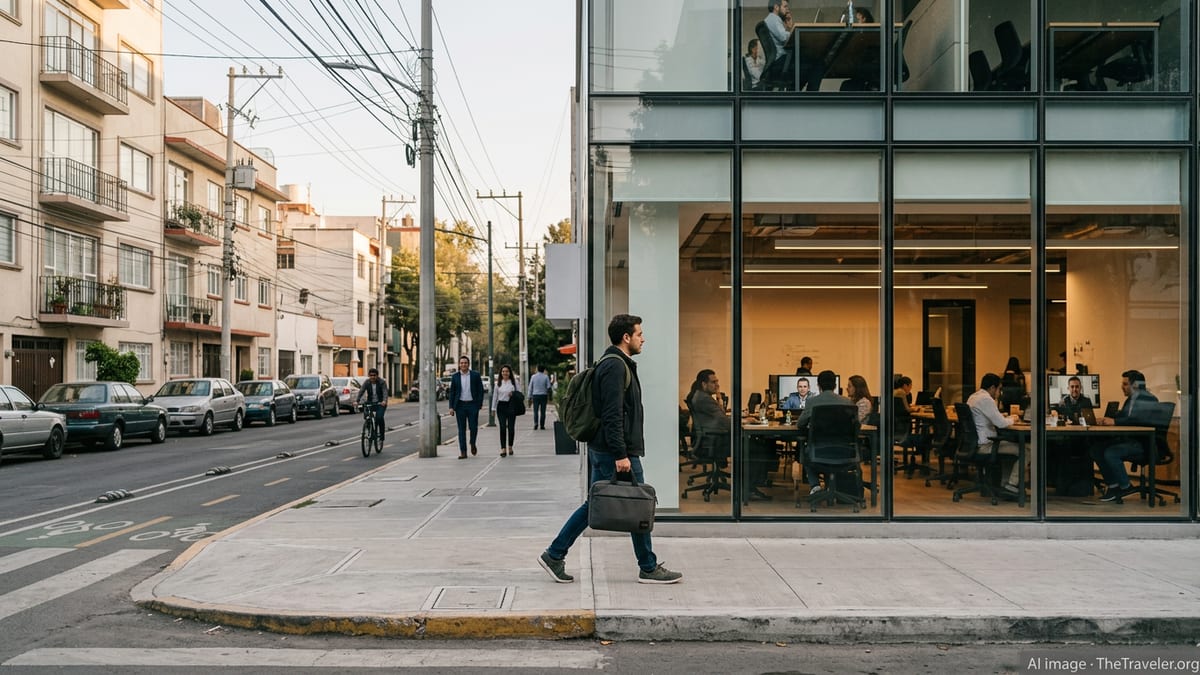
Overall Attractiveness for Expats and Remote Workers in 2026
Mexico in 2026 offers a combination of geographic proximity to the United States and Canada, overlapping time zones with major North American business centers, relatively competitive costs, and a large network of existing expat communities. These factors make it structurally attractive for remote employees of foreign companies and independent professionals whose work is oriented toward North American markets. The country’s large internal market and diversified urban system also provide a wide choice of locations, from megacities to secondary inland cities and coastal hubs.
At the same time, Mexico presents meaningful constraints that must be weighed in a relocation decision. Security risks are higher than in most OECD countries, and infrastructure quality is uneven between leading cities and rural or peripheral regions. While internet coverage and speeds have improved significantly, the digital divide between urban fiber connected neighborhoods and low income or remote areas is still pronounced. For most expats and remote workers, this makes careful city and neighborhood selection a core determinant of overall suitability.
For decision makers considering 2026 moves, Mexico is best viewed as a high opportunity but medium risk destination for remote work. It is rarely the right first choice for workers who prioritize maximum physical safety and institutional stability above all else, but it can be highly functional for those prepared to invest time in research, local due diligence, and realistic risk management.
Internet Connectivity and Technical Reliability
Reliable high speed internet is fundamental for remote work, and Mexico’s trajectory on this front has been positive. Median fixed broadband download speeds have risen rapidly in recent years as operators shift from copper and cable to fiber networks, with typical national medians now in the range of roughly 80 to 110 Mbps download and 70 Mbps upload, depending on the dataset and quarter referenced. In the largest cities and in fiber served neighborhoods, consumer plans at or above 100 Mbps are increasingly standard, and 300 Mbps or higher is widely available at a premium.
Mobile internet performance has also improved, though more modestly. Median mobile download speeds generally sit in the approximate 30 to 50 Mbps range, with leading operators and major urban centers achieving significantly higher speeds in practice. This is adequate for video calls and cloud based workflows, but in congested areas mobile performance may deteriorate at peak times, and 5G rollout, while ongoing, is still uneven across regions.
The main constraint for remote workers is not national averages but local variability. Fiber coverage is strong in parts of Mexico City, Guadalajara, Monterrey and several mid size cities, yet outer neighborhoods and many smaller towns still rely on legacy technologies with lower speeds and higher latency. Power stability is generally acceptable in major urban centers but occasional short outages do occur, particularly during storms or in older buildings. For work critical use cases, many expats opt for a dual setup: a high speed fixed fiber line plus a mobile data plan from a different provider as a backup hotspot.
For remote work feasibility in 2026, Mexico rates as solid to strong in the top tier cities and established expat hubs, and more uncertain in remote or less developed areas. Prospective movers should treat connectivity as a property level due diligence item, verifying not just advertised speeds but actual performance tests, router placement, and power reliability in the specific unit under consideration.
Workday Alignment, Time Zones, and Corporate Integration
Mexico’s geographic position is one of its strongest assets for remote workers whose employers or clients are in North America. The country spans multiple time zones but the main economic centers broadly align with Central and Pacific Time. This enables real time collaboration with teams in cities such as New York, Chicago, Toronto, Seattle, and San Francisco without requiring severe schedule shifts. For US based employees, a typical 9 to 5 corporate workday is generally compatible with normal local working hours in Mexican cities.
This time zone alignment significantly differentiates Mexico from many alternative remote work destinations. Workers considering Southeast Asia or parts of Europe often face either late night or very early morning schedules to coordinate with US based teams, which can negatively impact productivity and long term sustainability. In contrast, Mexico allows remote workers to maintain conventional diurnal routines while remaining fully reachable during core business hours.
For companies, the proximity and overlapping time zones also simplify travel for periodic in person meetings or hybrid work arrangements. Flight times from major Mexican hubs to US gateways are often in the two to four hour range, enabling quarterly or semiannual office visits with limited disruption. This can be relevant for employers assessing whether to approve long term cross border remote work, as Mexico offers a practical compromise between distance and connectivity.
From a workflow perspective in 2026, the combination of compatible time zones, growing coworking infrastructure, and improved connectivity means Mexico is well positioned to support standard corporate collaboration tools, agile team structures, and client facing roles that require extensive real time communication.
Local Work Environment, Coworking, and Productivity Conditions
The local work environment in Mexico’s principal expat destinations has evolved rapidly alongside the growth of remote work and international migration. Major cities and several coastal hubs now host a dense network of coworking spaces, shared offices, and flexible meeting venues. These range from small neighborhood spaces with basic facilities to large, professionally managed campuses with private offices, phone booths, and enterprise grade connectivity. Typical monthly hot desk memberships in 2024 and 2025 tend to fall into mid range global pricing, generally more affordable than top North American and European cities but higher than some Southeast Asian alternatives.
The quality of these workspaces is generally high in leading locations, with reliable air conditioning, ergonomic seating, and adequate noise management. Many facilities cater explicitly to international remote workers, offering English speaking staff and community events focused on professional networking instead of tourism. For workers who prefer not to work from home due to space, family, or distraction reasons, these coworking options can materially improve productivity and social integration.
Home based work setups vary more widely. Modern apartments in new developments, particularly in upper middle class urban neighborhoods, often provide sufficient space and electrical infrastructure for a dedicated home office, though it is still advisable to check socket distribution, natural light, and acoustic insulation before committing. Older buildings may have more variable standards, with occasional issues such as poor soundproofing, inconsistent water pressure, or limited climate control that can indirectly affect work comfort.
Noise is a recurrent theme in worker feedback. Street vendors, traffic, construction, and neighborhood festivities can be intrusive in some areas, even in otherwise desirable districts. Remote workers who rely heavily on video calls should pay close attention to building orientation, window quality, and internal layout to manage background noise. Coworking access or access to private, acoustically suitable meeting rooms is often a practical mitigation strategy.
Security, Governance, and Operational Risk for Remote Work
Security considerations are central to any evaluation of Mexico as a place to live and work. Nationally, violent crime rates are elevated compared with most developed countries, and organized crime is a persistent structural challenge. However, risk levels are highly localized. Many expats and remote workers live for extended periods in specific neighborhoods of cities such as Mexico City, Mérida, Querétaro, or parts of Guadalajara with relatively low day to day exposure to violent crime, while other cities and corridors are subject to more frequent high profile incidents.
For remote workers, the main practical risks tend to revolve around non violent crime such as petty theft, residential burglary, and opportunistic street robberies, alongside the broader backdrop of organized crime that, while usually not directly targeting foreign professionals, contributes to a generalized perception of insecurity. Digital nomad and expat communities commonly report that avoiding high risk areas, limiting displays of wealth, using registered transport apps, and applying standard big city precautions substantially reduces exposure to incidents.
Governance quality also influences the overall workability of Mexico in 2026. Administrative processes can be slow and bureaucratic, and service delivery from utilities or municipal offices may be inconsistent compared with higher income countries. Power and water infrastructure in most major urban areas is functional but not failure free, and response times for repairs can vary. From a remote work perspective, this translates into the need for contingency planning: having battery backups, mobile data redundancy, and alternative work locations identified in advance.
Risk tolerance thresholds differ between individuals and employers. Some organizations maintain blanket prohibitions on long term remote work from countries they classify as higher risk, which can limit the feasibility of Mexico for employees, even when day to day realities in a particular neighborhood are relatively stable. Prospective movers should confirm employer policies early in the decision process and, where possible, document security practices and specific neighborhood risk profiles to support internal approvals.
Language, Integration, and Professional Networking Environment
The working language environment in Mexico is another key factor in evaluating suitability for expats and remote workers. Spanish is dominant in all formal contexts, and while English proficiency is rising in younger and urban populations, it remains uneven. In leading expat neighborhoods and coworking spaces, it is generally possible to operate day to day in English, especially in private sector and service interactions oriented to foreign clients. However, dealing with landlords, utilities, and local authorities often still requires at least basic Spanish or the assistance of bilingual intermediaries.
For remote workers whose professional interactions are primarily cross border and online, limited Spanish may not be an immediate barrier to work itself, but it can constrain integration, access to local networks, and resilience in the face of disruptions. For example, resolving issues with internet providers or building management, or understanding local safety advisories, is materially easier with intermediate language skills. Over a multi year relocation horizon, investment in Spanish competency significantly improves both quality of life and operational reliability.
Professional networking opportunities for remote workers in 2026 are strongest in large cities and established hubs, where meetups, tech events, and sector specific groups are frequent. Some of these are conducted in English or are explicitly targeted at international communities, while others are local in character but open to foreigners who can engage in Spanish. For independent consultants, freelancers, and startup founders, Mexico’s size and economic diversity provide a substantial potential client base, although tapping into it typically demands linguistic and cultural fluency.
In summary, Mexico’s language environment is workable but not frictionless for monolingual English speaking expats. For fully remote employees of foreign firms, the impact is moderate and can be mitigated through careful location choice and support networks. For expats seeking to build local professional ties or regional businesses, language and cultural adaptation are central to long term success.
The Takeaway
By 2026, Mexico presents a mixed but generally favorable profile for expats and remote workers who prioritize North American time zone alignment, growing digital infrastructure, and access to established international communities. Fixed broadband speeds and fiber coverage have improved significantly, coworking ecosystems are mature in key cities, and daily collaboration with US and Canadian employers is operationally straightforward. For many remote professionals, these factors make productive long term work in Mexico not only possible but attractive.
At the same time, the country’s structural security challenges, uneven infrastructure outside core urban zones, and bureaucratic complexity introduce risks and frictions that are less prevalent in some alternative destinations. Mexico is not universally suitable for all expats or all remote work arrangements. It is most appropriate for individuals and organizations that are comfortable operating in a moderately high risk environment, are prepared to conduct granular city and neighborhood level assessments, and are willing to invest in redundancy and contingency planning for connectivity and security.
For decision makers evaluating relocation in 2026, a pragmatic assessment would classify Mexico as a viable and potentially high value destination for remote work, provided the move is anchored in specific cities and districts with strong infrastructure and relatively favorable safety indicators. Workers who require the lowest possible risk profile or who are unable to navigate a Spanish speaking environment may find more predictable options elsewhere, while those seeking a balance between opportunity, cost efficiency, and proximity to North American markets will likely view Mexico as a credible candidate for long term remote work.
FAQ
Q1. Is Mexico’s internet good enough for full time remote work in 2026?
The top tier cities and expat hubs generally offer fixed broadband speeds that are more than adequate for video conferencing, cloud based work, and large file transfers, often with fiber plans at or above 100 Mbps. However, performance is highly location specific, so it is important to verify connection type, historical reliability, and backup options for a particular building or neighborhood before committing.
Q2. Are power outages a serious concern for remote workers in Mexico?
Short power interruptions do occur, particularly during storms or in older neighborhoods, but long duration outages are not routine in most major cities. Many remote workers mitigate this risk by using uninterruptible power supplies, ensuring laptop battery capacity, and maintaining a mobile data plan as a secondary connection so that brief interruptions do not derail workdays.
Q3. How safe is Mexico for expats working remotely from home or coworking spaces?
Security conditions vary strongly by city and district. Many expats live and work for years in relatively secure urban neighborhoods with limited direct exposure to serious crime, while other areas face higher risks. For remote workers focusing on home and coworking based routines, risk is usually manageable with prudent neighborhood selection, standard big city precautions, and attention to local advice, but it is higher than in many high income countries.
Q4. Is it easy to find coworking spaces suitable for professional work?
In major destinations such as Mexico City, Guadalajara, Monterrey, and several coastal hubs, there is a wide choice of modern coworking spaces offering stable internet, meeting rooms, and quiet zones. Availability drops in smaller towns and rural regions, where remote workers are more reliant on home offices or cafes, so location choice strongly affects coworking access.
Q5. Does the time zone make Mexico convenient for working with US and Canadian employers?
Yes. Most of Mexico aligns closely with US Central or Pacific Time, which allows remote employees and contractors to work standard North American business hours without major schedule disruption. This is one of Mexico’s core advantages compared with more distant remote work destinations.
Q6. Can an English only speaker function effectively as a remote worker in Mexico?
An English only remote worker can typically function in expat oriented neighborhoods, coworking spaces, and international companies, especially if most professional interactions are online with foreign entities. However, daily life tasks and problem resolution with landlords, utilities, or local authorities often require Spanish, so lack of language skills can add friction and reliance on intermediaries.
Q7. Are there strong professional networks for remote workers and digital nomads?
In larger cities and established hubs, there are active communities of remote workers, freelancers, and tech professionals, often organized around coworking spaces and meetups. These networks can support collaboration, information sharing, and social integration, though their density and quality vary by city, and they are less developed in smaller localities.
Q8. How does Mexico compare to other Latin American countries for remote work infrastructure?
Mexico’s fixed and mobile internet speeds are no longer regional leaders but are competitive and improving, supported by growing fiber penetration. When combined with its proximity to the United States, extensive flight connections, and large domestic market, the overall remote work infrastructure is generally more favorable than in many smaller regional economies, although some countries may offer faster average speeds or lower crime.
Q9. What type of locations within Mexico are most suitable for remote work?
Well connected urban neighborhoods in large and mid size cities with established expat or professional communities tend to be the most suitable. These areas usually combine high quality internet, access to coworking spaces, and better security and public services. Remote or low income districts, as well as towns with limited infrastructure, are less predictable for sustained remote work.
Q10. Is Mexico a good long term base for remote workers, not just short term nomads?
Mexico can function effectively as a long term base for remote workers who secure appropriate housing in well serviced neighborhoods, develop basic Spanish skills, and implement reasonable security and connectivity redundancies. Its time zone alignment, maturing infrastructure, and established expat communities support multi year stays, although individuals with very low risk tolerance may prefer more stable environments.