

I arrived at Montmorency Falls with that mix of excitement and mild skepticism that comes from seeing a place all over Instagram. The waterfall looked spectacular in photos, but I had already heard mixed things about costs, crowds, and logistics. After spending a full half day exploring from both the top and the bottom, I left with a pretty firm opinion about who this park suits, when it shines, and where it falls short.
First Impressions: Bigger Than Expected, Less Wild Than Hoped
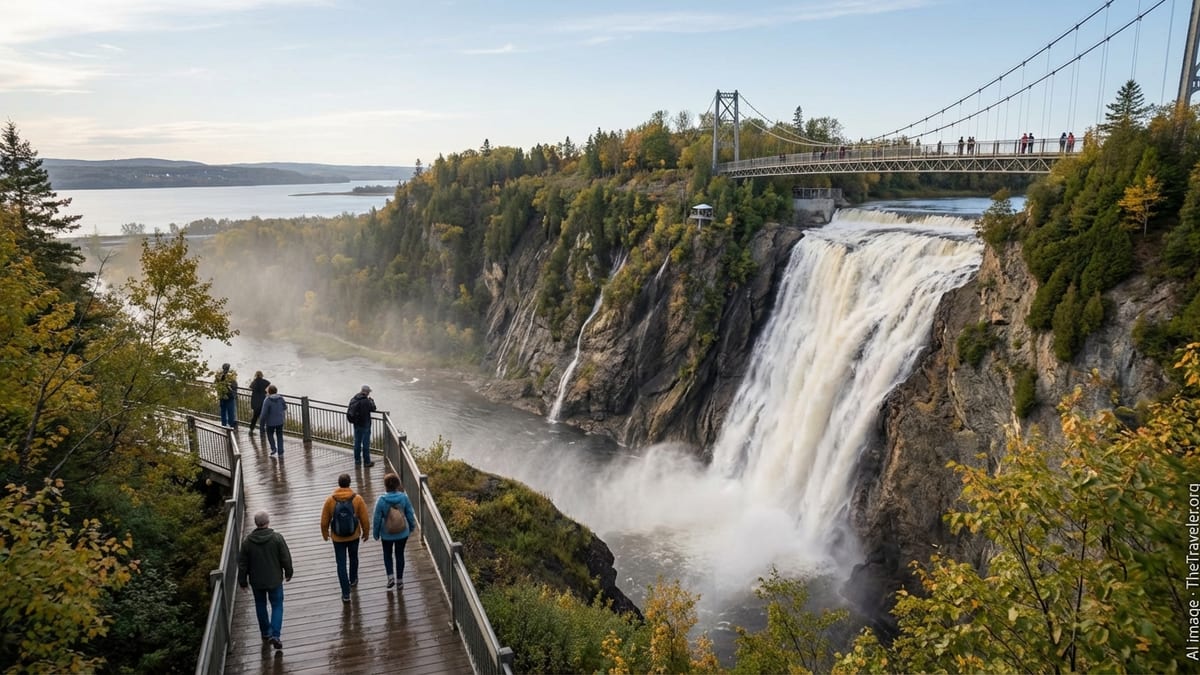
Driving in from Quebec City, Montmorency Falls suddenly appeared beside the highway, a vertical ribbon of white cutting through a surprisingly urban backdrop. The first thing that hit me was the height. At around 83 meters, it really is taller than Niagara in terms of drop, and from a distance it looked impressively steep and powerful. What I had not fully appreciated from the glossy photos was how developed and managed the site feels: toll booths for parking, manicured lawns, a manor-restaurant at the top, and large viewing platforms clearly designed for heavy tourist traffic.
That is not necessarily a bad thing, but it changed the mood. I had expected a bit more of a rugged natural escape; instead, my first impression was of a polished attraction sitting just off a major road. I could hear the constant rush of water, but also buses idle and the beeping of the parking gates. If you are picturing a remote wilderness waterfall, that is not what this is. It is very much a park built to move large numbers of visitors efficiently around a dramatic piece of scenery.
Once I parked and walked toward the river, though, the scale of the falls started to dominate everything else. The plume of mist, the raw volume of water dropping over the cliff, and the way the spray drifted over the lower boardwalk all felt more visceral and impressive than I had expected. I found myself slowing down and taking longer than planned just at the first viewpoint. In that moment, the commercial framing slipped a bit to the background and the waterfall itself took center stage.
Still, the overall vibe from the outset was clear: Montmorency Falls is not a hidden gem. It is a highly organized, highly photographed attraction. If you arrive with that expectation in mind, the initial adjustment from “wild” to “managed” is easier to swallow.
Logistics, Tickets and the Slight Shock of Extra Costs
Before coming, I had read enough to know that the park is technically open year round, and that the actual admission structure is a bit more confusing than it should be. On the ground, it still felt that way. There is a fee structure that covers access for adults, with under‑18s typically free, and then separate charges layered on for the cable car, zipline, via ferrata and, depending on where and when you park, parking itself. The exact numbers shift by season and year, so what bothered me was less the precise amount and more the feeling that everything was fragmented into extra line items.
By the time I paid for access, paid for parking, and then added the cable car, the total cost for what is essentially a few hours at a waterfall felt higher than I had imagined when I first penciled this into my Quebec City plan. It is not outrageous by big attraction standards, but if you are traveling as a family or group, the price climbs quickly. I would not call it a rip‑off, but I would definitely say this is not a budget outing once you include transport and any food or coffee on site.
Another small frustration was how early some of the paid services shut down compared with how long the grounds remain accessible. It is a public park in the sense that you can often walk around later in the evening, but the cable car and certain facilities keep more limited, seasonal hours. I met more than one person who had misread the schedule, arrived around late afternoon hoping for a sunset cable car ride, and discovered that the lift was either closed or closing soon. If you are building your day around those services, you really do need to check the current hours in advance rather than rely on assumptions.
Overall, I left feeling that the value is acceptable if you plan to use the park fully: walk the bridge, do the stairs at least once, maybe take the cable car one way and spend a proper half day. If you just want to pop in, snap a few photos, and leave, the total you pay at the gate and in parking may feel steep relative to the time you actually spend there.
The Cable Car vs The Stairs: Choosing How Much You Want to Sweat
The signature logistical decision at Montmorency Falls is whether to climb the panoramic staircase, ride the cable car, or do both. The staircase runs down the side of the cliff with close to 500 steps and several viewing platforms along the way. The cable car connects the base and the upper area near Manoir Montmorency in about a minute. In theory it is a simple choice. In reality, I was surprised by how much each option shaped my experience of the park.
I started at the top, crossed the suspension bridge, and then tackled the stairs down. Descending alongside the falls was by far my favorite part of the visit. The platforms bring you close enough to feel the mist in your face and hear the water pounding into the basin below. The views shift every few flights, and the staircase gives you a sense of the overall height that you never quite get from the bridge alone. It is a demanding climb back up if you choose to do it in reverse, and I saw plenty of people panting and taking long breaks at the landings, but as long as your knees are reasonably healthy, doing the stairs at least once is worth it.
Riding the cable car, on the other hand, felt more functional than magical. The views are pleasant and you see the full drop of the falls framed against the river and the bridge beyond, but it is a short hop and the cabin feels like exactly what it is: a glass box shuttling people up and down. I did not regret paying for it, because it saved me the slog of climbing back up all those steps, yet if you are reasonably fit and traveling on a tighter budget, this is one fee I would consider skipping. You can still access all the major viewpoints without it, you will simply trade money for muscle.
If I were to do it again, I would probably ride the cable car down first to get that overview, then climb the stairs up to really appreciate the height and the evolving perspectives. Doing the climb earlier in the visit, before I was tired and a bit damp from the spray, would have made it feel more like a fun challenge and less like a chore.
The Suspension Bridge and Viewpoints: Drama With a Crowd
The suspension bridge is the image that sold me on coming in the first place: a narrow band of steel and wood stretched across the lip of the falls, water thundering beneath. Walking out onto it, I did feel a little jolt of adrenaline. You are not dangling over a sheer drop with no barrier; the railings are high and sturdy. Still, there is enough vibration and movement when people walk that it feels alive under your feet. Looking down into the churning water is impressive, and glancing upriver toward the calmer section of the river gives a nice contrast.
What took some of the magic away for me was simply the number of people packed onto that same narrow space. At peak times, you move at the pace of the crowd, stopping when someone stops for photos, edging around selfie sticks, and waiting for gaps to grab your own shots. It is not chaotic or unsafe, but it does feel more like a queue than a contemplative walk. Early morning or closer to closing time would almost certainly be better for enjoying the bridge on its own terms.
Around the top of the falls, the viewing platforms offer strong, if slightly repetitive, perspectives. You can look straight down, step back for broader panoramas including the St. Lawrence River and Ile d’Orléans, and wander short paths that give more oblique angles on the gorge. Some platforms felt a bit too much like photo staging areas, designed primarily for quick snapshots and then moving on, but if you take the time to step away from the main cluster you can still find spots to quietly watch the water and the shifting mist.
Overall, the viewpoints deliver exactly what they promise: dramatic, elevated vantage points and plenty of opportunities for photos. If you are sensitive to crowds or hoping for solitude, though, you will probably feel a bit hemmed in during high season. I was glad I had tempered my expectations beforehand; otherwise the crush on the bridge and platforms might have disappointed me more.
Crowds, Atmosphere and Seasonality: Timing Matters More Than I Expected
One of the biggest factors in whether Montmorency Falls feels worth it is when you go. During the main visitor season, the park absorbs bus tours, independent travelers, local families, and adventure seekers, and you feel that density most around midday. On my visit, the parking lots started to look stressed by late morning, and lines formed for the cable car and food stands. It did not feel like an amusement park, but it also did not feel like a quiet nature outing.
That said, when I drifted away from the core viewpoints, the atmosphere softened. A short walk along the clifftop paths or down toward lesser used areas quickly thinned the crowds. The sound of the falls travels, so you still feel connected to the water even if you are not looking right at it. I found that the trick was to resist the impulse to linger only at the most obvious spots. The more I wandered, the more the park felt like a place rather than just a backdrop for photos.
The park is open in all seasons, but not all features are available year round. Winter visits are a very different experience: some trails and the staircase can close for safety, and activities like the zipline and via ferrata shut down. On the other hand, the falls partly freeze, forming an impressive wall of ice and snow that looks almost sculpted. I visited in the warmer months, but seeing photos of the winter “sugarloaf” of ice beneath the waterfall made me think a cold‑weather return trip could be worthwhile, especially with lighter crowds and a more atmospheric, icy landscape.
If your schedule is flexible, I would aim for early morning or late afternoon in shoulder season. That combination seems to hit the sweet spot between reasonable weather, working services, and more manageable crowds. If you only have a summer midday slot, I would go with realistic expectations and a bit of patience.
Food, Facilities and Small Annoyances
In terms of basic infrastructure, Montmorency Falls is well supplied. There are washrooms at both the bottom and the top, a visitor center, and Manoir Montmorency at the summit with a restaurant, terrace, and gift shop. During busy months, there are also snack kiosks and food trucks. You are allowed to bring your own food, and there are picnic tables scattered around, which is helpful if you want to keep costs down.
My experience with the on‑site food was mixed. The restaurant at the top enjoys lovely views and makes for a pleasant place to sit if you want to stretch your visit into a slower afternoon, but the pricing is very much “captive audience.” I did not have a bad meal, but it was unremarkable for the price. If I were to visit again, I would likely pack a picnic or eat in Quebec City before or after and limit myself to coffee or a cold drink at the park.
Facilities are generally clean and in good condition, but there are some bottlenecks. Restrooms near the main gathering points can get busy, and the ticketing area for the cable car can feel cramped when multiple tour groups arrive at once. The signage in the park is adequate, though I did wish for clearer, more consolidated information on tickets and operating hours at a single glance. I also noticed that audio from the more touristy zones carries a long way: bus engines, excited tour commentary, and general chatter. None of this ruined the experience, but it definitely reinforced the feeling that this is more an attraction than a quiet nature reserve.
On the positive side, the park does make an effort to be accessible. If you have mobility limitations, you can still access upper viewpoints via vehicle and the cable car, and you are not forced into taking the stairs. That inclusivity is worth acknowledging, even if it comes bundled with some of the more commercial aspects I found less appealing.
Adventure Add‑Ons: Zipline, Via Ferrata and Who They Are Really For
Montmorency Falls has embraced the adventure tourism trend with a long zipline that shoots you across the cove of the falls and several via ferrata routes bolted into the cliff face. These are seasonal and carry separate fees that are not insignificant. I opted not to do either on this visit, partly due to cost and partly because they were not the reason I came, but I paid close attention to how they fit into the overall atmosphere of the park.
The zipline in particular is hard to miss. You see people launching across the gap above the roaring water, sometimes screaming, sometimes laughing, and landing on the far side near one of the lookouts. It injects a distinctly adrenaline‑park element into what is otherwise a fairly traditional sightseeing environment. If you love that kind of thing, it probably looks fantastic, and the idea of soaring above the falls does have a clear appeal. If you came hoping for a more tranquil, nature‑focused experience, however, the constant whoosh and shouts can feel a bit out of sync with the setting.
The via ferrata routes are more discreet, tucked against the cliff, where small groups move along cables and metal rungs under guide supervision. These looked genuinely interesting, providing a very intimate way to experience the geology and height of the gorge. Again, though, the pricing stacks up quickly once you layer it onto the basic costs of access and transport, so for many visitors this becomes more of a special splurge than a casual add‑on.
Personally, I left feeling that the core of Montmorency Falls is still strong enough without the adventure extras. The waterfall, bridge and staircase offer plenty of drama on their own. If your time and budget are limited, I would not feel compelled to squeeze in the zipline or via ferrata unless these activities are already a key part of how you like to travel.
Comparisons and Expectations: How It Stacks Up Against Other Waterfalls
Inevitably, many people compare Montmorency Falls to Niagara Falls, and I did the same in my head as I stood on the viewing platforms. In terms of raw height, Montmorency comes out ahead, but Niagara wins decisively on volume and sheer sensory overload. What makes Montmorency interesting is that it sits somewhere between big‑ticket tourist attraction and more modest regional waterfall. It has the infrastructure and crowds of a major site, but the actual footprint is relatively compact, and you can see the main viewpoints in a couple of hours if you move briskly.
For me, the biggest adjustment was mental. I had pictured a half‑day nature escape where the falls would feel like the central element of a larger network of trails. In reality, the park orbits tightly around the waterfall itself. The experience is intense but concentrated. Once you have crossed the bridge, done the stairs and taken in the main vistas, there is not a lot of further depth unless you add in dining, adventure activities or just relax and enjoy the scenery for its own sake.
That does not make it a bad destination, but it means that expectations matter a lot. If you arrive thinking “quick but spectacular side trip from Quebec City,” you are likely to leave satisfied. If you frame it as a full‑day wilderness outing, you may find yourself looking at your watch by mid‑afternoon. I fell somewhere in the middle. I admired the power and beauty of the falls, I enjoyed the stairs more than I expected, and I also felt that the experience ran out of new layers sooner than I had hoped.
Compared with smaller regional waterfalls I have visited, Montmorency stands out both for its scale and for how easy it is to reach by car or public bus from the city. That accessibility is a real strength. You do not have to commit to a long road trip or hike to see it. The price of that convenience is, again, crowds and a more commercialized feeling.
The Takeaway: Is Montmorency Falls Park Worth It and For Whom?
After a full visit, my verdict is that Montmorency Falls Park is worth seeing, but not for everyone and not under every condition. If you are already in Quebec City and you enjoy striking landscapes, it makes sense as a half‑day trip. The waterfall itself is genuinely impressive, the combination of bridge, staircase and viewpoints creates a memorable sequence, and the park’s accessibility means a wide range of travelers can enjoy it, from families with young kids to older visitors who might prefer to stick to the upper platforms and the cable car.
Where it stumbles is in cost transparency, crowd management and overall atmosphere. By the time you factor in transport, admission, parking and optional extras, this is not a cheap outing. At busy times, the central areas feel saturated with people and cameras, and it can be difficult to find the quieter, more contemplative moments that many of us look for in a natural setting. If your travel style leans toward solitude, off‑the‑beaten‑path hikes and low‑key places, you might come away feeling you paid a premium for a fairly compact, structured experience.
If I could redo my visit, I would arrive earlier, pack my own lunch, double‑check the operating hours for the cable car and any seasonal closures, and prioritize the stairs and bridge while the light was soft and the crowds thinner. I would then treat anything beyond that as a bonus rather than a must‑do. Framing it that way turns Montmorency Falls into a rewarding, focused stop rather than an overhyped centerpiece.
In the end, I am glad I went. The image of the water dropping in a single clean curtain over the cliff, the feeling of mist on my face from the lower platforms, and that slightly wobbly step on the suspension bridge are moments I remember clearly. If you accept the park for what it is, plan your timing and budget with open eyes, and adjust your expectations away from wilderness and toward a well‑developed attraction built around a very real natural wonder, Montmorency Falls Park can still be a highlight of a Quebec City trip.
FAQ
Q1. How much time do I really need at Montmorency Falls Park?
I found that two to three hours was enough to cross the bridge, ride the cable car once, walk some of the paths and tackle the staircase without rushing.
Q2. Is the cable car worth paying for, or should I just use the stairs?
For me, the cable car was convenient but not essential. If you are reasonably fit and watching your budget, you can skip it and rely on the stairs and paths.
Q3. How crowded does it get, and when is the best time to avoid the crowds?
Midday in peak season felt busy, especially on the bridge and at main viewpoints. Early morning or late afternoon on weekdays was noticeably calmer.
Q4. Can I visit Montmorency Falls in winter and still enjoy it?
Yes, but expect a different experience. Some trails and activities close, while the partially frozen falls and snowy landscape become the main attraction.
Q5. Is Montmorency Falls suitable for travelers with limited mobility?
Yes to a point. You can access upper viewpoints and the area near the manor without tackling stairs, but some paths and platforms still involve uneven ground.
Q6. Are the extra activities like the zipline and via ferrata worth the money?
They looked fun but expensive. If you love adrenaline activities and have the budget, they add excitement, but the core waterfall experience stands fine without them.
Q7. Should I eat at the Manoir Montmorency restaurant or bring my own food?
I found the restaurant convenient with nice views but pricey for what it offered. Next time I would bring a picnic and maybe just buy a drink or coffee.
Q8. How does Montmorency Falls compare to Niagara Falls?
Montmorency is taller but much smaller in volume and scale. It feels more compact and less overwhelming, with easier walking access to multiple viewpoints.
Q9. Is it easy to get to Montmorency Falls from Quebec City without a car?
Yes, local buses and organized tours both run from the city. The bus takes a bit more time but is a cheaper, straightforward option if you plan ahead.
Q10. Would I visit Montmorency Falls again, and what would I do differently?
I would visit again, but earlier in the day and with clearer priorities: focus on the bridge and stairs, bring my own food, and treat the cable car as optional.