

I went to Newberg, Oregon, with pretty high expectations. Friends had called it the beating heart of Willamette Valley wine country, and glossy travel pieces promised misty vineyards, world-class pinot noir, and quietly luxurious small-town charm.
What I actually found was more complicated: pockets of real magic, some overrated and overhyped moments, and a town that still feels like it is figuring out what kind of destination it wants to be. This is my honest, unvarnished account of what Newberg was like for me, and whether I ultimately think it is worth your time and money.
First Impressions: A Wine Town That Still Feels Working-Class
Driving into Newberg along Highway 99W did not match the romantic image of wine country I had in my head. The approach is lined with chain stores, car dealerships, fast-food signs, and a lot of traffic. It felt more like the commercial strip of any mid-size Oregon town than a gateway to one of the most storied wine regions in the United States. I knew Newberg was a functioning community first and a tourist destination second, but the contrast between the carefully curated photos I had seen and the reality of a busy highway corridor was jarring.
Once I turned off the main drag and got closer to downtown, Newberg softened. Historic buildings, a traditional Carnegie-era library, small parks, and tree-lined residential streets made it feel more like the kind of slow-paced place I had imagined. I could see the layers: on one side, a blue-collar town that serves surrounding farms and commuters to Portland; on the other, tasting rooms, boutique inns, and polished restaurants clearly aimed at visitors with money to spend. The coexistence is interesting, but it also means Newberg does not feel like a fully “designed” resort town. Depending on your taste, that is either refreshing or disappointing.
My initial reaction was mixed. I appreciated that Newberg had not been turned into a theme-park version of wine country, but I also felt that the charm took more work to uncover than the promotions had suggested. If you arrive expecting a storybook village the minute you cross the city limits, you will probably be underwhelmed at first glance.
Wineries and Wine Country: Gorgeous Views, Real Costs, Mixed Value
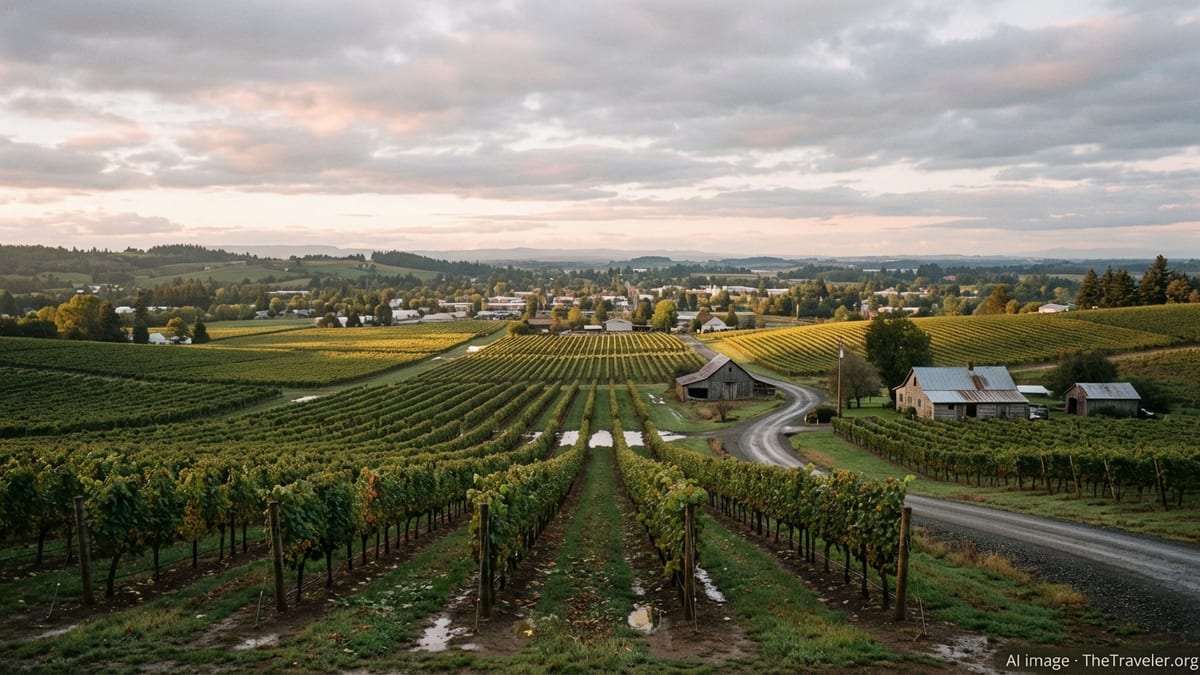
I planned my trip mostly around wine, and on that front Newberg delivered on beauty and quality, with some notable caveats. The hills around town are dotted with vineyards and tasting rooms, and the drives out into the Dundee Hills and surrounding AVAs are undeniably scenic: layers of vines, stands of oak and fir, and the occasional glimpse of distant mountains when the sky cooperates. I visited several wineries around Newberg and nearby, and I rarely had a bad glass of pinot noir or chardonnay.
What surprised me most was how expensive and structured the experience felt compared with the casual “drop in and taste” vibe I had imagined. Most tasting rooms required reservations or strongly encouraged them, and tasting fees were not trivial. It is common to pay a significant per-person fee, usually waived only if you buy multiple bottles or sign up for a wine club. For a solo traveler or a couple trying to sample broadly, these costs add up quickly. I understood why the prices were what they were, but it made the wine touring feel less spontaneous and a bit more transactional than I had hoped.
Service varied, too. At some wineries, staff took their time explaining the vineyards, the soils, and the philosophy behind the wines, and the experience felt thoughtful and personal. At others, I had the sense that the sheer volume of visitors had turned tasting into a script: a memorized spiel delivered briskly while they poured and moved on. On busy days, it felt more like a production line than a conversation. The wines themselves were often excellent, but the warmth of the human interaction did not always match the price point.
That said, when everything clicked, Newberg’s wine country was special. Watching morning fog lift off the vines, or lingering over a glass on a terrace as the light softened in the late afternoon, I understood why people fall in love with this area. If you are willing to plan ahead, accept that tastings are not cheap, and limit the number of stops in favor of deeper experiences, the winery side of Newberg still feels deeply rewarding.
Downtown Newberg: Quiet Charm, But Not a Buzzing Destination
I had pictured downtown Newberg as a compact, lively core where I would constantly stumble onto galleries, wine bars, and interesting shops. The reality is more modest. The historic center is walkable and pleasant, but it is not large, and it does not feel “bustling” except during specific events or busy weekends. If you are comparing it to major wine towns in California or Europe, you might find Newberg’s core a bit subdued.
There are bright spots. I found a couple of genuinely good coffee shops, a few boutiques selling locally made goods, and some tasting rooms that bring the vineyard experience into town. The Chehalem Cultural Center stood out as more substantial than I expected for a town of this size, with rotating art exhibits and community programming that makes Newberg feel more like a place where people actually live and create, not just pour wine for visitors. I also appreciated the small-town details: kids riding bikes, locals greeting each other by name, and the sense that the town has a life beyond tourism.
On the downside, there are gaps. Side streets can feel a bit empty, especially in the evenings or outside of peak seasons. Not every block is charming. Vacant storefronts and practical, non-touristy businesses sit right alongside more polished places, which breaks up the sense of continuity you might expect in a destination known internationally for its wine. Nightlife is limited; after dinner and maybe a drink, there is not much to wander to, and the town gets quiet early.
Overall, I liked downtown Newberg more the second day than the first, once I let go of the idea that it should feel like a curated resort. It is better approached as a small Oregon town that happens to sit in prime vineyard country, not as a picture-perfect tourist set. If you can make peace with that, its understated charm starts to show through.
Food, Coffee, and Drinking Beyond Wine
One of my main questions before visiting was whether the food scene would match the reputation of the wine. The answer is partially. Newberg has a handful of strong restaurants that take local ingredients seriously and would hold their own in a bigger market. I had a few meals that were genuinely memorable, especially at places that leaned into seasonal produce and straightforward, well-executed dishes rather than trying too hard to be “elevated.”
However, the dining options are not endless. If you are staying several nights, you can feel like you are rotating through the same limited set of places, especially if you are looking for something between high-end tasting menus and the standard burger-or-pizza fare. Some restaurants were closed on days I wanted to visit, or had shorter hours than I expected, which is common in smaller towns but still a bit frustrating when you are trying to plan. Reservations were advisable at the more sought-after spots, particularly on weekends and during wine events.
On the more casual side, I had better luck. Coffee culture in Newberg impressed me more than I anticipated, with roasters and cafes that clearly cared about their craft. Grabbing a good latte and watching locals filter in and out gave me a sense of everyday life that contrasted nicely with the wine-tourist energy. For quick bites and daytime meals, I found farm-style markets, bakeries, and delis that were solid and relatively affordable by wine-country standards.
If you are not a wine drinker, Newberg is more limited but not barren. There are local beers on tap in several places and the occasional cider or cocktail option, but the town is not a nightlife hub. After about 9 or 10 p.m., things quiet down dramatically. For some visitors, that calm is a feature, not a bug. For others used to more urban evenings with multiple bars and late-night snacks, Newberg will feel sleepy.
Nature, Activities, and Things to Do When You Need a Break From Tasting
Even as someone who enjoys wine, I did not want my entire trip to revolve around tasting rooms. In that sense, Newberg’s surroundings help a lot. The broader Willamette Valley offers a mix of low-key outdoor activities, and Newberg is a practical base for exploring some of them. Short drives took me to riverside parks and state heritage areas with walking trails, picnic spots, and a bit of local history. The scenery is not dramatic in the way of high mountains or ocean cliffs, but it is serene: flat riverlands, gently rolling hills, and farmland punctuated by stands of trees.
I tried to join a hot air balloon excursion, which is one of the more photogenic ways to experience the area, but weather is a real factor. Wind and low clouds meant that my first scheduled flight was canceled, and the postponed option did not line up well with my winery reservations. That was a good reminder that you need a bit of flexibility if you want to stack experiences in a short stay. Ballooning looked beautiful from the launches I watched, but it is not something you can count on if your schedule is tight.
One of the standout non-wine experiences for me was an evening at the local drive-in theater on the edge of town. It is an old-school setup, with cars lined up and a snack bar that feels stuck in the best possible version of the past. It was refreshingly unpretentious after a day of curated tasting rooms. I also appreciated that Newberg puts effort into seasonal events, from lavender and wine festivals in the summer to themed events in the fall. If your visit lines up with one of these, the town feels livelier and more cohesive, but on off weeks the tempo is very relaxed.
That said, if you crave adrenaline or high-density attractions, Newberg will not satisfy you on its own. There are no major museums, no large-scale entertainment complexes, and relatively few indoor attractions for rainy days beyond tasting rooms and a cultural center. For me, the gentler pace was fine, but I could see some travelers, particularly families with kids or people who do not drink, running out of things to do after a day or two.
Logistics, Cost, and the Less Romantic Realities
On paper, Newberg’s location is one of its biggest selling points. It sits less than an hour’s drive from Portland in normal traffic, and it is within reasonable reach of the coast, the Columbia River Gorge, and other classic Oregon sights. In practice, the drive in and out can be less convenient than it looks on a map. Highway 99W clogs up during commute times and busy weekends, and the final stretch into town is not particularly scenic. It is not terrible, but if you are hoping for a breathtaking, leisurely approach into wine country, this is more practical than poetic.
Once in town, I found that having a car was almost essential. Some tasting rooms sit within walking distance of each other or of lodging, but many of the most attractive vineyards are scattered across the hills. There are tour companies and private drivers who will string together winery visits for you, which is the safer and frankly more enjoyable option if you plan to taste seriously. Those services, however, are not cheap, and they can push an already pricey trip further into splurge territory. Rideshare coverage existed during my visit but felt thin and inconsistent, especially outside peak hours.
Overall costs in Newberg aligned more with a mature wine destination than with a sleepy small town. Lodging, especially at upscale inns and hotels that market themselves as retreats, comes at a premium. Dining at the top restaurants adds up quickly, and as mentioned earlier, tasting fees are significant. There are ways to trim costs, like staying at simpler motels or vacation rentals and focusing on fewer, more meaningful tastings rather than hopping all day, but Newberg is not a budget getaway in the way some older guides might suggest.
I also noticed that day-to-day amenities and infrastructure were adequate but not especially polished from a visitor perspective. Signage to some wineries and attractions could be clearer. The main highway corridor is busy and not particularly pedestrian friendly. Parking downtown was usually fine but occasionally tight near popular spots. None of these issues were trip-breaking, but they chipped away at the seamless, effortless experience that the most sophisticated wine regions strive to offer.
Who Will Love Newberg, and Who Might Be Disappointed
By the end of my stay, I had to admit that Newberg was not the effortlessly charming, fully walkable wine village I had initially imagined. Instead, it revealed itself as a working Oregon town in transition, surrounded by exceptional vineyards and slowly adding more polished hospitality layers on top of its everyday life. Whether that feels appealing or frustrating depends heavily on what you want from a trip.
If you are a serious wine enthusiast, Newberg works very well as a base, especially if you are comfortable renting a car or hiring a driver. The proximity to multiple AVAs and a high concentration of respected wineries means you can spend days exploring and still barely scratch the surface. The quality in the glass can justify the costs, and the setting, when you get out into the hills, is lovely in a quiet, agricultural way rather than a dramatic one.
If you are looking for a romantic escape, Newberg can deliver, but you will need to be intentional. Choosing lodging with beautiful views and booking one or two well-paced tasting days and a standout dinner will go a long way. What it does not provide is a bustling, nightlife-heavy town center; evenings are for slow dinners, maybe a nightcap, and early nights, not for bar-hopping or late dancing. Couples wanting a mix of wine and urban energy might be happier splitting time between Portland and the valley instead of staying in Newberg the entire time.
Travelers who do not drink or who are traveling with young kids may find Newberg more limiting. There are parks, trails, seasonal events, and that charming drive-in theater, but the town’s core identity is firmly tied to wine. Without that piece, the value proposition of staying in Newberg specifically, rather than in another Oregon town with more varied attractions, becomes less obvious.
The Takeaway: Is Newberg Worth Visiting?
So, after a few days of tasting, wandering, and quietly observing, would I say Newberg is worth visiting? For me, the answer is yes, but with conditions. I appreciated the quality of the wines, the authenticity of a town that has not entirely reshaped itself around visitors, and the soft, green beauty of the surrounding landscape. I had moments that felt genuinely special: sipping a nuanced pinot while looking out across carefully tended vines, catching a double feature at the drive-in under a clear sky, and lingering over a meal that clearly respected the region’s farms.
At the same time, Newberg did not always meet the expectations set by breathless coverage and marketing. The approach into town is ordinary, the downtown core is small and sometimes sleepy, logistics lean heavily on driving or pricey tours, and overall costs can be higher than you might assume for a place that still feels partly like a work-in-progress. It is not the perfectly polished, walkable wine village some promotional material implies.
If I went back, I would plan fewer winery stops and choose them more carefully, prioritize lodging that offered a real sense of place, and build in more unstructured time for slow walks, reading, and simply sitting with a glass of something good as the light changed over the hills. I would accept that Newberg is best experienced at a lower gear, rather than trying to pack the days full of activity.
In the end, I think Newberg is worth it for travelers who care more about the integrity of the wine and the authenticity of a real town than about glossy perfection. If you come with calibrated expectations, a realistic budget, and a willingness to drive a bit, Newberg can be deeply satisfying. If you want effortless glamour and wall-to-wall attractions, you may want to look elsewhere or pair your stay here with time in a larger city. For me, Newberg did not match the fantasy, but it did earn a place on my list of places I would quietly, thoughtfully return to.
FAQ
Q1. Is Newberg worth visiting if I am not really into wine?
It can be, but your experience will be more limited. There are parks, trails, seasonal events, and a nostalgic drive-in theater, yet most of the area’s identity and pricing is built around wine. If you do not drink at all, I would treat Newberg as a short stop rather than a multi-day destination.
Q2. How many days should I plan to stay in Newberg?
I found two to three nights ideal. That gave me enough time for one or two full days of winery visits, a slow wander through downtown, a drive-in movie, and a nearby park or heritage site without feeling rushed or running out of things to do.
Q3. Do I need a car to enjoy Newberg?
In practice, yes. While a few tasting rooms and restaurants are walkable from certain lodgings, the best vineyards and many outdoor spots are scattered around the hills. You can hire drivers or tours, but those add to the cost. A car or a planned tour is the most realistic approach.
Q4. Is Newberg expensive compared with other wine regions?
Newberg is not cheap. Tasting fees, upscale lodging, and fine dining are priced in line with a mature wine destination. You can keep costs down with simpler accommodations and fewer tastings, but budget travelers may feel squeezed if they try to replicate a high-end wine-country itinerary.
Q5. When is the best time of year to visit Newberg?
Late spring through early fall offers the most reliable weather and the fullest slate of events, with vineyards at their greenest and outdoor patios in full use. Harvest season can be especially atmospheric but also busier and sometimes more expensive.
Q6. Is Newberg family-friendly?
Partly. Some wineries are relaxed about kids on the property, and there are parks, open spaces, and the drive-in theater. However, many of the main attractions are geared toward adults, and there is not a huge range of child-focused activities, especially on rainy days.
Q7. How does Newberg compare with staying in nearby Dundee or McMinnville?
Newberg feels more like a working town with a growing hospitality layer, while places like McMinnville have somewhat larger and livelier main streets. Dundee is very close and heavily wine-centered. If you want a slightly busier downtown scene, McMinnville might suit you better; for proximity to Portland and a quieter base, Newberg works well.
Q8. Is it easy to visit Newberg as a day trip from Portland?
Yes, many people do. In normal traffic the drive is under an hour, and you can comfortably fit in two or three tastings and a meal. Just be mindful of traffic on Highway 99W at peak times and avoid driving after too much wine.
Q9. What should I book in advance before visiting Newberg?
I recommend reserving winery tastings, especially on weekends, along with any high-end or particularly popular restaurants. If you want a hot air balloon ride or a private wine tour, lock those in early too, as they are weather-dependent and can sell out.
Q10. Would I visit Newberg again, and what would I do differently?
I would visit again, but I would slow my pace. I would choose two or three wineries that really interest me, pick lodging with a view or strong character, and leave more open space in the itinerary for walks, reading, and quiet evenings instead of trying to fit in every possible tasting.