

Orient Bay Beach in Saint Martin has long been one of the Caribbean’s best known spots for visitors curious about clothing optional sunbathing. Yet the situation on the ground has evolved in recent years, especially after hurricane damage and new regulations.
Travelers arriving with out-of-date expectations can be surprised to learn that nudity is welcomed in some clearly defined areas but restricted in others.
Understanding how the rules work today, and how they differ from the island’s more relaxed topless norms, can help you choose the experience you are comfortable with and avoid awkward moments or fines.
Orient Bay at a Glance
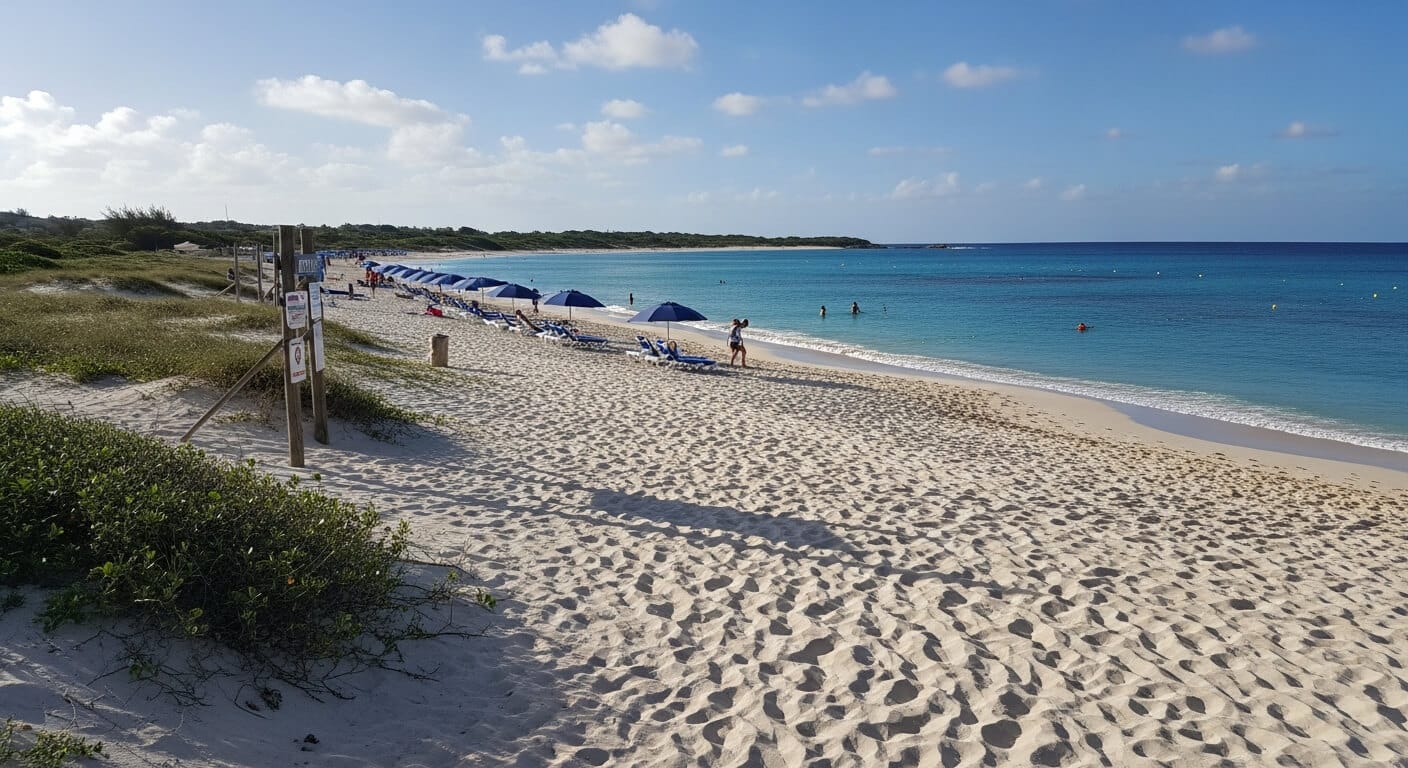
Orient Bay Beach stretches for roughly two kilometers along the northeast coast of the French side of Saint Martin. It is a broad, white sand beach backed by low dunes, casual beach bars, rental shacks and water sports operators.
Trade winds from the Atlantic keep the area breezy and make it one of the island’s hubs for kitesurfing, parasailing and other activities, while the shallow entry and generally calm sections of water draw families and cruise ship day trippers.
Historically, Orient Bay gained fame as a naturist destination linked to the former Club Orient resort at its southern end. Even now, visitors often use “Orient” and “the nude beach” interchangeably.
In reality, only a defined part of the southern section is considered clothing optional in the full sense, while the majority of the beach functions like a typical Caribbean strand where regular swimwear is the norm and only topless sunbathing is widely tolerated.
This split personality is one reason confusion persists. Official tourism messaging highlights both Orient’s active water sports scene and its naturist culture. Cruise excursion descriptions still warn guests that they may encounter beach nudity, yet new visitors often arrive not knowing where on the sand that is actually permitted. The key is to understand how the beach is divided and what “clothing optional” means in local practice.
Is Orient Bay Beach Really Clothing Optional?
Orient Bay Beach is partially clothing optional rather than fully nude from end to end. At present, full nudity is legally authorized only on the official naturist section at the southern tip of the bay, around the former Club Orient property. This area is sometimes referred to simply as “the nude beach” or “the Club O section,” and it remains a popular meeting point for naturists from around the world.
Outside this designated zone, public nudity is not allowed, but topless sunbathing is common and generally accepted on the French side of the island. On the central and northern stretches of Orient Bay, typical beachwear runs from bikinis and swim trunks to women comfortably sunbathing topless. Full nude bathing away from the naturist section can draw complaints and, under current regulations, may lead to intervention by local authorities.
The distinction can be summarized this way: Orient Bay as a whole is famous for being clothing optional in spirit, but only the southern naturist section is officially clothing optional in the strict sense of allowing complete nudity. Travelers who want the option to go fully nude should plan to spend their time on that specific segment, while those who prefer to stay clothed or merely topless will find the rest of the beach more in line with traditional expectations.
The Naturist Section: What to Expect
The naturist section lies at the southern end of Orient Bay, near the remnants of the former Club Orient resort, which was destroyed by Hurricane Irma in 2017. The resort itself has not been fully rebuilt, but the beach remains open to the public.
Here, a prefectural decree on the French side authorizes naturism, making it the island’s only officially sanctioned nude beach. Visitors typically recognize the zone by the clusters of sunbeds and umbrellas set up in front of the low dunes, the simple beach bar structures and the absence of swimwear on many guests.
In this area, “clothing optional” is taken at face value. You may remain in a swimsuit, go topless or shed everything, and no one is likely to react. The atmosphere is generally relaxed and social rather than provocative.
Couples, solo travelers and seasoned naturists mingle easily, and body types of every sort are represented. Although complete nudity is common, it is not mandatory. Guests sometimes start the day in swimwear and gradually become more comfortable as they acclimate to the environment.
A small beach bar on this section, often referred to as Perch Bar or Perch Bar Light, operates with a similar clothing optional approach. Guests can walk up nude from their loungers to order drinks or a simple lunch without dressing, which makes the area particularly convenient for those spending the whole day in the naturist zone.
Beach chair and umbrella rentals are typically available through local operators, with recent reports quoting set rates for two chairs and an umbrella on the clothing optional stretch. These services give the naturist area the feel of an informal beach club even in the absence of the original resort infrastructure.
Topless vs Fully Nude: Understanding Local Norms
One of the main sources of confusion for visitors is the difference between topless sunbathing and full nudity. On much of Saint Martin, particularly on the French side, female toplessness is considered unremarkable. Women remove bikini tops on many beaches without attracting attention or criticism, and families with children often share the sand with topless sunbathers without issue.
Orient Bay is no exception. On the central and northern stretches of the beach, topless sunbathing is common, although some restaurants or hotels on more conservative sections of the island may post signs asking guests to remain covered.
Full nudity, however, is treated differently and is much more tightly defined by law and custom. At Orient Bay, complete nudity is accepted and authorized only on the official naturist section at the southern end.
On the rest of the beach, signs now make it clear that nudity is prohibited, reflecting a shift from earlier years when naturists frequently walked the full length of the shoreline without interference. Visitors who are nude outside the designated area today risk attracting the attention of authorities and may be asked to dress or face a fine.
In practice, this means that a visitor who is comfortable only with topless sunbathing can make use of most of Orient Bay, choosing a stretch with more families or a favorite beach bar.
Guests aiming for a fully nude experience should limit their naturist activities to the Club Orient section and expect to cover up if they wander farther north to explore other beach clubs, have lunch in the village or visit shops. Respecting this distinction helps maintain a balance between Orient’s naturist heritage and the expectations of other visitors.
Rules, Regulations and Possible Fines
Although Orient Bay’s reputation suggests a freewheeling attitude, the current framework for nude and topless bathing is guided by French regulations. A prefectural decree specifically recognizes the naturist section at the southern end of Orient Bay as an official nude beach. Within that limited zone, public nudity is legal and protected so long as visitors comply with general public order laws and basic beach etiquette.
Beyond that section, local authorities have responded to changing visitor demographics and complaints by tightening enforcement. Signs posted on other parts of the beach indicate that nudity is prohibited, and recent visitor accounts describe warnings that going nude beyond the rock wall or the area where mainstream beach clubs begin can lead to fines or, in extreme cases, arrest.
For most people, intervention begins with a verbal reminder and a request to dress, but travelers should be aware that enforcement can be stricter during busy seasons or when cruise ships bring large numbers of day visitors.
Photography is another regulated aspect of the naturist experience. On the clothing optional section, visitors are expected to refrain from taking photos or video that include nude strangers. Staff and regulars are quick to challenge anyone obviously pointing cameras at sunbathers.
Even outside the naturist zone, shooting close-up images of topless guests without consent can be seen as a violation of privacy or cause confrontation. A safe rule is to reserve personal photography for landscapes, your own group and moments when other beachgoers are clearly out of frame.
Etiquette and Comfort: How to Behave on the Nude Section
Even where nudity is officially permitted, social norms play a major role in how comfortable everyone feels. On the naturist section of Orient Bay, the guiding principle is respect.
Visitors are welcome to undress as much or as little as they like, but they are also expected to behave as they would on any family friendly beach. That means no overtly sexual behavior, no intimate touching meant to draw attention and no intrusive staring at others.
New naturists sometimes worry about how they will look or whether existing regulars will judge them. In reality, Orient’s nude section is known for attracting a wide range of ages and body types, not just model-quality physiques.
Most guests are focused on their own experience and rarely pay much attention to newcomers beyond a friendly greeting. If you feel nervous, you can begin by staying clothed or topless, spend time observing the atmosphere and only undress further if you decide it feels right.
Basic courtesies help maintain a pleasant environment. Always sit on a towel when using shared loungers or chairs, especially if you are nude. Keep conversations at a normal volume, and avoid loud music that forces others to share your soundtrack.
If you have children with you, supervise them as you would anywhere else and be prepared that they will see naked bodies. For some families this is an ordinary part of life; for others it may call for a prior conversation about body acceptance and cultural differences.
Practical Tips for Visiting Orient Bay’s Clothing Optional Area
Planning ahead makes a first visit to Orient Bay’s naturist section smoother. Most visitors arrive either by rental car, taxi or organized excursion. Taxis typically drop passengers at general access points to the beach, from which it is an easy walk along the sand to the southern end.
Look for the area with a greater concentration of nude sunbathers, yellow or clustered umbrellas and the small clothing optional beach bar. If you are unsure, staff at beach clubs or local vendors can point you toward the “Club Orient” side.
Once there, you can rent lounge chairs and umbrellas from operators who specialize in the naturist zone. Reported rates fluctuate seasonally and may increase during peak holiday periods, but many visitors describe straightforward packages for a pair of chairs and an umbrella.
Bringing cash in euros or U.S. dollars is advisable, as small beachfront operations may not always accept cards. Light food and drinks are available at the bar, but you may want to carry water, sunscreen and a cover-up for walking to and from the naturist area.
Sun protection is particularly important on a nude beach. Exposed skin that rarely sees the sun burns quickly, so liberal use of high SPF sunscreen and occasional breaks in the shade are essential. Apply lotion discreetly, respecting the space and comfort of others.
Flip-flops or sandals will protect your feet from hot sand and uneven ground near the dunes. A light wrap, sarong or T-shirt is useful if you decide to explore farther up the beach, where you will be expected to cover up.
Beyond the Nude Section: The Rest of Orient Bay
Even if you have little interest in naturism, Orient Bay’s main stretches offer a full day’s worth of traditional beach activities. The central and northern parts of the bay host a row of beach clubs where you can rent loungers, order food and drinks, and enjoy table service under shade umbrellas. Menus range from simple burgers and salads to French-inspired seafood, and the vibe varies from laid-back to more stylish depending on the venue.
Water sports are a major draw in these sections. Operators set up along the sand rent paddleboards, jet skis and kayaks, organize parasailing flights and offer beginner-friendly kitesurfing instruction when the trade winds are favorable.
Families with children appreciate the shallow entry and the relatively protected waters on calmer days, though some stretches can be choppy when wind and swell increase. Lifeguard coverage is limited, so swimmers should always exercise caution.
Just inland from the beach, Orient Village functions as a compact hub with restaurants, cafés and small shops. Many visitors split their day between time on the sand and a stroll through the village for lunch or an evening meal. Here, casual resort wear is the standard.
Beachgoers coming from the naturist section are expected to cover up before entering restaurants or stores, in line with general French Caribbean norms that treat nudity as appropriate on specific beaches but not in town or at dining venues.
The Takeaway
Orient Bay Beach remains one of the Caribbean’s most distinctive coastal destinations because it successfully combines mainstream beach tourism with a clearly defined naturist culture. For travelers, the essential point is that the entire beach is not clothing optional in the same way.
Full nudity is authorized and normal only on the official naturist section at the southern end, around the former Club Orient property. The rest of the beach follows more conventional patterns, with regular swimwear and widespread topless sunbathing but an expectation that full nudity will not occur.
By understanding where nudity is permitted, respecting posted signs and following basic etiquette, visitors can enjoy Orient Bay in the style that suits them. Those curious about trying a nude beach for the first time will find a welcoming, low-pressure environment on the naturist stretch, while guests who prefer to remain clothed or only topless can settle comfortably on other parts of the sand.
With its mix of water sports, dining options and unique social atmosphere, Orient Bay offers a flexible experience that continues to draw a broad range of travelers year after year.
FAQ
Q1: Is all of Orient Bay Beach clothing optional?
Only the official naturist section at the southern end of Orient Bay is truly clothing optional in the sense that full nudity is allowed. The rest of the beach functions like a standard Caribbean beach where regular swimwear is expected and topless sunbathing is common but complete nudity is not permitted.
Q2: How do I find the nude section of Orient Bay?
The nude section is located at the southern tip of the bay near the remains of the former Club Orient resort. From most beach access points, walk along the sand toward the end of the beach where you see more nude sunbathers, a cluster of loungers and umbrellas, and a small casual beach bar known for being clothing optional.
Q3: Is nudity mandatory on the naturist section?
No, nudity is not mandatory. The naturist section is clothing optional, meaning you can wear a swimsuit, go topless or be fully nude. Many first-time visitors start out in regular beachwear and undress only if and when they feel comfortable.
Q4: Can I walk nude along the entire length of Orient Bay?
Today it is advisable to remain nude only within the clearly defined naturist section at the southern end. Outside that zone, signs and local enforcement indicate that nudity is prohibited. Walking nude beyond the rocks or into areas dominated by regular beach clubs may result in a warning or fine.
Q5: Are photos allowed on the clothing optional section?
Personal photos of your own group or general landscape scenes are usually acceptable, but taking pictures of other nude beachgoers without explicit consent is strongly discouraged and may lead to confrontation. Many regulars and staff will challenge anyone obviously photographing strangers on the naturist section.
Q6: Is Orient Bay suitable for families if part of it is nude?
Yes, many families visit Orient Bay and spend their time on the central or northern stretches of the beach, where regular swimwear is the norm and only topless sunbathing is common. Families who prefer to avoid nudity can simply stay away from the clearly identifiable naturist section at the southern end.
Q7: What should I wear when leaving the nude section for bars or restaurants?
When you leave the naturist part of the beach to visit beach clubs, inland restaurants or shops in Orient Village, you should cover up in at least standard beachwear such as shorts, a dress or a shirt over swimwear. Being nude or topless in restaurants or shops is not acceptable.
Q8: Are there specific rules about behavior on the naturist section?
Yes, visitors are expected to behave as they would on any family friendly beach. Sexual activity, explicit displays, intrusive staring and harassing other guests are not tolerated. Using a towel on shared loungers and maintaining normal social distance and courtesy are part of basic naturist etiquette.
Q9: Is topless sunbathing allowed outside the nude area?
Topless sunbathing is widely accepted on the French side of Saint Martin, including the non-naturist stretches of Orient Bay. Women going topless on these sections generally attract little attention, although some individual resorts elsewhere on the island may post their own dress code signs.
Q10: Do I need to bring anything special if I plan to use the clothing optional area?
In addition to the usual beach items, bring a towel for sitting on shared loungers, plenty of high SPF sunscreen for newly exposed skin, a light cover-up for walking to and from the naturist section and sufficient cash for chair rentals and refreshments. Comfortable sandals or flip-flops will also make it easier to move between the sand, bar and access paths.