

I went to Siem Reap for all the familiar reasons: Angkor Wat at sunrise, jungle temples wrapped in roots, cheap massages, maybe a cocktail on Pub Street to cap things off. I had seen the postcards and the Instagram reels; I expected something between a spiritual experience and a bucket-list checkbox. What I actually found was more complicated.
Siem Reap is memorable, sometimes magical, often exhausting, and occasionally disappointing. It is not a simple yes or no answer to the question of whether it is “worth it.” It depends a lot on your expectations, your tolerance for heat and crowds, and how much work you are willing to put into planning around the realities of modern mass tourism.
First Impressions: A City Built Around Ruins
Arriving at the new Siem Reap Angkor International Airport immediately set the tone. The terminal felt spacious and efficient, but it also sits far outside town, so the romance of a quick hop into a historic center disappeared the moment I realized I was in for a 45 to 70 minute drive just to reach my hotel. Airport shuttles and taxis are easy enough to arrange, but the distance adds both time and cost that I had not fully appreciated when I booked my flight. It was my first reminder that the photos never show the logistics.
Driving into town, the city felt almost provisional, like a place that had grown quickly and somewhat haphazardly around a single draw: the Angkor temples. There are wide new roads, clusters of hotels, and then pockets of more modest houses and local life. None of it is particularly beautiful at first glance, nor is it ugly; it just feels like a service town. That is essentially what Siem Reap is. It exists primarily because Angkor is a world-class archaeological site, and everything else in the city bends around that gravity.
I noticed immediately how tourism-dependent the local economy still is. Tuk-tuk drivers, tour operators, and street vendors seemed hungry for business. The hospitality was genuinely warm, but I could also feel the weight of economic necessity in almost every interaction. If you enjoy being somewhere that clearly lives and breathes tourism, Siem Reap delivers. If you prefer a city with multiple identities and industries, you may find it one-dimensional.
The Temples of Angkor: Magnificent, Crowded, Imperfect
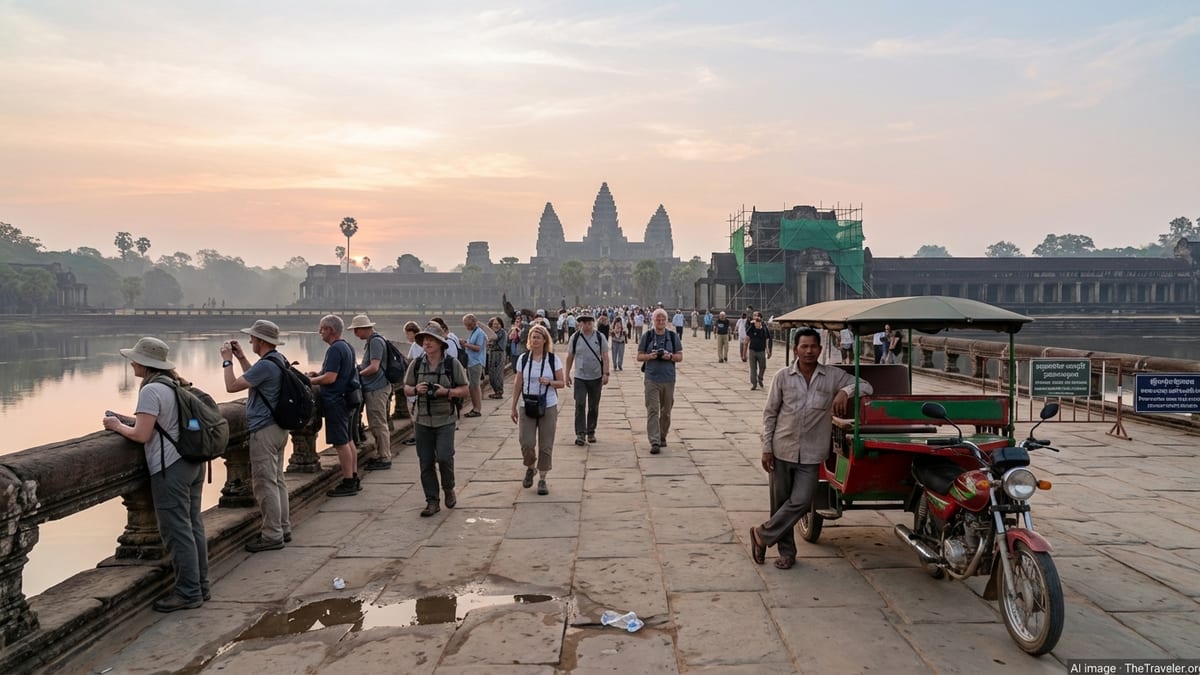
Angkor itself is the reason to come, and it is as extraordinary as all the clichés claim. I bought a multi-day pass and started with Angkor Wat at sunrise like everyone else. The temple complex opens around 5:00 am for sunrise access, and by the time I arrived in the dark, the outer causeway was already busy with people shuffling in half-silence, camera phones glowing. The sky slowly turned from navy to orange, and for a brief moment, it felt as magical as the photos had promised.
Then the spell broke. Selfie sticks came up, drones buzzed in the distance, and guides started corralling their groups. By 7:00 am, the temple interior was crowded enough that it was difficult to move freely or appreciate the bas-reliefs without someone stepping into my line of sight. Angkor Wat is still stunning in person, but it is work to find a quiet corner, and if you are not comfortable with early starts and crowds, the experience will test your patience.
The rest of the main circuit delivered similar contradictions. Bayon, with its serene stone faces, is unlike any place I have seen, but during mid-morning I had to wait politely just to climb certain staircases. Ta Prohm, the “Tomb Raider temple,” felt close to collapsing under the weight of tripods and tour groups ringed around the few photogenic tree roots that remain accessible. Restoration work is ongoing at several sites, and some doorways and galleries are blocked off, which is perfectly reasonable for preservation but can feel anticlimactic if you arrived with a mental image shaped entirely by movies and social media.
Despite all of that, I would still call walking among those temples one of the most powerful travel experiences I have had. The scale of Angkor, the detail in the carvings, the way jungle and stone compete with one another: all of it sinks in if you allow it to. I just had to adjust my expectations. This is not a lost city in the jungle. It is a huge open-air museum with modern rules, opening hours that now stretch later into the evening at some temples, and visitor flows that need to be managed. The romance is still there, but it shares space with railings, signboards, and loud tour groups.
Heat, Seasons, and the Physical Reality of Exploring
One thing no glossy photo really prepared me for was just how physically demanding Siem Reap can be. The climate is not a detail; it shapes everything. I visited during the dry season, which is theoretically the “best” time: clear skies, lower chance of rain, and more pleasant temperatures. In practice, it was still hot enough that by late morning I was sweating through my clothes and hunting for shade.
Climbing temple staircases in this heat, often on steep and irregular steps, is more tiring than I expected. The stone radiates warmth, and there are few breezes among the dense ruins. I learned quickly to schedule my most ambitious temple visits between about 5:30 am and 10:30 am, then again in the late afternoon. Middle-of-the-day temple hopping felt like punishment, not exploration. If you are sensitive to heat, or traveling with children or older relatives, this rhythm is not optional. It is the only way the trip remains enjoyable.
The wet season, which stretches roughly from May to October, has its own trade-offs. On one hand, the countryside and temple moats turn intensely green, the temples are less crowded, and Tonle Sap Lake fills enough to make floating-village visits more atmospheric. On the other, dirt roads to more remote sites can become slippery or impassable, and sudden storms can derail your carefully planned day. It is not a wrong time to come; it is just a different one. If I return, I might actually choose the shoulder of the wet season for cooler air and lusher scenery, accepting the risk of downpours for fewer people.
Either way, you do not just stroll casually through Angkor the way you might wander a European city. You sweat, you climb, you guzzle water, and you will probably feel drained by mid-afternoon. If your image of this trip is effortless temple wandering in crisp linen, recalibrate. Siem Reap is a physical destination as much as a cultural one.
Costs, Value, and the Question of “Worth It”
The financial side of Siem Reap also deserves a clear-eyed look. Cambodia is often described as “cheap,” and in some ways it is. Local food, simple guesthouses, and tuk-tuk rides are all very affordable. I found good meals at local restaurants for not much money, and basic accommodation prices remain reasonable compared with many other destinations in Asia.
Where the cost jumps is at the exact things that brought me there. Angkor temple passes are priced at a level that reflects both their global fame and the need for conservation funding. Tuk-tuk tours for full-day temple circuits add up over multiple days, especially once you include tips and detours to more distant sites like Banteay Srei or Beng Mealea. The long transfer from the new airport further adds to the bill, especially if you prefer a private car over the cheaper shuttle.
I would not call Siem Reap an expensive destination overall, but I no longer think of it as a true budget choice, at least not if you want to see the main sites thoroughly and comfortably. The value is still strong, especially when you compare Angkor’s historical weight with many similarly priced attractions elsewhere in the world. Yet the days when this could be a rock-bottom backpacker temple run feel like they are fading. For a solo traveler on a very tight budget who is counting every dollar, this might be frustrating.
On the other hand, mid-range travelers get good returns here. Comfortable hotels with pools, strong air conditioning, and decent breakfasts are relatively affordable. Multi-day passes let you amortize the temple cost over several days, and with some planning, you can structure your visit to get a lot out of each day without feeling rushed or overspent. For me, the overall cost-to-experience ratio still tilts in Siem Reap’s favor, but it is closer to a fair trade than a bargain.
Culture, Ethics, and the Tourist Bubble
I went hoping for a sense of Cambodian culture beyond the temples and quickly realized how easy it is to get stuck in a tourist bubble. Pub Street, the central nightlife area, sums this up perfectly. One side of me appreciated the easy comforts: cold beer, multiple cuisines, live music, and the ability to walk between bars without thinking too hard. Another side felt like I could have been in almost any backpacker nightlife district in Southeast Asia. Neon signs, cocktail buckets, and loud EDM tracks do not have much to do with Khmer heritage.
Stepping a few streets away helped. The local markets, small family-run restaurants, and quieter streets along the river gave me more of a sense of where I actually was. It is in these spaces that I felt softer, more grounded moments: a vendor teaching me how to pronounce the name of a dish properly, a tuk-tuk driver sharing stories of how quiet the town was during the pandemic, a monk sitting under a tree at a small pagoda in town. None of this is dramatic, but it made the trip feel less like a theme-park visit to “the temples” and more like a brief window into real lives.
Ethically, Siem Reap is also not a neutral place. Tourism brings money, but it also brings pressure, scams, and uncomfortable power imbalances. Around the temples and in town, I saw children selling trinkets and postcards. It is hard to say no, but buying from kids can keep them out of school and feed a cycle that locals and responsible organizations have been trying to break. I also had to navigate persistent offers of “special” tours or rushed attempts to overcharge on tuk-tuk fares. None of this ruined my experience, but it did require vigilance and an awareness that my presence, like that of all tourists, has impacts beyond my Instagram feed.
If you want Siem Reap to be purely a carefree vacation, these undercurrents might feel uncomfortable. If you prefer to travel with some awareness of where your money goes and how you behave as a guest, there is room here to do better, but also a responsibility to confront some things you might rather ignore. I left feeling both grateful and a little uneasy, which, in some ways, is a sign that the trip mattered.
Side Trips, Floating Villages, and Things That Fell Short
Beyond the core temples, I tried to see a bit more of the area. Some side trips were absolutely worth it; others felt over-commercialized or hollow. Visiting one of the floating or stilted villages on Tonle Sap Lake had been high on my list. Depending on the season, this can be a fascinating look at a unique way of life on the water, or it can feel like a staged circuit of souvenir stops. In my case, it was somewhere in between.
During the drier period, the water levels were lower than in the ideal “green season” months, which meant longer boat rides through muddy channels and less of that dramatic illusion of houses floating in a mirrored lake. I still found it interesting, but it did not match the dreamy photographs I had seen. There was also a constant sense of being funneled along a prescribed route: boat to ticket office, ticket office to a snack stop, snack stop to a shop. I never quite shook the feeling that the tour was more engineered for tourist consumption than for genuine cultural exchange.
In contrast, venturing to some of the more distant temples and countryside landscapes was a highlight. Places that sit off the main Angkor circuit had far fewer visitors, and the sense of discovery returned. The roads were rougher, and the journeys longer, but I found the trade-off worthwhile. I could stand under a banyan tree in near silence and allow the weight of centuries to sink in without being jostled by a dozen other people doing the same.
Ultimately, not every activity in Siem Reap lived up to its brochure. That is not unique to Cambodia; it is true of almost anywhere heavily photographed and promoted. But here, the gap between expectation and reality felt particularly sharp around the lake and some cultural shows that leaned more on costume changes than on storytelling. If I could redo my time, I would choose fewer attractions and give more time to the ones that genuinely resonated, rather than trying to tick every recommended box.
Practical Frustrations and Small Joys
On a practical level, Siem Reap was a mix of smooth moments and small irritations. Transport within town by tuk-tuk was easy and generally reliable, but negotiating prices every time got a little tiring. Using ride-hailing apps where possible simplified things, though availability waxed and waned, particularly at peak hours or late at night. Walking is theoretically an option in the central area, but uneven sidewalks, traffic, and intense heat turned what looked like a short stroll on the map into something much less pleasant in reality.
Language was not a major barrier; most people working in tourism spoke at least basic English, and often more. What was harder was filtering through the constant stream of offers: tour here, massage there, “special price just for you.” After a few days, I learned to be direct and polite about saying no, and that helped. Still, if you are someone who gets easily overwhelmed by persistent sales pitches, this aspect of Siem Reap will wear on you.
On the positive side, I was consistently impressed by the kindness and resilience of many locals I met. Hotel staff went out of their way to help with early breakfasts before sunrise tours. Restaurant owners took time to explain dishes and suggest local favorites rather than automatically steering me to tourist-safe options. Massage therapists worked miracles on temple-weary legs for a fraction of what similar treatments would cost in Western cities. These small, human-scale interactions did as much to shape my impression of Siem Reap as the grand stone towers did.
Internet connectivity, something many travelers now care about, was generally solid. Cafes and hotels provided usable Wi-Fi, which made planning, booking, and staying in touch smooth. I did at times feel the odd contrast of checking messages from home while sipping an iced coffee a short ride away from 12th-century ruins. That is modern travel in a nutshell: the ancient and the ultra-connected coexisting in slightly disorienting ways.
The Takeaway
When I look back on my time in Siem Reap, I do not see a simple highlight reel or a clear-cut disappointment. I see a layered experience that asked me to hold awe and irritation at the same time. Angkor is unquestionably one of the great historical sites of the world. Standing in those galleries, tracing carvings with my eyes, and watching the light move across centuries of stone remains a privilege I would not trade away. At the same time, the crowds, the commercialization, the climate, and the inevitable frictions of a tourism-dependent city are real, and ignoring them would be dishonest.
Is Siem Reap worth visiting? For me, yes, but not under every circumstance and not for every type of traveler. If you are deeply interested in history, archaeology, or architecture; if you have patience for heat and crowds; and if you are willing to plan your days carefully, then Siem Reap offers one of the most rewarding cultural trips you can take in Asia. The temples alone justify the effort. Add in the warmth of many of the people you will meet, the chance to engage with recent Cambodian history at museums and memorials, and the beauty of the countryside in the right season, and the scales tip firmly toward “go.”
If, however, your idea of a successful trip is a relaxed, low-effort holiday with minimal logistics, cool weather, and spontaneous unstructured days, Siem Reap may not be your ideal match. It demands early alarms, strategic planning, and a certain emotional resilience in the face of both tourist crowds and the visible economic disparities around you. For some, that will feel like part of the adventure. For others, it will feel like work.
If I return, I will do a few things differently. I will stay longer rather than try to compress everything into a rushed few days. I will plan at least one temple-free day between heavy sightseeing, to let my body and mind rest. I will skip some of the more contrived attractions and invest those hours in a slower, deeper visit to fewer places. I will also pay more attention to where my money goes, choosing businesses that treat staff well and engage responsibly with the community.
In the end, Siem Reap is not a perfect destination, but it is a meaningful one. It is worth visiting if you come with clear-eyed expectations, a respect for the place and its people, and a willingness to accept the compromises of modern tourism in exchange for the chance to walk through one of humanity’s most remarkable legacies. Under those conditions, I would say yes: go, but go thoughtfully.
FAQ
Q1. How many days should I spend in Siem Reap to see Angkor properly?
I would give myself at least three full days in Siem Reap, with two of those focused on the temples. One day for the main Angkor circuit, one for the more distant or less-visited sites, and one flexible day to revisit favorites, rest, or explore the town. If you are passionate about history, four or five days will let you go deeper without burning out.
Q2. Is Siem Reap safe for solo travelers?
I felt generally safe walking around the central parts of town, especially near the main streets and river. Most of the risks are the usual ones: petty theft, late-night drunken scenes around Pub Street, and the occasional pushy tout. Using common sense, avoiding dark alleys, and not overindulging in alcohol kept things uneventful in a good way.
Q3. What is the best time of year to visit Siem Reap?
The dry, cooler months from roughly December to February offer the most comfortable weather and reliable sunshine, but they are also the busiest and most expensive. The wet season from May to October brings greener landscapes, fewer crowds, and often lower hotel rates, at the cost of higher humidity and afternoon downpours. I would avoid the very hottest pre-monsoon months if possible.
Q4. Do I need a guide for Angkor, or can I explore on my own?
You can absolutely explore on your own with a tuk-tuk driver and a good map, but I found that hiring a guide for at least one day added a lot of depth. A knowledgeable guide can explain the stories behind the reliefs, the symbolism of the architecture, and the history of the different kingdoms. After that, I enjoyed wandering solo with more context in my head.
Q5. Is Siem Reap suitable for children or older travelers?
It can be, but it requires more planning. The heat, steep temple steps, and long days can be tough for kids and older visitors. Choosing a hotel with a pool, scheduling rest periods in the middle of the day, and being selective about which temples to climb make a big difference. If mobility is an issue, focus on the more accessible sites and let go of the pressure to see everything.
Q6. How much walking and climbing is involved at Angkor?
There is a lot of both. Even with a tuk-tuk dropping you fairly close to each site, you will walk thousands of steps a day over uneven ground. Some temples have steep staircases with minimal railings. Comfortable shoes, sun protection, and a realistic assessment of your fitness level are important. You can still enjoy the complex without climbing every tower, but some of the best views require effort.
Q7. Are the floating village tours on Tonle Sap Lake worth it?
My experience was mixed. In the right season, when water levels are high, the scenery can be dramatic and the way of life fascinating. At other times, it can feel like a tourist conveyor belt with too many commercial stops. If you go, choose your operator carefully, ask about water levels and the specific route, and be prepared for the ethical complexity of visiting communities whose livelihoods are tied to tourism.
Q8. How easy is it to get around Siem Reap without joining a big tour group?
It is quite straightforward. Tuk-tuks are everywhere, and many drivers are used to doing custom temple circuits. You can arrange a driver for a full day and set your own schedule. Ride-hailing apps help in town, though availability varies. The key is agreeing on prices and routes clearly in advance and keeping your expectations realistic about travel times and comfort.
Q9. What should I wear when visiting the temples?
Modest clothing is expected at religious and historical sites. That means covering shoulders and knees for both men and women. Light, breathable fabrics are your friend in the heat. I wore loose pants or a long skirt and a lightweight shirt with sleeves, along with a hat and sturdy walking shoes. It is less about strict enforcement and more about respecting local norms.
Q10. Would I go back to Siem Reap, and what would I do differently?
I would go back, but I would slow down. I would plan a longer stay with more rest days, spend additional time at fewer temples, and skip some of the more contrived attractions. I would probably aim for a shoulder period around the wet season to see the temples in greener surroundings, and I would make more deliberate choices about where I spend my money to support businesses that invest back into the community.