

From high speed links between major cities to slow overnight journeys that cross entire regions, Turkey’s rail network offers a very different experience from hopping between airports or long distance buses. As new lines open and classic routes gain cult status with local and international travelers, many visitors are asking a practical question: is train travel in Turkey actually worth it for my trip, or is it better left to railway enthusiasts? This guide draws on the latest routes and services as of early 2026 to help you weigh the pros and cons.
Understanding Turkey’s Rail Network Today
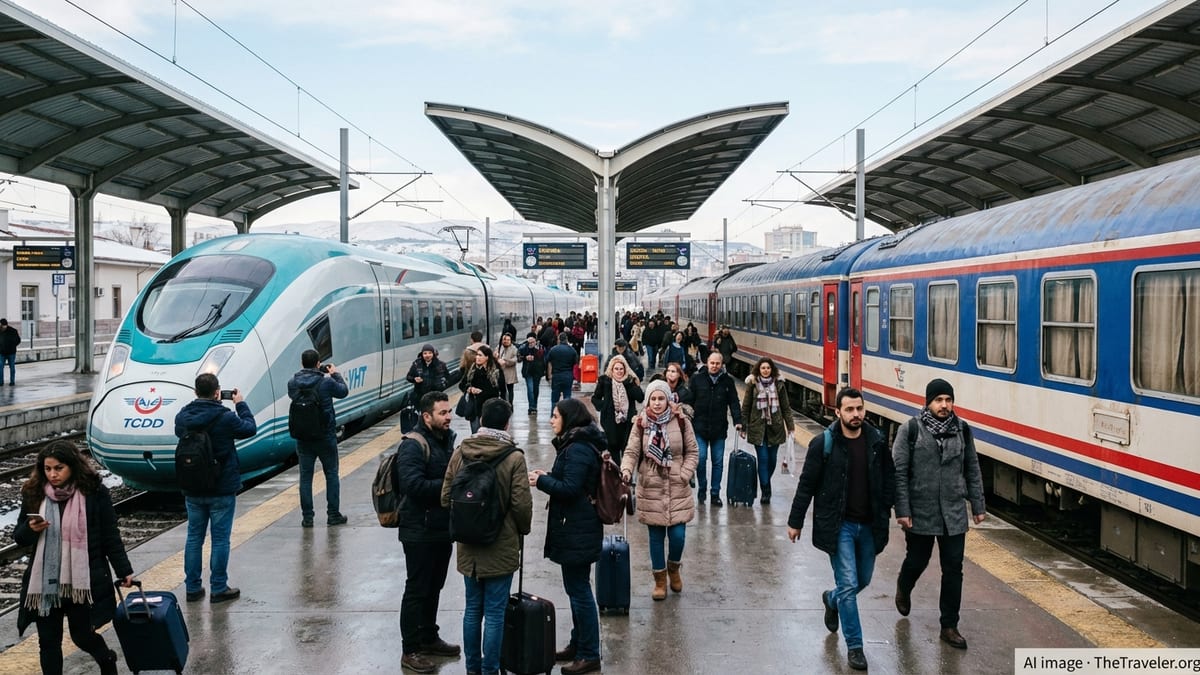
Turkey’s rail system combines modern high speed lines with a wide web of conventional intercity and regional routes. The backbone is operated by TCDD Taşımacılık, the state rail operator, which runs both Yüksek Hızlı Tren high speed services and slower classic trains. The result is a patchwork network: polished and time efficient on some corridors, charmingly old fashioned or simply slow on others. For travelers willing to adapt to this variety, rail can be both an efficient way to cover distance and a memorable part of the journey itself.
On the modern side, high speed services now link Ankara with Istanbul, Konya and Sivas, reducing traditional journey times dramatically and creating a fast axis across northwest and central Anatolia. These trains are typically clean, air conditioned and relatively punctual, with reserved seating and multiple classes. On the traditional side, long distance expresses such as the Eastern Express, Lake Van Express and Southern Kurtalan Express offer overnight journeys across Anatolia and toward the country’s eastern regions, often with couchettes or private sleepers and a dining car rather than sleek cafe trolleys.
The overall network is expanding and changing. The Ankara to Sivas high speed line opened in 2023, cutting travel times from roughly nine hours to under three, and work continues on a high speed connection from Istanbul’s European suburbs to the Bulgarian border at Kapıkule, intended to strengthen rail links with Europe. At the same time, tourism focused trains such as the Touristic Eastern Express and Mesopotamia Express have been developed as curated experiences with scenic stops built into the itinerary, reflecting Turkey’s ambition to turn certain routes into attractions in their own right.
For visitors, this mix means there is no single answer to what Turkish train travel is like. On some routes it is a practical, business friendly option that competes with domestic flights. On others it is slow, occasionally crowded and more about the experience than the timetable. Understanding which category your intended journey falls into is the first step in deciding whether rail travel will work for you.
High Speed Routes: When Trains Beat Planes and Buses
Turkey’s YHT high speed network is where train travel most clearly pays off in terms of time and comfort. The flagship corridor runs between Ankara and Istanbul, with services continuing or connecting toward cities such as Eskişehir, Konya and Karaman. Journey times between Ankara and Istanbul are typically around four and a half hours station to station, avoiding airport security queues and transfers to far flung terminals. For many travelers, especially those staying near central districts, this can rival or beat flying door to door.
The Ankara to Konya line is another strong example. The travel time is around two hours by high speed train, making it easy to include Konya as a side trip from the capital or to use it as a rail link onward into the south via other trains. Likewise, the Ankara to Sivas high speed route has reduced travel times to under three hours, which is a major improvement on the previous all day conventional run. These lines offer air conditioned, reserved seating, onboard cafes and clear multilingual signage in major stations, so the experience tends to be straightforward even for first time visitors.
On price, high speed trains are usually competitive with internal flights and often cheaper when booked in advance, though fares fluctuate and foreign currency exchange rates can change quickly. As of early 2026, tickets are generally good value relative to European high speed rail, especially outside peak holiday periods. For eco minded travelers, the environmental advantage is another reason to choose rail: high speed trains offer a significantly lower emissions footprint per passenger than short haul flights on the same corridor.
There are limitations. Seats on popular departures, especially Fridays and Sundays, can sell out quickly and last minute fares may be higher. Stations such as Ankara and Istanbul’s Söğütlüçeşme or Halkalı can be busy and occasionally confusing, especially while construction works continue in some areas. Even so, if your trip focuses on the corridor between Istanbul, Ankara, Konya and Sivas, the answer to whether train travel is worth it is usually yes, provided you book ahead and allow time for transfers between stations and city centers.
Slow Trains and Scenic Routes Across Anatolia
Beyond the high speed grid, Turkey’s conventional long distance trains are where the romance and frustration of rail travel often meet. These services connect Ankara with cities like Kars, Diyarbakır, Tatvan and Izmir, and are typically far slower than flying or driving. However, they pass through landscapes that most travelers never see from the highway, from the high plateau of eastern Anatolia to river valleys, gorges and mountain passes in the Taurus range. For some visitors, this slow immersion into Turkey’s geography and smaller towns is exactly the point.
The classic Eastern Express between Ankara and Kars, for example, takes roughly 24 to 30 hours depending on the service and seasonal timetable. It crosses the central Anatolian steppe, skirts mountain ranges and eventually enters the snow bound east in winter. The Lake Van Express, running twice weekly between Ankara and Tatvan near Lake Van, is another long overnight journey of around 24 to 26 hours that appeals to travelers heading toward the far east and the lake region. Similarly, the Southern Kurtalan Express connects Ankara with Kurtalan in the southeast, passing through a long chain of towns and rural districts.
On many of these traditional routes, the train is not only a travel experience but a mobile slice of everyday life. Families picnic in their compartments, tea is shared with strangers and the dining car often becomes an informal social hub, especially in the evenings. While facilities are basic compared with Western European night trains, couchettes and sleeper cabins can be comfortable enough for travelers who come prepared with snacks, earplugs and an open mind. Delays can occur, particularly in winter when snow or infrastructure works affect the line, so it is wise to treat these journeys as part of your holiday rather than a tight connection.
If your priority is seeing more of the country between major stops, these slow trains can offer great value. However, if time is limited and you need to move quickly between specific destinations, the long journey times, limited weekly frequencies and occasional scheduling changes may push you toward flights or long distance buses instead. In other words, these scenic routes are worth it primarily for travelers who view the train itself as a highlight rather than simply a way to get from point A to point B.
Touristic Trains: Eastern Express, Mesopotamia Express and More
In recent years, Turkey has added a distinct category of rail travel aimed very clearly at tourists: curated touristic trains with limited seasonal runs, longer stops at scenic or historic towns, and exclusively sleeper style accommodation. The best known of these is the Touristic Eastern Express between Ankara and Kars, a separate service from the regular Eastern Express that includes scheduled sightseeing breaks in cities such as Erzincan, Erzurum, İliç, Divriği and Sivas. The journey typically lasts around 33 hours and has become particularly popular in winter when the route’s snowy landscapes draw photographers and social media travelers.
Tickets for the Touristic Eastern Express are sold mainly as compartments rather than individual berths, with each sleeper compartment designed for two passengers. Because departures operate only a few times a week during a defined winter season, demand is intense and places often sell out quickly after sales open. This has helped turn the route into a kind of moving winter festival, with travel agencies chartering entire cars and building multi day itineraries around the photo stops and time in Kars. For travelers who want a structured scenic rail experience, this train is widely regarded as worth the splurge, provided they are comfortable with fixed dates and group tour style logistics.
Another high profile tourism train is the Mesopotamia Express, which runs between Ankara and Diyarbakır on a limited schedule and focuses on the culture and history of southeastern Turkey. It typically offers only private two berth sleepers, generous meal service and curated excursions at selected stops, operating more like a moving boutique hotel than a regular intercity train. Pricing reflects this, with fares several times higher than the subsidized seats on the regular Southern Kurtalan Express that follows a similar route. For travelers interested in Kurdish culture, southeastern cuisine and historical sites with built in guidance, this kind of trip can be extremely rewarding.
In addition, regional touristic services, such as a Kars to Erzurum excursion train, have been introduced to cope with demand and to spread tourism benefits to more towns along busy winter routes. These specialized trains are not a substitute for everyday transport, but as dedicated travel products they have succeeded in putting Turkey’s rail journeys on the international tourism map. Whether they are worth it depends heavily on your budget and interest in curated experiences. For many visitors, combining one touristic train with more conventional rail or other transport modes offers a good balance of comfort, authenticity and cost.
Comfort, Safety and Practicalities On Board
Comfort standards on Turkish trains vary by service type, but there are common themes that help travelers decide whether rail will suit them. High speed trains offer reserved seats in economy, business and sometimes first class, with air conditioning, power outlets at most seats, and a cafe counter selling simple hot meals, snacks and drinks. Seating is comparable to modern intercity trains in Europe, with open saloon cars rather than private compartments. Luggage storage is usually sufficient for standard suitcases and backpacks, though space can feel tight on fully booked departures.
On conventional long distance trains, travelers encounter a mix of seated coaches, four berth couchette cars and two berth sleepers, depending on the route. Cabins on sleeper services such as the Eastern Express, Lake Van Express and Southern Kurtalan Express are generally compact but functional, with fold down bunks, bed linen provided and a small table or storage area. Toilets are usually shared at the end of the coach, and while they are cleaned during the journey, standards can fluctuate, particularly on very long runs. Dining cars remain a highlight: menus are simple and inexpensive by international standards, with a focus on basic Turkish dishes, tea and breakfast plates, but the atmosphere can be lively and social.
In terms of safety, traveling by train in Turkey is broadly considered safe for both local and foreign passengers. Carriages are typically staffed, conductors check tickets regularly, and families and solo travelers commonly use night trains. As in any shared environment, petty theft is possible, so it is wise to keep valuables in a daypack you can secure or keep close while sleeping and to lock your cabin door from the inside at night when possible. Women traveling alone often report feeling more comfortable in private sleeper cabins or sharing couchettes with friends rather than in open seating overnight, but there is also a culture of families and older passengers helping to keep an eye on carriages.
Practical considerations can make a big difference to how worthwhile train travel feels. Heating and air conditioning can be strong, so dressing in layers is sensible. Food options at smaller intermediate stations may be limited, especially late at night, so stocking up on water and snacks at departure points is recommended. Announcements may not always be made in English, particularly on regional or conventional long distance services, so keeping an eye on station name boards and using offline map apps can help ensure you do not miss your stop.
Costs, Booking and When Trains Make Sense Financially
From a budget perspective, train travel in Turkey is generally good value, especially compared with Western Europe. Base fares on conventional long distance trains are usually modest, and even private sleepers on classic expresses are often competitive with a night in a mid range hotel, especially when you factor in that you are combining transport and accommodation. Tourist focused sleepers such as the Touristic Eastern Express and Mesopotamia Express are priced higher, but they also package in the experience of a scenic rail journey with longer stops and, in some cases, guided activities.
High speed train fares fall into a middle ground. They are typically higher than basic bus tickets but can be cheaper than last minute flights, particularly once you include baggage and airport transfer costs. Advance booking tends to secure better prices and guarantees a seat on popular dates such as weekends, public holidays and school vacations. Domestic travelers increasingly book via official mobile apps and ticket machines at major stations, but foreign visitors may still prefer to buy through staffed ticket offices or authorized agencies, especially for complex itineraries that combine high speed and conventional services.
In deciding whether rail makes financial sense, it helps to compare the total cost and time of a journey rather than simply ticket prices. For city pairings like Ankara and Konya or Ankara and Sivas, trains often offer a balanced mix of speed, comfort and value, especially if your accommodation is near the city center. On the other hand, for routes that require multiple changes or where the frequency is only once or twice a week, flights may be more practical unless you specifically want the rail experience. Fuel prices, currency shifts and occasional promotional fares on airlines and rail alike mean the equation can change from season to season, so checking a few options close to your travel date is wise.
Another factor is how flexible your itinerary needs to be. Train tickets for popular tourist services frequently sell out weeks in advance, and changes or refunds can involve fees or may not be possible close to departure. Buses and flights sometimes offer more daily frequencies, which can be helpful if you are building a complex route through Turkey and want to minimize the risk of knock on disruptions. For travelers who enjoy planning ahead and locking in a slower paced route, rail remains an attractive option. For those who prefer last minute decisions, it can be more hit or miss, especially on in demand seasonal trains.
Where Trains Fit Into a Wider Turkey Itinerary
Because Turkey is large and geographically diverse, no single mode of transport is ideal for every leg of a trip. The most rewarding itineraries often use trains as part of a mix that also includes domestic flights, intercity buses and occasional car rental. In this context, rail travel tends to work best on certain corridors and for particular styles of traveler. Understanding where trains shine, and where they are less practical, can help you decide if they are worth building into your plans.
For first time visitors focusing on Istanbul, Cappadocia and the Aegean or Mediterranean coasts, high speed rail and a few key conventional routes can make compelling alternatives to flights. An itinerary might involve taking a high speed train from Istanbul toward Ankara or Konya, then continuing by bus or organized transfer into Cappadocia, followed by a domestic flight or overnight bus to the coast. Travelers with more time could add a long distance train such as the Izmir Blue Train or Konya Blue Train to link central Anatolia with the Aegean, trading speed for scenery and the novelty of crossing large sections of the country by rail.
For repeat visitors or those especially interested in eastern Turkey, trains like the Eastern Express, Lake Van Express, Southern Kurtalan Express and the touristic services built around them become a central draw. These journeys lend themselves to slower, two or three week itineraries where nights on the train alternate with stays in regional cities such as Kars, Diyarbakır or Tatvan. In these cases, the value of train travel is less about saving money or time and more about creating a narrative arc through the landscapes and cultures of Anatolia and southeastern Turkey.
On the flip side, there are segments where trains are currently less competitive. Coastal destinations on the Mediterranean such as Antalya and much of the Turquoise Coast are better served by roads and airports than by rail, and some popular inland areas require lengthy rail detours or awkward connections. In these situations, buses or flights are often more straightforward. For many visitors, then, the best approach is to identify one or two legs where rail genuinely enhances the experience and to use other modes elsewhere, rather than trying to travel exclusively by train across the whole country.
The Takeaway
So, is train travel in Turkey worth it? The answer depends largely on your priorities, route and travel style. If you value comfort, central city to city journeys and a lower environmental footprint, high speed trains between hubs such as Istanbul, Ankara, Konya and Sivas are an excellent choice and often compare favorably with short haul flights. For travelers drawn to landscapes, photography and the slow unfolding of everyday life along the tracks, long distance expresses and touristic trains across Anatolia and into the southeast offer experiences that buses and planes simply cannot match.
However, trains are not always the most practical option. Slow journey times, limited frequencies and high demand on headline tourist services can make rail challenging for tight schedules or spontaneous trips. Some major seaside resorts and remote interior regions are simply better reached by bus or plane. As of early 2026, Turkey’s network is also still evolving, with construction and upgrades affecting certain lines, so a degree of flexibility remains important.
Ultimately, train travel in Turkey is most rewarding when you treat it as more than simple transport. A high speed hop between cities can neatly frame urban sightseeing, while an overnight run on the Eastern Express or Lake Van Express can become the centerpiece of a longer adventure. If you approach it with realistic expectations about comfort and timing, build in contingency and choose your routes carefully, the rails of Turkey can provide some of the most memorable days and nights of your journey.
FAQ
Q1. Is it safe to travel by train in Turkey for solo travelers?
Train travel in Turkey is generally considered safe for solo travelers, including women, with staffed carriages, frequent ticket checks and a family oriented passenger mix, though basic precautions around valuables still apply.
Q2. Do Turkish trains usually run on time?
High speed services are typically punctual, while conventional long distance trains can face delays, especially in winter or during infrastructure works, so it is wise to avoid tight onward connections.
Q3. How far in advance should I book trains like the Touristic Eastern Express?
For in demand touristic trains, it is best to book as soon as reservations open, as compartments can sell out quickly for peak winter dates and holiday periods.
Q4. Are there vegetarian or special diet options in Turkish dining cars?
Dining cars usually offer simple Turkish dishes with a few vegetarian friendly items, but options are limited, so travelers with strict dietary needs should bring their own snacks or meals.
Q5. Can I use Turkish trains to reach coastal resorts such as Antalya or Bodrum?
Rail access to many Mediterranean and Aegean resorts is indirect or limited, so a combination of trains, buses and occasionally flights is often more practical for reaching popular beach destinations.
Q6. Are sleeper cabins on Turkish night trains comfortable?
Sleeper cabins are compact but generally comfortable, with bedding provided and adequate heating, offering a solid mid range standard rather than luxury, especially on classic expresses.
Q7. Is train travel in Turkey cheaper than flying?
Conventional trains are often cheaper than flights, while high speed services are usually competitively priced; touristic trains tend to be more expensive but focus on the overall experience.
Q8. Do I need to speak Turkish to use the trains?
Basic English is common at major stations and on high speed routes, but less so on regional trains, so having key phrases, written details and offline maps is helpful.
Q9. Are Turkish trains suitable for families with children?
Yes, many Turkish families travel by train, and compartments or facing seats can be convenient for children, though long journeys require planning for snacks, entertainment and rest breaks.
Q10. Will Turkey’s rail network keep improving in the next few years?
Ongoing projects, including high speed extensions and tourism focused services, suggest that Turkey intends to keep investing in rail, likely expanding both fast links and scenic routes.