

Set on the southern tip of Vancouver Island, Victoria, British Columbia often feels like a world apart from the rest of Canada. Mild winters, historic architecture and an easygoing, walkable downtown have helped the city attract everyone from cruise passengers to remote workers looking for a softer kind of coastal life.
But is Victoria actually worth visiting when you stack it up against larger and better-known Canadian coastal cities such as Vancouver, Halifax or St John’s? The answer depends on what you value most in a trip.
Victoria in the Context of Canada’s Coastal Cities
Victoria is the capital of British Columbia and anchors a metropolitan area of roughly 400,000 people, making it smaller than coastal peers like Vancouver and Halifax but significantly larger than many island towns. That scale shapes the visitor experience. You are unlikely to feel overwhelmed in Victoria, yet it offers more depth in dining, museums and services than most small coastal communities. For many travelers, it strikes a middle ground between village charm and urban convenience.
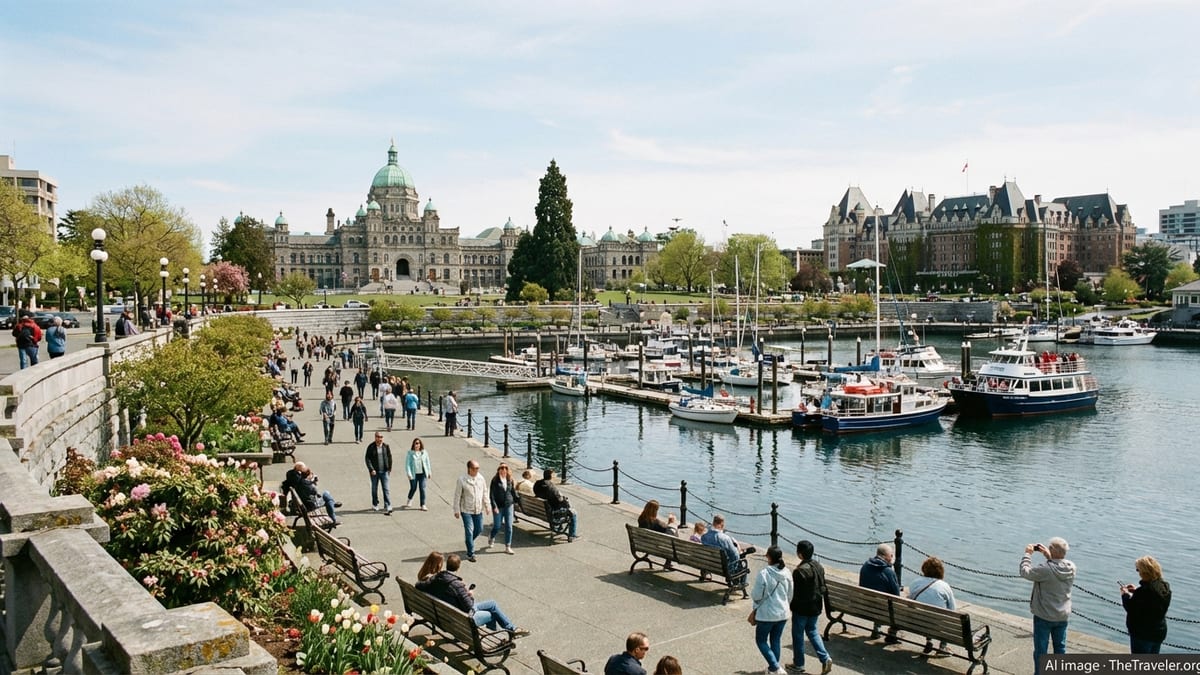
Geographically, Victoria looks straight across the Strait of Juan de Fuca toward Washington State, backed by the forested hills of southern Vancouver Island. This location gives it a distinctly Pacific Northwest character, quite different from the granite headlands of Atlantic Canada or the glassy skyline of downtown Vancouver. The compact Inner Harbour concentrates many of the city’s postcard views, from the domed provincial parliament buildings to the ivy-draped facade of the Empress Hotel and a busy mix of floatplanes, ferries and whale-watching boats.
Compared with other Canadian coastal cities, Victoria’s tourism profile leans toward gardens, heritage and gentle outdoor pursuits rather than nightlife or big-ticket urban attractions. Where Vancouver markets its mountains and cosmopolitan energy, and Halifax leans into music, pubs and maritime history, Victoria has cultivated a reputation for being tidy, tranquil and scenic. That reputation is broadly accurate, though it can obscure a growing food scene and an increasingly youthful population.
From a practical standpoint, Victoria competes most directly with Vancouver for visitors considering a West Coast city break and with smaller Atlantic cities for those who want maritime atmosphere within Canada. Understanding where Victoria excels and where it is merely adequate helps determine whether it fits your own travel priorities.
Climate and Natural Setting: Victoria’s Biggest Advantage
If there is one category where Victoria clearly stands out, it is climate. Meteorological data consistently show Victoria among the warmest and driest major cities in Canada, with an average annual temperature higher than almost anywhere else in the country and far fewer days with snow on the ground. Local weather records highlight long frost-free stretches and winters where temperatures barely flirt with freezing. For visitors who equate Canada with bitter cold, stepping out into a January day that feels more like northern California can be a revelation.
The city’s climate is shaped by the moderating influence of the Pacific Ocean and the rain-shadow effect of the Olympic Mountains across the strait. While Vancouver, only a ferry ride away, can see significantly more rainfall, Victoria often enjoys bright, crisp winter days and relatively dry summers. Recent coverage by Canadian weather outlets has even described the city as a kind of “mild oasis” within the national climate, with winter lows that sometimes stay above freezing for months at a time.
In purely scenic terms, Victoria’s setting is undeniably appealing, though it offers a different drama than other coasts. You will not find the sheer granite cliffs of Newfoundland or the sweeping surf beaches common along parts of the Atlantic, but you will encounter sheltered coves, rocky points and views toward snow-capped ranges on clear days. Urban parks, particularly Beacon Hill Park and the waterfront paths along Dallas Road, provide easy access to the shoreline without leaving the city.
Compared to Vancouver, Victoria lacks immediate access to alpine terrain, yet compensates with a calmer, more intimate coastal landscape that suits walkers, casual cyclists and sea-kayakers. When weather is an important factor in your travel planning, especially outside the summer peak, Victoria’s mildness becomes a compelling reason to choose it over almost any other Canadian coastal city.
Urban Character, Culture and Nightlife
Victoria’s downtown core is compact enough to cross on foot in 15 to 20 minutes, centered around the Inner Harbour and the adjacent shopping and restaurant districts. The built environment blends late Victorian and Edwardian architecture with low- and mid-rise contemporary buildings, giving the city a softer skyline than the forest of glass towers that defines central Vancouver. The feeling on the street is approachable and human-scaled, more akin to a large town in the United Kingdom or a small European capital than a North American metropolis.
Culturally, Victoria has evolved beyond its long-standing reputation as a retirement destination and a place of “olde English” tearooms. While afternoon tea at landmark hotels remains a draw, the city now supports a lively craft beer and cocktail scene, numerous independent coffee roasters and restaurants showcasing local seafood, island-grown produce and wines from nearby Vancouver Island and Gulf Island vineyards. Live music venues, theater companies and galleries add to the mix, though they operate at a smaller scale than in larger Canadian cities.
Visitors who prioritize nightlife will find Victoria quieter than Vancouver, Montreal or Toronto. Bars and pubs cluster around lower Johnson Street, Wharf Street and the Old Town area, and there is a healthy university population thanks to the University of Victoria and Camosun College. Yet late-night options thin out earlier than in bigger cities, and large concert tours tend to bypass Victoria in favor of Vancouver. Travelers looking for packed dance clubs or high-profile cultural festivals may find the city modest in comparison.
On the other hand, if your ideal evening involves a waterfront walk, a locally brewed beer and a dinner focused on sustainable seafood, Victoria compares favorably with coastal peers. It often feels safer and more relaxed at night than larger cities, with less congestion and a walkable core that reduces the need for taxis or public transit after dark.
Signature Attractions Versus Other Coastal Highlights
Victoria’s individual attractions may not be as globally recognized as Vancouver’s Stanley Park or Halifax’s Citadel, yet together they create a well-rounded itinerary, particularly for first-time visitors to Canada’s West Coast. The city’s signature sights cluster around nature, gardens and history. The Inner Harbour itself functions as an open-air stage, framed by the provincial parliament buildings and the historic Empress Hotel, both beautifully lit after dark and often animated by buskers and harbor activity.
Butchart Gardens, located a short drive north of the city, remains one of the most visited attractions in British Columbia, drawing travelers with its meticulously landscaped sunken garden, rose beds and seasonal displays. Travel writers and cruise guides regularly rank it among the top shore excursions in Victoria, especially during spring and summer when flowers are at peak bloom. For visitors who enjoy horticulture or contemplative spaces, it compares favorably to botanical gardens in other Canadian cities and benefits from the region’s almost year-round growing season.
On the water, whale-watching is a major reason many travelers choose Victoria over other coastal destinations. Operators based in the Inner Harbour and nearby marinas run tours to viewing areas frequented by orcas, humpbacks and other marine life, with the season generally stretching from spring into fall. While whale-watching is also available from Vancouver, Vancouver Island’s position closer to key feeding grounds gives Victoria a slight edge in terms of frequency and proximity of sightings, according to recent cruise-port and tour operator reports.
Victoria also offers a dense cluster of secondary attractions, including the Royal BC Museum with its strong focus on Indigenous cultures and natural history, historic residential neighborhoods like James Bay, and waterfront parks that give easy access to the shoreline. Compared to Atlantic coastal cities such as Halifax or St John’s, Victoria’s built heritage is less visibly tied to fortifications and dramatic maritime history, but its combination of gardens, museums and marine wildlife experiences can feel more diverse to some visitors.
Access, Transit and Ease of Getting Around
Reaching Victoria requires a bit more planning than flying directly into a major mainland hub, but the journey itself can be part of the charm. Travelers from within Canada typically fly into Victoria International Airport or arrive via ferry from the Vancouver area. Those coming from the United States often choose the passenger-only high-speed ferry between Seattle and Victoria or the vehicle ferry between Port Angeles and the city’s Inner Harbour. These routes offer views of islands, marine life and coastal mountains that few domestic flights can match.
Recent schedules from ferry companies show year-round service between downtown Seattle and Victoria, usually running at least one daily round trip, with additional sailings during parts of the spring and summer. Another privately operated ferry carries vehicles and passengers between Port Angeles and Victoria, important for visitors who want to explore the rest of Vancouver Island by car. From the Vancouver side, large car ferries connect the mainland with terminals on Vancouver Island several times a day, followed by a drive of roughly 30 to 40 minutes into Victoria from the closest ports.
Once in Victoria, the city is highly walkable. Many hotels cluster around the Inner Harbour and downtown core, allowing visitors to explore major museums, shopping streets and waterfront paths on foot. Public buses extend coverage to neighborhoods, beaches and local attractions such as Butchart Gardens, while taxis and ride-hailing fill in the gaps. Cycling infrastructure has improved in recent years, with protected lanes and traffic-calmed streets encouraging short rides within the core.
Compared to other Canadian coastal cities, Victoria scores well on ease of movement once you arrive, though it is less convenient for quick intercity travel than hubs like Vancouver, Montreal or Halifax, which sit on national rail and highway networks. Travelers who value a car-free city-break environment may find Victoria particularly appealing, whereas those planning extensive regional sightseeing should factor in ferry times and connections.
Costs, Crowds and Seasonality
Victoria is not a budget destination, but its costs sit somewhere between high-priced Vancouver and more affordable Atlantic cities. Recent surveys of Canadian cities that track rents, cost of living and quality-of-life indicators often place Victoria near the higher end for expenses, reflecting strong demand from retirees, remote workers and tourists. Hotel rates in high season can be steep, especially around the Inner Harbour, and peak dates during summer and major events are often booked well in advance.
On the other hand, Victoria’s smaller size and milder climate offer opportunities to visit outside the busiest summer window without sacrificing comfort. Spring and early autumn bring lower hotel prices, blooming gardens and generally pleasant temperatures. Even the winter months can make sense for travelers escaping harsher Canadian climates, though some seasonal attractions operate on reduced schedules and daylight hours are shorter.
In terms of crowds, Victoria’s downtown and waterfront can feel busy when multiple cruise ships are in port or during popular festivals. However, the intensity rarely reaches the crush seen in major urban centers. A few blocks away from the Inner Harbour, side streets and residential neighborhoods quickly regain a calmer feel. Travelers who dislike jostling with large tour groups will generally find Victoria more manageable than central Vancouver or Toronto in peak periods.
When comparing coastal options, visitors should weigh these factors against their own tolerance for higher costs. Atlantic cities like Halifax or St John’s often offer lower nightly rates, especially outside summer, though they balance that with colder winters and occasionally stormier conditions. For many travelers, the premium attached to Victoria’s climate and scenery feels justified, especially on shorter trips where comfort and ease of movement matter more than strict budget discipline.
Outdoor Activities and Day Trips Beyond the City
While Victoria itself is urban and relatively compact, it functions as a gateway to some of Vancouver Island’s most attractive coastal and forest landscapes. Within a short drive or bus ride, visitors can access sheltered beaches, rugged shoreline hikes and inland lakes. Popular nearby destinations include the Saanich Peninsula with its farms and wineries, the surfing communities of the island’s west coast, and regional and provincial parks that protect temperate rainforests and coastal bluffs.
The area immediately around Victoria supports a wide range of low-intensity outdoor activities. Paddlers can launch kayaks from in-town beaches or marinas to explore coves and nearby islets, while whale-watching and wildlife tours run daily in season. Cycling routes follow former railway lines and quiet country roads into the peninsula and beyond. For many travelers, the key advantage here is accessibility; you can spend a morning in urban museums or cafes and be walking on a waterfront trail or forest path by early afternoon without extensive driving.
Compared with Vancouver, Victoria lacks direct access to major ski areas but holds its own in gentler pursuits such as coastal walking and road cycling in a quieter setting. Against Atlantic coastal cities, it offers a different flavor of maritime landscape, with evergreen forests, rocky points and mild ocean breezes instead of wind-swept headlands and, in winter, harsher storms. Travelers interested primarily in rugged backcountry or dramatic surf may prefer other regions, but those who want a blend of soft adventure and urban comfort will find Victoria a strong contender.
For longer stays, Victoria can serve as a base for multi-day trips to other parts of Vancouver Island, including famed Pacific Rim National Park Reserve and small coastal communities that feel far removed from city life. In this sense, it compares favorably with Halifax, which also functions as a gateway to surrounding seaside villages, though the visual character of the two regions could hardly be more different.
The Takeaway
So is Victoria, British Columbia worth visiting compared to other Canadian coastal cities? For many travelers, the answer is yes, especially if you value climate, walkability and a gentle pace over nightlife and big-city spectacle. Victoria’s mild weather, compact historic center and strong mix of gardens, museums and marine wildlife tours combine to create an experience that is easy to enjoy over a long weekend or a relaxed week.
Where Victoria truly distinguishes itself is in shoulder and winter seasons, when much of the rest of Canada is cold or stormy and the city remains comparatively temperate and green. At those times, it can feel almost like a different country, offering patio dining, blooming flowers and accessible outdoor time that coastal peers cannot easily match. This makes it particularly attractive for domestic travelers seeking a quick escape without leaving Canada.
On the other hand, Victoria is not the ideal choice for every traveler. Those wanting dense nightlife, major league sports, very broad shopping options or a dramatic skyline will likely find more of what they seek in Vancouver or in larger eastern cities. Visitors focused on raw Atlantic landscapes, deep maritime history and a more rough-edged coastal culture may feel more drawn to places like Halifax or St John’s.
In the end, Victoria shines as a coastal city that prioritizes livability, scenery and ease. It rewards travelers who move at a slightly slower pace, who care about gardens as much as galleries, and who would rather stroll a waterfront path in a light jacket than bundle up against icy winds. If that description matches your ideal trip, Victoria is not just worth visiting, it may well become one of your favorite urban escapes in Canada.
FAQ
Q1. Is Victoria worth visiting if I have already been to Vancouver?
Yes. While the two cities share a Pacific Northwest setting, Victoria feels smaller, calmer and more historic, with a compact harbor-centered core and easier walkability.
Q2. How many days do I need in Victoria compared to other coastal cities?
Most visitors are satisfied with two to four full days in Victoria, which allows time for key sights and a day trip, similar to a short stay in Halifax or St John’s.
Q3. Is Victoria really warmer than other Canadian coastal cities?
On average, yes. Weather records show Victoria among the warmest and driest major Canadian cities, particularly in winter, though specific conditions vary by year.
Q4. Is Victoria a good choice for travelers without a car?
Very much so. The downtown and harbor areas are highly walkable, public buses reach major attractions, and organized tours cover gardens, wineries and whale-watching.
Q5. How does the cost of visiting Victoria compare with Vancouver or Halifax?
Victoria often costs slightly less than Vancouver but more than Atlantic cities like Halifax, especially for central hotels in peak summer season.
Q6. Are there enough activities for families in Victoria?
Yes. Families can combine whale-watching, parks, beaches, kid-friendly museums and gardens, although high-energy theme-park style attractions are limited.
Q7. When is the best time to visit Victoria?
Late spring through early autumn offer the best combination of mild weather and open attractions, though winter can be appealing for a quieter, greener escape.
Q8. How does Victoria’s nightlife compare to other coastal cities?
Nightlife is modest, with pubs, small music venues and cocktail bars, but fewer late-night clubs and big concerts than in larger cities such as Vancouver.
Q9. Is Victoria a good base for exploring Vancouver Island?
Yes. It works well as a starting point for trips to the Saanich Peninsula, west coast surf towns and inland parks, provided you allow extra travel time.
Q10. Is Victoria safe for solo travelers?
Victoria generally feels safe, especially in central areas, and many solo travelers appreciate the walkability and relaxed atmosphere, while still taking normal urban precautions.