

More news on this day
Vertical Aerospace has selected Italian transparency specialist Isoclima to design and manufacture the full transparency suite for its Valo electric vertical takeoff and landing aircraft, a move that underscores how critical glazing technology has become as urban air mobility edges closer to commercial service.
Get the latest news straight to your inbox!
Strategic Partnership Around Certification-Critical Components
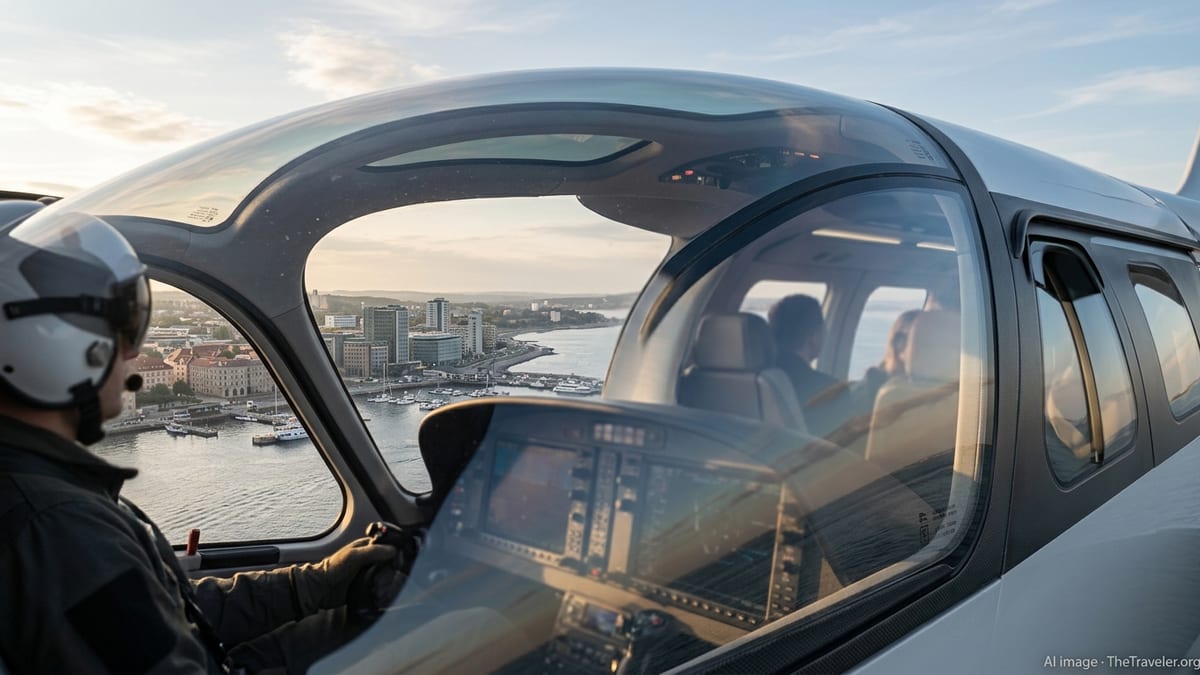
Publicly available information indicates that the agreement will see Isoclima supply all major transparent elements for the Valo program, including pilot and passenger canopies as well as cabin glazing systems. These parts are regarded as certification-critical because they influence safety, structural integrity, and pilot visibility in a wide range of operating conditions.
For eVTOL designs such as Valo, transparencies must withstand repeated pressurization cycles, bird-strike impacts, dynamic loads from vertical operations, and prolonged exposure to sun, heat, and moisture, while preserving optical clarity. Industry coverage notes that regulators place stringent requirements on cockpit and cabin windows, since they form part of the aircraft’s pressure envelope and emergency egress design.
Reports on the deal emphasize that Vertical Aerospace is locking in key suppliers early in the certification process to manage technical risk and ensure industrial continuity. By aligning transparency development with the rest of the airframe and avionics architecture, the manufacturer aims to avoid late-stage design changes that could delay approval timelines.
The long-term nature of the partnership suggests that Isoclima’s role is expected to extend beyond prototype and certification aircraft into serial production, tying the two companies together as Valo transitions from engineering development toward potential commercial deployment.
Isoclima Brings Cross-Sector Transparency Expertise
Isoclima is known in the aerospace sector for high-performance glazing systems, but its portfolio extends across several demanding markets, including armored vehicles, high performance automobiles, rail transportation, defense platforms, and large yachts. Company materials describe a focus on combining complex geometries with advanced materials to deliver strength, low weight, and high optical quality.
This cross-sector footprint is viewed as an advantage for next-generation aviation projects, where lightweight yet resilient transparencies are increasingly important. Techniques perfected for ballistic protection, for example, can inform bird-strike resistant cockpit windows, while experience with complex curvatures on luxury vehicles and yachts aligns with the sweeping canopies common in eVTOL cabin designs.
Public information on Isoclima’s aerospace work highlights investments in in-house testing, including bird-strike laboratories and advanced numerical modeling. These capabilities allow glazing systems to be iterated and validated before installation on flight test aircraft, potentially shortening development schedules for partners such as Vertical Aerospace.
The partnership also reflects a wider trend in the eVTOL sector, where manufacturers are leaning on established industrial specialists rather than attempting to vertically integrate every system. By relying on a supplier with an existing global customer base, Vertical gains access to proven processes and certifications that can support its own regulatory submissions.
Valo’s Design Priorities: Visibility, Passenger Experience, and Safety
Valo, previously known under the VX4 designation, is being developed as an all-electric aircraft intended for missions such as urban air mobility, airport transfers, and regional hops. Promotional materials for the program present a cabin more akin to a light business jet than a traditional helicopter, with large windows and a panoramic canopy to give passengers a wide field of view over cities and coastlines.
In this context, transparencies are not only structural elements but also central to the passenger experience. Expansive glazing can help reduce motion discomfort, support situational awareness during vertical operations, and create a sense of space in relatively compact cabins. At the same time, the windows must manage heat and glare, particularly for aircraft operating in hot climates or at low altitudes over highly reflective urban surfaces.
Reports on Valo’s development note that safety remains the overriding consideration, with transparency systems required to maintain integrity in unlikely events such as bird strikes or debris impacts. Materials must also resist crazing, delamination, and optical distortion over thousands of flight hours, as unreliable visibility can quickly become a safety concern for pilots operating in dense airspace.
By pairing aesthetic and experiential goals with certified durability, the Isoclima partnership is being interpreted as an effort to balance market appeal for premium urban air travel with the hard engineering realities of regular commercial service.
Supply Chain Consolidation in the eVTOL Ecosystem
The selection of Isoclima adds another named supplier to the Valo program alongside previously announced partners in avionics, structures, propulsion, and advanced materials. Industry observers view this as part of a broader consolidation across the eVTOL sector, as a small group of specialized companies emerges to serve multiple aircraft manufacturers.
Supply chain stability has become a central concern for electric aviation projects, many of which are transitioning from prototype builds to low-rate production planning. Transparency systems are relatively niche, requiring dedicated tooling, customized laminates, and specific certification pathways, so securing capacity in advance is seen as a way to mitigate schedule and cost risks.
Publicly available commentary on the Vertical-Isoclima arrangement suggests that long-term agreements can also support investment decisions on the supplier side, such as new production lines or additional testing infrastructure tailored to eVTOL geometries. This, in turn, may contribute to more predictable lead times and pricing for transparency components.
For prospective operators and city partners evaluating urban air mobility services, clear evidence of a mature, diversified supply chain is part of the broader assessment of program viability. Announcements that define who will supply critical systems like glazing, propulsion, and flight controls are increasingly scrutinized as indicators of how close an aircraft is to commercial readiness.
Implications for Travelers and Emerging Urban Air Markets
Although Valo remains in the certification phase, transparency choices made now are expected to shape the eventual passenger experience on routes such as city center to airport corridors or short regional links. Large windows and clear canopies could become a defining visual feature of early electric air taxi services, differentiating them from conventional helicopters and narrow-body regional aircraft.
For travelers, the combination of panoramic views with quieter, zero in-flight emissions propulsion is being promoted as a new category of premium short-distance transport. Comfortable visibility, reduced glare, and effective temperature control inside the cabin may prove as important as speed when passengers weigh the appeal of eVTOL flights against ground alternatives.
Urban planners and tourism boards are also watching these developments, since aircraft design choices influence how acceptable low-altitude flights will be to residents and visitors. Transparencies that minimize internal reflections and allow pilots superior situational awareness may support safer integration of eVTOL operations over complex urban landscapes and scenic coastal corridors.
As certification efforts progress and demonstration flights expand, the partnership between Vertical Aerospace and Isoclima will likely be one facet of a broader story about how specialized suppliers help shape the look, feel, and safety profile of the next generation of electric aircraft serving both business and leisure travelers.