

More news on this day
Bulgaria’s tourism sector is warning of catastrophic losses after more than 70,000 planned visits by Israeli tourists to key resorts were wiped out in a matter of days, as the escalating conflict involving Israel, the United States and Iran triggers widespread flight cancellations and deepens fears of a prolonged collapse in regional travel.
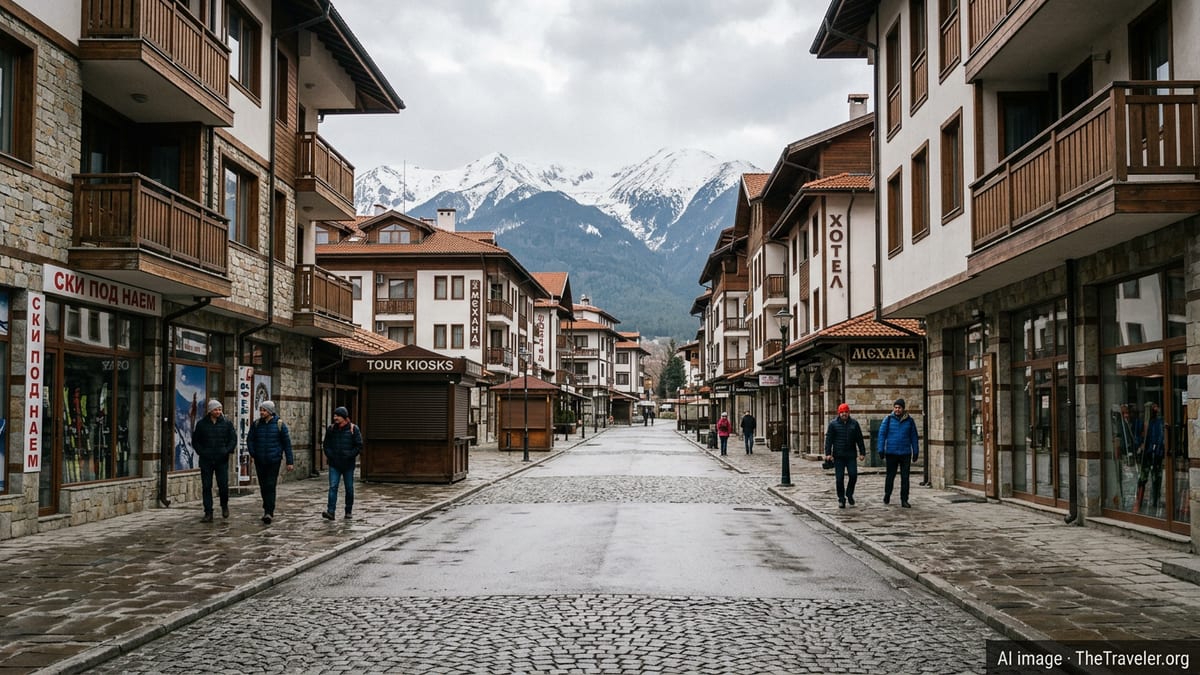
Mass Cancellations Hit Key Bulgarian Resorts
The Bulgarian Hotel and Restaurant Association (BHRA) reports that bookings from Israel, traditionally one of Bulgaria’s highest-spending winter and shoulder-season markets, have effectively disappeared for March and beyond. Industry representatives say that for Bansko and the northern Black Sea coast alone, over 70,000 anticipated Israeli visitors have now canceled or postponed their trips, following the closure of Israeli airspace and major disruptions across Middle Eastern flight corridors.
Hotels in Bansko, which had counted on late-season ski traffic from Israel to shore up revenues after a weak early winter, are suddenly facing occupancy levels that hoteliers describe as “near empty” for dates that are normally considered peak. In many properties, entire blocks of rooms booked by Israeli tour operators have been released within a single week, stripping millions of leva from projected cash flow.
National tourism data underscore how severe the blow could be. In 2025, Bulgaria recorded more than 219,000 visits by Israeli citizens, placing Israel among the country’s top non-EU source markets. Losing a third or more of that volume virtually overnight, sector leaders warn, will be felt across transport, retail and hospitality far beyond the country’s main resort regions.
Unlike short weekend trips from neighboring states, Israeli tourists tend to stay longer and spend more per day, especially on organized ski and seaside packages. That spending profile has made them crucial to resorts’ ability to remain profitable outside the core July and August beach season, amplifying the impact of mass cancellations when they occur.
War-Driven Aviation Chaos Fuels Economic Shock
The immediate trigger for the collapse in Israeli arrivals is a wave of airspace closures and flight suspensions following coordinated US and Israeli strikes on Iran and subsequent retaliatory attacks. Ben Gurion Airport remains shuttered to commercial traffic, while airspace restrictions over Iran, Iraq, Kuwait and parts of the Gulf have forced European carriers to reroute or cancel thousands of flights, effectively cutting the main air bridge between Israel and Bulgaria.
Tourism analysts note that while Bulgaria is geographically distant from the fighting, the country’s connectivity is tightly bound to east-west air corridors that traverse the conflict zone. The latest estimates from global tourism consultancies suggest the Middle East conflict could shave up to 27 percent off regional tourist flows this year, with spillover effects across neighboring markets in Eastern Europe and the Mediterranean.
For Bulgarian ski and coastal resorts, the cancellations are doubly painful because many operators had already reoriented toward Israel after losing most of their pre-war Russian and Ukrainian clientele. Operators now say they are facing a “triple hit” from successive crises: first the pandemic, then the war in Ukraine, and now the escalating confrontation in the Middle East.
With margins already thin, hoteliers warn that the sudden hole in revenue could destabilize loan repayments and investment plans made on the assumption that Israeli demand would remain strong at least through the 2025–2026 winter and the upcoming summer season. Smaller family-run establishments, heavily reliant on seasonal cash flow, appear particularly exposed.
Industry Warns of Layoffs and Regional Collapse
Against this backdrop, Bulgaria’s tourism businesses are sounding the alarm about looming job losses and regional economic distress. The BHRA has publicly cautioned that, without swift intervention, hotels and restaurants in Bansko, Varna, Shumen and other northern Black Sea areas will be forced to lay off staff before the start of the summer season, compounding the shock from the lost winter revenue.
Some resort operators report that they are already cutting working hours, postponing planned hires and freezing renovation projects. Others are considering temporarily closing parts of their properties, such as additional wings or spa facilities, to limit operating expenses until demand stabilizes. Seasonal workers, many of whom rely on contracts that bridge winter ski jobs with summer seaside employment, face an increasingly uncertain year.
Local authorities in resort towns warn that the impact reaches far beyond hotel lobbies and ski lifts. Transport companies that operate airport shuttles and charter buses, suppliers of food, beverages and cleaning services, and even small retailers and tour guides who depend on organized Israeli groups all risk a sharp downturn in income. Municipal budgets, underpinned by tourism-related taxes and fees, could also come under pressure just as communities need resources to mitigate unemployment.
Business associations stress that the cancellations are not the result of dissatisfaction with Bulgaria as a destination, but of a sudden deterioration in regional security perceptions and connectivity. They argue that protecting the sector now is crucial to preserving market share that would otherwise be quickly taken up by rival destinations once travel patterns normalize.
Calls Grow for Immediate State Support
Faced with what they describe as an existential crisis, tourism leaders are urging Sofia to move quickly with a coordinated relief package. Proposals under discussion with the government include targeted wage subsidies to keep staff on payrolls, temporary tax deferrals for hotels and restaurants in the hardest-hit regions, and low-interest credit lines to bridge cash-flow gaps until alternative markets can be developed.
Industry representatives also want the state to underwrite emergency marketing campaigns in Western and Central Europe, aiming to attract last-minute spring and early summer visitors to offset some of the lost Israeli demand. They argue that Bulgaria’s reputation as a safe, affordable European destination near but not inside conflict zones can be a selling point, provided that clear messaging reassures travelers worried by headlines about regional instability.
Officials from the Tourism Ministry have acknowledged the seriousness of the situation and are working with other ministries on crisis scenarios, but concrete measures have yet to be announced. Sector stakeholders warn that any delay in decision-making will narrow the window for saving jobs before businesses begin cutting back sharply in April and May.
There are also calls for closer coordination with European institutions to explore the use of existing crisis-response instruments for tourism, similar to those deployed during the height of the pandemic. Bulgarian hoteliers argue that the external nature of the shock and its close connection to broader geopolitical developments justify support at both national and EU level.
Searching for New Markets Amid Uncertain Outlook
In parallel with demands for state intervention, Bulgarian tourism operators are scrambling to diversify their customer base. Many are seeking to boost arrivals from neighboring Romania, Greece and Serbia, as well as from traditional Western European markets such as Germany and the United Kingdom, where demand for value-oriented beach and ski holidays remains robust despite global uncertainty.
However, redirecting marketing and contracting strategies mid-season is challenging. Tour operators in Europe typically finalize their packages and flight allocations months in advance, and consumers wary of conflict headlines may hesitate to travel eastward, even to destinations well outside any war zone. This lag raises fears that, without aggressive promotion and incentives, Bulgaria will not be able to replace lost Israeli arrivals in time to salvage 2026 revenues.
Longer term, analysts say Bulgaria must invest in a more diversified source-market mix and develop higher-value niche products, from wellness and cultural tourism to adventure and conference travel, to reduce vulnerability to geopolitical shocks affecting a single region. The current crisis, they add, highlights the importance of resilient air links, flexible route planning and contingency agreements with carriers that can reroute capacity when traditional corridors close.
For now, though, resort towns from the Pirin Mountains to the Black Sea are focused on surviving the year ahead. With more than 70,000 Israeli tourists already gone from their booking charts and no clear end in sight to the Middle East crisis, Bulgaria’s tourism sector is pressing its case that only rapid, decisive government action can avert a deeper economic fallout.