

More news on this day
Travel to Israel, Egypt and the Palestinian territories is facing a new wave of caution as updated foreign office advisories warn of rising regional tensions, disrupted flight schedules and increasingly uncertain border conditions.
Get the latest news straight to your inbox!
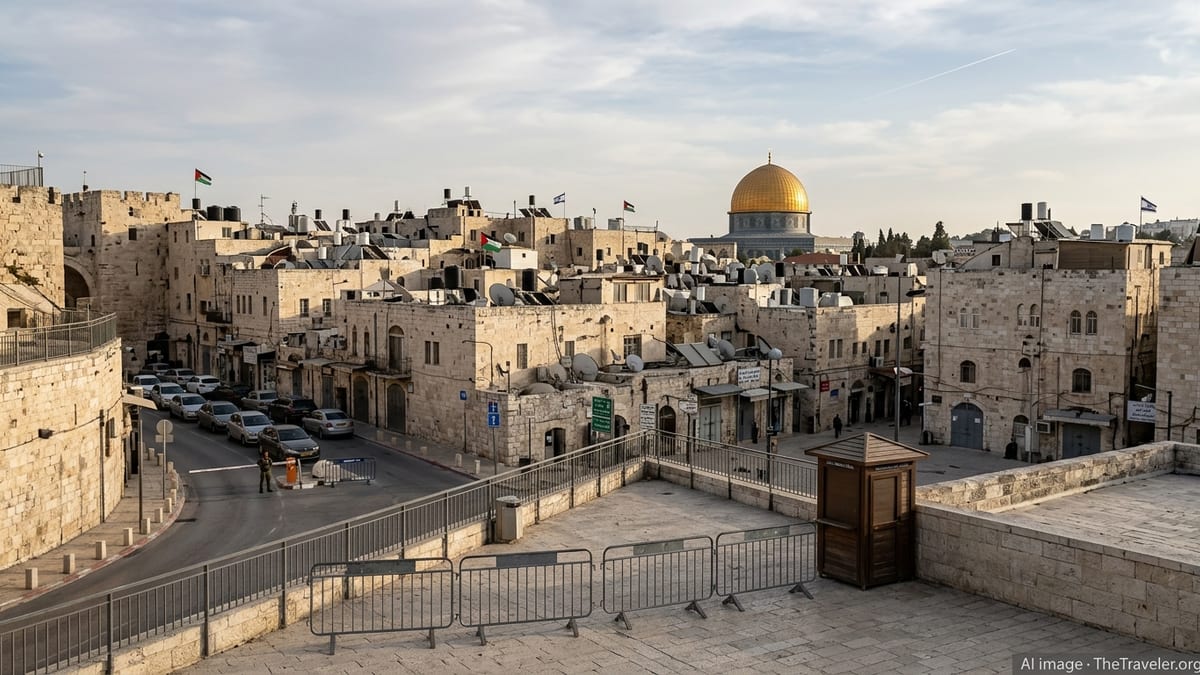
Foreign Offices Tighten Warnings Across the Region
Publicly available government advisories in March 2026 show a marked tightening of travel guidance for Israel and the Palestinian territories, with some foreign ministries now advising against all travel to the area. Updated UK Foreign, Commonwealth and Development Office advice states that regional escalation has created significant security risks, citing ongoing instability and the potential for sudden deterioration in multiple locations.
Recent coverage of United States travel policy indicates a parallel shift in tone. The US Department of State has urged citizens to leave Israel, the West Bank and Gaza using commercial options where available, after elevating its regional warnings and authorizing the departure of non-emergency staff from diplomatic missions. Advisory summaries emphasize the threat of terrorism, rocket fire and civil unrest, coupled with the risk that airports and land crossings could shut with little or no notice.
For travellers, the combined effect is a landscape in which journeys that were once routine pilgrimages or beach breaks now carry advisory language more commonly associated with active conflict zones. Insurance implications are also coming into sharper focus, with consumer guidance noting that travel policies may be invalidated when a destination is subject to “do not travel” or equivalent warnings from a traveller’s home government.
Palestinian Territories See Severe Restrictions and Volatile Access
The most stringent official language currently applies to the Palestinian territories, where government travel portals describe rapidly changing and highly dangerous conditions. Advice for Gaza warns that border crossings can close entirely to civilian traffic for extended periods during periods of unrest or military activity. Reports from humanitarian and diplomatic channels underline that access through the Rafah crossing has repeatedly been curtailed or restructured since Israeli forces took control of the Palestinian side in 2024, creating prolonged uncertainty for residents and visitors alike.
In the West Bank, advisories reference a heightened risk of clashes, checkpoints and localized violence, particularly around flashpoint cities and near Israeli settlements. Movement restrictions, roadblocks and sudden curfews are all highlighted as potential hazards for foreign nationals attempting to travel independently. Publicly available information stresses that some crossing points between Israel, Jordan and the West Bank have additional limitations for certain nationalities or passport holders, adding a layer of administrative complexity to already difficult routes.
The cumulative message is that any non-essential travel into Palestinian areas carries significant risk, with multiple governments explicitly recommending against it. Those already present are encouraged by official information channels to monitor updates constantly, keep travel documents on hand and have contingency plans for sheltering in place if routes out become unavailable.
Israel Grapples With Security Alerts and Flight Disruption
In Israel itself, the security picture remains fluid. Recent advisories note a combination of missile and drone threats, sporadic cross-border fire, and a continued risk of terrorist attacks in major urban centres. Localized incidents in and around Jerusalem and Tel Aviv are often followed by rapid security clampdowns, which can include temporary closures of public transport hubs, tightened access to religious sites and delays at highway checkpoints.
International travel has been heavily affected. Coverage from regional media and airline updates describes waves of cancellations and rerouted services, with some major carriers suspending or reducing flights into Ben Gurion Airport during spikes in regional tension. Security alerts circulated by diplomatic missions in Jerusalem highlight that departures may shift at short notice from Israel’s main gateways to secondary routes involving land crossings and airports in neighbouring countries.
As a result, some foreign governments are directing citizens toward overland exits via Israel’s southern frontier, particularly toward the Taba crossing and onward connections through Egyptian resorts such as Sharm el Sheikh. Travellers have reported being advised to prepare for long queues, additional screening and the possibility that routes deemed safe one day may be disrupted or closed the next.
Egypt Balances Relative Stability With Heightened Regional Risk
While not at the centre of current hostilities, Egypt is increasingly entangled in the regional travel picture as both a transit hub and a destination under closer scrutiny. The US Department of State continues to classify Egypt overall as a destination where travellers should exercise increased caution, with stronger warnings in place for parts of Sinai and border regions. Foreign office summaries flag longstanding concerns such as terrorism in North Sinai, isolated security incidents and the presence of restricted military zones.
At the same time, Egypt’s Red Sea resorts and Nile tourism corridor remain operational, and many European advisories have not moved to blanket “do not travel” language for the country as a whole. Travel industry analysis notes that Egypt has become a key conduit for those leaving neighbouring hotspots, with charter and commercial flights from Sharm el Sheikh and other airports absorbing passengers unable to depart directly from Israel.
This dual role as both refuge and risk area creates a complicated picture for holidaymakers. Tour operators are telling customers to pay particular attention to the fine print of government advisories, which can distinguish between relatively stable tourism centres and no-go zones near the borders with Gaza, Israel and Libya. Travellers are also being reminded that border dynamics can change quickly, and that an overland route that appears open when a trip is booked may not be available by the time of departure.
Travellers Confront Insurance Gaps and Logistical Uncertainty
Across Israel, Egypt and the Palestinian territories, one of the most immediate consequences of the sharpened advisories is on travel planning and insurance. Consumer guidance widely circulated in early March explains that when a foreign office formally advises against all or all but essential travel, many standard insurance policies will no longer provide cover if a traveller chooses to proceed. That can leave visitors exposed to the full cost of medical treatment, emergency evacuation or trip disruption in the event of an incident.
Logistical uncertainty is also mounting. With airlines reviewing schedules day by day and land borders at times operating under capacity limits or temporary closures, travellers face the possibility of extended stays, expensive re-routing or last-minute diversions through third countries. University and corporate risk offices have begun issuing their own briefings, advising staff to register their presence with consular services, keep digital copies of documents and maintain flexible onward plans.
For those still determined to visit the region, travel experts recommend paying close attention to the exact wording and update timestamps on official advisories, rather than relying on second-hand summaries or social media. Monitoring both home-country and local government channels can provide a more nuanced sense of where travel may still be feasible, albeit with restrictions, and where the latest guidance points to an increasingly unsafe and unpredictable environment.