

More news on this day
Global air travel to Israel has plunged into fresh turmoil as at least 211 flights serving Tel Aviv’s Ben Gurion Airport were cancelled this weekend, with carriers including FlyDubai, Wizz Air, United, Swiss, Delta and Air Canada pulling services amid a rapidly escalating US-Israel conflict with Iran and leaving passengers stranded from Dubai and Prague to Rome, New York, Los Angeles and Miami.
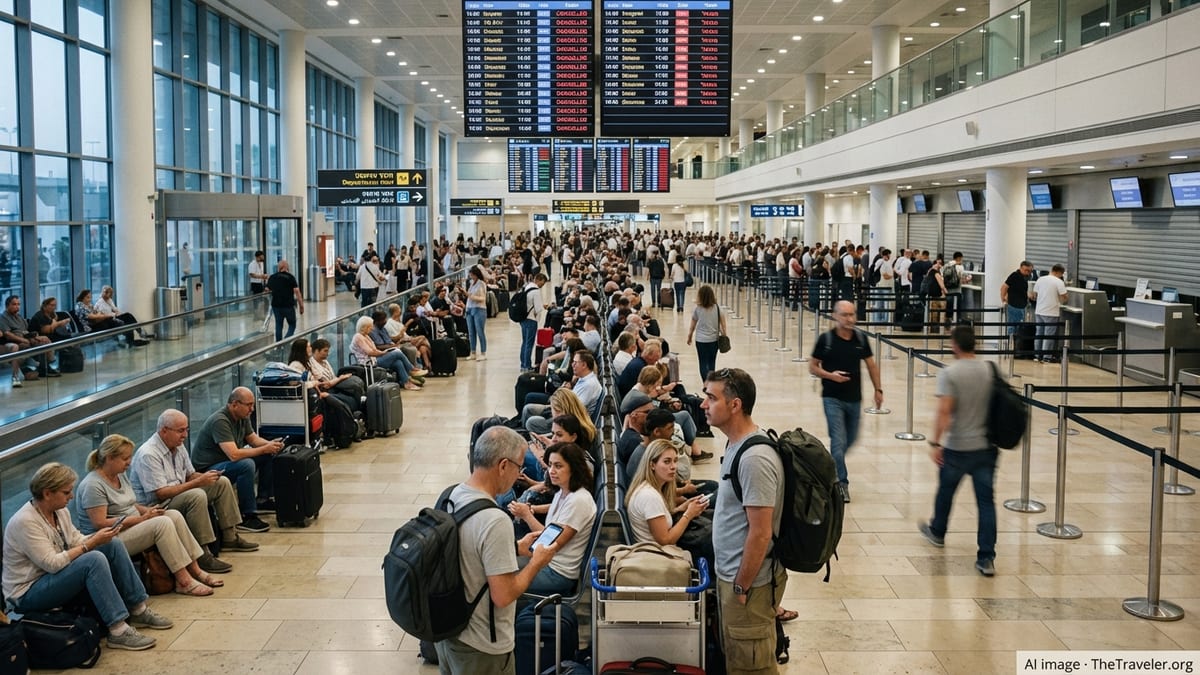
Ben Gurion at a Standstill as Regional Skies Close
The latest wave of cancellations comes after joint US-Israeli strikes on Iran prompted wide airspace closures across the Middle East, forcing airlines to suspend or reroute services that normally funnel through Israel and Gulf hubs. Aviation data shows that nearly a quarter of all scheduled flights to the wider region have been scrapped since late Saturday, with Israel and Bahrain among the hardest hit as carriers pull back from routes deemed too risky.
At Ben Gurion Airport, Israel’s main international gateway, the impact has been immediate. Low cost and full service carriers alike have axed rotations into Tel Aviv, triggering knock on disruptions for onward connections to Europe and North America. Aviation analysts say at least 211 individual flights touching Ben Gurion over the weekend have been cancelled, a number they warn could rise if airspace restrictions tighten or military exchanges continue.
Flight tracking maps on Sunday showed large swathes of airspace over Iran, Iraq, Kuwait, Israel and parts of the Gulf almost empty, with traffic forced into narrow corridors around the disruption zone. That has extended flight times on some long haul services by hours, while others have been abandoned altogether as airlines wait for clearer security guidance.
Airlines Pull Back: From Wizz Air and FlyDubai to United and Air Canada
Among the first carriers to take decisive action were regional low cost operators Wizz Air and FlyDubai. Wizz Air has suspended all services to and from Israel, Dubai, Abu Dhabi and Amman until at least early March, effectively wiping its network presence from some of the region’s busiest leisure and migrant worker corridors. FlyDubai, meanwhile, has cancelled multiple departures from Dubai and sharply cut back flights serving Tel Aviv and nearby markets, citing sudden changes in approved flight paths and crew safety concerns.
Legacy European groups have followed suit. The Lufthansa Group, including Swiss, has halted flights to Tel Aviv, Beirut, Amman, Erbil and Tehran through the first week of March and has temporarily stopped using key regional airspaces, with additional suspensions on services to Dubai and Abu Dhabi. These moves have compounded pressure on Ben Gurion, which relies heavily on European connections for inbound tourism and business travel.
North American carriers are also retrenching. Delta has suspended its New York to Tel Aviv route through at least March 1, while United Airlines has cancelled Tel Aviv services into the start of the week along with selected flights to Dubai. Air Canada has stopped flying from Canada to Israel until at least March 8 and has frozen services to Dubai in the shorter term, cutting crucial transatlantic links for diaspora communities and winter sun travelers alike.
US airline waivers allow some passengers to rebook without change fees, but capacity on remaining routes is limited. With planes already heavily booked for the late winter holiday period, stranded travelers are being told that the earliest available seats could be days away, especially from major hubs in North America and Europe.
Stranded Passengers from Dubai to New York Face Uncertain Timelines
The ripple effects are being felt far from Israel’s borders. In Dubai and Abu Dhabi, hundreds of passengers heading for Tel Aviv, Amman and onward connections have been left sleeping on terminal floors or queuing for hours at transfer desks as airlines scramble to rebook or reroute. Similar scenes have been reported in Prague and Rome, where European low cost carriers had been feeding growing city break and pilgrimage traffic into Israel before the latest escalation.
Across the Atlantic, travelers in New York, Los Angeles and Miami have arrived at airports to find their flights to Israel or connecting Gulf hubs suddenly cancelled. Some have chosen to abandon trips altogether, while others are attempting complicated workarounds via Southern Europe or Africa, using the few remaining carriers still operating altered routings to the region.
The uncertainty is compounded by the fact that no airline is yet able to say when full operations will resume. Travel agents report that many affected passengers are opting for refunds rather than future credits, wary that further military developments could trigger additional rounds of cancellations. Others, particularly business travelers and those visiting family, are pressing ahead and asking to be rebooked at any cost on the first available seats, however indirect.
Industry observers note that while the immediate focus is on getting stranded passengers home, the deeper concern for airlines is operational stability. With aircraft and crew out of position and complex new routings eating into turnaround times, carriers face days of schedule disruption even if airspace restrictions begin to ease.
Wider Middle East Disruption Adds to Aviation Headwinds
Ben Gurion’s difficulties are part of a much larger aviation shockwave rolling across the Middle East. Airspace closures affecting Bahrain, Iran, Iraq, Israel, Jordan, Kuwait, Qatar and the United Arab Emirates have led to more than 1,800 regional flight cancellations since Saturday, with delays and diversions rippling through Europe, Asia and North America. Key Gulf hubs in Dubai, Abu Dhabi and Doha, normally among the world’s busiest connectors, have seen a substantial portion of arrivals and departures wiped from schedules.
Some carriers, including Etihad, have issued time limited suspensions on all departures from Abu Dhabi, while others have temporarily halted flying to specific Gulf cities. Qatar Airways, Emirates and other major network airlines are reconfiguring long haul routes to avoid conflict zones, adding hours to travel times and increasing fuel burn on flights between Europe and Asia or Australia.
Experts warn that if the airspace closures persist, the knock on cost to airlines could be significant, potentially translating into higher fares on some routes later in the year. For now, however, most carriers are focused on crisis management rather than commercial strategy, publishing rolling updates as security assessments change and coordinating with national regulators on what is considered an acceptable level of risk.
Travel demand into the region was already fragile after previous bouts of unrest. The new shock, arriving at the tail end of the winter travel season and just ahead of key religious holidays, threatens to undermine a tentative recovery in inbound tourism to Israel, Jordan and parts of the Gulf.
What Travelers Headed to Israel Need to Know Now
For travelers with imminent plans to fly to Israel, the message from airlines and travel advisors is clear: do not go to the airport without checking your flight status repeatedly and be prepared for rapid changes. Schedules that appear confirmed in the evening can be altered overnight as military activity and airspace guidance evolve, and some flights listed as operating may still be pulled at short notice.
Passengers whose flights have been cancelled are generally entitled to a choice between rebooking and a refund, though exact rights vary by jurisdiction and carrier. Consumer advocates recommend keeping records of all communications with airlines and, where possible, seeking written confirmation of new arrangements. Travel insurance policies that cover war related disruption remain rare, but some comprehensive plans may offer limited benefits for extended delays or additional accommodation costs.
Foreign ministries in Europe and North America have updated travel advisories, with several governments now formally warning against all but essential travel to Israel and adjacent conflict zones. Tour operators have begun cancelling escorted group departures for the coming weeks, offering date changes or credit notes to affected customers as they reassess itineraries across the Eastern Mediterranean.
Seasoned travel planners say flexibility will be crucial in the weeks ahead. Travelers may need to consider alternative entry points in the wider region, postpone non essential trips, or shift to destinations that are not reliant on contested air corridors. With 211 Ben Gurion linked flights already lost in a single weekend and more at risk, Israel’s place on the global air map has, for now, become one of the most uncertain in international travel.