

More news on this day
Non-stop flights between Israel and New York are being restored as El Al and Arkia rebuild a vital air bridge from Tel Aviv’s Ben Gurion Airport to the United States following weeks of disruption caused by regional conflict and temporary airspace closures.
Get the latest news straight to your inbox!
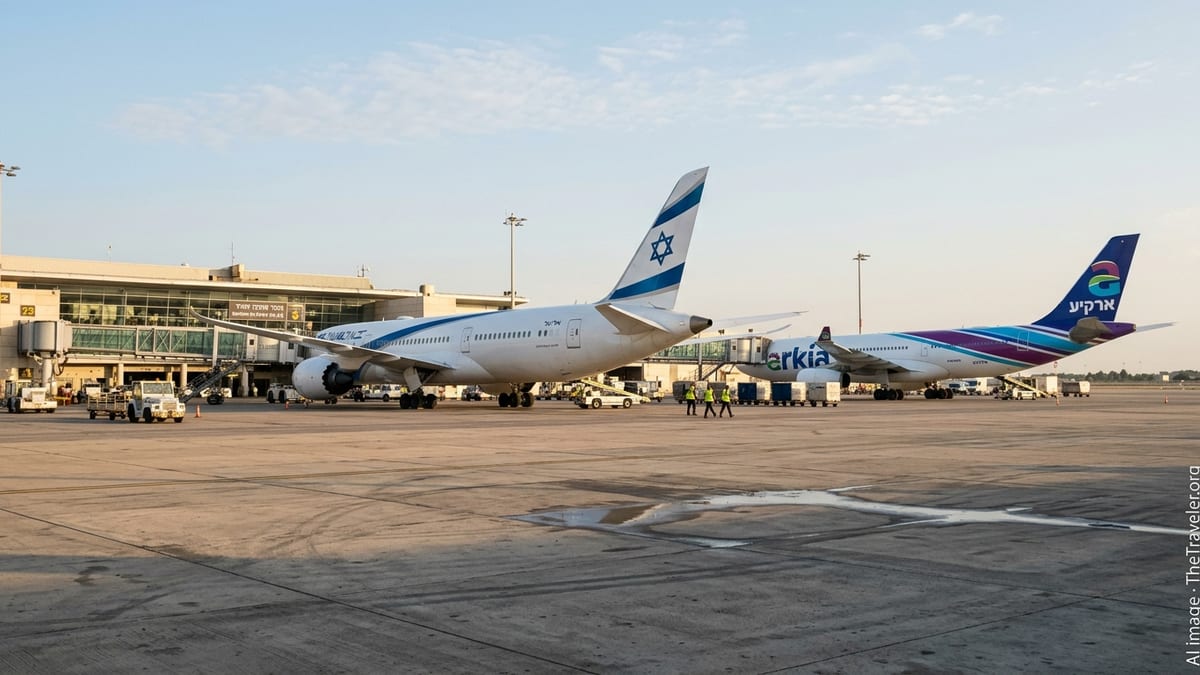
A Strategic Air Bridge Reopens Between Israel and New York
The Tel Aviv–New York route has long been Israel’s most important long-haul corridor, linking the country to one of the world’s largest Jewish communities, major financial markets, and a dense network of political and cultural institutions. After periods in which operations were either curtailed or diverted due to security concerns, publicly available schedules now show El Al and Arkia once again mounting regular non-stop services between Ben Gurion Airport and New York area airports.
According to published coverage, El Al maintained a reduced pattern of direct flights during the height of the regional security crisis, often operating as the sole non-stop option while U.S. carriers temporarily suspended service. As conditions stabilized and airspace restrictions began to ease, Arkia moved to resume and expand its own direct offerings to New York, restoring competition on a route where demand consistently outstrips capacity.
Industry reports indicate that the return of multiple Israeli operators on the New York route is viewed as a key benchmark for the normalization of Israel’s international connectivity. The renewed focus on non-stop flights is particularly significant for travelers who had grown reliant on longer, more expensive itineraries via European hubs during the most volatile months.
Arkia’s Direct Tel Aviv–JFK Service Returns
Arkia, traditionally known as a domestic and regional leisure carrier, entered the New York market in 2024 and 2025 with direct flights between Tel Aviv and John F. Kennedy International Airport, at first in cooperation with long-haul partners supplying widebody aircraft. Aviation trade publications describe the move as a milestone for Arkia, marking its first sustained operation of a transatlantic route and offering an alternative to El Al’s long-standing presence.
Reports from Israel’s travel press state that Arkia initially structured its New York schedule around three weekly rotations, targeting peak demand windows for business travelers, tech-sector passengers, and visiting friends and relatives traffic. As load factors strengthened, publicly available information shows that the airline extended the route’s operation beyond its original seasonal window, with plans to keep flying at least into 2026 to meet persistent demand.
Recent coverage indicates that Arkia is now resuming fully non-stop operations on the Tel Aviv–New York link after periods when some flights made an intermediate technical stop outside Israel for operational reasons. With crews and aircraft once again based at Ben Gurion Airport, the carrier is positioned to offer a more straightforward journey for passengers traveling between Israel and the U.S. East Coast.
El Al Rebuilds Its Transatlantic Network Strength
El Al, Israel’s flag carrier, has operated non-stop flights between Tel Aviv and New York for decades, using a mix of Boeing 787 and 777 aircraft. During the most recent bout of regional instability, the airline often acted as Israel’s primary direct connection to North America when other carriers limited or halted operations. Company schedules show that El Al’s New York services remained the backbone of Israel’s long-haul network even as frequencies were adjusted in response to security assessments and demand patterns.
As airspace gradually reopened and international travel confidence began to recover, El Al moved to restore more of its pre-crisis transatlantic capacity. Industry analyses describe an increase in weekly frequencies between Tel Aviv and the New York area, along with flat, clearly published emergency fares aimed at aiding stranded travelers on both sides of the Atlantic. These measures have been presented in local media as part of a broader recovery effort to stabilize essential passenger flows.
Publicly available fleet data suggest that El Al’s use of modern long-haul aircraft on the New York route is helping the airline manage fuel costs and improve reliability at a time when schedules across the region remain susceptible to short-notice changes. The carrier’s familiarity with operating under heightened security protocols is also cited in aviation commentary as a factor enabling it to resume and sustain non-stop services more quickly than some competitors.
Capacity, Competition and Fares on a Rebounding Route
The restoration of direct flights by both El Al and Arkia is reshaping supply on a corridor that had briefly become one of the most constrained long-haul markets in the world. Before regional conflict escalated, multiple U.S. and European airlines shared the Tel Aviv–New York segment with Israeli carriers. With some foreign operators still in various stages of returning, the renewed presence of two Israeli airlines on the route is already beginning to loosen capacity bottlenecks.
Economic analyses published in Israeli business media highlight that a period of de facto monopoly on New York flights had driven average fares sharply higher, especially around peak travel periods and major holidays. The reintroduction of Arkia’s non-stop service, alongside a strengthened El Al schedule, is described as an important first step toward restoring price competition and greater choice of departure times for both leisure and corporate travelers.
Travel agents and online booking platforms are reporting a gradual diversification of options, with more non-stop seats available in both economy and premium cabins. While prices remain elevated compared with pre-crisis norms, publicly accessible fare data suggest that additional capacity from El Al and Arkia is helping to moderate the most extreme spikes, particularly on last-minute one-way tickets between Tel Aviv and New York.
Broader Implications for Tourism and Diaspora Travel
The return of robust non-stop links between Israel and New York carries significance far beyond aviation metrics. New York is both a gateway for inbound tourism to Israel and the principal hub for Jewish diaspora travel, educational exchanges, and business ties. Tourism bodies and travel industry commentators in Israel have long identified the sustained operation of direct flights to the New York area as a prerequisite for any meaningful recovery in visitor numbers.
With El Al and Arkia flying again on a regular non-stop basis, early indicators from tour operators suggest a cautious uptick in forward bookings from North America for the coming seasons. Analysts note that group travel and pilgrimage segments, in particular, often depend on the reliability and perceived safety of non-stop connections rather than itineraries involving multiple transfers through unfamiliar airports.
For Israeli travelers, the renewed choice of direct routes to New York translates into more predictable access to family, education, and employment opportunities in the United States. After an extended period where many journeys required circuitous routings via Europe or the Mediterranean, the restoration of regular, same-day non-stop flights by El Al and Arkia is being framed in local commentary as a symbolic step toward reconnecting Israel with one of its most vital international lifelines.