

More news on this day
As Israel’s war with Iran grinds into its second week, Israeli airlines have begun reopening limited exit routes from Ben Gurion Airport, offering a crucial escape valve for tens of thousands of stranded tourists while the country remains under a sweeping state of emergency.
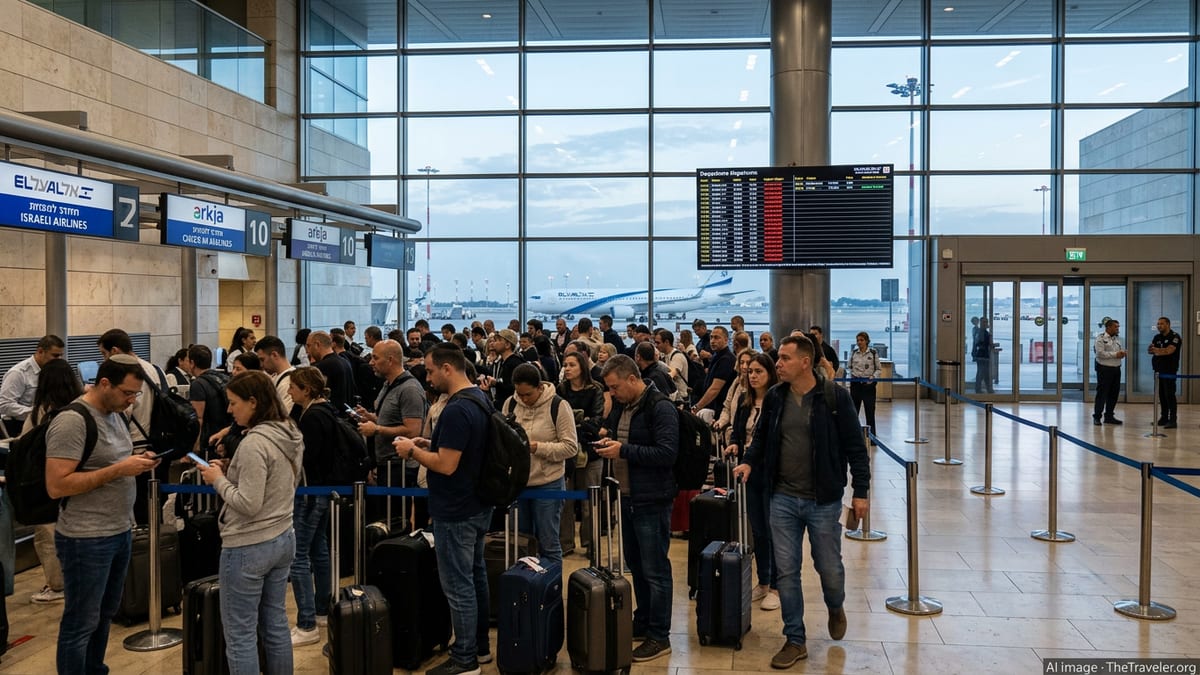
Ben Gurion’s Partial Reopening and What It Means for Travelers
Israel’s main gateway, Ben Gurion International Airport near Tel Aviv, is slowly emerging from an unprecedented shutdown triggered by joint U.S.–Israeli strikes on Iran on February 28 and subsequent missile barrages across the region. The government has authorized a phased reopening focused first on outbound traffic, with Israeli carriers operating a small number of tightly controlled departures each day.
Officials say outbound flights are currently capped at limited passenger loads, often around 70 to 100 travelers per aircraft, to allow rapid security checks and to keep airport operations nimble if the threat level suddenly changes. The Ministry of Transport has stressed that these are not a full resumption of normal schedules but an emergency framework designed to move foreign tourists and Israelis in urgent need out of the country.
The reopening follows a complete closure of Israeli airspace that stranded an estimated 100,000 Israelis abroad and more than 30,000 foreign visitors inside the country. Many of those tourists had journeys disrupted mid-trip, with hotel stays unexpectedly extended and connecting flights missed as regional skies shut down in quick succession.
Authorities continue to warn that flight operations remain subject to abrupt cancellations or delays if missile alerts, drone activity or new military strikes occur. Travelers departing in the coming days are being advised to treat confirmed tickets as tentative and to remain flexible about routing and timing.
Which Airlines Are Flying and Where They Are Going
For now, the most reliable way out of Israel is via its own carriers. Flag airline El Al, along with smaller operators Arkia and Israir, have been cleared to run a skeleton network of outbound services from Ben Gurion, supplemented in some cases by repatriation-style operations to nearby hubs in Egypt and Jordan.
According to aviation and government statements, these flights are aimed primarily at connecting passengers to safer third-country gateways rather than restoring long-haul tourism routes. Common destinations in the first wave of departures include European capitals and regional airports viewed as lower-risk, as well as the Red Sea gateways of Taba in Egypt and Aqaba in Jordan, which provide overland access from Israel’s southern borders.
Foreign carriers, by contrast, remain largely absent from Israeli skies. Many international airlines suspended service to Tel Aviv at the outset of the crisis and have yet to publish concrete restart dates. Some have declared cancellations for the remainder of their winter schedules, while others are only authorizing ad hoc rescue flights subject to security clearance and insurance coverage.
Seat availability on the newly restored Israeli departures is tight, and fares have risen sharply amid the scramble to get out. Israel’s competition regulator has already signaled concern about potential price gouging, and industry officials say pressure is building on the national carrier to keep emergency pricing in check even as operating costs spike.
How to Book an Exit Flight and Access Emergency Support
Israel’s Tourism Ministry says that tourists wishing to leave the country should first attempt to book flights directly with Israeli airlines through normal commercial channels. Under the new aviation framework, inventory from El Al, Arkia and Israir is being loaded gradually, and tickets must be purchased from the carriers themselves rather than through government intermediaries.
For visitors who cannot secure a seat or who face urgent humanitarian circumstances, the ministry has outlined a parallel assistance track. Tourists can apply for dedicated support, which may include placement on special departures or coordinated ground transfers toward land border crossings with Egypt and Jordan. Authorities emphasize that these emergency arrangements are reserved for those who have tried and failed to obtain a ticket or who are dealing with exceptional medical, family or security situations.
Travelers are being urged to keep documentation such as passports, existing tickets, hotel bookings and proof of onward travel easily accessible, as security and airline staff may request them repeatedly during the booking and check-in process. In some cases, priority is being given to passengers with imminent connections outside the region, vulnerable travelers and families with small children.
Because conditions are changing by the hour, tourists are advised to stay in close contact with their airline via mobile apps or call centers and to monitor guidance from their own embassies, which in many cases are coordinating departure lists or advising on preferred routes out of the country.
Regional Airspace Turmoil and Alternative Routes Out
The crisis extends well beyond Israel’s borders. The opening salvo of Operation Lion’s Roar and retaliatory Iranian strikes triggered cascading airspace closures across Iran, Iraq, Syria, Israel and parts of the Gulf, prompting thousands of cancellations at major hubs from Dubai to Doha. Some countries, including Qatar and the United Arab Emirates, have since begun allowing limited evacuation and cargo flights, but standard commercial schedules remain heavily disrupted.
This turbulence has narrowed the options for tourists still in Israel. Traditional one-stop routes via Gulf super-hubs are often unavailable, while European and Asian airlines are diverting to longer, less direct flight paths that avoid contested skies. The result is longer journey times and fewer seats for the same global demand, which is feeding into higher prices and frequent last-minute schedule changes.
For many travelers, overland exits offer an important safety valve. Israel’s land borders with Egypt and Jordan remain open, and Israeli airlines are operating repatriation-style services that connect foreign visitors and citizens returning home to airports near these crossings. Tourists able to reach cities such as Cairo or Amman may find a wider range of onward flights operated by carriers that have paused Israeli operations but continue flying from neighboring states.
However, security officials caution that overland travel is not risk-free and that roads can become congested quickly during missile alerts or civil defense drills. Travelers are urged to heed local authorities, keep fuel and essential supplies stocked for long journeys and avoid traveling during active security incidents.
Safety, Insurance and Practical Advice for Tourists
Beyond securing a seat out of Israel, tourists must navigate overlapping safety advisories and insurance restrictions linked to the war with Iran. Governments including the United States have warned citizens across the broader Middle East to depart while commercial options remain available, citing heightened risk from missile and drone attacks and the possibility of further airspace closures with little notice.
Travel insurers are likewise invoking war and terrorism clauses, and some policies may no longer cover trip interruption or medical emergencies connected to the conflict. Experts recommend that travelers review their policy documents carefully, contact their insurers before departure where possible, and carry a clear record of any written guidance received. In some cases, airlines may offer more flexible change or refund policies than insurers, particularly for tickets booked before the crisis escalated.
At the airport, passengers should expect a heavier security footprint and longer processing times than usual. Authorities are enforcing strict limits on the number of people allowed inside terminals, with non-travelers often barred from entry. Security alerts can halt boarding or ground operations temporarily, and shelters within the airport complex may be activated if missile sirens sound.
Despite the severe disruption, aviation and tourism officials stress that the gradual reopening of Israeli-operated exit routes marks an important, if fragile, step toward restoring mobility. For now, the key message to tourists is to move early, stay informed and remain flexible about how and when they leave, recognizing that conditions on the ground and in the air can change rapidly as the conflict unfolds.