

More news on this day
Bulgaria’s tourism industry is warning of catastrophic losses after more than seventy thousand Israeli visitors canceled planned trips in the wake of the rapidly escalating Middle East conflict, leaving Black Sea resorts and city hotels bracing for a sudden collapse in one of their most lucrative source markets.
Key Source Market Vanishes Overnight
Israeli travelers have long been among Bulgaria’s most valuable foreign visitors, consistently ranking in the top tier of inbound markets and providing crucial demand outside the peak summer season. In the post-pandemic recovery year of 2022, roughly 174,000 Israelis visited Bulgaria, a significant share for a country that welcomed several million foreign tourists overall.
That reliance has turned into acute vulnerability. Industry associations now estimate that more than seventy thousand Israeli tourists, many of them booked months in advance for spring and early summer 2026, have canceled holidays in Bulgarian resorts and city destinations within days of the latest escalation between Israel and Iran. Tour operators report entire charter programs being wiped from their schedules, with group bookings for spa, ski and cultural trips evaporating almost overnight.
Adding to the shock, Bulgaria’s flag carrier last week suspended all flights to and from Tel Aviv until at least 5 March, following airspace closures and security restrictions around Israel. Low-cost and charter airlines have also shelved services, severing the air bridge that underpins Israeli leisure demand for Bulgaria’s Black Sea coast and urban short breaks.
For many hotels that invested heavily in the Israeli market after losing Russian and Ukrainian visitors in recent years, the sudden stoppage is being described by owners as a “total market collapse” and a direct threat to the financial viability of their businesses.
Heavy Blow to Black Sea Resorts and Urban Hotels
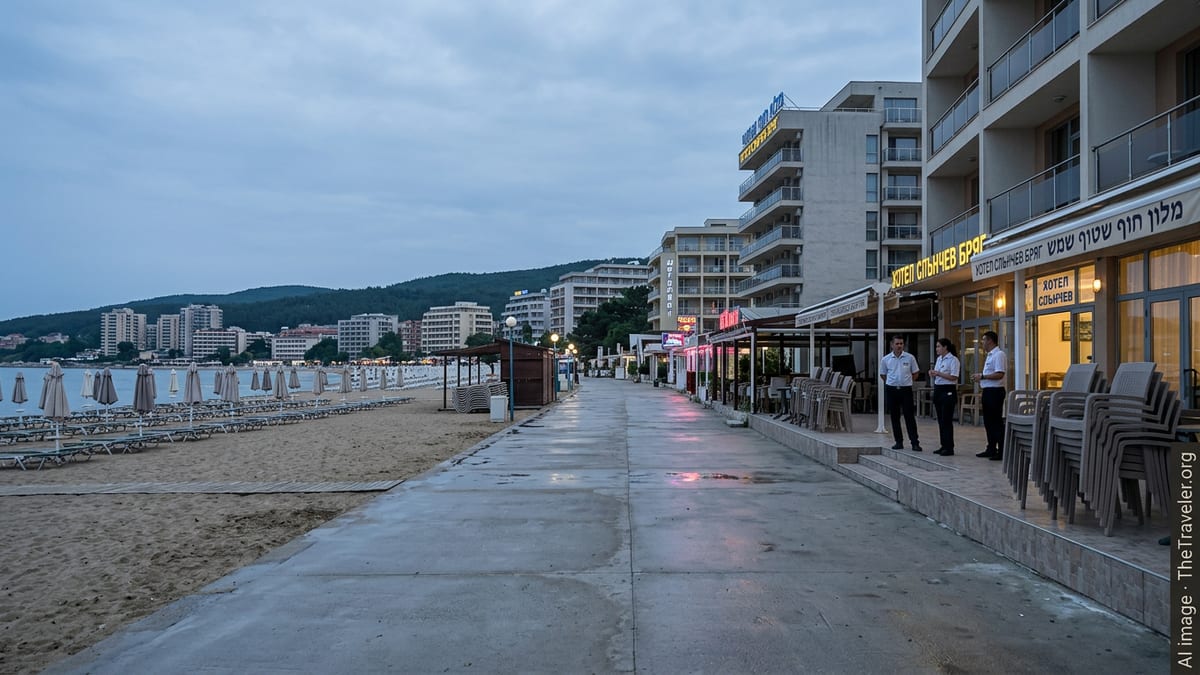
The sharp downturn is already rippling through Bulgaria’s Black Sea resorts, where Israeli guests are known for relatively high on-site spending in restaurants, casinos and nightlife, as well as for organized excursions to nearby cultural and nature attractions. Hoteliers in Burgas, Varna, Sunny Beach and Golden Sands say group cancellations are affecting not only bed nights, but also event bookings, conference packages and kosher catering contracts that supported year-round employment.
In Sofia and Plovdiv, city hotels that marketed themselves aggressively to Israeli city-break travelers and medical tourists are being hit by the same wave of cancellations. Managers report occupancy forecasts for April and May being revised downward by double digits, wiping out expectations of a strong shoulder season that was meant to compensate for rising utility and wage costs.
The knock-on effect is particularly severe for small, family-run guesthouses, transport providers and incoming agencies specialized in the Israeli market. Many rely on advance deposits from tour operators, which are now being refunded or rolled over to uncertain future dates. Local guides trained in Hebrew, niche cultural tours linked to Bulgaria’s Jewish heritage, and specialized security services tailored to Israeli groups are all seeing business vanish.
Regional authorities along the coast warn that the loss of high-spending visitors will reduce tax revenues and strain municipal budgets already under pressure from infrastructure and beach-maintenance costs. For some communities that have spent years building a reputation as safe, friendly destinations for Israelis, the prospect of an extended hiatus is raising fears of long-term brand damage.
Escalating Middle East Crisis Fuels Travel Fears
The cancellations are being driven by an abrupt deterioration in the security environment across the Middle East since late February, when coordinated strikes between Israel and Iran triggered widespread airspace closures and a new round of regional tensions. As commercial routes were suspended and governments urged citizens to avoid non-essential travel, many Israelis rushed to rebook or abandon holidays abroad, prioritizing proximity to family and access to essential services at home.
European aviation routes have been heavily disrupted, forcing airlines to reroute or ground flights that would normally pass over conflict-affected air corridors. Bulgaria, which sits on key northbound detours between Asia and Western Europe, has seen its airports turned into temporary hubs for diverted traffic and repatriation flights, but not for regular leisure services from Israel.
Analysts note that the crisis hit at a time when international travel from Israel was only just recovering from the shock of the Gaza war and earlier security scares. Surveys in 2024 and 2025 showed that outbound travel from Israel was still significantly below pre-2023 levels, with many citizens cautious about long-haul vacations and more sensitive to risk. The latest escalation appears to have further depressed confidence, particularly for family groups and older travelers who form a key segment for Bulgarian resorts.
Tourism experts warn that perceptions of regional instability, rather than concrete security threats in Bulgaria itself, are likely to shape Israeli travel decisions in the coming months. Even if flights resume quickly, it may take an extended period of calm and targeted reassurance campaigns before bookings return to previous levels.
Industry Leaders Demand Urgent State Intervention
Facing the prospect of a lost season in a critical market, Bulgaria’s tourism leaders are calling for immediate government intervention to prevent cascading bankruptcies. Hoteliers’ unions and tour operator associations are urging the cabinet to approve emergency liquidity measures, including interest-free bridge loans, deferred social security and tax payments for affected businesses, and temporary wage support schemes to retain trained staff.
Sector representatives argue that the cumulative impact of losing Russian, Ukrainian and now Israeli tourists within a few years has left many operators with no financial buffers. Without rapid assistance, they warn, closures of medium-sized hotels and specialized agencies could accelerate, shrinking Bulgaria’s capacity just as other markets begin to recover and further weakening the country’s competitiveness in the region.
In parallel, industry groups are pressing for a coordinated marketing and diplomatic response aimed specifically at Israel once conditions allow travel to resume. Proposals include joint campaigns with Israeli tour operators, participation in tourism fairs with reinforced security messaging, and a relaunch of charter support programs to quickly rebuild air connectivity between Tel Aviv and Bulgarian resorts.
Local mayors and regional tourism boards are also seeking a seat at the table, arguing that national policymakers must recognize the strategic role tourism plays in coastal and mountain economies. They are pushing for targeted grants for municipalities heavily exposed to the Israeli market, to safeguard public services and tourism infrastructure while private businesses ride out the crisis.
Race to Diversify Markets and Restore Confidence
As the crisis unfolds, many Bulgarian operators are racing to diversify their source markets in order to reduce dependence on any single country. Efforts are under way to attract more visitors from neighboring Romania, Serbia and Greece, as well as from Western European markets such as Germany, the United Kingdom and Scandinavia, where demand for affordable seaside and spa holidays remains resilient.
However, replacing the spending power and year-round travel patterns of Israeli tourists will not be easy. Israeli visitors have traditionally booked organized group packages, participated in cultural and pilgrimage itineraries, and traveled outside the narrow July and August beach season, providing much-needed stability for hotels and restaurants in spring and autumn. Few alternative markets can match that profile in the short term.
To reassure both current and prospective guests, Bulgarian authorities and industry players are emphasizing that the country remains a safe destination, geographically distant from active conflict zones and with a track record of protecting foreign tourists. Security protocols around Israeli groups, which were strengthened after the 2012 Burgas bus attack, are widely cited as evidence of the state’s capacity to respond to evolving risks and safeguard visitors.
Whether those messages will be enough to counteract the powerful images of regional conflict and empty terminals in Tel Aviv remains uncertain. For now, Bulgaria’s tourism sector is bracing for a season defined by cancellations, last-minute booking shifts and a renewed scramble for alternative markets, as it waits for both the guns in the Middle East and the shockwaves hitting European tourism to subside.