

More news on this day
As Israel reopens Ben Gurion Airport in March 2026 under wartime restrictions, a strict 50-passenger limit on outbound flights is reshaping how travelers enter and leave the country, leaving many scrambling for alternatives as regular international schedules remain largely on hold.
Get the latest news straight to your inbox!
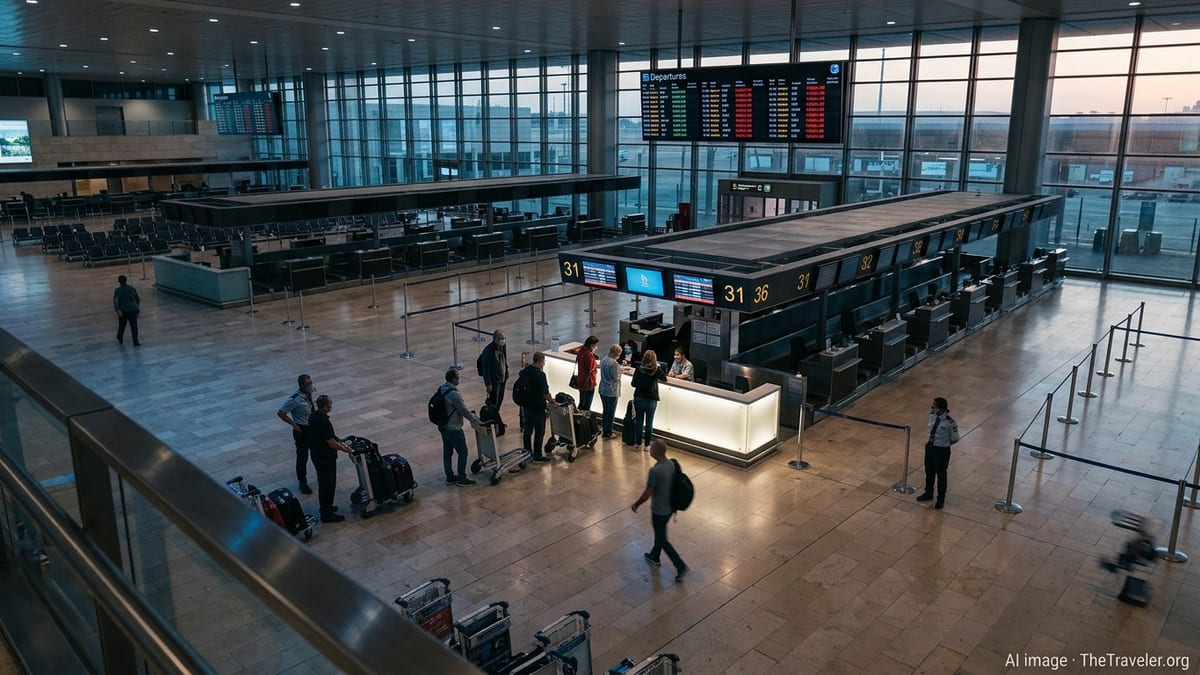
How the 50-passenger rule came into force
Following weeks of heightened conflict with Iran and the temporary closure of Israeli airspace at the end of February 2026, Ben Gurion Airport began a gradual and tightly controlled reopening. Publicly available information from Israel’s transportation authorities and news coverage show that while a limited number of inbound flights resumed first, outbound passenger operations were set to restart from March 8 in what officials have described in prior statements as an “extremely limited format.”
Reports from international outlets and regional media indicate that security planners identified crowds at the country’s main gateway as a potential high-value target. To reduce the number of people on the tarmac and in departure halls at any given time, the government introduced a cap of just 50 passengers per departing aircraft, even on widebody jets that would normally carry several hundred travelers.
This approach follows an earlier pattern seen in mid-2025, when Ben Gurion briefly operated with sharply reduced capacity after missile damage and threats to airport infrastructure. The current wartime framework, however, is more systematic: capacity caps, spacing of arrivals and departures, and a focus on evacuation-style traffic have combined to create an airport that is technically open but functioning far below its usual volume.
Impact on international airlines and flight availability
The 50-passenger restriction has had an immediate effect on commercial airlines. Many foreign carriers had already suspended services to Tel Aviv when Israeli airspace was first closed, citing insurance constraints and security concerns. With the new rule, industry coverage shows that most non-Israeli airlines are not yet rushing back into the market, since operating near-empty aircraft is commercially unviable without state support or a clear repatriation mandate.
Published flight data and airline advisories suggest that, for now, most outbound capacity is being provided by Israeli airlines operating under special schedules. Seats on these flights are being prioritized for urgent categories such as medical cases, dual nationals seeking evacuation and passengers whose original return journeys were canceled at the start of the crisis. In some instances, airlines have halted general ticket sales through late March so that remaining seats can be allocated first to stranded travelers.
For prospective visitors planning trips later in 2026, major carriers are largely maintaining previously announced suspension windows or waiving change fees for Israel-bound itineraries. Some network airlines are signaling that a meaningful restoration of regular international service will depend on a relaxation of the 50-passenger cap and a clear improvement in the security outlook, neither of which has a firm timeline.
What stranded travelers are experiencing on the ground
Accounts shared in public forums, as well as advisories from foreign embassies, paint a picture of intense competition for the limited seats now available out of Ben Gurion. With each flight capped at 50 passengers, even multiple daily departures translate into only a fraction of normal capacity, and travelers report that waitlists for outbound travel can stretch for days.
Some foreign governments have coordinated shuttle buses and charter-style departures, funneling their citizens toward the few operating flights or to border crossings where onward routes remain feasible. Publicly accessible guidance emphasizes the need for travelers to register with consular services, respond promptly to email or text notifications and remain close to their phones, as last-minute seat offers and departure time changes are common under these conditions.
Travelers still inside Israel describe an airport experience focused on throughput rather than comfort. To keep numbers inside the terminal low, access is often limited to ticketed passengers close to departure time, with strict rules on baggage and security screening. Check-in cutoffs may be brought forward, and boarding processes are tightly managed to avoid crowding at gates.
Alternative exit routes via neighboring countries
With Ben Gurion operating at a fraction of its normal capacity, many travelers are turning to regional detours. Embassy alerts and local media coverage highlight land crossings into Jordan and Egypt as key pressure valves, although these are subject to their own constraints, such as limited operating hours, security checks and occasional queues lasting several hours.
Once across the border, outbound travelers have been booking flights from airports such as Amman and Egyptian Red Sea gateways where international services continue, albeit at busy load factors due to the diversion of Israel-bound demand. Travel discussions in public forums show that some airlines serving these secondary hubs have added capacity or upgauged aircraft to absorb displaced passengers, while others have relied on existing schedules and voluntary rebookings.
These indirect routes come with trade-offs. Overland journeys can be lengthy, and shifting from a straightforward non-stop flight to a multi-leg itinerary raises costs and complexity. However, for many stranded visitors, especially those whose original airline has not yet resumed Tel Aviv service, regional airports remain the most realistic way out until Ben Gurion’s outbound passenger limits are eased.
Practical guidance for current and future travelers
For travelers currently in Israel, publicly available safety advisories and airline communications converge on a set of priorities. First, passengers are urged to remain in close contact with both their carrier and their home country’s diplomatic mission, using official apps, email alerts and social media channels. Second, travelers are encouraged to be flexible about routing, departure airport and even final arrival city, as seats may open up first on indirect journeys or into alternative hubs.
Those with confirmed outbound seats under the 50-passenger regime should prepare for a very different airport experience compared with normal times. Arriving early, traveling with carry-on luggage only when possible and keeping printed as well as digital copies of travel documents can help avoid delays. Given the limited number of daily departures, missing a flight in this context can mean a multi-day setback rather than a simple rebooking.
Prospective visitors planning trips later in 2026 may wish to take a cautious approach. Industry commentary suggests booking flexible or fully refundable fares on routes that may be affected and monitoring airline schedule updates regularly. Travel insurance policies with robust trip interruption and evacuation benefits can provide an extra layer of financial protection in a fluid security environment.
While the 50-passenger rule is officially described as a temporary wartime measure, no clear end date has been signaled. Until the cap is lifted and foreign airlines re-enter the market at scale, Ben Gurion Airport will continue to function more as a controlled evacuation and essential travel hub than as a normal international gateway, and travelers should plan with that reality firmly in mind.