

More news on this day
Israel’s move to halt further strikes on a critical Iranian gas field has added a new twist to the Iran–Israel war, offering a brief respite to energy traders even as conflict around the Strait of Hormuz and Gulf energy hubs continues to rattle oil and gas markets worldwide.
Get the latest news straight to your inbox!
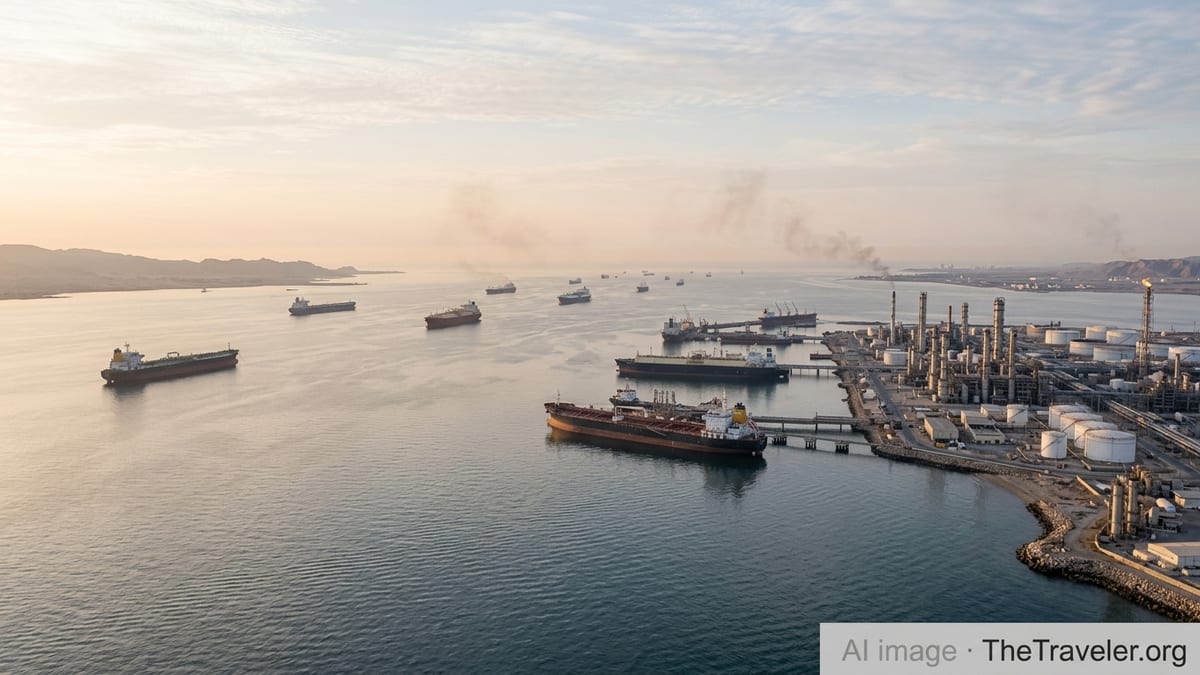
Pause on Gas Field Strikes After Global Backlash
According to recent international coverage, Prime Minister Benjamin Netanyahu has indicated that Israel will refrain from additional strikes on the South Pars natural gas field, a massive deposit that Iran relies on for a large share of its domestic electricity generation. The announcement followed days of criticism over the decision to target such a strategically vital energy asset and concerns about the potential humanitarian impact inside Iran.
The halt comes after Israeli forces struck facilities linked to South Pars earlier in the week, damaging infrastructure and briefly disrupting operations at the world’s largest gas field. Reports indicate that the decision to pause further strikes was shaped in part by pressure from allies worried that sustained attacks on energy infrastructure would turn a regional conflict into a full-blown global energy crisis.
Publicly available information shows that while Israel has stopped new attacks on the gas field for now, it has not ruled out resuming operations if Iran escalates elsewhere. This conditional pause has done little to calm nerves in energy markets, where traders are weighing the risk of renewed strikes against the already severe disruption to supply routes and production capacity across the Gulf.
The situation underscores how energy assets have moved closer to the center of the conflict. What began as a primarily military confrontation has increasingly entangled oil terminals, refineries and gas complexes, putting infrastructure that underpins global trade flows into the direct line of fire.
Energy Infrastructure Becomes a Front Line
Coverage from multiple outlets in recent days has detailed how the war has spread to critical energy infrastructure across the region. After the initial Israeli strike on Iran’s section of the South Pars field and associated facilities near Asaluyeh, Iran launched retaliatory attacks on energy hubs in neighboring states, including Qatar’s Ras Laffan Industrial City, one of the world’s most important liquefied natural gas export complexes.
There have also been reported strikes and attempted strikes on oil facilities tied to Saudi Arabia, the United Arab Emirates and other Gulf producers, as well as on desalination plants and storage depots. Analysts note that while some of these sites are not directly linked to export flows, damage to processing and supporting infrastructure can ripple through supply chains, curbing output and slowing shipments.
The conflict has converged with an ongoing crisis in the Strait of Hormuz, where Iran’s restrictions and attacks on shipping have already choked off a significant share of crude oil and liquefied natural gas exports. Publicly available data and expert commentary describe the current disruption as one of the largest shocks to seaborne energy trade in decades, with knock-on effects for refineries and power systems far beyond the Middle East.
For many countries that depend heavily on imported oil and gas, especially in Europe and Asia, the combination of damaged facilities and constrained shipping lanes has revived fears reminiscent of earlier energy crises. Governments are once again examining strategic reserves, alternative pipeline routes and emergency demand-management plans as potential tools to navigate an increasingly uncertain supply outlook.
Markets React With Oil Near Triple Digits and Gas Soaring
Oil prices have surged since late February, when joint United States and Israeli airstrikes on Iran first raised the prospect of a prolonged disruption in Middle East energy flows. Benchmark crude contracts have recently traded around or above the 100 dollar per barrel mark, according to financial market reporting, after briefly spiking even higher in the immediate aftermath of attacks on Iranian export hubs and Gulf infrastructure.
Natural gas markets have been even more volatile. European gas futures jumped sharply after reports of Iranian strikes on Qatar’s liquefied natural gas facilities and the temporary shutdown of production there. Traders worry that damage at Ras Laffan and other export terminals could constrain deliveries to Europe and Asia heading into periods of higher seasonal demand.
Market analysis published this week highlights how the war has transformed energy from a manageable geopolitical risk into a direct supply shock. The earlier focus on shipping insurance premiums and potential rerouting has given way to concern about physical damage to wells, processing plants and export terminals that cannot be easily or quickly replaced.
Travel and tourism sectors are also feeling the effects. Higher jet fuel prices are feeding into airline operating costs, and renewed regional instability is prompting carriers to cancel or reroute flights around Persian Gulf airspace. For travelers, that translates into longer routes, higher fares and increased uncertainty, particularly for connections through Middle Eastern hubs that have become central to global aviation networks.
Global Ripples for Consumers, Travelers and Importing Nations
As oil and gas benchmarks climb, households and businesses across importing nations are beginning to feel the pinch. In the United States, recent business press coverage points to a rapid increase in gasoline prices at the pump, with averages climbing well above levels seen earlier in the year. Similar pressure is building in Europe, where elevated wholesale gas costs are expected to raise heating and electricity bills.
Energy-intensive industries, from chemicals and metals to aviation and logistics, face a difficult combination of higher fuel expenses and fragile demand. Some carriers serving transatlantic and Asia–Europe routes have already announced surcharges to offset rising jet fuel costs, while shipping operators report higher bunker fuel prices and longer voyages as they divert away from risk-prone chokepoints.
For developing economies that rely on imported fuel and have limited fiscal space, the shock threatens to erode pandemic-era recoveries. Public commentary from economists and multilateral institutions suggests that sustained high energy prices could rekindle inflation, weaken currencies and force governments to choose between fuel subsidies and other social spending priorities.
Travelers are likely to encounter these dynamics in multiple ways, from pricier flights and cruises to higher accommodation and transport costs at their destinations. Tourism-dependent countries in Europe, Asia and the Mediterranean, which count on affordable air links and stable power supplies, are watching energy markets closely as they plan for upcoming peak seasons.
Uncertain Outlook Keeps Volatility Elevated
The temporary halt to Israeli strikes on Iran’s gas field has provided only limited relief to jittery markets. Analysts cited in recent commentaries argue that as long as the wider Iran–Israel war continues, with periodic attacks on energy infrastructure and shipping, traders will maintain a significant geopolitical risk premium in oil and gas prices.
Much depends on whether diplomatic efforts can secure safer passage through the Strait of Hormuz and reduce the targeting of energy facilities across the Gulf. Publicly available assessments indicate that any credible ceasefire or maritime security arrangement could quickly knock several dollars off crude benchmarks, but the path to such an agreement remains unclear.
In the meantime, governments and companies are exploring contingency plans that include tapping strategic reserves, accelerating renewable energy deployment and seeking alternative suppliers outside the Gulf. While these measures may cushion some of the impact, they cannot fully substitute for the scale of oil and gas flows that normally transit the region.
For now, the combination of conflict, infrastructure risk and shipping disruption has turned the Middle East once again into the epicenter of a global energy crisis. Israel’s pause on gas field strikes may slow the escalation, but the underlying tensions that have pushed prices higher and unsettled markets show little sign of easing.