

More news on this day
Air traffic across Turkey’s busiest domestic corridors was severely disrupted on Thursday as Istanbul’s two main airports reported 342 delayed flights and three cancellations, throwing travel plans into disarray for thousands of passengers flying with Turkish Airlines, Pegasus and other carriers on key routes to Ankara, Izmir and Antalya.
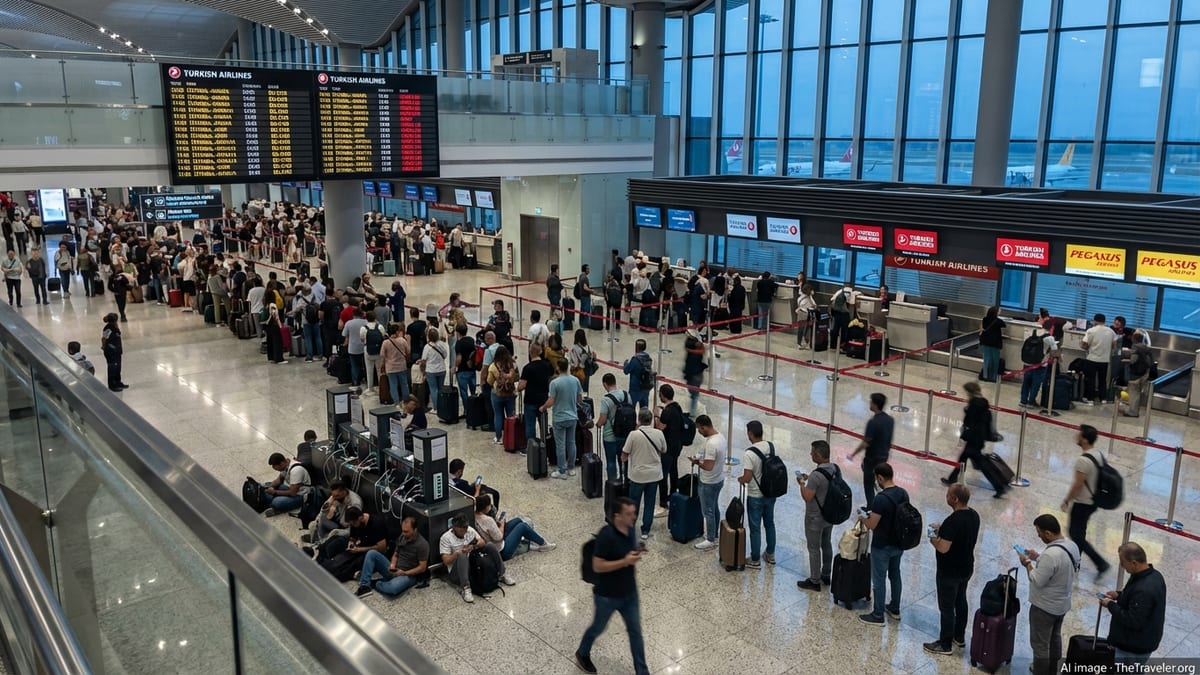
Heavy Delays Ripple Out From Istanbul Hubs
Operational strain at Istanbul Airport and Sabiha Gokcen International Airport translated into widespread disruption on February 19, with airlines struggling to keep tightly timed domestic schedules on track. Airport operations data and live tracking services pointed to a sharp spike in delayed departures and arrivals on core domestic routes linking Istanbul with Ankara, Izmir and Antalya, the country’s three other major aviation markets.
By late evening, a combined 342 flights touching Istanbul were reported delayed, alongside three outright cancellations, according to aggregated figures from flight-tracking and airport-monitoring platforms. The majority of affected services were short-haul domestic rotations scheduled within narrow turnaround windows, leaving airlines little margin to recover once early delays began to cascade through the day’s program.
Passengers reported long queues at check in, security and boarding gates, as both hubs tried to manage a backlog of delayed aircraft and displaced travelers. While most flights eventually departed, many did so 30 to 90 minutes behind schedule, creating missed connections and forcing some travelers to rebook onto later departures or overnight in Istanbul.
Airline representatives acknowledged operational challenges but stressed that safety remained paramount. They said aircraft would only be dispatched once mandatory checks, crew rest requirements and air traffic control clearances were fully satisfied, even if that meant longer waits in departure lounges.
Turkish Airlines and Pegasus Bear the Brunt
With Turkish Airlines and Pegasus accounting for the bulk of domestic capacity in and out of Istanbul, their operations were hit hardest. Dozens of their frequencies to Ankara, Izmir and Antalya departed late, with aircraft often waiting for incoming connections or ground handling slots to free up before boarding could begin.
On the busy Antalya corridor, live data showed multiple Pegasus flights between Antalya and Istanbul Sabiha Gokcen operating behind schedule, including services that left more than 50 minutes late before making up some time en route. Turkish Airlines rotations between Antalya and Istanbul Airport also recorded a pattern of minor but accumulating delays, typically around 10 to 20 minutes, which can quickly erode timetable resilience on dense domestic banks.
Services to and from Ankara, Turkey’s capital, were similarly affected. Pegasus flights from Sabiha Gokcen to Ankara Esenboga operated against a backdrop of lower-than-normal punctuality, reflecting the knock-on impact of congestion and tight aircraft utilization. Turkish Airlines, whose expansive network relies on smooth hub flows in Istanbul, faced the additional pressure of protecting onward international connections for delayed domestic passengers.
Smaller carriers using Istanbul as a transfer point also saw their schedules disrupted, with delays on shared routes compounding the overall picture of congestion. However, their lower frequency meant that a greater proportion of the day’s delays could be traced directly to the two dominant domestic airlines and their high-intensity operations on the main trunk routes.
Ankara, Izmir and Antalya Struggle With Knock-On Effects
The disruption was felt far beyond Istanbul’s terminals. In Ankara, Izmir and Antalya, late inbound aircraft from Istanbul translated into outbound delays, as ground staff and crews worked to turn planes around as quickly as possible while still meeting regulatory and safety standards.
At Antalya, one of Turkey’s key leisure gateways, several morning and mid day flights to Istanbul departed behind schedule, with one high-profile service leaving more than an hour late after passengers had already boarded. While many of those flights ultimately landed only 30 to 40 minutes after their scheduled arrival times, the downstream impact on connecting passengers was significant, particularly for those heading on to evening international departures from Istanbul.
In Ankara, where domestic services link government, business and academic travelers with Istanbul’s global network, even short delays proved disruptive. Passengers reported crowded departure halls and frequent gate announcements adjusting estimated departure times, as carriers worked through a backlog of late-arriving aircraft from Istanbul.
Izmir’s Adnan Menderes Airport, another major domestic hub on the Aegean coast, also experienced pressure on its Istanbul connections. Late evening flights in particular were vulnerable, as any slippage on earlier legs from Istanbul left minimal room for recovery, prompting some travelers to opt for next day services rather than risk missed onward plans.
Three Cancellations Add To Passenger Frustration
While the vast majority of affected flights eventually departed, three cancellations connected with Istanbul operations added to the frustration of an already difficult day for travelers. Those cancellations, spread across different domestic routes, forced passengers onto alternative services or required overnight stays in Istanbul or regional cities.
For many, the timing of the cancellations was particularly challenging. In at least one case, passengers only learned of the decision when they were already in the terminal or arriving from connecting services, leaving limited options to reroute on the same day. Airline staff worked to rebook travelers onto later flights, but peak load factors on domestic routes meant that not everyone could be accommodated immediately.
Under Turkish and international aviation regulations, airlines are required to offer assistance in cases of cancellations that are within their control, which can include rebooking, meal vouchers and, in some circumstances, accommodation. However, the exact remedies depend on the cause of disruption and the specific ticket conditions, leaving some passengers uncertain about their entitlements.
Travelers caught up in the cancellations described long lines at customer service desks and crowded help points at both Istanbul hubs. Many turned to airline call centers and mobile apps to secure new itineraries, occasionally finding better options digitally than were immediately available in person at the airport.
Operational and Weather Pressures Combine
Although airlines did not immediately publish a single overarching cause for the day’s disruptions, a combination of operational and meteorological factors appeared to be at play. Istanbul’s complex winter weather, with rapidly changing visibility, cloud ceilings and wind conditions around the city’s two airports, often forces air traffic controllers to impose temporary spacing restrictions on arrivals and departures.
Such constraints can have an outsized impact on Istanbul’s tightly choreographed domestic banks, where turnarounds are short and aircraft are scheduled on multiple consecutive rotations to Ankara, Izmir and Antalya in a single day. A brief slowdown in movements during a key morning or evening peak can quickly create a queue of aircraft waiting for take off or landing slots.
Ground operations at both airports also face seasonal challenges, including wet runways and reduced ramp capacity during adverse conditions. Even when flights take off close to their scheduled times, small delays in boarding, pushback or taxiing can accumulate across the network, particularly for airlines that rely on high aircraft utilization.
Industry observers noted that while Istanbul’s infrastructure has expanded significantly in recent years, demand has grown just as quickly, leaving little slack in the system during busy travel days. This structural tightness means that even modest disruptions can ripple through the network, as witnessed in the high number of delayed flights registered on February 19.
Passenger Experience: Queues, Missed Connections and Rebookings
For travelers, the operational statistics translated into a day of uncertainty and inconvenience. At both Istanbul airports, passengers arriving for domestic flights to Ankara, Izmir and Antalya encountered crowded check in areas and longer processing times, as staff handled simultaneous departures that had bunched together after earlier delays.
Some travelers described boarding processes that started, paused and then restarted as gate agents waited for updated departure slots from ground control. In a number of cases, aircraft doors closed and pushback began only for flights to spend extended periods in taxi queues, further eroding on time performance while passengers remained seated on board.
Those connecting in Istanbul to onward international flights were among the hardest hit. Even delays of 30 to 45 minutes on inbound domestic legs to Istanbul Airport or Sabiha Gokcen can be enough to jeopardize minimum connection times, leading to missed long haul departures. Airline transfer desks reported a steady stream of disrupted passengers seeking new routings, often via later Istanbul departures or alternative European hubs.
Despite the disruption, there were also reports of ground staff working intensively to manage the situation, with some airlines proactively issuing rebooking options through their mobile applications and text alerts. Where possible, passengers with tight onward connections were prioritized for faster processing or moved to earlier available flights.
Advice for Travelers Heading Through Istanbul
With Istanbul remaining one of the busiest aviation crossroads for both domestic and international traffic, travel experts advise passengers to factor in additional buffer time when planning itineraries, particularly in winter and early spring. For domestic trips to Ankara, Izmir or Antalya that connect to long haul flights, booking slightly longer layovers can significantly reduce the risk of missed connections if delays like those seen on February 19 recur.
Passengers are also encouraged to monitor their flight status closely through official airline channels and airport information services on the day of travel. Many carriers servicing Istanbul, including Turkish Airlines and Pegasus, offer real time updates via mobile apps and text messages, which can provide earlier warning of schedule changes than departure boards in crowded terminals.
Travelers who experience significant delays or cancellations should retain documentation of their disruption, including boarding passes and any written notifications from airlines. This information can be important when seeking compensation or reimbursement for additional expenses incurred as a result of missed flights, meals or hotel stays.
Finally, frequent travelers through Istanbul suggest packing essential items, such as medication and a change of clothes, in carry on baggage rather than checked luggage. In the event of unplanned overnight stays or missed onward connections, having immediate access to these essentials can make a considerable difference to comfort while waiting for the next available flight.
Airlines and Airports Assess Longer Term Resilience
The scale of February 19’s disruption has prompted renewed discussion within Turkey’s aviation sector about how to strengthen operational resilience on critical domestic corridors. With demand on Istanbul to Ankara, Izmir and Antalya routes projected to grow further in the coming years, airlines and airports are under pressure to ensure that schedule intensity does not outpace the system’s capacity to absorb shocks.
Industry analysts argue that incremental changes, such as slightly lengthened turn times on the most delay prone rotations or the introduction of additional standby aircraft and crew in Istanbul, could help reduce the risk of cascading delays on heavy traffic days. Others point to the potential for more sophisticated slot management and closer coordination between air traffic control, airport operators and carriers.
Istanbul’s airports, for their part, have highlighted ongoing investments in infrastructure, technology and staffing aimed at smoothing passenger flows and accelerating ground handling. These include expanded security lanes, improved baggage systems and more flexible use of gates and stands during peak periods.
While Thursday’s 342 delays and three cancellations represented an unusually challenging day for travelers, aviation stakeholders acknowledge that similar episodes are likely to recur without continuous attention to capacity, planning and real time coordination. For passengers, that means staying prepared for occasional disruption remains an essential part of flying through one of the world’s busiest air hubs.