

More news on this day
Hundreds of air travelers in and through Istanbul faced extensive disruption on March 26, as operational snarls at Istanbul Airport and Sabiha Gokcen led to 329 delayed flights and at least five cancellations, affecting services by Turkish Airlines, Pegasus Airlines and several foreign carriers.
Get the latest news straight to your inbox!
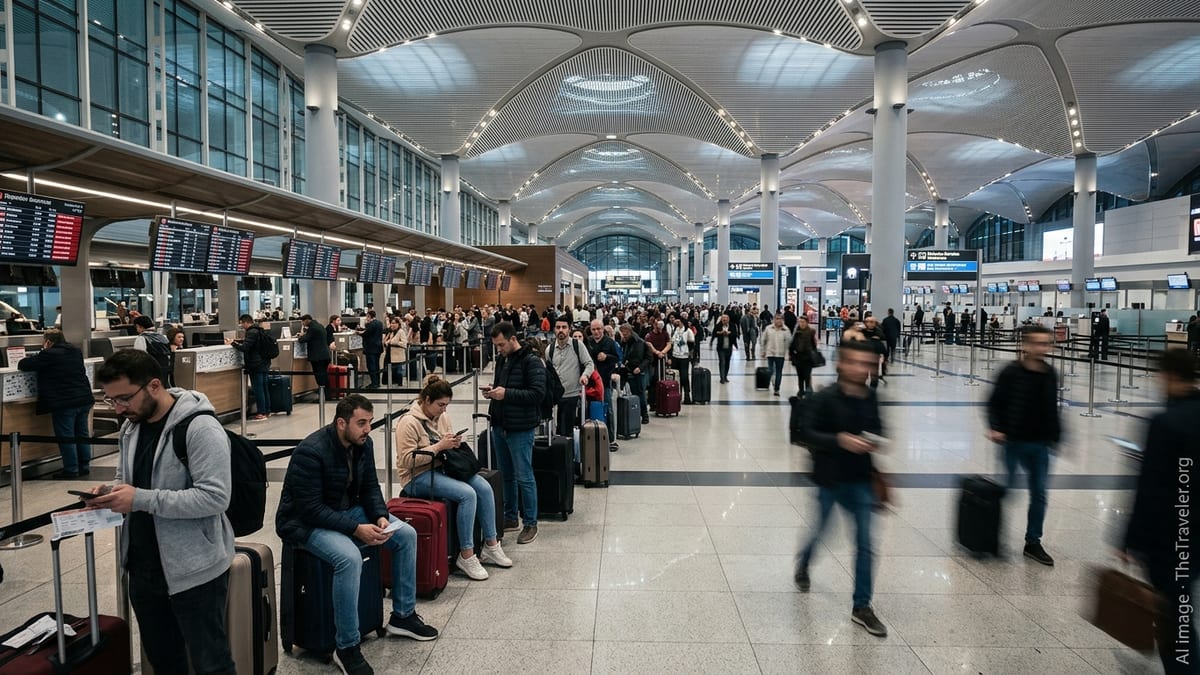
Delays Mount Across Istanbul’s Dual Airport System
Publicly available flight-tracking data on March 26 showed Istanbul’s two major airports struggling to keep services running to schedule, with a combined 329 departures and arrivals delayed and five flights cancelled. The impact was most visible at the city’s main hub, Istanbul Airport, and at Istanbul Sabiha Gokcen International Airport on the Asian side, which together form one of Europe’s busiest aviation systems.
The disruption began building through the morning peak and intensified into the afternoon, according to live operations dashboards and airline status pages. While the majority of affected flights ultimately departed, many did so hours behind schedule, creating missed connections and extended transit times for passengers using Istanbul as a long-haul transfer point.
Operational data indicated that the delays spanned short-haul domestic routes within Türkiye and longer international sectors to Europe, the Middle East, Asia and Africa. With Istanbul positioned as a key bridge between continents, even a modest number of cancellations and a high volume of delays can quickly ripple outward to airports far beyond Türkiye.
Turkish Airlines, Pegasus and Foreign Carriers Entangled
Turkish Airlines, the largest operator at Istanbul Airport and one of the dominant transfer carriers between Europe, Asia and Africa, saw a significant portion of its network affected. Online schedules and status tools showed pushed-back departure times across a range of routes, from regional links to major intercontinental services, as aircraft and crew fell out of their planned rotations.
Pegasus Airlines, which concentrates its operations at Sabiha Gokcen, also experienced notable disruption. The low-cost carrier relies heavily on tight turnarounds, and any prolonged delay can cascade rapidly through the day’s flying program. Recent passenger accounts from previous months describing long waits, missed onward connections and difficulty obtaining assistance at Sabiha Gokcen highlight how quickly pressure can build when schedules slip, and March 26 added fresh strain to the system.
Several foreign airlines operating into Istanbul similarly recorded off-schedule arrivals and departures. Because international carriers often have just one or two daily rotations to Istanbul, even a single delayed turnaround can lead to knock-on timetable changes at their home bases, heightening the global reach of what begins as a local operational issue.
Weather, Congestion and Operational Constraints Intersect
Meteorological reports for Istanbul on March 26 indicated unsettled conditions, with periods of low cloud, gusty winds and intermittent precipitation, factors that can reduce runway capacity and require wider spacing between arriving and departing aircraft. When combined with heavy traffic loads at both airports, these conditions increase the likelihood of holding patterns, slower ground handling and, ultimately, departure and arrival delays.
Industry analyses of Istanbul’s aviation system in recent years have pointed to chronic congestion at peak times, even as new infrastructure has expanded capacity at the main Istanbul Airport. While simultaneous runway operations and upgraded terminal facilities are designed to relieve bottlenecks, any combination of adverse weather, technical checks or ground-handling constraints can still push the network beyond its operating comfort zone.
Operational updates from airlines on their public channels frequently cite a mix of weather-related restrictions, air-traffic flow management and “operational reasons” for similar disruptions. Passenger reports from recent weeks referencing long waits on the tarmac, late gate changes and difficulty securing rebooking at Istanbul’s airports provide additional context for the challenges experienced on March 26.
Knock-on Effects for Transit Passengers and Regional Travel
The March 26 disruption particularly affected transit passengers using Istanbul as a connecting hub between Europe, North America, the Middle East and Asia. With many itineraries built around tight transfer windows, multi-hour delays on inbound flights often resulted in missed onward connections, forcing travelers to be rebooked onto later departures or, in some cases, to wait until the following day.
Recent traveler accounts circulating online describe extended overnight stays in Istanbul terminals after missed connections on both Turkish Airlines and Pegasus itineraries, with some passengers reporting confusion about eligibility for hotel accommodation, meal vouchers or rebooking options. The high number of delayed flights on March 26 is likely to have generated similar situations for affected travelers, especially during late-evening and overnight periods when alternative flights are limited.
Within Türkiye, the heavy disruption also affected domestic travel. Istanbul’s role as the primary hub for internal routes means that delays there can strand passengers trying to reach secondary cities, with knock-on impacts on business meetings, family travel and tourism plans heading into the busy spring season.
What Travelers Can Expect in the Coming Days
While most flights impacted on March 26 eventually operated, large-scale delays typically create residual imbalances in aircraft and crew positioning that can persist for at least another operational day. Timetables and seat availability into and out of Istanbul are therefore likely to remain fluid in the short term, particularly on routes where aircraft utilization is already high.
Public-facing guidance from aviation regulators and consumer organizations generally advises passengers facing extended delays or cancellations to closely monitor airline apps and airport information screens, keep boarding passes and receipts for incidental expenses, and review the applicable passenger-rights rules for the jurisdiction in which their journey originates. For those flying with Turkish Airlines and Pegasus, these rights can vary depending on whether the trip starts in the European Union, the United Kingdom or elsewhere.
For now, the March 26 episode underscores both the strategic importance and the vulnerability of Istanbul’s twin-airport system. As airlines continue to rebuild and expand schedules across Europe, Asia and the Middle East, relatively small disruptions at such a critical crossroads can quickly escalate into a multi-airport, multi-day challenge for carriers and travelers alike.