

More news on this day
Italy has seized a commanding position in Europe’s aviation map as ITA Airways’ formal integration into the Lufthansa Group accelerates, unleashing a wave of new routes, alliances and passenger perks that promise to reshape travel across the continent and far beyond.
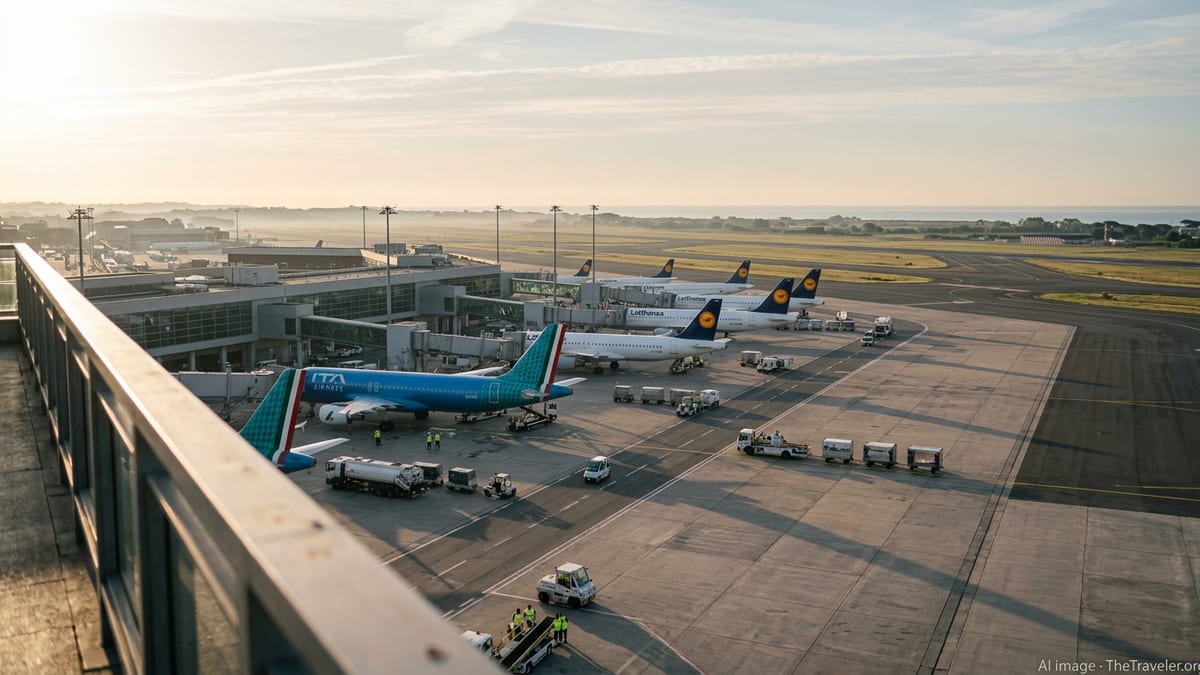
A New Power Bloc in European Aviation
The integration of ITA Airways into the Lufthansa Group marks the most significant consolidation move in European aviation since the last decade’s wave of mergers. Lufthansa finalized a 41 percent stake in Italy’s flag carrier through a 325 million euro capital increase, bringing ITA into its multi-brand network alongside Lufthansa, SWISS, Austrian Airlines, Brussels Airlines and Air Dolomiti. The remaining state-held shares are expected to be gradually transferred in coming years, giving the German group an eventual full foothold in one of Europe’s most strategically important markets.
The takeover followed a protracted competition probe by the European Commission, which gave its approval subject to route and slot remedies aimed at preserving fair competition on key short and medium haul links. Regulators ultimately backed the argument that a stronger, better capitalized Italian carrier within a pan-European group would be better placed to challenge Gulf, US and low cost rivals, while securing long term stability after the collapse of Alitalia.
For Italy, the deal creates a powerful new flag carrier embedded inside Europe’s largest airline group by revenue, but still trading under the ITA Airways brand. For Lufthansa, it locks in the third largest aviation market in Europe, complementing its hubs in Frankfurt, Munich, Zurich, Vienna and Brussels with Rome Fiumicino and Milan Linate as southern gateways.
Codeshares and Coordinated Schedules Redraw the Map
The clearest expression of the new power structure is in the timetable. From the start of the 2025 summer schedule, ITA Airways and Lufthansa Group airlines are rolling out more than 100 new codeshare routes within Europe, allowing passengers to book combined itineraries under a single ticket and flight code. ITA’s dense domestic network from Rome and Milan, including secondary airports such as Alghero, Reggio Calabria and Pantelleria, is now directly plugged into Lufthansa, SWISS, Austrian and Brussels Airlines’ pan European reach.
Practical changes at airports mirror the strategy. ITA is moving into Terminal 1 at Frankfurt and Terminal 2 at Munich, physically aligning its operations with its new sister carriers to cut minimum connecting times and simplify transfers. At other hubs, including Rome Fiumicino and Milan Linate, ITA and Lufthansa Group airlines are already co-located, allowing smoother passenger flows, easier rebooking and shared ground services.
Crucially, the integration goes beyond Europe. Once the initial wave of intra European codeshares is fully embedded, the group plans to attach ITA’s network to long haul flights to the Americas, Africa, the Middle East and Asia. From mid 2025, many of these intercontinental services will be offered under shared marketing flight numbers, giving Italian passengers seamless access to more than 260 new destinations worldwide while feeding Lufthansa Group’s long haul banks through Rome, Frankfurt and Munich.
From Rival Alliances to Star Alliance Integration
Alliance politics are also being reshaped. ITA Airways has begun its withdrawal from the SkyTeam alliance, with passenger benefits on former partner airlines scheduled to be phased out in 2025. In parallel, preparations are underway for ITA to join Star Alliance as a full member, with entry targeted for early 2026. The move will align Italy’s national carrier with the global network already anchored by Lufthansa, United Airlines, Air Canada, Singapore Airlines and others.
For frequent flyers, the integration is tangible. Members of Lufthansa’s Miles & More program can already earn and redeem miles on ITA flights, while ITA’s Volare members now have access to award and status accrual across the Lufthansa Group’s network airlines. Lounge access is being harmonized, giving eligible ITA passengers entry to some 130 partner lounges worldwide and opening ITA’s Italian lounges to Lufthansa Group customers.
Alliance entry will further extend those advantages, adding priority services, baggage handling benefits and through check in across the Star Alliance network. For global travelers, Italy will function less as an end point and more as a fully integrated gateway threaded into one of the world’s most extensive airline partnerships.
Italy’s Hubs Emerge as Long Haul Gateways
The strategy behind the deal is clear: Rome and Milan are being positioned as southern pillars of a multi hub system that spans northern and central Europe. With ITA’s 360 daily flights feeding into Star Alliance carriers, Rome Fiumicino is expected to grow as a connector between northern Europe and destinations across the Mediterranean, North and West Africa and South America, regions where Italy’s historic ties and diaspora create strong demand.
New long haul routes are already emerging from this platform. ITA Airways has announced fresh intercontinental services, including additional links to North America, with carriers within the group signaling further expansion as more aircraft arrive. Secondary European and US cities are poised to benefit from one stop access to Italy via the combined network, illustrated by the planned launch of routes such as Houston to Rome that will tap into both leisure and business demand.
On the ground, the Italian government sees the reinforced flag carrier as a lever for tourism and trade policy. Easier connectivity to regional airports in the south and islands could stimulate higher value tourism beyond the country’s traditional hotspots, while tighter links to northern European hubs are expected to support Italy’s export focused industrial base.
Growth Ambitions Amid Industry Headwinds
The promise of “unstoppable” growth comes against a backdrop of structural change across European aviation. Lufthansa Group has outlined plans for its largest fleet renewal in history, ordering more than 230 new aircraft, including 100 long haul jets, by the end of the decade. ITA is set to share in that modernization, gradually replacing older aircraft with more fuel efficient models that reduce operating costs and emissions per passenger.
At the same time, the group is using digitalization and automation to streamline back office functions, targeting thousands of job reductions across member airlines by 2030 while maintaining or expanding front line capacity. Management argues that deepening integration, including the incorporation of ITA’s operations, is essential to sustain profitability in an industry facing high fuel costs, supply chain constraints and increasingly stringent climate regulation.
Regulators and rivals will watch closely as the enlarged group flexes its muscles. Low cost competitors remain dominant in much of the intra European leisure market, and other legacy groups are pursuing their own consolidation drives, from bids for Portugal’s TAP to strengthened transatlantic joint ventures. Yet with Italy now firmly inside its tent, Lufthansa has secured a powerful competitive asset: a national airline with renewed backing, a growing global reach and a pivotal geographic position between northern Europe, the Mediterranean and beyond.