

More news on this day
Key Italian airports have begun warning airlines about constrained jet fuel availability, as the worsening Middle East crisis and disruption around the Strait of Hormuz start to ripple through Europe’s aviation network.
Get the latest news straight to your inbox!
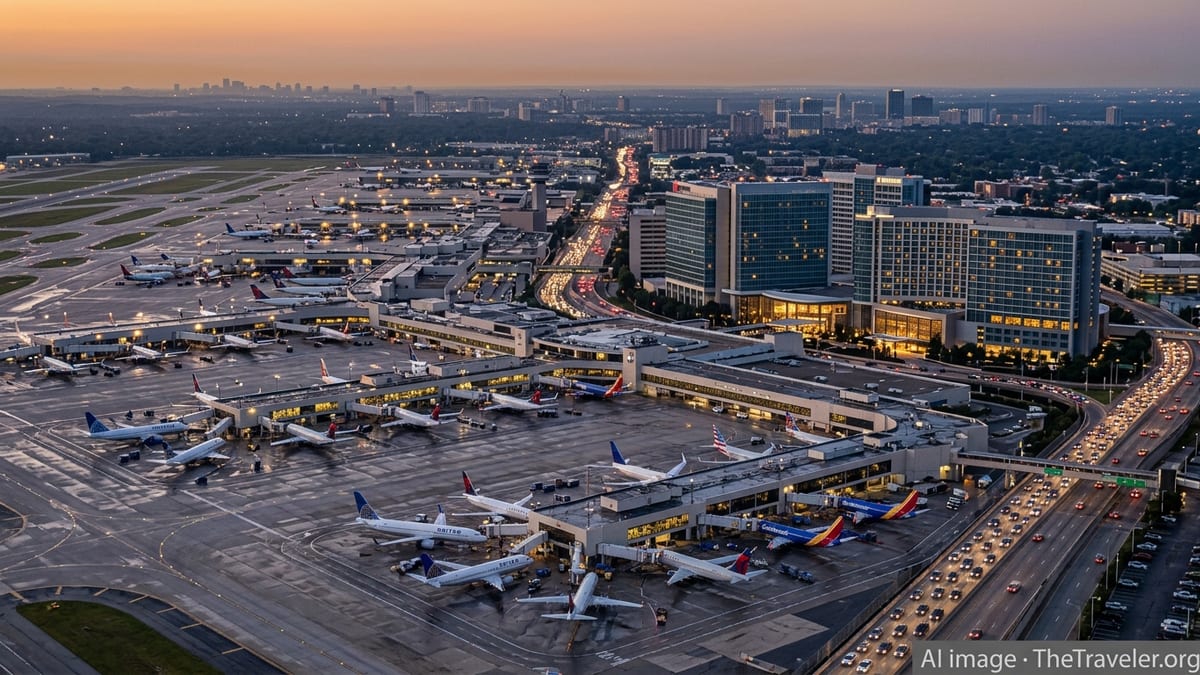
Fuel Notices at Four Northern Italian Gateways
Published information from aviation advisories indicates that at least four airports in northern Italy have introduced temporary limits on jet fuel uplift, prompting carriers to adjust refuelling plans in the first half of April. Notices to air missions describe reduced availability of Jet A1 at Bologna Guglielmo Marconi, Milan Linate, Venice Marco Polo and Treviso, with restrictions generally applying through April 9.
Operational updates circulated to airlines describe the measures as precautionary rationing rather than an outright shortage. Aircraft are being asked to arrive with additional fuel from previous sectors or to restrict the volume taken on in Italy, in order to spread existing stocks more evenly across scheduled traffic.
Reports from specialist aviation outlets note that Venice faces some of the tightest constraints, with guidance for flight crews to plan enough fuel at departure from prior airports to cover onward rotations. For Bologna, Milan Linate and Treviso, the language used highlights “reduced” or “limited” availability, signalling that fuel remains accessible but not in unrestricted quantities.
Industry coverage frames the move as an early European example of how the global fuel shock triggered by tensions in the Gulf is beginning to intersect with day to day airport operations, even though the current Italian measures remain time limited and targeted.
Link to the Middle East Energy Shock
The advisories come against the backdrop of a deepening crisis in the Middle East, where conflict involving Iran has led to significant disruption in oil and refined product flows. Analysis from international agencies and industry groups describes the closure or partial blockage of the Strait of Hormuz as one of the most severe supply shocks in the history of the global oil market.
The waterway is a critical artery for both crude oil and jet fuel exports from Gulf producers. With tanker movements curtailed and several refineries and gas facilities in the region damaged or operating under constraint, Europe’s reliance on imported aviation fuel has become a key vulnerability. Commentators note that Europe typically sources a substantial share of its jet fuel from the Middle East, leaving airlines and airports exposed when those seaborne deliveries are disrupted.
Recent economic briefings show that jet fuel prices in Europe have climbed sharply since late February, outpacing gains in other oil products as refiners grapple with logistical bottlenecks and shifting trade flows. The Italian notices, while localised, are being interpreted by analysts as a signal that the pricing shock is beginning to be matched by tangible availability issues at specific hubs.
Strategic assessments from aviation bodies in recent weeks have warned that jet fuel, unlike some other energy commodities, is difficult to substitute quickly, and that the sector therefore sits at the “sharp edge” of current supply dislocations. The Italian experience is being closely watched as an indicator of how quickly pressures might spread to other European gateways if the crisis persists.
Impact on Passengers and Airline Operations
For travelers, the immediate impact of the Italian fuel advisories is expected to manifest mainly through schedule fine tuning rather than widespread cancellations. Airline operations teams can respond to uplift limits by tankering extra fuel from less affected airports, swapping aircraft types on certain routes, or rerouting some services through alternative hubs with more comfortable stock levels.
Travel industry bulletins recommend that passengers booked to or from Bologna, Milan Linate, Venice and Treviso over the coming days monitor airline communications closely, particularly for tight connections and late evening departures, when operational margins are thinner. Some last minute aircraft changes, minor retimings or rebookings through larger hubs such as Milan Malpensa or Rome Fiumicino remain possible if fuel management plans need to be adjusted.
Low cost and point to point carriers that typically operate with short ground times may face additional operational complexity, as carrying more fuel reduces payload capacity and can affect performance on shorter runways. Network airlines, by contrast, may be able to spread the impact across their systems, drawing on larger fuel contracts and a wider range of alternate airports for refuelling.
Travel advisors currently describe the situation as manageable, with airlines still emphasizing continuity of service over cuts in capacity. However, they also highlight that operational resilience will be tested if the Middle East crisis continues to constrain tanker traffic into Europe through the spring and summer high season.
Government Response and Energy Security Context
The fuel notices coincide with a broader Italian push to shore up energy security in response to the evolving crisis. Recent international coverage shows Prime Minister Giorgia Meloni undertaking a rapid diplomatic tour of Saudi Arabia, Qatar and the United Arab Emirates, with the stated goal of reinforcing ties with key energy suppliers and calming volatility in fuel markets.
Economic commentary points out that Italy entered 2026 with a significant share of its oil and gas imports still tied to Middle Eastern producers, even after efforts since 2022 to diversify away from Russian supplies. The interruption of shipping through Hormuz has therefore raised fresh questions about how quickly the country and the wider European Union can build more resilient supply chains for both power generation and transportation fuels.
Think tank reports argue that the jet fuel strain at Italian airports illustrates the wider challenge: aviation has less flexibility than other sectors to switch to alternative energy sources in the near term, making it heavily dependent on secure access to refined products. Calls are growing in policy circles for targeted strategic reserves of aviation fuel, improved coordination between airports and energy planners, and faster progress on efficiency and sustainable aviation fuel deployment.
At the same time, analysts caution that the immediate Italian airport measures are limited in scope and duration, and are being used as a tool to prevent more severe disruption later. By rationing supply in a controlled way and signalling constraints early, authorities and fuel suppliers aim to stretch stocks while the international community seeks diplomatic and commercial pathways to ease the blockade’s impact.
What Travelers Should Watch in the Coming Weeks
Looking ahead, travel experts advise that the key variable for passengers will be the duration and intensity of the Middle East energy disruption. If tanker routes through or around the Gulf remain heavily constrained into late spring, the risk of broader jet fuel tightening across Europe is expected to rise, potentially forcing airlines to trim flight programs or raise surcharges.
For now, published airline guidance continues to encourage travel within Europe, while acknowledging that the margin for operational surprises has narrowed. Observers suggest that travelers with trips involving multiple connections, peak holiday weekends or smaller regional airports should pay particular attention to any updates from carriers and tour operators.
Industry analysts are also watching whether other European states begin to mirror Italy’s approach with targeted fuel advisories at selected hubs. Any expansion of such measures would signal that the shock to jet fuel logistics is becoming more widespread, with implications for fares, capacity and route networks across the continent.
In the meantime, the Italian notices serve as an early marker of how a distant geopolitical flashpoint in the Middle East is feeding directly into day to day passenger journeys, underscoring the tight links between global energy flows and the freedom of movement that underpins modern air travel.