

More news on this day
Air travelers to, from, and within Italy on Friday, April 10, 2026 face widespread disruption as a four-hour national air traffic control strike is expected to affect flight schedules across the country’s main airports and airspace.
Get the latest news straight to your inbox!
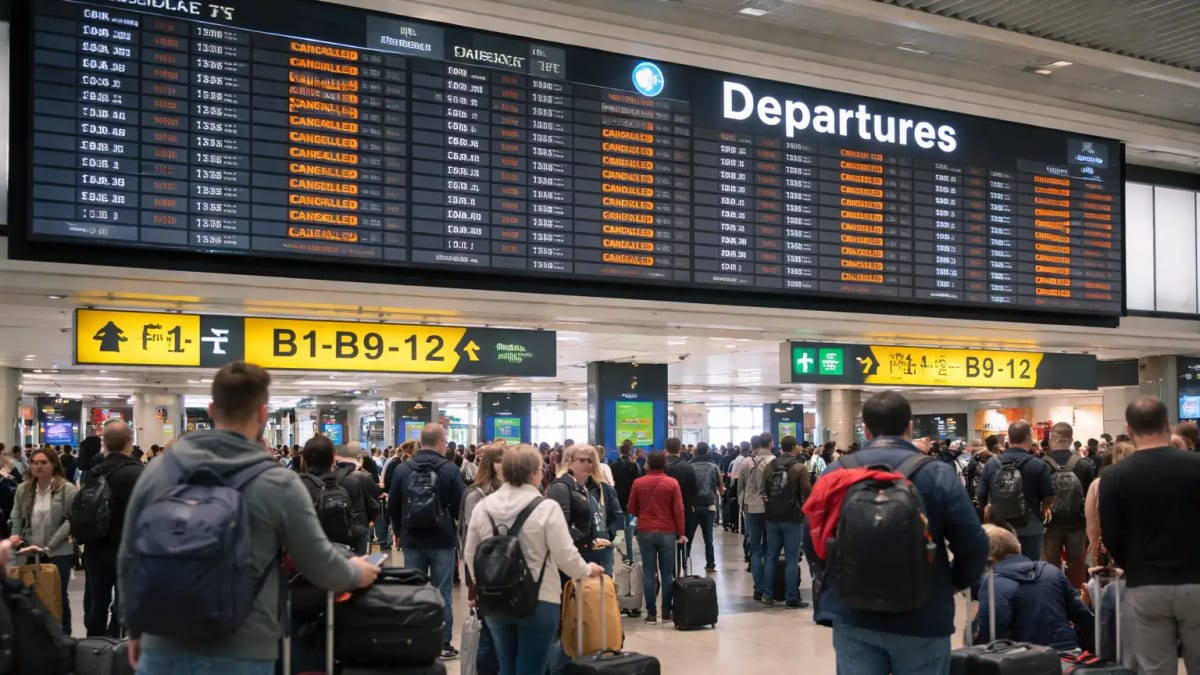
Nationwide walkout to hit Italian airspace and major hubs
Publicly available strike notices from Italy’s air navigation service provider ENAV show that air traffic control personnel and linked technical staff have called a coordinated national walkout for Friday, April 10, between 13:00 and 17:00 local time. The industrial action focuses on the systems and professionals that manage Italian airspace, rather than on a single airline, raising the likelihood of widespread schedule changes.
Reports from Italian and international travel outlets indicate that the strike will touch key en route control centers serving Rome and Milan, as well as approach and tower services at busy airports including Rome Fiumicino, Rome Ciampino, Milan Malpensa, and Naples Capodichino. Regional airports such as Olbia Costa Smeralda in Sardinia have also issued advisories warning passengers of potential delays and cancellations during the four-hour window.
While the formal strike period is limited to the afternoon, disruption is expected to ripple across the day as airlines adjust operations to reduced air traffic control capacity. Flights scheduled to depart or arrive immediately before and after the 13:00 to 17:00 slot may be retimed or consolidated to keep traffic within safety and flow-management limits.
Industry analyses note that because ENAV is responsible for both en route and terminal air traffic management, the impact will not be confined to point-to-point domestic services. International routes crossing Italian airspace, including long-haul connections, could face rerouting or holding patterns, particularly during the busiest hours of the stoppage.
Unions escalate aviation labor dispute during peak spring travel
According to published coverage of the strike calendar, the April 10 action is part of a broader wave of transport labor disputes in Italy in 2026, following earlier stoppages in rail and local public transit. Multiple unions representing aviation and technical staff have backed the four-hour protest, citing long-running concerns over working conditions, staffing levels, and the implementation of new technologies in traffic management systems.
Reports indicate that personnel at Techno Sky, the company responsible for maintenance and operation of critical flight management and navigation systems, will join ENAV staff in the walkout. The combined participation of air traffic controllers and technical specialists raises the potential operational impact, since any degradation in either staffing or systems availability can constrain the overall volume of aircraft allowed in the sky at a given time.
Travel and business media describe April 10 as one of the most significant aviation strike dates of the month, with several distinct actions converging on the same afternoon window. This clustering increases the likelihood of bottlenecks at major hubs, where high traffic density and complex runway operations leave limited flexibility to absorb last-minute staffing shortfalls.
With the strike falling in the middle of the European spring travel season, analysts point out that even a four-hour interruption may create knock-on effects as aircraft and crews fall out of position. Short-haul carriers operating multiple daily rotations through Italian airports may be forced to cancel select flights outright in order to restore schedules later in the day.
Legal protections and partial service guarantees
Italy’s strike regulations for essential public services require a basic level of air transport to be maintained, including certain categories of flights such as medical, emergency, and some long-haul or island connections. ENAV and airports have reiterated in public notices that minimum essential services will be guaranteed, with specific time bands designated in which operations must be safeguarded.
Information released by several airports indicates that morning and evening time slots outside the core strike window will see a higher level of protection, meaning a proportion of flights should operate more or less as scheduled. At Olbia, for example, notices specify guaranteed operating bands in the early morning and early evening, even as the 13:00 to 17:00 period is flagged for possible disruption.
Despite these guarantees, industry observers stress that most regular commercial passenger flights remain exposed to delay or cancellation if airlines judge that traffic capacity or ground handling support will be insufficient. Carriers typically coordinate closely with air traffic flow management to decide which services can safely operate, sometimes reducing frequencies on busy domestic routes or trimming marginal flights that require tight turnarounds.
Consumer-rights guidance circulating ahead of April 10 notes that passengers affected by cancellations may have rebooking or refund rights under European air passenger regulations, depending on the circumstances and notice period. However, travelers are being cautioned that high demand around the strike date could limit same-day alternatives, especially on popular city pairs and long-haul connections.
Airlines adjust schedules and issue travel waivers
Several major airlines using Italian airports and airspace have begun updating schedules and issuing advisories in response to the planned industrial action. Publicly available information shows that carriers are reviewing flights that fall within or close to the 13:00 to 17:00 window on April 10, with some introducing flexible rebooking policies to ease congestion and give passengers options.
Travel industry reports highlight that both Italian and foreign airlines are likely to focus first on maintaining core trunk routes and key long-haul services, while being more willing to adjust or cancel secondary frequencies. In previous Italian aviation strikes, flag carriers and low-cost operators have often cut selected mid-day departures, while attempting to preserve early-morning and late-evening flights that sit outside the peak disruption period.
Advisories from international carriers serving Italy suggest that passengers scheduled to travel on April 9 and 10 may qualify for voluntary change waivers, allowing them to move journeys to surrounding dates without additional fees, subject to availability. These measures are designed to reduce the number of travelers in the system on the strike day itself and limit congestion at check-in and customer service desks.
Analysts note that some airlines may also re-time flights to arrive just before the strike begins or to depart once staffing coverage resumes, particularly on high-value or strategically important routes. However, such adjustments are constrained by aircraft rotations and slot availability at busy European hubs, meaning not all services can be re-accommodated in this way.
What passengers can expect at Italian airports
Travel advisories from Italian airports emphasize that passengers flying on April 10 should prepare for longer queues, last-minute gate changes, and the possibility of significant delays in both departures and arrivals. Security screening and border control are not the primary targets of the strike, but knock-on effects from disrupted flight banks can still lead to crowding in terminals.
Experts in air traffic management explain that during controller strikes, capacity at affected airports is typically reduced by imposing strict limits on the number of arrivals and departures per hour. Aircraft may be held at their origin airports until a landing slot becomes available in Italy, leading to extended ground delays even when weather and technical conditions are otherwise normal.
Passengers arriving into Italy during the strike window could be subject to holding patterns in the air, diversions to alternative airports, or longer taxi times on the ground if runway movements are rationed. Those connecting through Italian hubs face an elevated risk of missed onward flights, especially where layovers are short or require terminal changes.
Travel commentators suggest that anyone whose plans are flexible may wish to avoid nonessential flying during the afternoon of April 10, particularly on domestic routes that offer rail alternatives. For those who must travel, carrying essential items in hand luggage, monitoring airline apps and airport information screens, and allowing generous time buffers for connections are being widely recommended as pragmatic steps to navigate the disruption.