

More news on this day
Air passengers traveling through Rome and Milan on Friday 10 April 2026 face widespread disruption as a four hour national aviation strike is set to affect air traffic control and airport operations across Italy.
Get the latest news straight to your inbox!
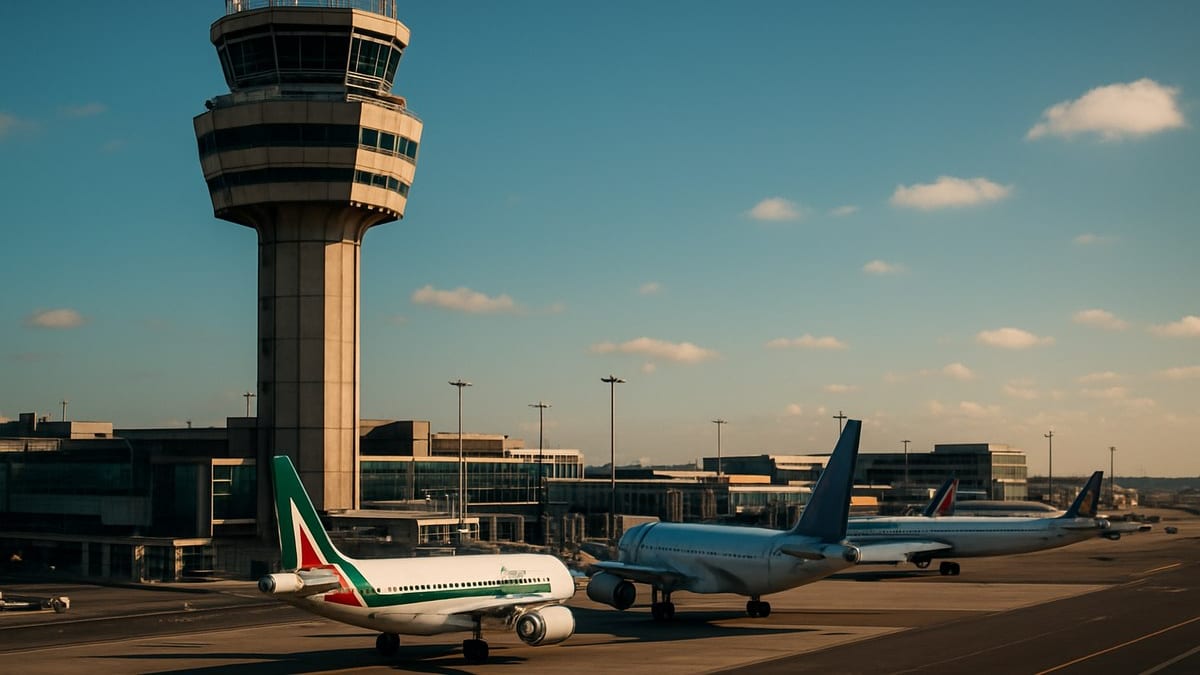
Nationwide Four Hour Walkout Targets Air Traffic Control
According to public advisories and union announcements, aviation workers across Italy will stage a coordinated walkout on 10 April from 13:00 to 17:00 local time. The industrial action involves air traffic controllers employed by ENAV, the national air navigation service provider, as well as technical and support staff in the wider aviation sector.
Official strike filings published in recent days indicate that the stoppage has been formally registered with the Italian transport ministry, a legal requirement that confirms both the date and the four hour time window. Travel risk bulletins circulated this week describe the action as a national event, meaning that disruption is expected at multiple airports rather than being confined to a single region.
Because air traffic control services sit at the core of flight operations, even a limited four hour strike is likely to have knock on effects before and after the official window. Airlines routinely adjust schedules in advance, rerouting or retiming services to avoid the peak impact period, and airport operators may reduce flight volumes to maintain safety margins while staffing is constrained.
Industry coverage notes that the 10 April action follows a series of shorter strikes in early 2026 over contract renewals, staffing levels and working conditions in Italy’s aviation sector. Previous walkouts have led to significant delays and dozens of cancellations, particularly on short haul and domestic routes.
Rome Fiumicino and Ciampino Prepare for Disruption
Rome’s main international gateway, Leonardo da Vinci Fiumicino Airport, is expected to be among the most affected hubs on 10 April. Publicly available operational data show that Fiumicino currently handles some of the highest daily flight volumes in Italy, serving national flag carrier ITA Airways alongside major European and long haul airlines.
Travel advisories highlight that the national air traffic control strike includes the Rome area control center, which manages a significant portion of Italian airspace and approaches for both Fiumicino and the smaller Rome Ciampino Airport. As a result, both airports could see a combination of cancellations, extended ground holds and en route delays while reduced staffing is in effect.
Italian civil aviation rules require the protection of certain “essential” services during industrial action, including guaranteed time bands in the early morning and evening. Flights scheduled to depart Rome during those protected windows are more likely to operate, although they may still be affected indirectly by aircraft and crew being out of position from earlier disruptions.
Travel oriented publications advise passengers flying to or from Rome on 10 April to monitor airline communication channels closely, as carriers are beginning to publish updated timetables and lists of guaranteed services. Some operators are reported to be offering voluntary rebooking options for customers willing to move trips to non strike days or flights outside the 13:00 to 17:00 period.
Milan Malpensa and Linate Face Knock On Effects
Milan’s twin airports, Malpensa and Linate, are also forecast to experience significant operational challenges during the walkout. Recent traffic planning documents indicate that Malpensa and Linate rank among Italy’s busiest airports by daily movements, serving both business and leisure markets across Europe and beyond.
Regional coverage notes that the strike involves air traffic control centers responsible for upper airspace and approach services in northern Italy, including the sectors that manage arrivals and departures for Milan’s airports. Any reduction in capacity at these units typically forces airlines and airports to trim schedules and extend turnaround times in order to avoid congestion in the terminal airspace.
Travel media point out that Milan has seen notable aviation strikes in previous years, with earlier actions causing dozens of cancellations in a single day. Based on those precedents, passengers traveling through Malpensa or Linate in the early afternoon of 10 April should prepare for potential schedule changes, including aircraft swaps, retimings and consolidations of lightly booked flights.
Experts cited in transport analyses suggest that long haul flights to and from Milan, particularly those departing outside the main strike window, may be relatively less affected, while high frequency domestic and regional services bear the brunt of any reductions. However, knock on delays can still arise if inbound aircraft arrive late from other Italian airports touched by the strike.
Airline Cancellations and Passenger Options
Consumer focused outlets report that airlines have already begun to adjust their 10 April operations. ITA Airways, the Italian flag carrier and largest operator at Rome Fiumicino, has publicly indicated that it will cancel a notable share of its scheduled services that day in response to the four hour walkout and associated airspace restrictions.
Budget carriers with a strong presence in Italy, including those serving Milan and Rome, are also revising their programmes. Aviation news coverage notes that some low cost airlines have issued travel waivers or offered free rebooking for passengers booked on affected routes, while others are proactively reshuffling flights to outside the strike hours where possible.
Italian aviation regulations require that an updated list of guaranteed flights be published ahead of the strike, covering connections deemed essential for connectivity or public necessity. Once this list is released, passengers will be able to see which services are expected to operate even if broader reductions remain in place.
Travel advisors recommend that passengers due to fly on 10 April confirm their contact details in airline booking systems so they can receive email or SMS notifications about schedule changes. Those with tight onward connections, particularly intercontinental itineraries transiting Rome or Milan, are being encouraged to consider moving to morning departures or to adjacent dates where capacity is still available.
What Travelers Through Rome and Milan Should Do Now
With the strike now formally scheduled, travel guidance platforms suggest that passengers take practical steps in the days leading up to 10 April. These include checking the latest status of flights via airline apps, avoiding unprotected self connections between separate tickets, and allowing additional time for airport formalities in case of crowding at check in and security.
For journeys that absolutely cannot be rescheduled, some analysts recommend booking departures outside the 13:00 to 17:00 window and favoring flights that operate in the legally protected time bands. Where rail links are available, particularly between Italian cities and Milan or Rome, travelers may also wish to use train services to position themselves the night before, reducing reliance on same day feeder flights that could be cancelled.
Travel news outlets underline that while the 10 April strike is limited to four hours, its national scope means that ripple effects may be felt into the evening and potentially into early services on 11 April as aircraft and crews return to normal rotations. Passengers are therefore advised to keep monitoring information even after the official end time.
Despite the expected disruption, Italian authorities and aviation stakeholders stress that safety will remain the overriding priority, with traffic levels managed conservatively while staffing is reduced. For those who stay informed and build flexibility into their plans, travel to and from Rome and Milan around 10 April should remain possible, even if journeys take longer than originally scheduled.