

More news on this day
Italy is heading into one of its most turbulent travel months in years, with nationwide rail and air strikes scheduled across February, mounting local transport stoppages, and fresh rail sabotage incidents all converging just as the country hosts the Milano Cortina 2026 Winter Olympics.
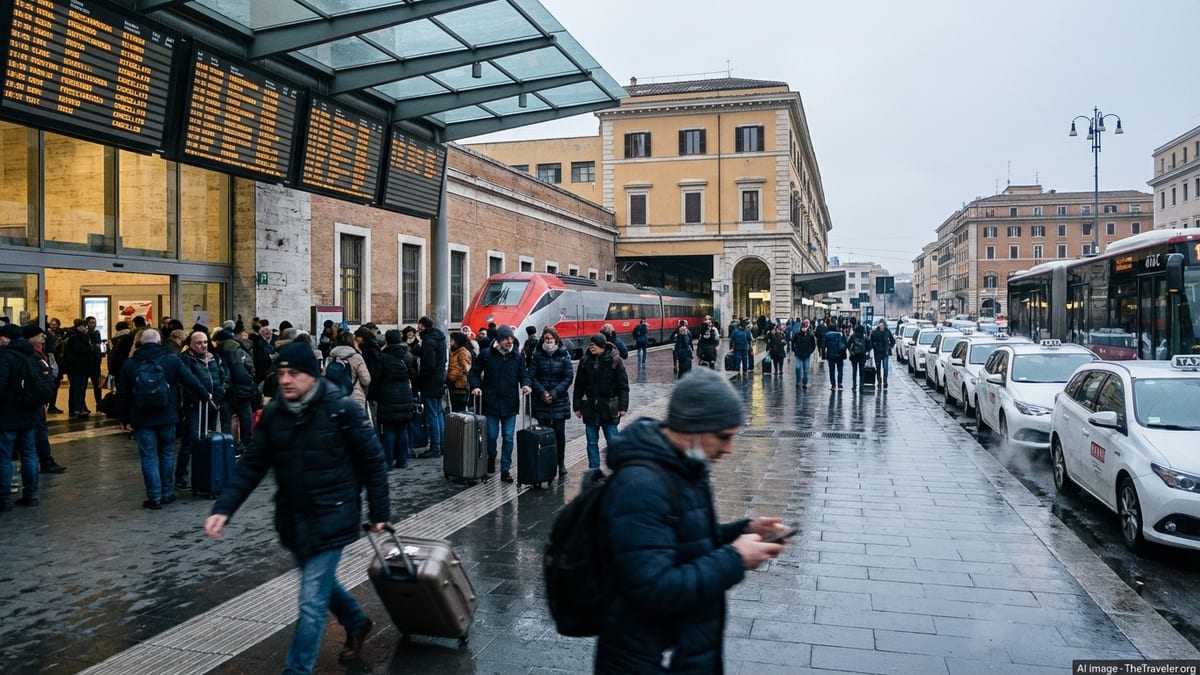
Nationwide Strikes Collide With Winter Olympics Travel
February is typically a busy period for Italy’s transport network, but this year’s calendar of strikes coincides with the Milano Cortina 2026 Winter Olympics and Venice Carnival, dramatically raising the stakes for travelers. Italian unions representing air and rail workers have confirmed a series of national walkouts that will affect key travel days throughout the month, adding strain to a system already coping with heavy seasonal demand and security concerns.
The most disruptive actions are expected around two headline dates. A 24-hour national air transport strike is set for Monday 16 February, threatening flight schedules across the country’s major airports. At the end of the month, a 24-hour nationwide strike by train drivers and on-board staff at the state rail group Ferrovie dello Stato Italiane is scheduled from the evening of Friday 27 February into Saturday 28 February, affecting long-distance and regional rail links across the peninsula.
Authorities have reiterated that Italy’s strict strike regulations guarantee minimum services during specific time windows, but operators and passenger advocates warn that large parts of the daily timetable fall outside those protected periods. As a result, tens of thousands of travelers could face cancellations, long delays or rebookings on already crowded services.
The strikes unfold against the backdrop of Italy’s efforts to present a smooth, modern transport system to the world during the Olympics. The timing has drawn criticism from government officials, who accuse unions of undermining the country’s image, even as labor leaders insist that collective bargaining disputes have been left unresolved for too long.
Air Transport Walkouts to Hit Key Italian Gateways
The most immediate disruption will come from the air transport strike on 16 February, a 24-hour walkout that will involve staff linked to ITA Airways, cabin crew at Vueling and ground handling teams at Milan Linate and Milan Malpensa airports. The action, called by several major transport unions, targets what they describe as stalled contract talks, workload pressures and dissatisfaction with corporate restructuring plans in the sector.
Italian civil aviation rules require airlines to operate flights during two safety and mobility protection windows, from 07:00 to 10:00 and from 18:00 to 21:00, even during strikes. However, industry data suggest that nearly 70 percent of ITA Airways flights scheduled for 16 February fall outside those guaranteed time bands, leaving a large share of the day’s operations at risk of cancellation or significant delay. Travel analysts estimate the industrial action could affect between 25,000 and 27,000 air passengers on that day alone.
Rome Fiumicino, Milan Malpensa and Milan Linate are expected to bear the brunt of the disruption, but knock-on effects are likely at other busy gateways including Venice Marco Polo, Bergamo Orio al Serio, Verona and Catania. Low cost and foreign carriers may be indirectly impacted as airport congestion builds and handling services are stretched.
Unions have rebuffed calls by Italy’s transport ministry and the national strike authority to reschedule the strike outside the Olympic window. Senior government figures, including Transport Minister Matteo Salvini, have publicly complained that the timing amounts to a deliberate attempt to embarrass the country while global attention is focused on the Games. Union leaders counter that their dispute is rooted in pay, staffing and job security issues that long predate the Olympics, and argue that high-profile dates are the only way to force talks forward.
Rail Strike at Month’s End Threatens Long-Distance Links
For rail passengers, the sharpest disruptions are expected at the end of February, when drivers and on-board staff across the Ferrovie dello Stato Italiane group plan a 24-hour national strike. The walkout is scheduled to start at 21:00 on Friday 27 February and run until 20:59 on Saturday 28 February, hitting one of the busiest travel weekends of the month.
The action will affect a wide spectrum of services, including high-speed Frecce trains on main corridors such as Milan–Rome–Naples, Intercity connections between major cities and regional routes used by commuters and tourists alike. While some trains will operate in statutory guarantee windows, rail operators warn that the late-evening and early-morning hours on both days, as well as many daytime departures, are vulnerable to cancellation or heavy delays.
Italy’s national strike rules protect a limited set of essential services, particularly early-morning and late-afternoon trains that are considered crucial for commuters. Outside those bands, however, timetables can be heavily reduced. Travelers with tight connections, such as late arrivals from abroad followed by early trains to ski resorts or art cities, are being urged to reconsider their plans by adding overnight stays or shifting journeys to non-strike days.
The rail strike comes on top of already fragile confidence in the network after recent acts of sabotage in early February caused extensive delays on critical routes. Passenger groups say the combination of industrial unrest and security incidents has left many travelers wary of relying on Italy’s trains for long-planned winter trips.
Sabotage Incidents Add Tension to an Already Fragile Network
Italy’s rail system has in recent weeks faced an additional, non-union threat in the form of suspected sabotage attacks targeting infrastructure during the Winter Olympics period. Early in February, coordinated damage to signaling and control equipment near major hubs such as Bologna and along routes serving the north of the country triggered hours of delays and cancellations for tens of thousands of passengers.
Days later, new incidents were reported on high-speed lines linking Rome with Florence and Rome with Naples, where control cables and trackside installations were deliberately damaged, according to the state rail operator. Investigators have suggested that arson was likely in some of the cases and have opened terrorism-related inquiries, drawing parallels with previous attempts to disrupt rail networks during international events in Europe.
Authorities have not confirmed any direct link between the sabotage and domestic labor disputes, and unions have condemned the attacks. Officials note, however, that the incidents compound the perception of instability on Italy’s railways at a time when the system is under intense pressure. Security has been stepped up along key rail corridors, with increased patrols and monitoring near tunnels, bridges and critical junctions.
For travelers, the practical implication is that even on non-strike days, timetables may be more prone to sudden disruption while infrastructure repairs continue and security checks are tightened. Travel experts advise allowing generous buffers between connections, especially for itineraries linking rail journeys with flights or time-sensitive events.
Local Transport Strikes Multiply Across Regions
Beyond the headline national actions, February’s strike calendar in Italy is dotted with a series of local public transport stoppages that could complicate city-level movements for visitors. These include 24-hour or limited-hour walkouts affecting bus and tram networks in destinations such as Bolzano, Campobasso, Udine and Catania on various dates throughout the month.
In Bolzano, staff at the SASA urban transport company have already staged one 24-hour strike and have another day of action scheduled later in February, affecting bus services within the city and nearby communities. In Campobasso and Termoli, union-led stoppages are reducing local bus frequencies, while in Udine an afternoon-to-midnight strike has disrupted both urban and interurban routes. Catania’s AMTS network is also subject to a four-hour strike window this month, which can coincide awkwardly with peak sightseeing and airport transfer times.
National unions have in addition called a 24-hour strike across local public transport, including metro, bus and tram services, for 25 February. In major cities such as Rome and Milan, operators have published indicative guarantee bands, but riders should expect substantially reduced service outside those windows. For tourists relying on public transport to reach museums, archaeological sites or Olympic events, even a short, localized stoppage can cause missed time slots and last-minute itinerary reshuffles.
Travel advisors note that local strikes are often confirmed only weeks or even days in advance, and can be postponed or modified at short notice. Visitors are encouraged to monitor local news and operator announcements in the specific cities they plan to visit, and to keep walking distances and taxi availability in mind as back-up options.
Why Workers Are Striking: Pay, Contracts and Safety
Behind the disruption lies a complex web of grievances spanning pay, workloads, safety and long-term job security. In the aviation sector, unions representing staff at ITA Airways and other carriers argue that collective labor agreements have not kept pace with inflation and evolving working conditions. They criticize what they see as aggressive cost-cutting and restructuring that, in their view, undermine service quality and worker protections.
Rail unions similarly cite stalled negotiations on contract renewals and staffing levels, particularly for on-board and driving personnel in the state rail group. Some representatives point to heavy traffic linked to the Winter Olympics and Carnival season as a stress test that exposes chronic shortages and fatigue among frontline workers. They insist that striking during a high-profile period is the most effective way to draw attention to the issues.
Government officials, for their part, argue that unions are wielding an outsized veto over national mobility at a moment when Italy is investing heavily in transport infrastructure and international tourism marketing. The national strikes authority has attempted to balance the right to industrial action with the need to protect essential services, recommending alternative dates in some cases, though its guidance is not always followed.
The broader debate has taken on a political tone, with ministers accusing some unions of acting irresponsibly and opposition parties defending workers’ rights to protest. For now, there is little sign of a rapid breakthrough in negotiations, leaving travelers caught in the crossfire of a dispute that shows no sign of abating.
Practical Advice for Travelers in February
With multiple layers of disruption affecting Italy’s trains, planes and local transport throughout February, travel specialists are urging visitors to build as much flexibility into their plans as possible. For those yet to book, one key recommendation is to avoid scheduling long-distance journeys or critical flights on the main strike dates of 16, 25, 27 and 28 February, when cancellations and delays are most likely.
Where travel on those days is unavoidable, experts suggest choosing departures that fall within officially guaranteed time windows, such as early morning or early evening slots specified by Italian regulations. Direct routes are preferable to tight connections, and travelers should factor in extra time for airport check-in and transfers, particularly in cities where local transport may also be affected.
Passengers already holding tickets are advised to monitor their airline or rail operator’s alerts closely, as many carriers offer fee-free rebooking or refunds when industrial action is announced. Travel insurance policies should be reviewed carefully to confirm whether they cover strike-related disruptions and what documentation is needed to file a claim.
On the ground, having a Plan B can make a significant difference. In major cities, that might mean mapping out walkable routes between central districts, budgeting for taxis during peak disruption hours or considering car rentals on days when rail links are uncertain. For travelers heading to smaller towns or ski resorts that rely heavily on regional trains and buses, contacting accommodation providers in advance for local transport updates can help avoid last-minute surprises.
Italy’s Brand as a Destination Under Pressure
The convergence of strikes and security incidents this February presents a test for Italy’s reputation as a reliable, welcoming destination, especially at a moment when the country is enjoying unprecedented global visibility as host of the Winter Olympics. Tourism businesses, from hotels and tour operators to restaurants and cultural sites, are watching nervously as travelers weigh the risks of disruption against the draw of Italy’s marquee events.
Some operators report a rise in inquiries from clients seeking clarification on the likely impact of strikes, along with a modest uptick in booking shifts away from the main strike dates. Others fear that images of crowded terminals, delayed trains and stranded passengers could deter last-minute visitors or push them toward rival European destinations with more stable transport conditions.
Industry groups are calling on the government and unions to prioritize mediation and to give as much notice as possible of any changes to the strike calendar. They argue that clear communication, robust contingency planning and visible efforts to keep key tourist corridors functioning can mitigate at least some of the reputational damage.
For now, though, February in Italy is shaping up as a month where flexibility, patience and up-to-the-minute information will be essential parts of any travel plan. Tourists determined to experience the Olympics, Carnival or the quieter charms of Italy’s winter landscapes will likely still come, but many will do so with back-up itineraries in hand and one eye on the latest transport updates.