

More news on this day
Italy is entering 2026 as one of the most sought-after destinations in global tourism, riding a wave of record visitor numbers and a rapid shift toward AI-powered travel planning that is reshaping how travelers choose, customize, and book their Italian escapes.
Get the latest news straight to your inbox!
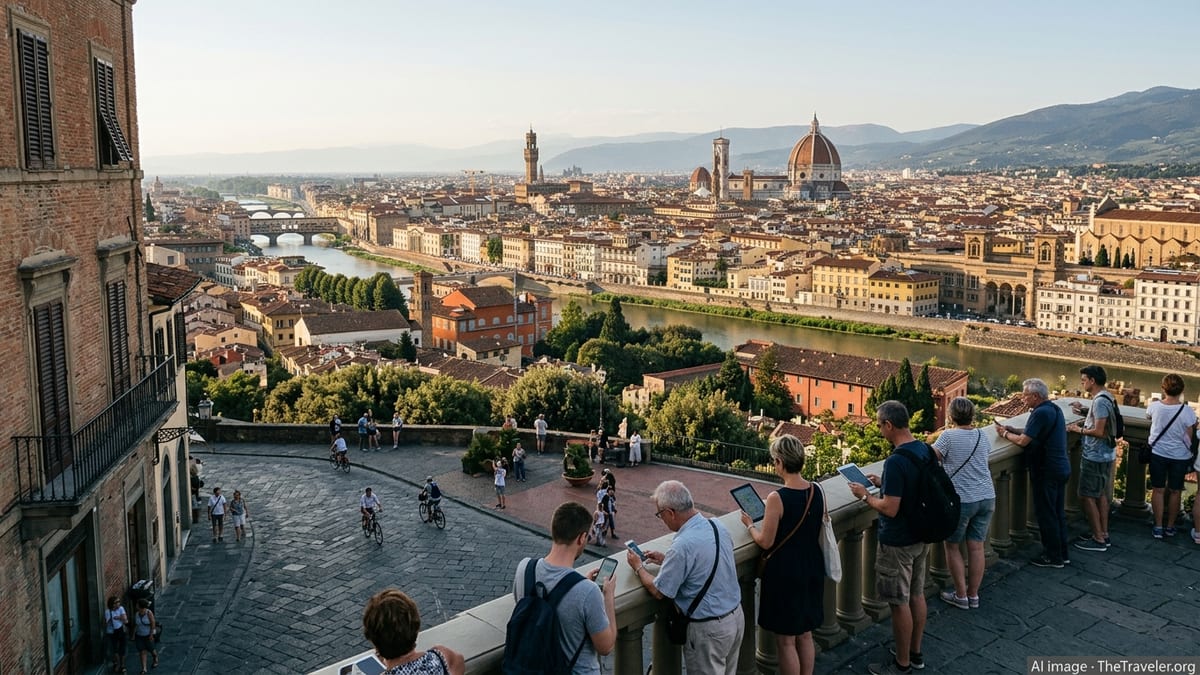
Record Tourism Momentum Puts Italy Ahead of Global Rivals
Recent tourism data and industry analyses indicate that Italy is consolidating a leading position in Europe after a string of record-breaking years for visitor arrivals and overnight stays. Official statistics and sector observatories report that total tourist arrivals surpassed 180 million in 2025, with foreign visitors growing faster than domestic demand and helping to push overnight stays to new highs. This performance places Italy at or near the top of European rankings by total nights spent, alongside or ahead of traditional powerhouses such as France and Spain.
The trend is underpinned by a broad mix of demand from North America, Europe, and emerging long-haul markets. National and regional monitoring bodies describe sustained year-on-year increases across city breaks, coastal resorts, and nature destinations, with major cultural events, art exhibitions, and religious commemorations further boosting arrivals. Forecasts for 2026 suggest that Italy’s visitor economy will continue to outpace many competitors, reinforcing the country’s appeal to travelers weighing it against Canada, the United States, Mexico, France, and Spain.
Italy’s tourism growth is also increasingly visible in source-market reports. Analyses of outbound travel from Canada list Italy among the top international destinations for 2026 leisure trips, ahead of other European staples for certain segments. At the same time, U.S. travel data show continued expansion in American arrivals, with spending in Italy rising as visitors stay longer and opt for higher-value experiences. These dynamics are helping to shift the perception of Italy from a once-in-a-lifetime tour to a repeat, all-season choice.
By early 2026, publicly available industry commentary frequently framed Italy as a benchmark destination for combining volume, value, and diversity of experiences, from alpine landscapes and lakes to coastal villages and historic cities. As global travelers reconsider where to invest their long-haul trips, Italy’s recent performance and forward bookings position it as a frontrunner in the competition for 2026 vacation spending.
AI Travel Assistants Redefine How Italy Trips Are Planned
The rapid rise of AI-powered travel assistants is changing how travelers discover and plan trips to Italy, making the country more visible and accessible at the inspiration stage. Research on specialized travel-planning agents published in 2025 shows that multi-agent AI systems can transform open-ended requests into feasible itineraries that respect timing, budget, and preference constraints more reliably than earlier chat-based tools. Experimental frameworks such as DeepTravel, Vaiage, and TriFlow demonstrate that these systems can analyze transportation options, attraction opening hours, and route logistics to generate realistic day-by-day schedules.
Consumer-facing tools are following similar principles. AI travel bots embedded in messaging apps, web platforms, and search interfaces now parse vague prompts such as “a two-week art and food trip in Italy next May, avoiding crowds” and return tailored routes that adjust automatically as travelers refine their preferences. Studies on multimodal models like TraveLLaMA highlight how newer systems can interpret photos, maps, and street scenes, allowing travelers to ask follow-up questions about neighborhoods in Rome, viewpoints above Florence, or hiking paths in the Dolomites using images rather than only text.
These advances are especially important in a destination with dense cultural assets and complex transport networks. Italy’s patchwork of regional rail lines, historic centers with restricted traffic zones, and a high concentration of UNESCO sites can be daunting for first-time visitors who previously depended on guidebooks or generic package tours. By surfacing point-to-point options, suggesting off-peak visiting windows, and flagging potential bottlenecks, AI trip planners reduce friction and make ambitious multi-city itineraries feel manageable, encouraging travelers to choose Italy over destinations with simpler but less compelling offerings.
Publicly available surveys on AI adoption in business underline how quickly these capabilities are moving into mainstream tools. A 2025 management study cited by technology analysts found that a growing share of organizations had already deployed agentic AI, with many more planning near-term rollouts. As large travel platforms integrate similar agents, Italy’s hotel inventory, rail timetables, and local experiences become more discoverable to travelers who no longer need to be experts in European geography to map out a sophisticated circuit.
Hyper-Personalized Suggestions Shift Demand Within Italy
While Italy’s headline numbers capture international attention, AI-driven personalization is reshaping where within the country visitors actually go. Search and booking data shared in recent industry reports point to sharp increases in interest for secondary and coastal cities such as Alghero in Sardinia, which appeared near the top of trending global destinations in one 2026 travel search analysis. These surges are often linked to algorithmic recommendations that prioritize “hidden gems” matching users’ past behavior, budget, and travel history.
Smart itinerary engines draw on large datasets of reviews, social content, and historical bookings to propose combinations of major and lesser-known stops. A traveler who previously focused on hiking and small towns in Canada or the American West, for example, might be steered toward the Dolomites, the Apennines, or hilltop villages in Umbria rather than the standard Rome–Florence–Venice circuit. Over time, this can rebalance demand away from a narrow list of icons and toward wider regions that are actively seeking more year-round tourism.
At the same time, there is growing awareness of overcrowding risks in some hotspots. Media coverage in 2025 highlighted tensions in the Dolomites, where residents voiced concern that rapidly expanding visitor numbers were transforming once-quiet valleys into crowded playgrounds. Local authorities and tourism bodies have responded by experimenting with reservation systems, trail management, and messaging that encourages off-season travel or alternative routes. AI systems that factor in visitor caps, congestion metrics, and sustainability indicators can nudge users toward less stressed destinations and time slots.
For 2026 visitors comparing Italy with Canada’s national parks, Mexico’s beaches, or U.S. road-trip itineraries, these personalized, sustainability-aware suggestions are becoming part of the value proposition. Instead of a generic list of “top ten sights,” travelers receive nuanced pathways through Italian regions that align with their values, whether that means slow food, low-impact hiking, or art-focused city breaks that avoid peak-season bottlenecks.
AI-Optimized Booking Experiences Outpace Traditional Hubs
Beyond trip design, the booking stage is also being reshaped by AI, and Italy is benefiting from this shift. Major travel platforms and emerging startups increasingly rely on machine-learning models to sort through thousands of hotel, apartment, and activity options, ranking them according to price, user profile, and satisfaction patterns. In practice, this means that a family comparing Italy with the United States or Mexico can see dynamically bundled options linking flights, high-speed rail, and family-friendly stays in cities such as Rome, Naples, or Bologna, all tuned to their stated budget and flexibility.
Industry reports on agentic AI adoption describe how travel brands are deploying autonomous agents to monitor fare volatility, rebook disrupted segments, and surface alternative airports or dates without requiring travelers to intervene. For itineraries that cross multiple regions of Italy, these systems can stitch together combinations of domestic flights, trains, and ferries that would have required significant manual research only a few years ago. The result is a booking experience that feels comparable in ease to all-inclusive packages in Mexico or resort stays in the United States, but with a much more customized structure.
Specialist companies are also using AI to connect travel publishers and content creators with bookable inventory, turning articles about Italian destinations into interactive gateways for reservations. By automatically mapping place names, events, and neighborhoods mentioned in travel features to live accommodation and tour options, these intermediaries make it easier for readers to move directly from inspiration to transaction. Italy-focused coverage, which already occupies a prominent place in global travel media, becomes even more commercially powerful under this model.
As more booking flows take place in messaging apps and embedded widgets rather than on traditional search-engine results pages, destinations that are already top-of-mind and richly documented stand to gain. With its dense web of lodgings, tours, and transport options, Italy provides fertile ground for AI systems seeking the best matches for each traveler profile, often pushing it ahead of countries where options are either more limited or less consistently digitized.
Italy’s 2026 Appeal: Culture, Connectivity, and Smart Infrastructure
Underlying Italy’s rise as a 2026 favorite is a blend of classic cultural appeal and modern infrastructure that works well with AI-driven travel tools. Rail improvements on key north-south corridors, expanded regional airport connections, and investment in digital ticketing for museums and attractions make it easier for algorithmic planners to build seamless experiences. Many major sites offer timed-entry systems and online reservations, variables that AI agents can use to minimize queuing and avoid scheduling conflicts.
At the same time, Italy’s cultural calendar for 2026 remains dense, with art biennials, design fairs, food festivals, and sporting events scheduled across the country. Publicly available tourism forecasts point to continued expansion in Europe-wide and global travel volumes, and Italy’s strong recent performance suggests it is well positioned to capture a disproportionate share of that demand. For travelers comparing options, the combination of heritage, cuisine, landscapes, and increasingly frictionless logistics is compelling.
In contrast, several competing destinations are navigating more complex dynamics. The United States continues to attract significant numbers of tourists, but long-haul visitors face evolving visa rules and higher long-distance airfare costs. Canada and Mexico remain popular for nature and resort travel, yet Italy’s concentrated mix of experiences within relatively short travel distances appeals to travelers who want to maximize limited vacation time. France and Spain have both reported near-record visitor volumes, but some urban centers are grappling with housing pressures and overtourism debates that can influence traveler sentiment.
As AI tools become a default layer in how trips are researched, planned, and booked, destinations that combine strong digital footprints with logistical depth are rising to the top of recommendation engines. Italy’s recent tourism records, broad international appeal, and compatibility with emerging AI travel ecosystems are together propelling it into the spotlight for 2026, positioning the country not just as a perennial favorite but as a data-driven, AI-optimized choice for the coming year.