

More news on this day
Air travellers across Italy faced a day of mounting disruption on March 1 as more than 100 flights were delayed and dozens cancelled at major airports including Venice, Naples, Florence, Rome and Milan, with ITA Airways, Ryanair, Lufthansa and easyJet among the carriers affected.
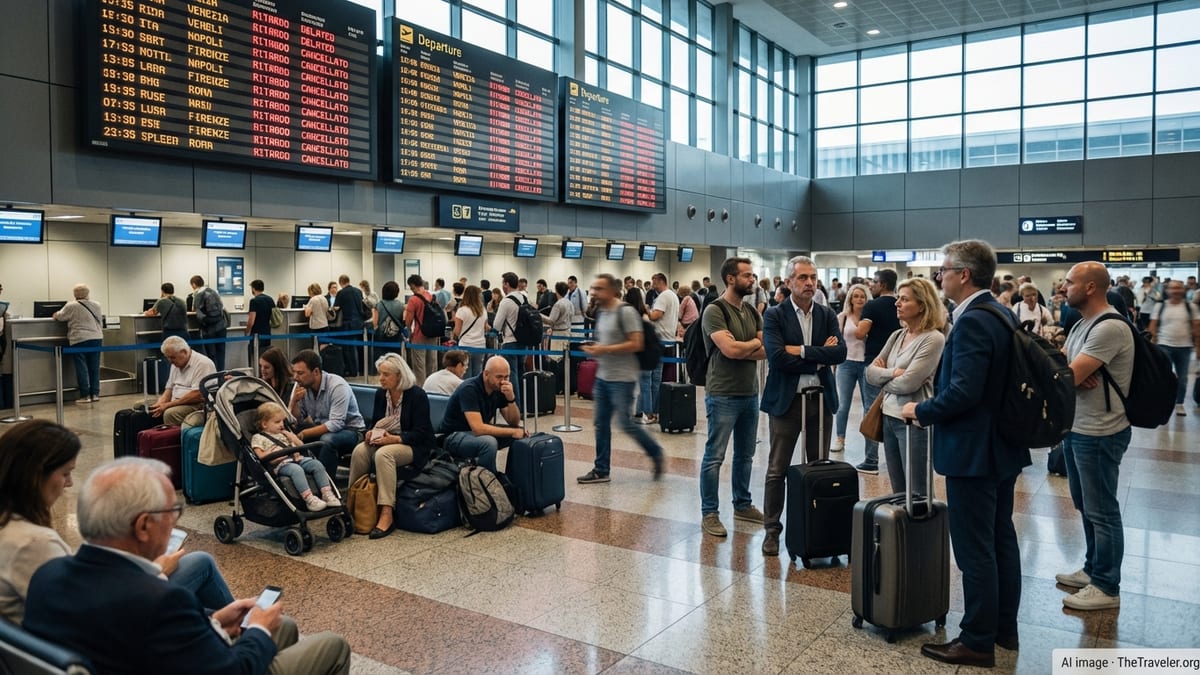
Widespread Disruptions Across Italy’s Airport Network
Operational problems rippled through Italy’s air transport system on Saturday, concentrating at major gateways but felt across the broader network. At Rome Fiumicino and Milan’s airports, high passenger volumes combined with scheduling and handling issues to trigger knock-on delays throughout the day, while secondary hubs including Venice Marco Polo, Naples Capodichino and Florence Peretola reported growing backlogs at departure boards.
By late afternoon, industry data and airport operational reports pointed to roughly 102 delayed flights and around 45 cancellations nationwide, with the most acute disruption recorded at the country’s largest international hubs. Although flight operations continued, the cumulative effect of rolling delays, missed connections and last-minute cancellations left hundreds of passengers stranded in terminals or forced to rebook onto later departures.
In Venice and Naples, disruption was described as moderate but persistent, with many services leaving behind schedule rather than being scrubbed entirely. Florence, which has a short runway and more limited capacity, saw its tightly packed schedule quickly thrown off balance as aircraft arrived late from other Italian cities, leaving travellers facing unexpected waits even on short domestic hops.
The timing of the disruption, at the start of a busy spring travel period, intensified the impact. Many passengers were beginning holidays or weekend city breaks, while business travellers and those connecting to long-haul services from Rome and Milan faced a higher risk of missed onward flights and overnight stays.
Major Carriers Hit: ITA Airways, Ryanair, Lufthansa and easyJet
The operational turbulence cut across the airline spectrum, affecting Italy’s national carrier, leading European low-cost operators and major network airlines. ITA Airways, which relies heavily on Rome Fiumicino as its primary hub, reported a mix of delays and selected cancellations that disrupted both domestic rotations and European connections. Knock-on effects were felt on routes linking Rome with Venice, Naples and Florence, as late-arriving aircraft compressed turnaround times.
Ryanair, with a substantial footprint at Italian airports including Venice and Naples, experienced extensive delays on intra-European services. While many flights ultimately departed, late operations created queues at gates and service desks as travellers attempted to rebook missed transfers or adjust ground arrangements in destination cities.
Lufthansa and other full-service European carriers also reported schedule changes, mainly on flights into and out of Rome and Milan. Delays on feeder routes from Germany and other European hubs disrupted connection banks for passengers heading onwards to North America, the Middle East and Asia, forcing airlines to re-accommodate travellers on later departures where seats were available.
easyJet, which maintains strong seasonal and city-break traffic to Venice, Naples and Florence, saw its point-to-point network squeezed by late aircraft and airport congestion. While many of its flights operated, the carrier’s tight turnarounds meant even relatively short delays had a cascading effect on later services, particularly on popular weekend routes from the United Kingdom and other European markets.
Venice, Naples and Florence Feel the Strain
While Rome and Milan registered the highest number of affected flights, the situation at Venice, Naples and Florence underlined how quickly disruption at major hubs can spread across an entire national network. In Venice, departures boards showed a succession of services leaving behind schedule as aircraft arrived late from Rome, Milan and other European cities. Passengers reported long queues at check-in and security during peak hours as staff worked to manage rebookings and revised departure times.
Naples, a key leisure gateway for the Amalfi Coast and southern Italy, experienced lighter disruption in absolute terms but still saw selected cancellations and numerous delayed departures. For travellers arriving to start cruises or pre-booked tours, even comparatively short delays had outsized consequences, compressing already tight itineraries.
In Florence, which handles a smaller volume of traffic than the country’s major hubs, even a limited number of delayed or cancelled flights created visible strain. With few alternative direct connections and limited spare capacity, passengers whose flights were cancelled often had to be rerouted via Rome or Milan, adding hours to journeys that would normally take less than an hour in the air.
Regional airports across Italy also reported secondary effects, chiefly in the form of delayed arrivals and departures on routes tied to the main hubs. This left some domestic travellers facing late-evening or night-time arrivals, complicating onward rail connections and hotel check-ins.
Passengers Face Long Queues, Missed Connections and Uncertain Plans
For many travellers, the statistics translated into hours of uncertainty on terminal floors. Long queues formed at airline service desks as passengers sought rerouting options or clarification on new departure times. Families on school-holiday trips and city-break visitors were among those most significantly affected, with some forced to cut short weekend itineraries or rearrange paid-for accommodation and activities.
Missed connections became a particular concern for those linking domestic segments from Venice, Naples or Florence through Rome or Milan onto long-haul flights. Where onward services were full or departed on time despite late feeders, airlines were obliged to offer hotel accommodation, meal vouchers or rebooking onto later flights, stretching available capacity during an already busy period.
Airport staff in several locations appealed for patience, stressing that safety remained the overriding priority and that crews and ground handlers were working to restore regular operations as quickly as possible. However, the cumulative pressure of multiple delayed banks of flights meant that normal schedules were not expected to stabilise until late in the day, with some residual effects possible into Sunday morning.
Travel advisors noted that passengers who booked directly with airlines or through reputable agents were generally better positioned to secure prompt assistance, while those using third-party booking platforms sometimes faced longer waits for support. They added that, under European passenger rights rules, travellers on cancelled or significantly delayed flights may be entitled to compensation or refunds, depending on the underlying cause of the disruption.
What Travellers Should Do Next
With Italy’s aviation sector in a period of heightened operational sensitivity, industry experts are urging passengers planning trips in the coming days to monitor their journeys closely and prepare for potential schedule adjustments. Checking flight status directly with airlines’ official channels before leaving for the airport remains the single most important step, as departure times and gate information can change multiple times in a short window when delays begin to accumulate.
Travellers are also being encouraged to allow greater buffer time for connections, particularly when linking short domestic segments from cities such as Venice, Naples or Florence to long-haul departures from Rome or Milan. Where possible, choosing longer connection windows or earlier feeder flights can reduce the risk of missed onward services if disruption flares again.
For those already affected by cancellations, consumer advocates recommend keeping all documentation related to delays, rebookings, additional accommodation and meals, as these may be required when submitting claims for compensation or reimbursement. Passengers are advised to familiarise themselves with European air passenger rights and to contact airlines directly before turning to intermediaries or third parties.
Although Saturday’s disruption has been particularly visible, analysts note that Italian aviation has experienced recurrent strains in recent seasons, linked to a combination of industrial action, staffing constraints and strong demand. Travellers heading for Venice’s canals, Naples and the Amalfi Coast, Florence’s Renaissance sights or other Italian destinations in the weeks ahead are being advised to build flexibility into their plans and to stay informed as conditions evolve.