

More news on this day
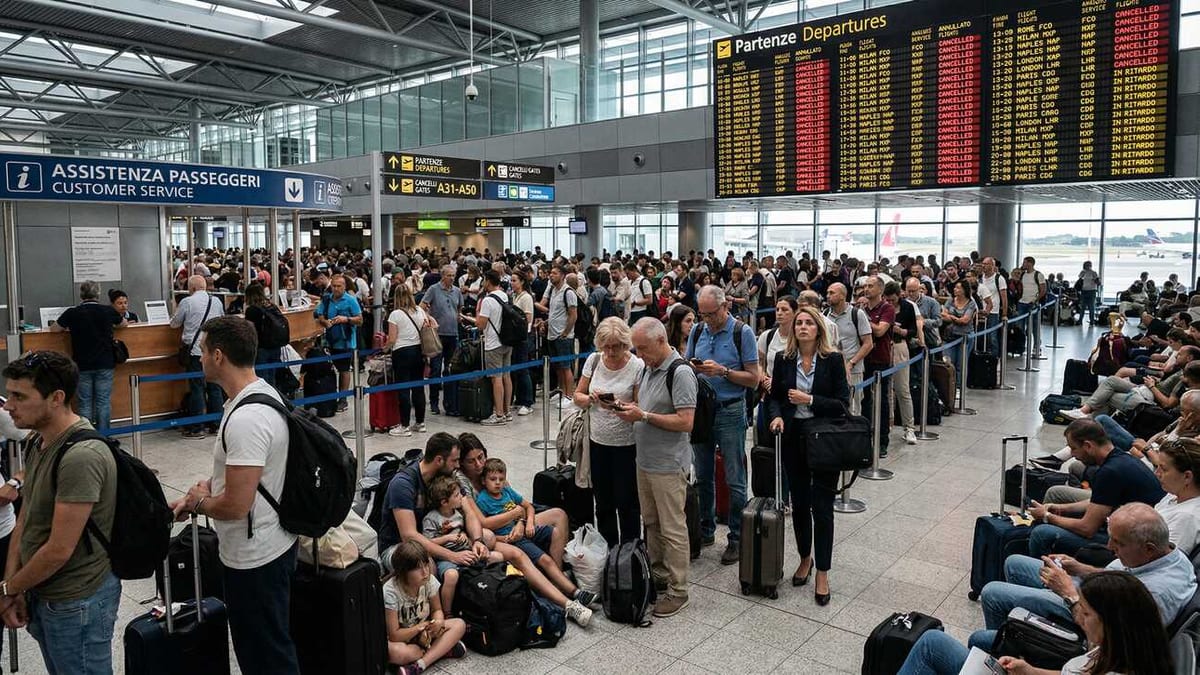
Hundreds of passengers traveling through Rome Fiumicino and Milan Malpensa on April 6, 2026, faced significant disruption as 271 flights were delayed and 15 were canceled across Italy’s two busiest air hubs.
Get the latest news straight to your inbox!
Major Disruptions at Italy’s Busiest Gateways
According to published coverage and real time monitoring data, Rome’s Leonardo da Vinci International Airport, better known as Fiumicino, and Milan Malpensa International Airport experienced one of their most challenging operational days in recent months. Combined, the hubs registered 271 delayed flights and 15 cancellations affecting both domestic and international routes.
Fiumicino accounted for the largest share of disruption, with reports indicating around 182 delayed services and 4 cancellations, while Malpensa registered approximately 89 delays and 11 cancellations. Flights on key connections to London, Paris, New York and other major destinations were among those impacted, affecting carriers such as ITA Airways, Lufthansa, British Airways and several low cost operators.
Publicly available airport and aviation industry information shows that the disruption built up through the morning and early afternoon, creating knock on effects that rippled across evening schedules. With both airports functioning as critical transfer points, delays in Rome and Milan also propagated to other European and long haul networks.
Operationally, the scale of the disruption strained airport handling capacity, with aircraft waiting for stands, crews and ground services while arriving passengers crowded baggage halls and departure lounges. The result was a day of prolonged queues, missed connections and last minute itinerary changes for travelers.
Operational Pressures Behind the Flight Chaos
Reports in the Italian and international travel press point to a convergence of structural pressures behind the latest wave of disruption. Airlines and airports across Europe have been managing tight staffing levels, high passenger demand and airspace constraints, any combination of which can quickly magnify into large scale schedule disruption on a busy travel day.
Industry analysis highlights that Italian airports, including Rome and Milan, are operating with limited slack in peak periods, meaning even relatively modest operational issues can accumulate into long delays. Weather, congestion in surrounding European airspace and knock on effects from earlier rotations can all contribute to cascading delays as aircraft and crews fall out of their planned positions.
Italy’s civil aviation framework, overseen at national level by the aviation regulator ENAC, sets standards for safety, service quality and passenger protections. Publicly available guidance emphasizes that airlines are responsible for managing schedules and ensuring adequate staffing and contingency planning, while airports must maintain sufficient infrastructure and ground handling capacity to cope with irregular operations.
Recent European punctuality reports also underline that Milan Malpensa and other major hubs have periodically struggled with on time performance during peak travel months, reinforcing concerns that the system remains vulnerable when confronted with sudden surges in demand or external shocks.
Passenger Experience: Long Queues and Uncertain Plans
For travelers in terminal buildings, the statistics translated into hours of waiting and uncertainty. Social media posts and travel forum accounts from April 6 described crowded check in areas at both airports, long lines at security and rebooking desks, and departure boards dominated by delayed statuses.
Families returning from holidays, students on connecting flights and business travelers with time sensitive meetings all faced similar challenges: limited information early in the delay, changing departure estimates and the risk of missing onward connections. In some cases, passengers reported being rebooked onto flights later the same day or the following morning, forcing last minute searches for hotel rooms near the airports.
According to publicly available information from consumer groups, such disruption days are particularly difficult for travelers with tight itineraries, such as cruise departures, tours or nonrefundable onward arrangements. The concentration of delays at two key Italian hubs heightened the pressure because alternative routings were also heavily booked, reducing the flexibility airlines could offer.
Travel advisories issued by tourism and mobility platforms increasingly encourage passengers flying through major European hubs to build in longer connection times, consider earlier departures ahead of important events and monitor flight status closely in the 24 hours before travel.
Implications for Tourism, Business Travel and Aviation Confidence
The timing of the disruption is significant for Italy’s tourism economy. Rome and Milan are principal gateways for visitors heading to cultural cities, coastal regions and alpine destinations, and both airports have been reporting strong traffic as international travel demand continues to recover.
Travel industry commentary warns that repeated high profile disruption events can erode traveler confidence, particularly among visitors planning once in a lifetime trips or complex multi stop itineraries. Persistent operational issues may encourage some to route through alternative hubs in neighboring countries, potentially diverting spending away from Italian airports and associated services such as hotels, ground transport and retail.
Business travel is also exposed. Companies with tight travel policies and limited tolerance for delay related productivity losses may reassess routing choices or encourage the use of rail for shorter intra European sectors where feasible. In northern Italy, the availability of high speed rail between Milan, Turin, Bologna and Rome provides a competitive alternative for some journeys, although air travel remains essential for long haul connections.
Aviation sector analysts note that the April 6 performance underscores the need for continued investment in staffing resilience, air traffic management efficiency and digital tools that give passengers clearer, more timely information. Without such improvements, days of severe disruption risk becoming a recurring feature of peak travel seasons.
What Travelers Can Do When Flights Are Delayed or Canceled
Under European Union regulations, including EU Regulation 261/2004, passengers departing from or arriving into EU airports are entitled to a range of protections when facing significant delays or cancellations. Publicly accessible guidance explains that travelers may have rights to care, rerouting or reimbursement, and in some cases financial compensation, depending on the circumstances of the disruption and the length of the delay.
Consumer advocates advise passengers caught in large disruption events to retain boarding passes and booking confirmations, document the timing of notifications and keep receipts for any meals or accommodation they pay for while waiting. This documentation can support later claims with airlines or, where applicable, travel insurance providers.
Many carriers now provide digital self service tools in their apps or websites, allowing passengers to request rerouting, vouchers or refunds without waiting in airport queues. On heavily disrupted days, using these online options can sometimes secure earlier alternatives than those offered at physical desks, which may be handling long lines of travelers.
For future trips through Rome, Milan or other busy hubs, travel planners recommend allowing extra time for connections, considering flexible tickets where budgets permit and reviewing insurance options that provide additional compensation in the event of lengthy delays. While the April 6 disruption highlights the continued fragility of the aviation system, it also underscores the value of informed, proactive planning by passengers navigating Europe’s busiest skies.