

More news on this day
Travelers moving through Italy’s busiest air hubs faced severe disruption as 271 delayed flights and 15 cancellations at Rome Fiumicino and Milan Malpensa triggered hours of congestion, missed connections and widespread itinerary changes across European and long haul networks.
Get the latest news straight to your inbox!
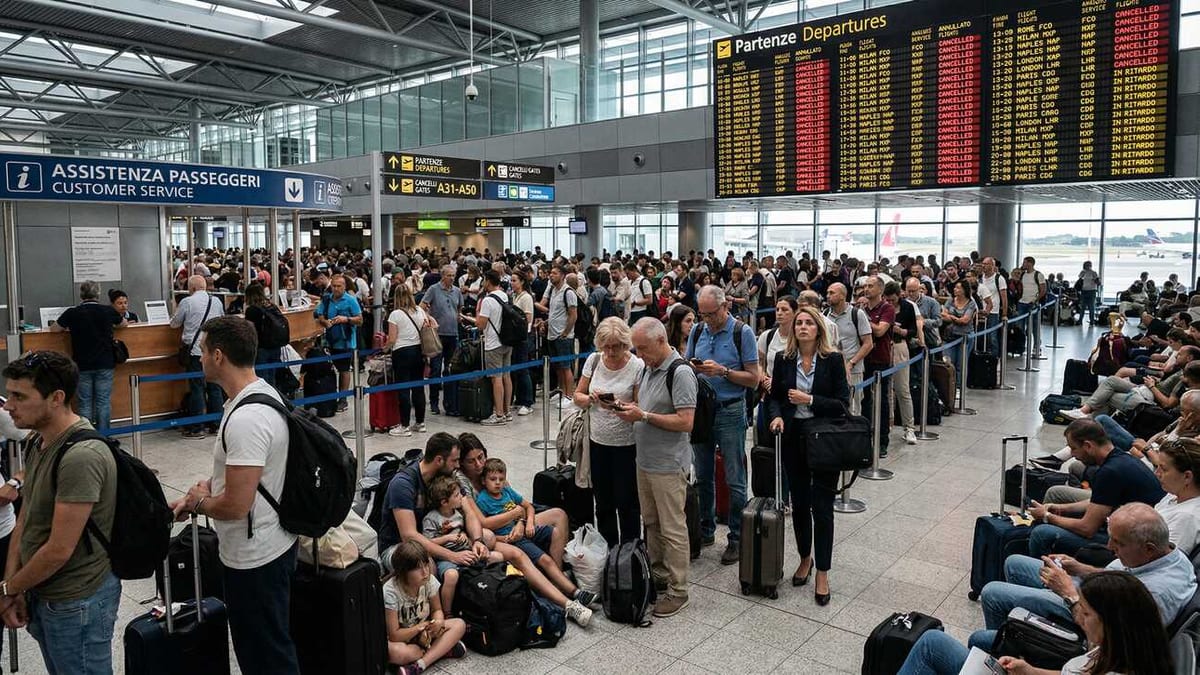
Major Italian Hubs Struggle With Severe Disruptions
The latest disruption concentrated on Rome Fiumicino and Milan Malpensa, the country’s two largest international gateways, where a combined 271 delays and 15 cancellations rippled across the day’s schedule. Published coverage indicates that the disruption affected a mix of domestic, European and intercontinental services, turning normal peak periods into prolonged bottlenecks.
Rome Fiumicino saw the highest volume of delayed departures and arrivals, while Milan Malpensa experienced a smaller but still significant cluster of problem flights. Reports indicate that hold ups began building during the morning and continued into the evening connection banks, creating queues at check in, security and passport control and pushing aircraft turnaround times well beyond normal operating windows.
Travel industry reporting links the Italian situation to a broader wave of operational strain across Europe in early April, with several major airports recording elevated delay and cancellation levels. The Italian hubs, heavily relied upon for both point to point travel and connections, were particularly exposed once punctuality began to slip.
Airlines and Routes Most Affected
According to publicly available information, the disruption touched a wide range of airlines using Rome and Milan as key gateways. ITA Airways, as the primary Italian carrier, was among the airlines experiencing significant schedule pressure, alongside major European operators such as Lufthansa and British Airways. Low cost and leisure focused carriers also faced knock on impacts as aircraft and crews fell out of position.
Route patterns show that services connecting Italy with London, Paris and other major European capitals were heavily represented among the delayed departures. Several transatlantic rotations, including flights linking Rome and Milan with New York and other North American destinations, also faced extended ground times or pushed back departure slots, raising the risk of missed onward connections for long haul passengers.
Domestic routes did not escape the disruption. Busy trunk sectors such as Milan to Rome and links from the hubs to southern Italy and the islands operate on tight turnarounds. Once early services were delayed, later flights on the same rotations became vulnerable to rolling knock on effects, with some eventually removed from the schedule altogether when recovery within the operating day became unrealistic.
Operational Pressures Behind the Chaos
Air traffic control flow restrictions, congested airspace and challenging weather conditions in parts of Europe have all been cited in recent weeks as contributing factors to irregular operations, and the latest Italian disruption appears to fit within that broader pattern. Flight tracking and punctuality data show that several European hubs have been operating close to capacity, leaving little margin for recovery when even modest delays emerge early in the day.
Ground handling capacity at major airports is another pressure point. Rome Fiumicino and Milan Malpensa both rely on complex chains of baggage, ramp, security and passenger processing functions. When arrival banks run late, ground teams must process more aircraft and passengers in compressed time frames, increasing the likelihood of further delays as stands, equipment and staff are stretched.
Industry analysis also points to aircraft and crew utilization strategies that maximize flying hours but leave schedules sensitive to disruption. With many carriers still closely managing capacity and costs, there is often limited spare equipment or reserve crew available to absorb unexpected shocks. Once a delay sequence takes hold on a particular aircraft rotation, subsequent sectors can easily fall behind or be cancelled entirely.
Impact on Passengers and Summer Travel Outlook
For passengers at Rome and Milan, the immediate impact was measured in hours spent in terminal queues, rebooking lines and crowded departure lounges. Many travelers attempting to connect through the hubs to onward European or long haul destinations faced missed flights or forced overnight stays, depending on the availability of later services and hotel accommodation near the airports.
Reports from recent disruption episodes across Europe suggest that families, cruise passengers and organized tour groups are particularly exposed when key hub flights run late, since onward ground arrangements are often fixed and difficult to reschedule at short notice. Business travelers relying on tightly planned same day returns or multi city itineraries can also see entire trips unravel when a single key sector is substantially delayed.
The latest turbulence at Rome and Milan comes as Europe moves toward the main spring and summer travel seasons, when schedules become even more densely packed. Travel industry observers note that, if current patterns of airspace constraints, weather related disruption and high aircraft utilization continue, Italy’s primary hubs could face recurring periods of strain. Travelers planning peak season trips may need to factor in additional buffers and flexible arrangements to adapt if irregular operations reappear.
What Travelers Can Do If Caught in Delays
Consumer guidance from aviation regulators and passenger rights organizations stresses that travelers caught up in disruption at Italian and other European airports should first verify the real time status of their flight through airline channels and airport information systems. Once a significant delay or cancellation is confirmed, passengers can review their options for rebooking, rerouting or seeking refunds under applicable regulations.
European air passenger protections generally set out entitlements to care, including meals and hotel accommodation in certain circumstances, along with potential financial compensation where delays or cancellations are not caused by extraordinary circumstances. Publicly available case studies indicate that the exact remedies depend on factors such as route length, duration of delay and the underlying cause of disruption.
Travel planners increasingly recommend building additional connection time into itineraries that route through busy hubs such as Rome Fiumicino and Milan Malpensa, especially when linking separate tickets or moving between different airlines. Allowing generous buffers for onward trains, cruises or tours, taking early departures where possible and ensuring that travel insurance covers missed connections and delays can all reduce the impact when large scale disruptions like the current Italian episode occur.