

More news on this day
Italy has become the latest flashpoint in Europe’s mounting jet fuel squeeze, as new refuelling caps at Milan Linate, Venice, Bologna and Treviso force airlines to juggle aircraft, revise routes and brace passengers for higher fares just weeks before the peak summer travel season.
Get the latest news straight to your inbox!
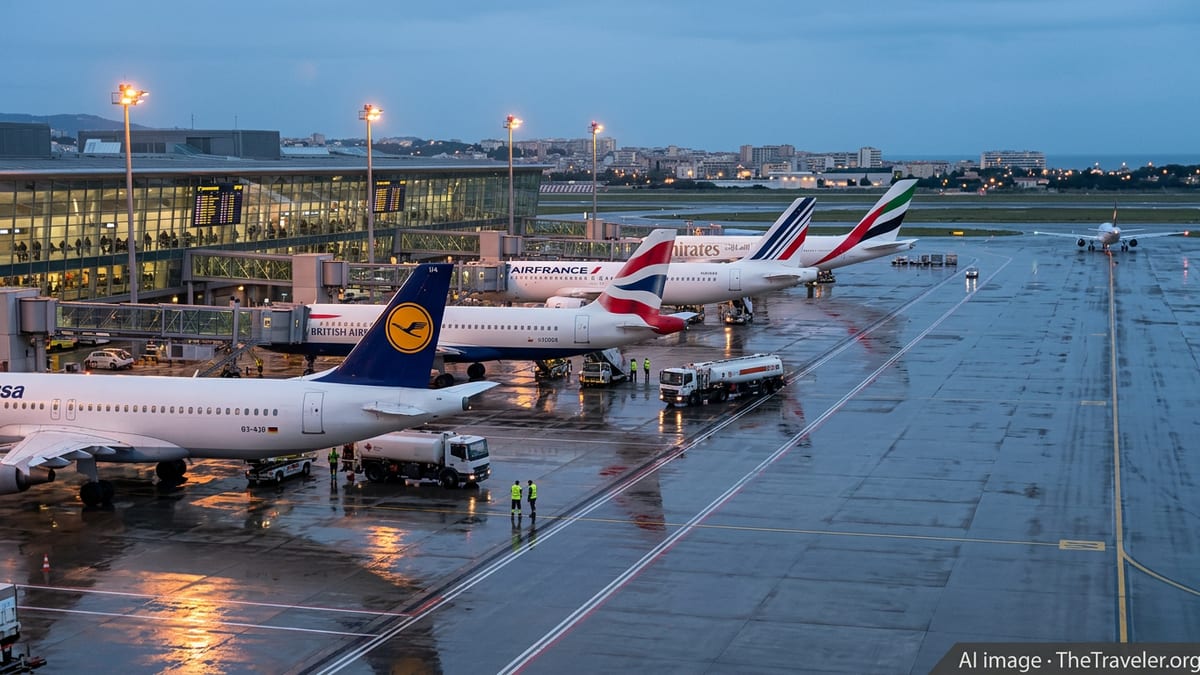
Fuel Rationing Hits Northern Italy’s Air Hubs
Jet A1 supplies at four northern Italian airports have tightened sharply in recent days, prompting formal fuel restrictions that are now reshaping day to day flight operations. Notices to air missions issued on 4 April set caps on the amount of fuel that commercial aircraft can load at Milan Linate, Venice Marco Polo, Bologna and Treviso, citing limited availability from supplier Air BP Italia.
Reports from aviation outlets describe strict limits at Venice and Bologna, where departing aircraft are being held to around 2,000 litres of jet fuel, while Treviso is operating with only slightly higher thresholds. Industry coverage notes that these caps are currently in place through at least 9 April, with some notices indicating potential extensions at Bologna and Treviso if supplies do not stabilise.
The rationing does not apply uniformly to all traffic. Available information indicates that priority is being assigned to essential flights such as medical services, government operations and longer haul journeys that cannot safely complete their sectors without additional fuel. Shorter intra European flights, in contrast, are more likely to be asked to tanker fuel from other airports or adjust schedules.
While Milan Malpensa, Italy’s main intercontinental gateway in the north, has not been named in the current restrictions, the pressure on nearby Linate and on Venice’s busy leisure and cruise traffic underscores how quickly bottlenecks at a handful of hubs can ripple through domestic and regional networks.
Europe’s Jet Fuel Deficit Widens After Middle East Shock
Italy’s move comes as Europe wrestles with a broader jet fuel shortfall that has been building for months and escalated after the recent conflict in the Middle East. Analysts have been warning that Europe’s own kerosene production has fallen behind demand as refineries close or retool away from aviation fuels, forcing the continent to rely more heavily on imports.
The latest disruption centers on the effective closure of the Strait of Hormuz to most oil and refined product shipments following the outbreak of war in late February. Industry and policy analysis describe Europe as highly exposed, with roughly half of its aviation fuel imports typically sourced from the Gulf region. The last large kerosene cargoes en route to northwestern European ports are now being closely watched as traders signal that replacement flows are uncertain.
Energy research groups and airline trade bodies have recently highlighted a widening imbalance between European jet fuel supply and demand in 2025 and 2026, with structural deficits being covered only through higher cost imports. The current geopolitical shock is compounding that trend, driving prices sharply higher and raising concerns about physical availability at inland and smaller coastal airports.
Market commentary suggests that, while outright shortages may remain localized, the cost of securing reliable jet fuel supplies has surged. Carriers are being forced to compete for volumes, renegotiate contracts and consider more complex refuelling patterns, particularly on multi leg European networks that connect to long haul services.
Germany, Spain, UK and France Also Feel the Strain
The squeeze is not limited to Italy. Across the continent, airlines and airports are adjusting operations in response to tight fuel markets. In northern Europe, carriers have publicly flagged the doubling of jet fuel prices in a matter of days, prompting a wave of capacity reviews and selective flight cancellations, particularly on marginal and seasonal routes.
In Germany and France, major hub operators are monitoring inventories and increasing coordination with suppliers as they prepare for the summer peak. Coverage from European aviation media indicates that some long haul departures have already been rebalanced, with aircraft taking on heavier fuel loads at transatlantic or Middle Eastern gateways less affected by the immediate shock and lighter loads at constrained European airports.
Spain and the United Kingdom, which handle some of Europe’s densest leisure traffic flows, are also seeing pressure. Industry news reports describe budget carriers trimming frequencies and scaling back growth plans in parts of Spain, Portugal, Germany, France and Belgium, pointing to a combination of fuel costs, higher airport charges and environmental levies. In the UK and Ireland, online forums and regional coverage reference consolidations of flights as operators seek to maintain profitability in the face of rising fuel bills.
So far, widespread consumer facing restrictions on refuelling have mainly surfaced at a few high profile locations such as the northern Italian airports. However, aviation analysts warn that other secondary hubs across Europe could introduce similar measures if deliveries slip or if storage levels are drawn down more quickly than anticipated.
Operational Disruptions and Route Reconfigurations
The practical effects of fuel rationing are already being felt in airline schedules. With fixed caps at departure points like Venice, Bologna and Treviso, carriers are turning to strategies such as tankerage, where aircraft load extra fuel at unconstrained airports earlier in the itinerary in order to minimize uplift at restricted fields. This approach can maintain schedule integrity but adds weight, increases fuel burn and complicates planning.
Another emerging tactic is the addition of technical stops, where aircraft pause at intermediate airports solely to refuel, particularly on longer routes that would otherwise exceed the fuel allowed at origin. Travelers posting on social platforms and in aviation communities describe growing uncertainty over whether direct services will remain nonstop or pick up an additional refuelling stop en route, lengthening journey times.
Airlines are also re examining which aircraft types they deploy on certain routes. Larger, more fuel efficient jets may be prioritized on constrained sectors to maximize the number of passengers carried per kilogram of kerosene. Conversely, thinner routes operated by smaller regional aircraft may be consolidated or temporarily suspended if fuel logistics become too complex or expensive.
For airports, the challenge lies in managing ramp operations and avoiding cascading delays. Published notices warn of significant refuelling queues at some Italian airports, and ground handlers are having to adjust turnaround procedures to account for variable fuel loads and changed slot timings. Any delay in refuelling can quickly propagate through a tightly scheduled European network, especially during busy holiday periods.
What Travelers Can Expect for Summer 2026
For passengers planning European and long haul trips in the coming months, the jet fuel situation points to a less predictable and more expensive travel landscape. Publicly available data from freight and airline markets already show fuel surcharges climbing, with some carriers adjusting fees every few weeks to keep pace with spot prices. These surcharges are starting to filter through to final ticket prices, particularly for departures from Europe to long haul destinations.
Travel industry analysts expect further upward pressure on fares if fuel costs remain elevated through the summer. Budget carriers that built their business models around high frequency, low margin flying are especially sensitive to fuel price spikes and may trim schedules, cut underperforming routes or shift capacity to markets with stronger demand and higher yields.
Travelers transiting Italy face the added risk of schedule adjustments at the affected airports if rationing persists beyond the initial April window. Industry commentary suggests that airlines may proactively reroute some services away from constrained airports, switch to alternative gateways such as Milan Malpensa, or adjust departure times to align with more favorable refuelling slots.
Across Europe more broadly, passengers may see a growing emphasis on flexibility. Advisories from travel consultancies recommend allowing extra connection time, monitoring itineraries closely in the days before departure and being prepared for aircraft changes or added fuel stops. While aviation regulators and industry groups maintain that safety remains paramount and that flights will not depart without adequate reserves, the era of largely invisible fuel logistics appears to be giving way to one in which supply constraints are a visible factor in travel planning and pricing.