

More news on this day
Italy is facing a fresh wave of disruption today as a nationwide general strike ripples through major cities including Rome, Florence, Venice, Milan and Naples, upending travel plans, slowing key public services and adding new uncertainty for tourists at the height of the spring travel season.
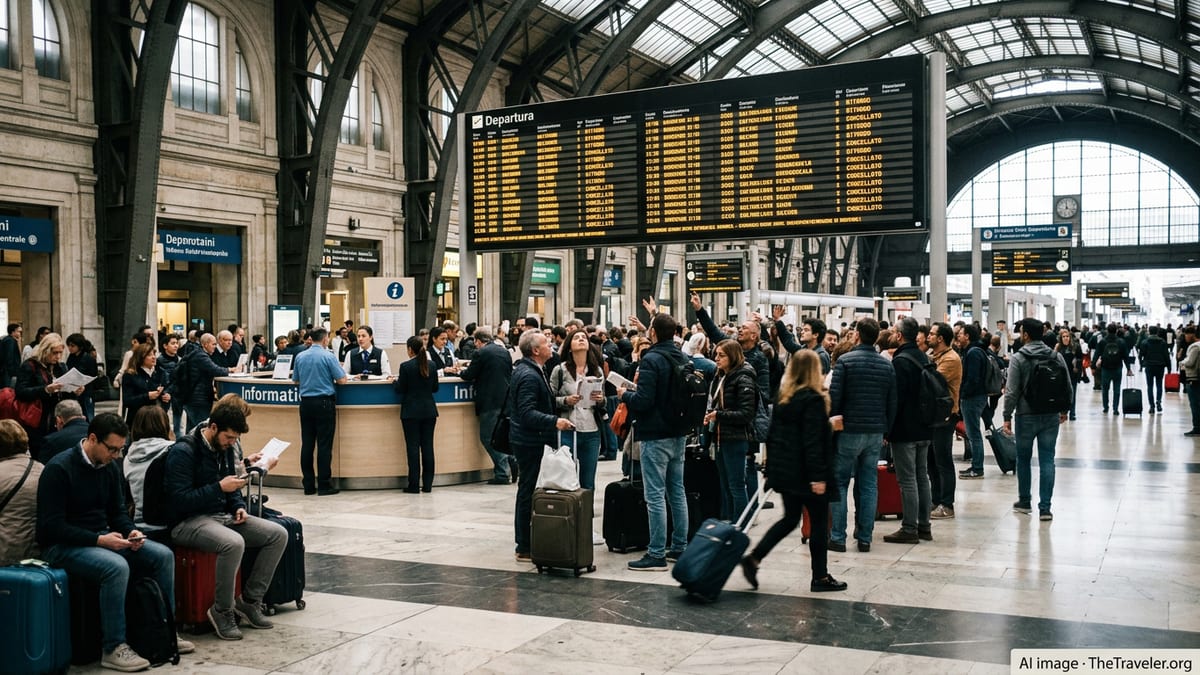
General Strike Widens Into National Disruption
The 24-hour walkout, called by several grassroots and base unions for Monday 9 March 2026, is aimed at drawing attention to grievances over wages, working conditions and public-sector investment. While organizers initially framed the action as a protest focused on public administration and social services, knock-on effects are now being felt by travelers across Italy’s main tourism corridors.
Union federations say participation is strong in schools, municipal offices, health facilities and some privately contracted public services, creating a patchwork of closures and reduced staffing. In practice, that has meant slower processing times, sporadic office closures and long queues in cities already busy with visitors. Travelers arriving in Italy today are reporting confusion as they encounter shuttered ticket counters, limited information desks and skeleton staff at some public-facing offices.
The general strike comes on the heels of a winter marked by repeated sector-specific walkouts in rail and aviation, which had already tested the resilience of Italy’s transport network. Today’s coordinated action, even where it does not directly target transport, has nonetheless strained the country’s capacity to keep services running smoothly in and between the country’s most-visited destinations.
Authorities have asked residents and visitors to allow extra time for all movements and interactions with public services, from purchasing tickets to checking into public museums, and to monitor local updates city by city as the day unfolds.
Rome, Florence and Venice Grapple With Local Transport and Service Gaps
In Rome, the impact of the general strike is being felt across municipal services and parts of the local transport ecosystem. While core metro and commuter rail lines are operating with protections mandated by Italian law, travelers are encountering stretched timetables, fewer staff at stations and delays in connecting bus and tram services. Some smaller museums and civic cultural venues have reduced hours or closed entirely after staff joined the strike, forcing last-minute changes to sightseeing itineraries.
Florence, a compact city heavily reliant on buses, trams and regional rail, is experiencing intermittent slowdowns in urban transport, ticketing and information services. Visitors arriving at Santa Maria Novella station this morning reported longer queues at ticket machines and help desks, along with sporadic cancellations on regional lines serving the Tuscan countryside. Tour operators say they are fielding a surge of calls from travelers unsure whether pre-booked transfers and excursions will run on time.
In Venice, where public ferries and buses are run by the local transport operator, most essential services to the historic center and the islands are being maintained, but with occasional gaps in timetables and heavier crowding at peak hours. Staff participation in the strike at some support functions is also slowing customer service, from ticket inspection to information points at key hubs like Piazzale Roma and the train station. Tourism businesses report that many visitors only learn of the strike on arrival, increasing pressure on hotels and guides to help re-route guests in real time.
Across these three flagship destinations, city authorities have emphasized that essential mobility is preserved, but they warn that travelers should be prepared for extra waiting times, altered routes and reduced staffing in public-facing roles through the end of the day.
Milan and Naples See Flight Delays and Knock-On Rail Issues
Milan and Naples, two of Italy’s most important air and rail gateways, are contending with a more acute wave of disruption today as the national strike coincides with labor tensions in aviation and rail. By midday, more than a hundred flights at Milan’s main airports and Rome’s Fiumicino and Ciampino had been delayed or cancelled, with ripple effects spreading to Naples and other regional hubs. Passengers heading to and from long-haul destinations found themselves facing long queues, rolling schedule changes and crowded rebooking counters.
At Milan’s Malpensa and Linate airports, ground handling slowdowns and staff absences linked to the strike have contributed to aircraft turnaround delays, forcing airlines to trim schedules. Similar pressures have been reported in Naples, where local workers in associated services have joined the nationwide action, affecting everything from security lines to baggage handling. Despite legal requirements to maintain minimum essential services, the cumulative effect for travelers has been hours-long delays and, in some cases, missed connections onward to other European cities.
Italian rail operators are officially outside the central focus of today’s general strike, but ongoing industrial disputes and the need to respect previous strike cooldown periods have left the network fragile. High-speed links between Milan, Florence, Rome and Naples are running, though some departures have been thinned out to absorb operational pressures. Travelers report fully booked “guaranteed” trains and a lack of same-day alternatives after last-minute changes to timetables, particularly on popular north–south corridors.
Travel agencies and corporate travel managers say the combined impact at airports and on long-distance rail is complicating itineraries for both tourists and business travelers who rely on quick transfers between Milan, Rome and southern Italy. Many are advising clients to build in additional buffers or, where possible, to postpone nonessential travel until services stabilize.
Tourism Sector Scrambles to Support Stranded and Confused Visitors
Italy’s tourism industry, still in growth mode after recent strong seasons, is moving quickly to contain the fallout from the strike and preserve visitor confidence. Hotels in city centers report extending check-in and check-out flexibility for guests whose flights or trains have been delayed or cancelled. Some properties near major stations and airports are seeing an unexpected spike in last-minute bookings from stranded travelers looking for a bed for the night after missed connections.
Tour operators and local guides are spending much of the day reconfiguring programs, swapping time slots where attractions are short-staffed, and arranging alternative transport when local buses or regional trains are disrupted. In Rome and Florence, several operators have turned to private coaches or minivans to keep day trips running, passing added costs on only partially to clients in an effort to maintain goodwill. Cruise lines with calls in Venice and other Adriatic ports are coordinating with local agents to adjust shore excursion timings when onward rail and coach links are uncertain.
Airport and station hotels, along with independent guesthouses, are also acting as informal information centers for international visitors who may not be aware of how strikes typically unfold in Italy. Front-desk staff describe fielding a constant stream of questions about which services are guaranteed, how long the disruption will last and what options exist for rebooking. Language barriers and rapidly shifting timetables are compounding the sense of confusion for many first-time visitors.
Despite the disruption, tourism representatives stress that Italy remains open for business and that most major attractions in cities such as Rome, Florence, Venice, Milan and Naples are accessible, albeit sometimes with longer lines and altered opening hours. They argue that clear communication, flexible policies and contingency planning will be key to sustaining traveler confidence through any future waves of industrial action.
Travel Advice for Visitors in Italy Today
Authorities and travel organizations are urging visitors already in Italy, as well as those due to arrive later in the day, to stay informed and build flexibility into their plans. Travelers are advised to check the status of flights and trains frequently, use official operator channels and airline communications for the latest updates, and arrive at airports and major stations earlier than usual to account for possible queues and schedule changes.
Within cities, visitors are encouraged to favor metro and mainline rail services over less frequent buses and trams when possible, as core lines are more likely to be protected by minimum-service requirements. Taxis and licensed ride services may face heavier demand in hubs such as Rome, Milan and Naples, leading to longer wait times and higher costs at peak periods. Walking is a practical alternative in compact historic centers like Florence and Venice, where many key sights are within a relatively short distance of one another.
Industry experts say that travelers with flexible itineraries may benefit from reshuffling plans, such as swapping intercity travel days with local sightseeing days, or delaying nonessential long-distance trips until after the strike period. Those with time-sensitive connections, including cruises or international flights, are being urged to contact their carriers and tour providers as early as possible to discuss contingency arrangements.
While today’s general strike has underscored the vulnerability of tightly timed travel plans in Italy’s busiest corridors, it has also highlighted how quickly the country’s tourism ecosystem can mobilize to support visitors. For now, patience, advance planning and close attention to local advisories remain the most valuable tools for anyone traveling through Italy’s major cities as the strike runs its course.