

More news on this day
Italy is joining a wider European push to spotlight its most underrated historic old towns, aligning with destinations in Switzerland, the Czech Republic, France, Austria, Spain, Slovenia, and Montenegro that are promoting compact centers of cobbled streets, colorful facades, and dramatic natural backdrops as alternatives to Europe’s most crowded city breaks.
Get the latest news straight to your inbox!
A Continent-Wide Shift Toward Smaller Historic Centers
Across Europe, tourism strategies are increasingly steering visitors toward lesser-known old towns rather than a short list of flagship cities. Recent travel reports and destination campaigns highlight compact historic centers where medieval lanes, riverfront promenades, and pastel townhouses can be explored at a slower pace and often at lower cost than in major capitals. These efforts are framed as a way to disperse visitor numbers more evenly, reduce pressure on saturated hotspots, and extend tourism benefits to smaller communities.
In this context, countries such as Switzerland, the Czech Republic, France, Austria, Spain, Slovenia, and Montenegro have emerged as leaders in promoting small heritage towns as stand-alone draws rather than day trips. Publicly available information from tourism boards and independent travel reports points to a growing emphasis on old quarters that retain living local communities, where residents still shop in traditional markets and historic architecture forms part of daily life rather than a museum backdrop.
For travelers, this means a rising number of curated itineraries that string together old towns reachable by regional trains or short drives. The pattern reflects a broader trend identified in European tourism analyses that describe how visitors are looking for “authentic” neighborhoods, human-scale streetscapes, and nature access within a short walk of historic centers, particularly for long weekends and rail-based trips.
Italy’s Underrated Old Towns Step Into the Spotlight
Italy, long associated with blockbuster destinations such as Rome, Venice, and Florence, is now being increasingly promoted for its quieter historic centers that have often lingered in the shadow of better-known neighbors. Recent travel features and destination roundups for 2025 and 2026 point to small Italian towns where medieval walls, stone campaniles, and centuries-old piazzas have remained relatively unaffected by mass tourism compared with the country’s coastal and art-city icons.
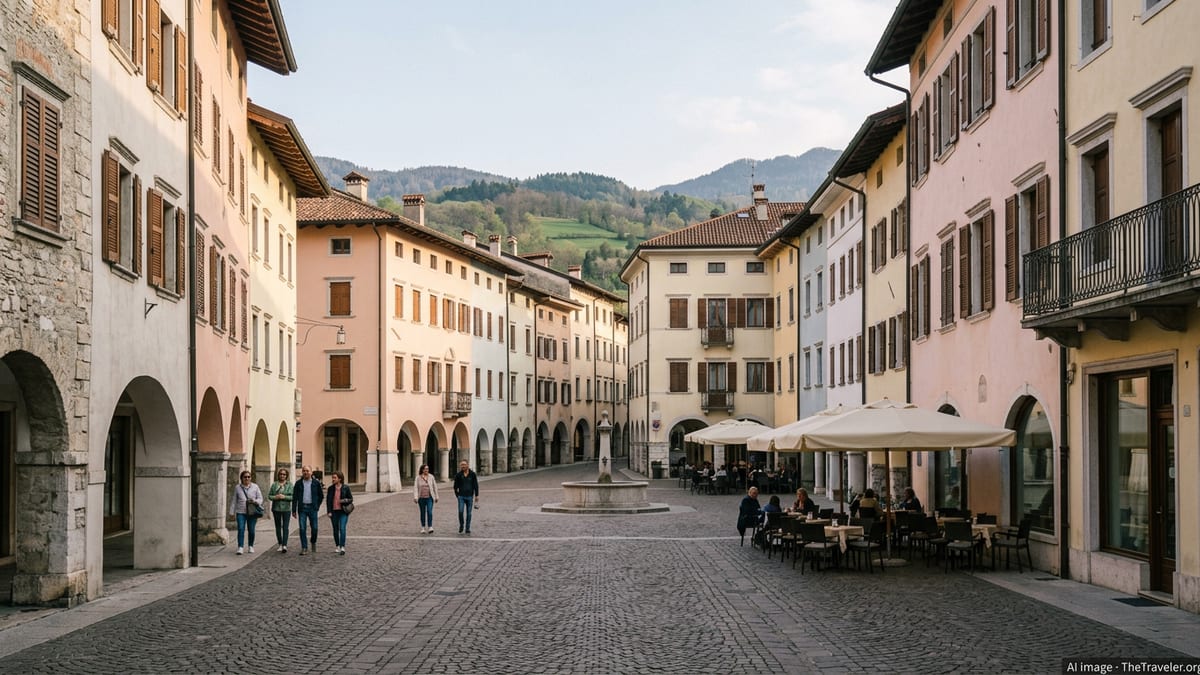
Reports highlighting “secret” or “underrated” Italy increasingly reference compact old towns in the north and center of the country, where colorful facades line riverbanks or cling to hillsides with views over vineyards and alpine foothills. These places typically cluster around a central square with arcades and historic town halls, while side streets reveal artisan workshops, intimate churches, and family-run trattorias. Travel coverage notes that such towns can offer a more relaxed rhythm, with visitors encountering schoolchildren, local markets, and evening passeggiata rather than cruise-ship crowds.
Italy’s participation in the latest wave of “hidden gem” lists aligns it more explicitly with other European countries that have already leveraged their lesser-known old towns as anchors of regional tourism. The focus tends to fall on walkable centers that combine layered history with dramatic settings, such as mountain lakes, river gorges, or rolling wine country, and that can be integrated easily into rail or road trips across borders.
Alpine and Lakeside Towns: Switzerland and Austria Reframe the Classic View
In the Alps, Switzerland and Austria are broadening attention beyond celebrated resort hubs to showcase quieter villages and small towns where historic cores face lakes and valleys framed by high peaks. Specialist train guides and rail passes now routinely spotlight old towns that sit on major routes but have previously been treated mainly as transit stops. These towns tend to feature compact main streets of painted facades, traditional inns with carved wooden balconies, and riverside quays where mountain reflections shift with the light.
Travel literature describes how Swiss and Austrian centers are positioning their old towns as year-round destinations that combine heritage with outdoor access. Visitors can stroll under arcades, visit centuries-old churches or town halls, and then within minutes join lakeside walking paths or funiculars climbing into surrounding hills. This dual appeal of cultural depth and easy access to hiking, skiing, or cycling is being framed as a key advantage over larger cities, especially for travelers seeking quieter stays with strong landscape connections.
There is also a sustainability dimension. Tourism reports for alpine regions indicate that promoting rail-linked old towns and encouraging visitors to stay longer in a single base helps reduce car traffic into sensitive valleys. Traditional architecture and long-established street patterns are presented not only as attractions in themselves but also as evidence of communities adapted to their landscapes over centuries, lending further weight to the idea of “living heritage.”
Central Europe’s Storybook Streets: Czech Republic and Slovenia Gain Ground
In Central Europe, the Czech Republic and Slovenia are increasingly associated with storybook old towns of pastel facades, tiled roofs, and rivers looping below castles. While some locations have already become established favorites, recent travel surveys and destination marketing material emphasize a wider network of smaller historic centers, many of them overlooked by first-time visitors focused on major capitals. These towns typically offer cobbled main squares, Renaissance and Baroque architecture, and steep lanes that rise toward hilltop fortifications.
Slovenia’s tourism strategy documents and press materials for 2025 and 2026 place particular emphasis on historic towns and cultural routes that connect them, presenting these places as gateways to both heritage and green landscapes. Slovenia’s oldest town, for example, has recently been recognized in European cultural heritage rankings for the way its medieval streets, castle, and riverside vineyards form a coherent historic landscape. Campaigns highlight pedestrian-friendly centers, local wine traditions, and festivals that animate old squares without overwhelming them.
In the Czech Republic, travel guides and independent reports stress how small towns beyond the country’s headline destinations allow visitors to experience preserved historic fabric at a calmer pace. Colorful townhouses, arcaded squares, and riverside mills remain in active use, with cafes, bookstores, and small museums tucked behind centuries-old facades. Taken together, these Central European examples underscore how compact old towns are being repositioned as primary destinations in their own right, rather than side trips from the nearest metropolis.
From Atlantic to Adriatic: France, Spain, Slovenia, and Montenegro Promote Coastal and Hilltop Gems
On Europe’s Atlantic and Mediterranean fringes, France and Spain are working alongside Slovenia and Montenegro on the Adriatic side to elevate small coastal and hilltop towns that combine heritage architecture with sea views and dramatic inland landscapes. Recent travel features point to French river and wine towns where half-timbered or stone houses edge narrow lanes, as well as Spanish mountain villages and old quarters where colorful facades and tiled roofs overlook ravines and highland valleys.
In France, regional tourism campaigns and guidebook updates have placed additional emphasis on smaller medieval and Renaissance towns away from the busiest stretches of the Mediterranean coast. These places often feature preserved ramparts, market squares, and riverside walks, with brightly painted shutters and stone bridges that have become emblematic images in editorial photography. Similarly, Spanish tourism coverage increasingly celebrates mountain and inland old towns that pair historic streets with access to national parks, gorges, and high plateaus.
Further east, Slovenia and Montenegro have been singled out in recent trend analyses as examples of destinations that pair historic Adriatic and hinterland towns with a strong nature offering. Montenegro’s old coastal centers, for instance, are framed by steep mountains dropping to the sea, with stone palaces, churches, and plazas lining the waterfront inside walled historic cores. Inland royal capitals and market towns add another layer of history and scenery, giving visitors a choice between bay views, lakefront promenades, and mountain panoramas, often within a short drive of one another.
The combined effect of these national efforts is a pan-European narrative that repositions the old town as the centerpiece of a wider cultural landscape. Travelers following the latest recommendations encounter a mosaic of small historic centers, many newly highlighted in rankings and travel lists for 2025 and 2026, that together redefine what a “classic European town” looks like beyond the usual postcard favorites.