

More news on this day
Italy has surged to the top of Europe’s short-term rental league in 2025, overtaking traditional heavyweights such as France, Denmark, Ireland, Finland, Sweden and Portugal in growth fueled by Airbnb and similar platforms, and signaling a profound shift in how visitors choose to experience the continent.
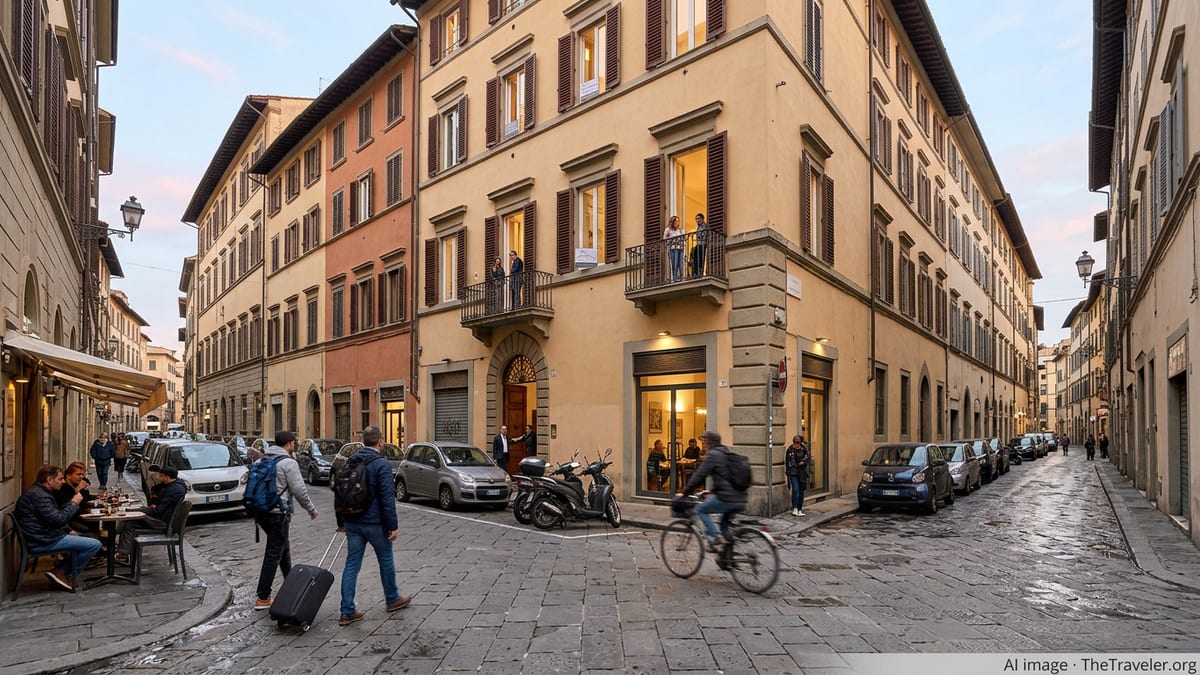
Data Signals a New European Leader in Home-Sharing Growth
Fresh industry data for 2025 points to Italy as Europe’s standout growth story in short-term rentals, even as France still retains the continent’s largest overall inventory. Analytics providers tracking active listings, occupancy and revenue report that Italy’s supply of short-term rentals has expanded at one of the fastest rates in Europe this year, supported by rising international arrivals and robust domestic demand.
While Spain and France continue to dominate in absolute guest nights, Italy is increasingly where the momentum lies. Recent European market reviews note that Italy, alongside Greece, has led year on year gains in occupancy and demand in several key months of 2025, outpacing more mature and regulation-heavy markets in northern and western Europe. This acceleration places Italy ahead of countries such as Denmark, Ireland, Finland, Sweden and Portugal when it comes to growth rather than scale.
Behind the headline surge is a country that has quietly crossed important thresholds. Analysts estimate that Italy now counts well over a quarter of a million active short-term rental listings across platforms, with major cities and classic holiday regions all registering double digit growth in active supply compared with pre pandemic baselines. That growth is increasingly being captured through Airbnb, which remains the best known gateway for international visitors seeking apartments, farmhouses and villas.
The shift is reshaping how official tourism statistics read. Recent European Union figures show that nights booked via platforms such as Airbnb, Booking and Expedia reached record levels in 2024, setting the stage for the even stronger 2025 performance now being recorded in Italy. As more travelers choose homes over hotels, the country is emerging as a bellwether for how fast and how far the home sharing model can grow in a large, diversified tourism economy.
Rome, Milan and the Regions Drive Record Airbnb Demand
Italy’s short-term rental boom is not confined to a handful of postcard hotspots. Travel analytics firms tracking flight searches, platform bookings and nightly rates report that Rome and Milan are at the center of a powerful upswing that extends across the peninsula. Searches for flights into Italy’s top 20 airports in the first half of 2025 captured a leading share of inbound interest to southern Europe, with Rome and Milan among the strongest performing urban destinations globally.
In parallel, secondary cities and regional hubs are seeing the fastest proportional growth in listings and occupancy. Venice, Florence and Turin continue to attract high-spending cultural travelers, while smaller art cities and wine regions in Tuscany, Puglia and Piedmont are drawing remote workers and long stay visitors who increasingly favor fully equipped apartments or rural homes booked through Airbnb. This geographic diversification is one reason Italy’s overall growth curve now outpaces several northern European rivals that rely more heavily on a few capital city markets.
Seasonality is also changing. Italy’s 2025 data shows an expansion of demand beyond traditional summer peaks, as remote workers and shoulder season city breakers fill calendars in March, April, October and November. For many hosts, this has translated into higher annual occupancy and more stable revenues, even as average nightly prices in popular historic centers continue to climb.
Industry observers add that the country’s strong recovery in residential real estate sales and a wave of small scale property investment are feeding directly into the short-term rental ecosystem. New owners, particularly in northern and central regions, are increasingly turning to Airbnb management companies and professional hosts to tap into the record levels of inbound demand.
Why Italy Is Outpacing France and Northern Europe in Growth
France still has Europe’s largest pool of short-term rental units, but growth there has slowed under a tightening web of national and municipal regulations. In contrast, Italy’s framework remains fragmented and locally managed, creating pockets of comparatively flexible conditions that are attracting both domestic and cross border investors. The result is a faster rate of net new listings in many Italian regions than in heavily regulated northern markets such as Denmark, Ireland, Finland and Sweden.
Analysts also highlight the composition of demand. Italy’s tourism recovery has been powered not only by a rebound from long haul markets, but also by steady flows from other European countries seeking culture-rich city breaks and longer rural stays. This blend favors whole home rentals that can accommodate families and remote workers, a segment where Airbnb and similar platforms have a pronounced edge over traditional hotels.
Pricing dynamics are reinforcing the trend. With hotel rates in key Italian cities now sitting well above pre pandemic levels, travelers are using short-term rentals as a value play, particularly for multi night stays or trips with friends and extended family. In many neighborhoods outside the most historic cores, guests can find larger spaces at equal or lower nightly costs than a mid range hotel, shifting additional demand into the platform economy.
By contrast, in northern European markets where visitor growth has been more modest and hotel supply relatively plentiful, the pressure to pivot to home sharing has been less intense. Combined with aggressive caps or registration schemes in several capitals, this has left growth rates in Denmark, Ireland, Finland and Sweden trailing the accelerations now logged in many Italian provinces.
Regulation, Overtourism and the Search for Balance
Italy’s rapid ascent has not gone unnoticed by local communities. The same 2024 and 2025 period that delivered record numbers of platform-booked nights across Europe also brought protests and political debate over housing affordability and overtourism, particularly in city centers that are heavily represented on Airbnb. Residents in cities such as Florence, Venice and Rome argue that the proliferation of short-term rentals has reduced long-term housing options and pushed up rents.
Regional and municipal governments have started to respond. Florence has moved to restrict new short-term rental properties in its UNESCO-listed historic core, while several other cities have introduced registration requirements, caps or higher flat tax rates on owners with multiple short-lease apartments. National discussions on harmonizing aspects of regulation continue, but for now, the patchwork approach has allowed strong growth to coexist with increasingly targeted local controls.
Industry stakeholders contend that clearer, more predictable rules could actually support sustainable expansion. Professional operators managing portfolios across multiple European countries note that Italy’s challenge is not whether short-term rentals will grow, but how to channel that growth into areas and formats that minimize disruption to residents. Ideas under consideration range from incentives for converting underused commercial properties into tourist apartments to differentiated tax treatment for hosts who rent primary residences only part of the year.
What is clear is that Italy is now one of the central stages on which Europe’s wider struggle to balance tourism, housing and local quality of life is playing out. The way it calibrates regulation over the next few years will influence not only the trajectory of Airbnb growth at home, but also the policy choices of other countries watching closely.
How Italy’s Surge Is Reshaping the Future of Travel Accommodation
For travelers, Italy’s ascent as Europe’s fastest growing short-term rental market is widening the menu of stays available well beyond standard hotel rooms. Visitors can now choose from urban lofts in redeveloped Milan neighborhoods, restored trulli in Puglia, working vineyards in Tuscany and compact design apartments near emerging cultural districts in Turin or Naples, almost all bookable with a few taps.
This diversity is changing expectations. Tourists increasingly assume they will be able to live like locals, cook with market produce and stay in residential neighborhoods far from traditional hotel clusters. That, in turn, is pushing hospitality brands to experiment with apartment hotel hybrids, serviced flats and extended stay concepts that can compete more directly with Airbnb style offerings.
The investment landscape is evolving as well. Data showing Italy outpacing France, Denmark, Ireland, Finland, Sweden and Portugal in 2025 growth has caught the attention of institutional players, from real estate funds to listed property managers that specialize in flexible living. Several Italian and pan European operators have announced expansion plans focused on converting existing buildings into professionally managed short-term and medium-term rental stock tailored to platform distribution.
If current trajectories hold, Italy’s 2025 surge will be remembered less as an anomaly and more as an inflection point. By overtaking some of its European peers in short-term rental growth while still grappling with regulation and resident concerns, the country is offering an early look at the next phase of travel accommodation, where hotels, home sharing and hybrid models coexist in a more fluid, data-driven marketplace.