

More news on this day
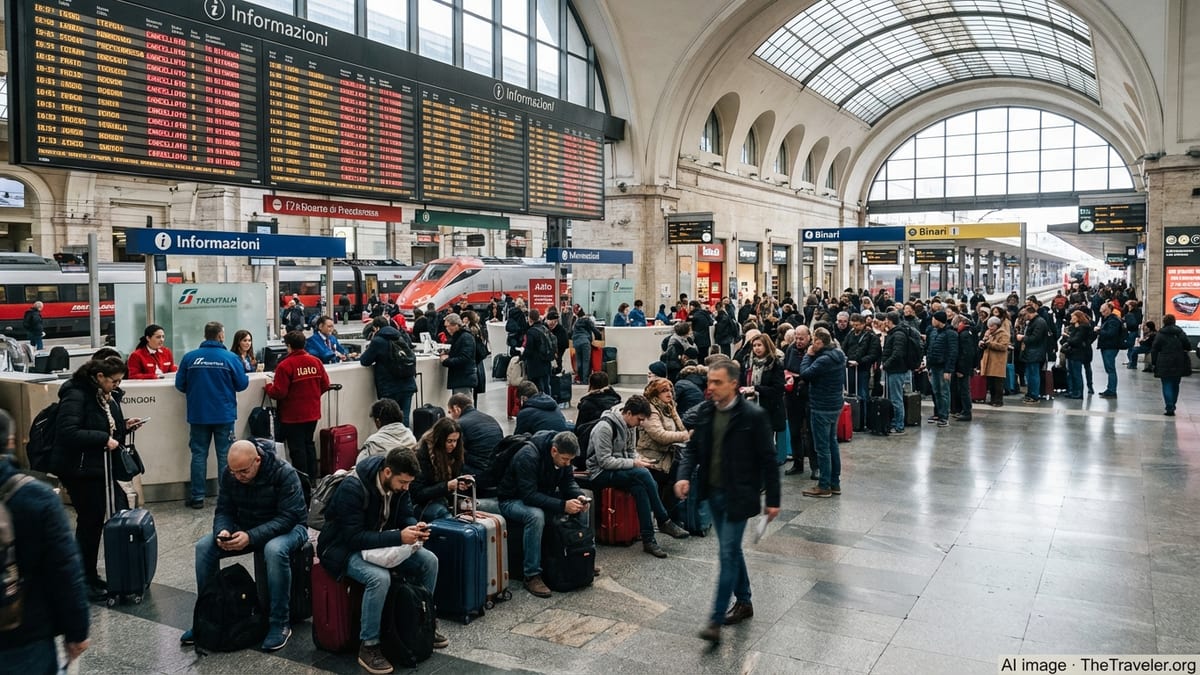
Thousands of passengers were left stranded on platforms across Italy on Thursday as rail operators Trenitalia, Italo and the wider FS Group began cancelling services ahead of a nationwide strike that is paralyzing travel in and out of key hubs including Rome, Milan, Venice, Bologna and Naples.
Nationwide Rail Stop Follows Day of Air Chaos
The rail disruption comes on the heels of a 24-hour aviation strike on 26 February, which forced ITA Airways and other carriers to cancel around half of scheduled flights and caused knock-on delays at major airports from Rome Fiumicino to Venice Marco Polo. As trains were pulled from timetables on Thursday in preparation for the rail stoppage, many travelers already hit by flight cancellations found themselves with no viable alternative route by land.
The national rail strike, called by several transport unions, is officially scheduled from 21:00 on Friday 27 February until 20:59 on Saturday 28 February. However, long-distance and high-speed services operated by Trenitalia, Italo and FS Group subsidiaries began to see pre-emptive cancellations and rescheduling on Thursday, with operators warning that rolling disruption would extend well beyond the formal strike window.
Authorities have cautioned that the combination of aviation and rail walkouts over three consecutive days amounts to one of the most disruptive transport episodes in Italy in recent years, affecting both domestic mobility and international tourism during the busy late-winter travel period.
Stations in Rome, Milan and Venice Jammed With Delayed Travelers
By Thursday afternoon, Rome Termini and Tiburtina, Milan Centrale and Venice Santa Lucia were crowded with passengers facing boards filled with cancellations and severe delays. At Venice Marco Polo’s connected services and at Bologna Centrale and Napoli Centrale, announcements of further train cancellations prompted queues at ticket counters and customer service desks stretching across concourses.
Many travelers reported arriving to find their high-speed services already withdrawn from the schedule or retimed outside practical hours. Families returning from Carnival trips, business travelers aiming for end-of-month meetings and international visitors connecting to flights all scrambled to rebook onto the limited number of guaranteed or still-operating trains.
With only a small subset of essential services assured during the strike, rail staff advised passengers not to travel unless strictly necessary. Loudspeaker messages in stations repeatedly urged people to check operator apps and information screens, and to expect last-minute changes even to trains that initially appeared confirmed.
Trenitalia, Italo and FS Group Slash Services Nationwide
Both flagship high-speed operators, state-controlled Trenitalia and private competitor Italo, confirmed widespread cancellations across their Frecciarossa and Italo AV networks, particularly on the crucial north-south spine connecting Turin, Milan, Bologna, Florence, Rome and Naples. Regional and commuter routes run under the FS Group umbrella, including those in Lombardy and Emilia-Romagna, also reported severe reductions.
The rail unions behind the strike have cited safety, working conditions and pay, as well as broader criticism of government transport policy, as reasons for the walkout. Management at the major operators acknowledged the impact on passengers but underscored that they are legally required to respect strike notifications while still providing a minimum level of essential service.
In line with national rules, operators have published lists of guaranteed trains, largely focused on early-morning and early-evening commuter windows. Outside these protected time bands, even long-distance services that are normally considered priority can be cancelled or replaced by slower alternatives, complicating cross-country journeys for tourists and business travelers alike.
Tourists Face Missed Flights, Lost Nights and Extra Costs
The timing of the transport disruptions has been particularly punishing for inbound and outbound tourists who had planned multi-city itineraries or cruise, ski and cultural trips built around Italy’s extensive high-speed rail network. Visitors in Rome, Milan, Venice and Florence reported difficulty reaching airports after both flight and train options were cut or heavily delayed.
Many travelers faced the prospect of paying last-minute rates for hotels near stations and airports after missing connections, while others turned to car rentals at inflated prices or long-distance coaches already operating close to capacity. For those on tightly scheduled itineraries, missed prepaid tours, non-refundable accommodations and lost nights in other destinations across Europe added to the financial burden.
Tour operators and travel agents fielded a surge in emergency calls from clients trying to reroute trips around the strike days, with some advising customers to postpone or shorten stays in Italy if they had not yet departed. Travel insurers were meanwhile reviewing claims linked to strikes, with coverage varying significantly depending on the policy and when tickets were purchased.
Authorities Urge Passengers to Rebook and Monitor Real-Time Updates
Italy’s transport ministry reiterated on Thursday that minimum services will be maintained, but urged all travelers to verify the status of their journeys directly with rail companies before heading to stations. Passengers holding tickets for canceled trains have generally been offered the option to change to another date without penalty or seek a refund, although availability on alternative services remains limited.
Local authorities in several cities have encouraged residents and visitors to consider postponing non-essential trips during the strike period, and to rely on urban public transport where available. In regions where strike participation extends to certain local services, bus and metro networks may also face sporadic interruptions, further complicating last-mile travel for rail passengers.
With unions and operators yet to signal any breakthrough in negotiations, travelers planning to pass through Italy in the coming days are being advised to build generous buffers into their schedules, keep digital tickets and notifications handy, and prepare for the possibility that journeys between Rome, Milan, Venice, Bologna, Naples and other key destinations could take significantly longer than usual.