

More news on this day
Hundreds of travellers were left stranded at airports across Italy on Thursday as nationwide transport strikes triggered at least 168 flight delays and 67 cancellations, disrupting operations at Milan, Naples, Bergamo and Rome and throwing the schedules of easyJet, ITA Airways, Ryanair, Wizz Air Malta and several other carriers into chaos.
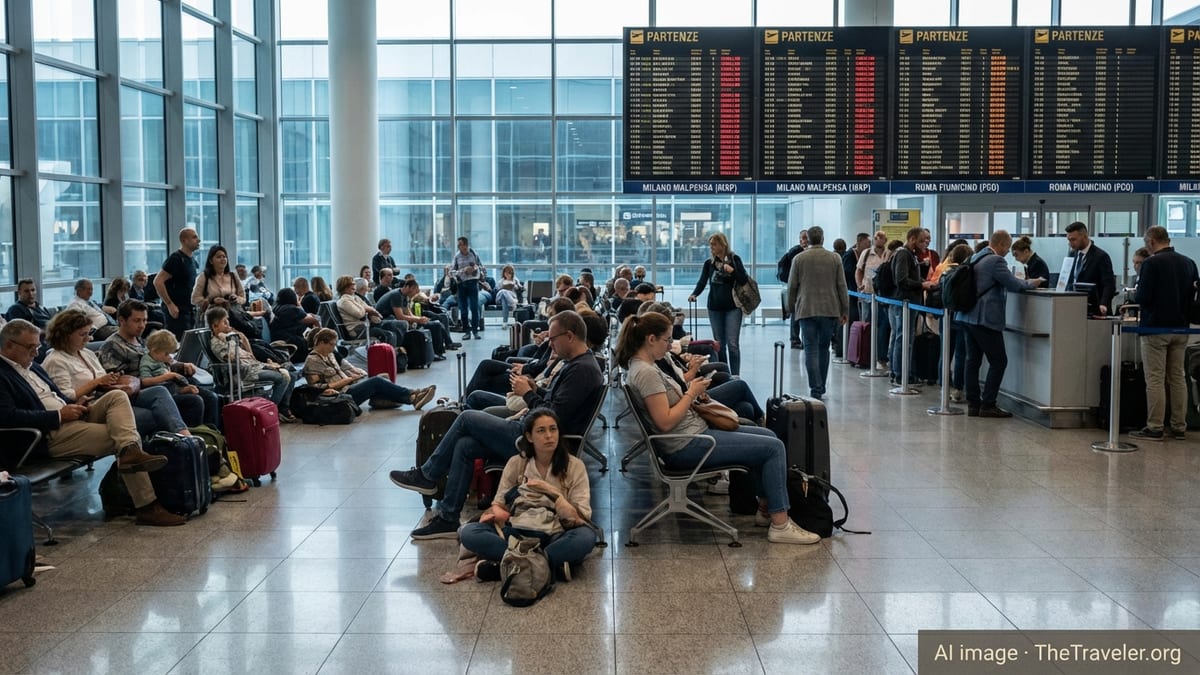
Nationwide Strike Brings Major Hubs to a Standstill
The 24-hour aviation walkout, which began just after midnight on February 26, quickly rippled through Italy’s busiest hubs, including Milan Malpensa and Linate, Rome Fiumicino, Naples Capodichino and Bergamo Orio al Serio. Early-morning departures were among the first to be hit, with departure boards filling with notices of long delays and last-minute cancellations.
Airport officials and unions said the action involved flight crews, cabin staff and ground-handling workers, severely reducing capacity for check-in, baggage handling and aircraft turnaround. With reduced staffing, airlines were forced to trim schedules, consolidate services and in many cases cancel flights outright to maintain basic operational safety.
By mid-morning, terminal concourses were crowded with passengers queueing at airline desks as they sought rebooking options, meal vouchers and hotel accommodation. Families returning from school holidays, business travellers and tourists heading to ski resorts or onward European connections all found themselves unexpectedly grounded.
The disruption coincided with a broader wave of transport unrest that is also affecting rail services, sparking warnings from travel analysts that Italy faces one of its most challenging late-winter travel weekends in recent years.
easyJet, ITA Airways, Ryanair and Wizz Air Malta Among Worst Hit
Low-cost giant easyJet and Italian flag carrier ITA Airways shouldered a significant share of Thursday’s cancellations and delays, with both airlines operating heavily from Milan and Rome. Pre-emptive schedule cuts were followed by fresh same-day disruptions as staff participation in the strike exceeded expectations in some locations.
Ryanair and Wizz Air Malta, key operators at Bergamo and other regional airports, also reported a series of delayed departures and short-notice cancellations. Passengers on intra-European routes to and from cities including London, Paris and Munich experienced missed connections and extended layovers as aircraft and crews fell out of rotation.
Smaller carriers serving domestic and short-haul routes were not spared, with knock-on effects spreading to Verona, Venice and secondary Italian airports that rely on shared handling agents. Aviation data from Thursday showed Italy among the worst-affected countries in Europe for flight punctuality, with delays cascading across the wider network.
Airlines urged customers to check flight status before travelling to the airport and offered fee-free rebooking options where possible. However, with many services fully booked at the tail end of the school holiday period, some passengers reported being re-accommodated one or even two days later than planned.
Labour Dispute Over Contracts and Pay Fuels Walkout
The latest strike stems from a long-running labour dispute over the renewal of the national collective contract for aviation and ground-handling workers, as unions press for pay increases that keep pace with inflation and clearer guarantees on working hours and staffing levels. Representatives argue that post-pandemic recovery and strong passenger demand have not yet translated into fairer conditions for frontline staff.
Union leaders said early indications suggested high participation among those called to strike, particularly at major hubs where multiple carriers share the same handling companies. They accused employers and authorities of failing to respond adequately to previous warnings, describing Thursday’s stoppage as a necessary escalation to unlock stalled negotiations.
The date of the protest has also drawn political attention, coming after earlier attempts to curb strike action around high-profile national events. Transport officials acknowledged the disruption but insisted that minimum essential services, including “protected” flight slots at peak times, had been maintained in accordance with Italian law.
Industry observers noted that the dispute highlights ongoing tensions within Europe’s aviation labour landscape, where rising costs of living and staffing shortages are colliding with airlines’ efforts to keep fares competitive.
Travellers Face Long Queues, Uncertain Rebookings and Knock-On Delays
For passengers on the ground, the impact was immediate and tangible. At Milan and Rome, long lines formed at airline service counters as travellers tried to secure alternative flights. Some reported waiting several hours to be seen, only to learn that the next available seat to their destination was not until the following day.
In Naples and Bergamo, where low-cost carriers dominate, many customers found their short city breaks or onward connections abruptly curtailed. With hotel availability tightening around major hubs, those without travel insurance or flexible tickets faced additional out-of-pocket costs for last-minute accommodation and meals.
Even flights that departed as scheduled were often subject to delays on arrival, as congested ground operations and air-traffic flow restrictions forced aircraft to wait for stands or handling teams. Aviation analysts warned that the disruption would not be confined to Thursday, with aircraft and crews out of position likely to cause further delays and isolated cancellations into Friday.
Consumer groups in Italy renewed calls for clearer communication and faster processing of compensation and refunds, urging airlines to proactively notify passengers by text or app as soon as schedule changes were confirmed.
Advice for Passengers Travelling Through Italy This Week
With the aviation strike overlapping with further industrial action in the rail sector, travel experts are advising anyone planning to transit through Italy over the coming days to build in additional time and flexibility. Where possible, passengers are encouraged to reconfirm flights well before travelling to the airport and to consider earlier departures or alternative routings.
Those already affected are being urged to hold onto all receipts for meals, transport and accommodation in case of future reimbursement. Travel agents report a rise in requests to adjust itineraries, including rerouting through less-affected hubs or shifting journeys by 24 to 48 hours.
Analysts say the latest disruption underscores the value of comprehensive travel insurance, particularly policies that cover strike-related delays, missed connections and additional accommodation costs. Frequent flyers also point to the benefits of booking through flexible fares or using loyalty points, which can make last-minute changes easier to secure.
As negotiations between unions and employers continue, regular passengers on Italian routes are bracing for the possibility of further strike calls later in the year, and many are watching closely for signs of progress that might restore stability to one of Europe’s most important aviation markets.