

More news on this day
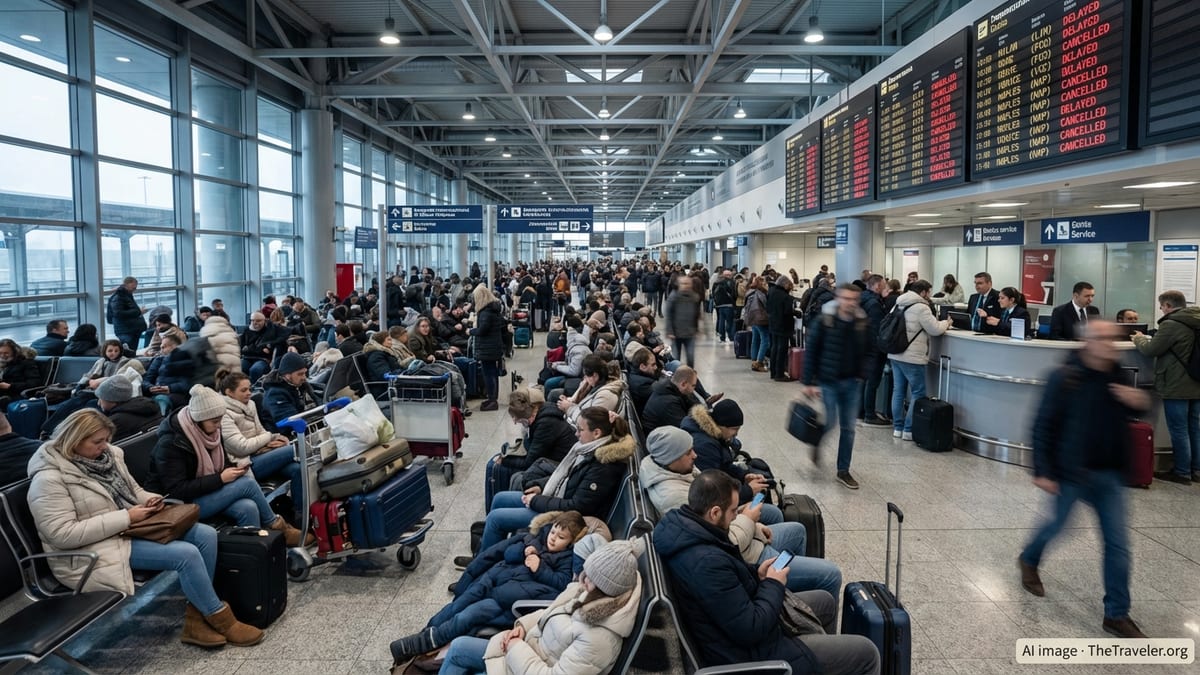
Hundreds of airline passengers were left stranded across Italy on February 27 as a wave of cancellations and delays rippled through key airports in Milan, Rome, Venice and Naples, disrupting operations for carriers including Wizz Air Malta, ITA Airways, Ryanair, easyJet, Emirates and several other airlines.
Nationwide Strike Paralyzes Key Italian Hubs
Italy’s already stretched aviation network was pushed to breaking point as nationwide transport strikes swept through major cities, triggering fresh disruptions just a day after a broader air transport walkout. Airports serving Milan, Rome, Venice and Naples reported mounting queues, crowded terminals and frustrated travelers as staff shortages and protests slowed operations to a crawl.
The latest disruption follows a 24 hour national air transport strike on February 26, when unions reported around 300 flights cancelled across the country. That earlier action, involving both cabin crew and ground handling staff, prompted ITA Airways to preemptively axe about half of its scheduled services, setting the stage for knock on delays and residual cancellations that continued into February 27.
On Friday, the situation deteriorated again as ground crews and airport staff at multiple hubs joined wider transport protests, leaving airlines scrambling to reassign aircraft and crews. While some services operated within protected time slots in the morning and evening, mid day waves of flights bore the brunt of disruption, with departures banked up and arriving aircraft held on remote stands for lack of personnel.
Operational data compiled from Italian airports indicated at least 30 flights were cancelled and roughly 170 were delayed across major hubs, with impacts concentrated at Milan Malpensa and Linate, Rome Fiumicino, Venice Marco Polo, Naples Capodichino and the low cost gateway of Bergamo Orio al Serio.
Airlines Scramble as Cancellations and Delays Mount
Low cost and leisure focused airlines were among the hardest hit, with easyJet, Ryanair, Wizz Air and Wizz Air Malta all reporting multiple cancellations and extensive delays. Figures from flight monitoring services showed easyJet suffering several dozen cancellations nationwide, particularly at Milan Malpensa and Naples, where the carrier has a dense schedule of intra European services.
Ryanair and Wizz Air Malta, both heavily exposed at Italy’s secondary airports, faced a combination of grounded departures and late running inbound flights that knocked on across their networks. Delays on early morning rotations forced aircraft to miss afternoon slots, while crew duty time limits complicated recovery efforts and led to further last minute cancellations.
Italy’s flag carrier, ITA Airways, remained at the center of the crisis after slashing around 50 to 55 percent of its schedule on February 26 in anticipation of the initial strike. Although the airline attempted to restore a more regular program the following day, residual staffing and handling constraints meant additional cancellations and chronic delays at its Rome Fiumicino hub and at Milan Linate.
International full service operators were not immune. Emirates, which links Italy to its Dubai hub with long haul services from Milan, Rome and other gateways, was forced to adjust departure times and reroute passengers onto alternative dates as ground handling bottlenecks slowed turnarounds. Other European legacy carriers operating into Rome, Milan and Venice also reported schedule disruptions, even where their own staff were not directly involved in the industrial action.
Scenes of Frustration for Stranded Passengers
Inside terminals, the impact was immediately visible. In Milan, long lines formed at airline service desks as stranded passengers sought rebooking options, refunds or overnight accommodation. Information boards at Malpensa and Linate displayed a patchwork of cancelled and heavily delayed flights, with some short haul services pushed back by several hours.
At Rome Fiumicino, travelers reported waiting in check in queues that snaked through departure halls as skeleton teams attempted to process passengers for the limited number of operating flights. Boarding gates repeatedly announced changes of stand, last minute schedule tweaks and, in some cases, outright cancellations after passengers had already passed security.
Families headed for winter city breaks, students returning to universities and business travelers connecting to onward long haul services all found themselves caught in the disruption. With hotels around major airports quickly filling up, some passengers resigned themselves to sleeping on terminal benches while waiting for rebooked flights in the following days.
Venice Marco Polo and Naples Capodichino also saw congestion as services to key European destinations were pushed back. In Bergamo, a major base for low cost carriers, disruptions to handling operations triggered a cascade of delays that left aircraft out of position for later rotations.
Labour Disputes and Transport Tensions Behind the Chaos
The turmoil in Italian skies is rooted in long running labour disputes between unions representing aviation workers and employers over pay, working hours and the renewal of sector wide collective agreements. Unions say inflation and rising living costs have eroded real wages, while staff shortages and robust travel demand have increased workloads on those remaining in the industry.
The 24 hour national air transport strike of February 26, which was originally scheduled for earlier in the month but postponed by government order, marked a significant escalation. High participation rates among cabin crew, pilots and ground handling staff forced airlines to implement widespread preventive cancellations and consolidate services ahead of time.
Friday’s renewed disruption illustrated how even after a formal strike ends, operational systems can remain fragile. Aircraft and crews displaced by the previous day’s cancellations left gaps in schedules, while absences among ground staff slowed the process of turning aircraft around. That fragility was compounded by simultaneous protests affecting other parts of Italy’s transport network, from rail services to urban transit, complicating the ability of both workers and passengers to reach airports.
Trade union leaders have signaled that further action is possible if negotiations over contracts and conditions remain stalled, raising the prospect of additional travel headaches in the coming weeks. Industry observers warn that unless a compromise is found quickly, Italy’s reputation for reliable connectivity during the busy spring travel season could suffer.
What Travelers Can Expect in the Coming Days
Although airlines and airport operators said they were working to restore normal operations as quickly as possible, knock on effects from the latest disruptions are likely to continue through the weekend. Aircraft and crew rotations need time to be realigned, meaning residual delays and occasional cancellations may persist even after formal strike periods end.
Passengers with upcoming flights to or from Milan, Rome, Venice, Naples and Bergamo are being urged to monitor their flight status closely and to check in online where possible to reduce time spent in crowded terminals. Many carriers, including ITA Airways and major low cost operators, have activated flexible rebooking policies, allowing affected customers to change travel dates without additional fees or to request refunds for cancelled services.
Travel industry analysts suggest that travelers with tight connection times or fixed onward plans should build in additional buffers or consider alternative routings through less affected European hubs. Those already in Italy and needing urgent travel are advised to remain in close contact with their airline, as seats on remaining services are limited and can sell out quickly when schedules are severely constrained.
With unions and employers still at odds and the broader transport sector under strain, Italy’s aviation landscape remains volatile. For now, stranded passengers in Milan, Rome, Venice and Naples have become the most visible face of a deeper struggle over the future of work and investment in one of Europe’s most important travel markets.