

Italy’s landscapes may be timeless, but the ways visitors move between them are changing quickly. New train services, evolving airport links and stricter rules on tickets and traffic zones mean that a little planning can save tourists time, money and stress. This guide explains the main transportation options in Italy as of 2026 and offers practical advice for using them with confidence, whether you are riding a high speed train into a Renaissance city or catching a local bus to a hill town.
Understanding Italy’s Transport Network
Italy has one of Europe’s most varied transport systems, combining dense rail coverage, extensive regional and urban bus networks, domestic flights between major hubs and a growing web of airport links. For most visitors, trains form the backbone of longer journeys, supported by buses, metros and trams within and between cities. Ferries, cable cars and seasonal shuttle services fill in gaps to islands, ski resorts and rural destinations.
Responsibility for transport is shared between the national government, regions and cities. National rail services are dominated by Trenitalia, with private competitor Italo operating on some high speed routes. Local buses and trams are usually run by city or regional companies, each with its own ticketing rules. This fragmentation can look confusing on a map, but it gives travelers a wide range of options and price points.
Tourists should also be aware that Italy is tightening enforcement of traffic rules, ticket validation requirements and restricted driving zones. While fines can be steep, they are easily avoided with basic knowledge of how tickets, platforms and road signs work. Planning routes a day or two in advance and checking local information when you arrive in each city will make the network feel far more manageable.
The best way to approach Italian transport is to think in layers: high speed trains for crossing the country, regional trains and buses for reaching smaller towns, and local transit or taxis for the “last mile” from station or airport to your hotel. Once you understand how those layers connect, it becomes much easier to build a flexible but efficient itinerary.
High Speed and Regional Trains
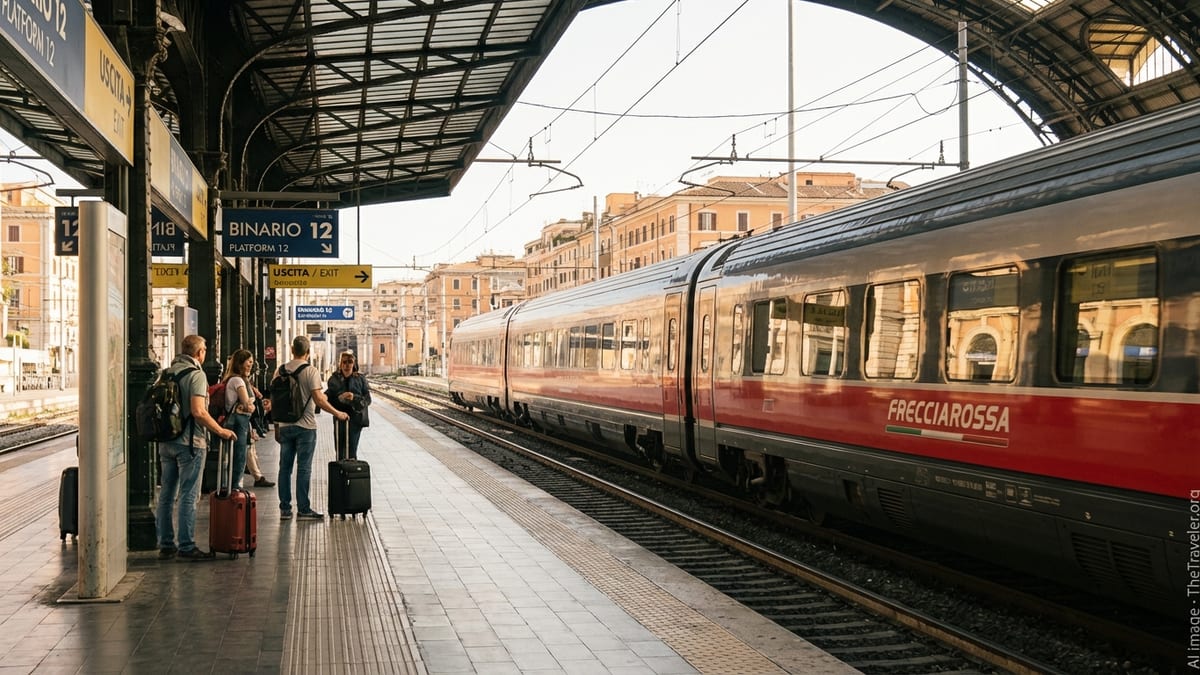
For journeys between major cities such as Rome, Florence, Venice, Milan and Naples, high speed trains are usually the fastest and most comfortable choice. Trenitalia’s Frecciarossa and Frecciargento services and Italo’s red trains link city centers in a matter of hours, often running at intervals comparable to air shuttles. Seats are reserved, luggage spaces are generous by rail standards and onboard Wi‑Fi is common, although performance can vary.
Foreign visitors who plan multiple rail journeys within a short period can consider the Trenitalia Pass, aimed at non‑residents and sold in several versions that bundle a fixed number of high speed or Intercity trips into a set number of consecutive travel days. The pass can offer savings and flexibility for travelers who favor spontaneous day trips, but it still requires a reservation for each individual train, which needs to be made before boarding.
Beyond the high speed trunks, Italy’s regional and Intercity trains reach medium‑sized cities, coastal towns and inland hubs. These services are slower and usually cheaper, often with unreserved seating and more basic rolling stock. They are particularly useful in regions like Tuscany, Emilia‑Romagna and Lombardy, where short hops link a chain of historic towns. Timetables can change seasonally, so checking the schedule close to your departure date is advisable, especially for lines serving smaller communities.
Tourists should pay close attention to ticket rules. On high speed trains, your seat reservation and ticket are tied to a specific departure. On many regional and suburban services, however, paper tickets bought from machines or newsstands must be validated in a small machine on the platform before you board. Inspectors conduct routine checks and fines for unvalidated tickets can be substantial, even if you have paid for the ticket itself.
Urban Transport: Metros, Trams and Buses
Italian cities offer a mix of metros, trams, buses and in some cases suburban rail, with Rome, Milan, Naples and Turin running more extensive metro networks and smaller cities relying primarily on surface transport. Metro systems generally operate from early morning until late evening, with shorter hours or reduced frequencies at night and on holidays. Trams and buses can be an efficient way to cross historic centers where road layouts are complex and parking is restricted.
Tickets for local transport are usually time‑based rather than distance‑based, valid across buses, trams and sometimes metro within a city or metropolitan area. Many cities sell single tickets and day passes through automated machines, tobacco shops and newsstands. Increasingly, mobile apps and contactless payment options are available, but coverage is not yet uniform, so it is wise to confirm how payment works in each city on arrival. Whatever the format, tickets nearly always require validation when you first use them.
Service quality and crowding can vary widely. In peak hours, Rome’s and Milan’s metros can be packed, while mid‑day services are more relaxed. Buses in historic centers may be slowed by traffic and narrow streets, although some cities are expanding dedicated bus lanes. Trams often provide a smoother ride and a scenic view of urban neighborhoods, especially in cities such as Milan and Florence where they run through central districts.
While pickpocketing remains a concern on crowded urban transport, simple precautions are usually sufficient. Keep bags closed and in front of you, avoid displaying valuables and be especially alert on airport connections, around central stations and on tourist‑heavy metro lines. Official transport staff and inspectors are identifiable by uniforms and ID cards, and they focus mainly on safety checks and fare control rather than direct security enforcement.
Airports and Intercity Connections
Italy’s main international gateways include Rome Fiumicino, Milan Malpensa and Linate, Venice Marco Polo, Naples, Bologna and several regional airports in Sicily and Sardinia. Over the last few years, many of these airports have improved their ground transport links, adding direct rail connections or shuttle services to nearby city centers. For visitors, that often means a choice between premium express trains, slower commuter lines, buses and fixed‑fare taxis.
In Rome, Fiumicino Airport is connected to the city by the Leonardo Express, a non‑stop Trenitalia service to Termini station that runs roughly every 15 minutes, alongside a suburban rail line that links the airport to neighborhoods such as Trastevere and Ostiense. Ciampino, which handles many low‑cost flights, relies on a combination of buses and fixed‑fare taxis to reach the central area. Both airports use regulated taxi tariffs for trips to central districts, with flat rates meant to prevent overcharging, although visitors should still insist on using official cabs from the marked ranks.
Milan Malpensa and Linate, Venice Marco Polo and Bologna’s Guglielmo Marconi Airport all offer rail connections into the respective city centers, supplemented by buses and coaches serving outlying areas. Bologna in particular is linked to the main railway station by the Marconi Express, a short monorail ride that connects air and rail networks in under 10 minutes. Regional airports like Naples and Trapani often rely more heavily on buses, with projects under way in some locations to add rail links in the coming years.
Domestic flights can be practical for long‑distance trips that do not align well with the high speed rail corridors, such as links between the mainland and Sicily or Sardinia. However, for most city pairs in northern and central Italy, high speed trains offer a more relaxed experience, with fewer security formalities and stations typically located in walkable central districts. When planning, factor in transfer times to and from airports, especially during peak traffic periods.
Driving, Car Rental and Restricted Zones
Renting a car in Italy can be a rewarding way to explore rural regions, vineyards, coastal drives and small towns with limited public transport. The road network is extensive, with toll motorways connecting major cities and scenic secondary roads winding through countryside. For many visitors, however, driving is best kept for specific legs of a trip rather than as a continuous mode throughout a multi‑city itinerary.
Urban driving comes with significant challenges. Italian cities often have restricted traffic areas in their historic centers, marked as ZTL zones, where access is limited to residents, delivery vehicles or taxis at certain times of day. Cameras monitor entries and fines for unauthorized access are sent automatically, sometimes weeks after a trip. Rental cars are not exempt, and agencies typically pass on fines with additional administrative fees, so understanding and respecting ZTL signs is crucial.
Parking can also be difficult and expensive in central areas. Many visitors opt to stay at accommodations that provide parking on the edge of historic centers, then switch to walking or public transport for sightseeing. In some cities, park‑and‑ride facilities and suburban car parks connect directly with tram or metro lines, offering a practical compromise for travelers who prefer to drive between regions but not within dense urban cores.
On motorways, speed limits and toll collection systems are clearly signed, but driving style may feel assertive to those used to more regulated traffic cultures. Keeping to the right except when overtaking, maintaining safe distances and allowing faster traffic to pass will make motorway travel less stressful. Fuel prices fluctuate, and full‑service stations on motorways tend to be more expensive than those in towns. For most city‑to‑city routes in northern and central Italy, travelers should compare the cost of tolls and fuel with high speed train fares before deciding to drive.
Tickets, Validation and Avoiding Fines
Italy’s transport system places strong emphasis on correct ticketing and validation, and inspectors have broad authority to issue on‑the‑spot fines when rules are not followed. The crucial point for visitors is that simply buying a ticket is not always enough. On many trains, buses and trams, tickets must be stamped or activated before or as you board, using validation machines on platforms or near doors.
These machines imprint the date and time on paper tickets or activate digital ones, preventing them from being reused. If a ticket inspector finds you on board without a validated ticket, you may be treated as if you had not paid at all, even if you can show an unstamped ticket bought minutes earlier. Penalties can start at around the cost of several full fares and increase sharply if not paid immediately or within a short deadline.
To avoid problems, give yourself extra time at stations to find the validation machines or to activate tickets in official apps. If in doubt, ask station staff or fellow passengers for help before the train departs. When using passes or online bookings, keep both your digital reservation and any associated identification or pass documentation ready, as conductors may ask to see them together. On high speed trains, staff usually check tickets shortly after departure, while on regional and urban services, inspections can happen at any point.
It is also important to keep tickets and reservations until you leave the station, as checks sometimes take place at exits. Accidental non‑compliance is not always waived for tourists, and disputes can be difficult to resolve after the fact. Adopting a cautious routine of purchasing from official channels, validating every paper ticket and following posted rules at stations and stops will significantly reduce the risk of fines.
Accessibility, Safety and Seasonal Factors
Accessibility standards across Italy’s transport network are improving but remain uneven. High speed trains and major stations usually offer step‑free access, elevators and assistance services that can be booked in advance. Many newer trams and buses are low‑floor models with designated spaces for wheelchairs and strollers. However, older vehicles and small stations may still present obstacles such as steps, narrow doors or limited signage in languages other than Italian.
Travelers with mobility concerns should, where possible, research routes and stations in advance and consider contacting operators’ assistance services before departure, especially for complex journeys involving changes at busy hubs. In smaller towns, calling ahead to confirm whether a station has lifts, ramps or staff presence can prevent last‑minute surprises. Within historic centers, cobblestone streets and steep gradients may affect how far you want to walk from a stop or station.
From a safety perspective, Italian transport compares broadly with other Western European countries. Accidents on high speed rail are rare, and urban systems are heavily used by commuters and students. The main concerns for tourists are petty theft in crowded areas, fatigue on long driving days and summer heat, which can affect comfort on older regional trains and buses without strong air conditioning. Carry water during summer journeys and consider timing long trips for earlier in the day.
Seasonal factors can also influence transport. August brings holiday crowds and occasional service alterations as locals travel to coastal and mountain destinations. Winter schedules in Alpine and Apennine regions may include special ski buses and extra trains to resorts, alongside the risk of weather‑related delays. Around major events, such as festivals and forthcoming Winter Olympic venues in the Dolomites, temporary shuttle services and reinforced train timetables are often added, so checking updated information close to travel dates is particularly important.
The Takeaway
Italy’s transport options give visitors enormous freedom to combine bustling cities, quiet hill towns, coasts and mountains in a single trip. High speed trains provide fast, comfortable links between major hubs, while regional lines, buses and ferries reach smaller destinations that preserve much of the country’s local character. Taxis, rides with licensed drivers and occasional car rentals fill in gaps, particularly for rural stays and after‑hours transfers.
For most tourists, the key to smooth travel lies in a few habits: plan the broad framework of your routes in advance, learn how ticketing and validation work in each place, and treat restricted driving zones with respect. Allow extra time for connections, especially after flights, and avoid scheduling hard deadlines around the last train or bus of the day. Modest flexibility, backed by a basic understanding of how the system is structured, will protect you from the most common frustrations.
Staying informed about recent changes is especially valuable in 2026, as Italy continues to expand rail services, modernize airports and tighten enforcement of long‑standing rules. Information from station staff, official apps and local tourism offices can help you navigate new links and temporary diversions without stress. With these tools, Italy’s transport network becomes not a barrier but a bridge between the country’s many distinct regions.
Ultimately, embracing trains and local transport can enhance your experience of Italy itself. Watching the landscape shift from plains to vineyards to mountains, sharing a commuter tram with residents or stepping off a regional bus into a quiet piazza are all part of traveling the country as more than a spectator. With a bit of preparation and curiosity, getting around Italy becomes one of the pleasures of the journey.
FAQ
Q1. Do I need to buy Italian train tickets in advance or can I purchase them on the day?
For high speed and many Intercity trains, buying in advance often secures better prices and guarantees a seat, especially on busy routes and weekends. Regional tickets can usually be bought on the day, but you must validate paper tickets before boarding where required.
Q2. How do I validate tickets on Italian trains, buses and trams?
On many regional trains and local services, you insert a paper ticket into a small stamping machine on the platform or near the vehicle doors before or immediately after boarding. Digital tickets are usually activated through an app. Always check local instructions, as riding with an unvalidated ticket can lead to fines.
Q3. Are taxis in Italian cities metered and reliable for tourists?
Licensed taxis in Italy are metered and regulated, and in some cities there are fixed fares from airports to central areas. To avoid problems, use official taxi ranks, confirm the fixed fare or meter use before departure and avoid unmarked cars offering rides.
Q4. Is it better to take a train or fly between major Italian cities?
For most routes between major cities in northern and central Italy, high speed trains are usually more convenient, delivering you to central stations with fewer formalities. Flying can be useful for longer distances involving islands or when rail connections are indirect.
Q5. What is a ZTL and how can it affect my rental car?
A ZTL is a restricted traffic zone, often in historic centers, monitored by cameras. Only authorized vehicles may enter during certain hours. Driving a rental car into a ZTL without permission can generate automatic fines that are later passed on by rental agencies.
Q6. Are Italian metros, buses and trains safe to use at night?
Most services are widely used by locals and generally safe, though they may be less frequent at night. Common sense precautions apply: stay in well‑lit areas, keep valuables secure and consider using licensed taxis for very late journeys or if services are infrequent.
Q7. Can I use contactless bank cards to pay for public transport in Italy?
Contactless payment is being introduced in several major cities and on some rail services, but coverage is not yet universal. In many places you still need to buy a ticket or pass from machines, shops or apps, so always check local guidance when you arrive.
Q8. How accessible is Italian public transport for travelers with reduced mobility?
High speed trains and major stations usually provide step‑free access, lifts and assistance on request, but smaller stations and older vehicles may be less accessible. Travelers with mobility needs should research routes in advance and contact operators’ assistance services where available.
Q9. What is the best way to get from Italian airports into city centers?
Most major airports are linked by a combination of express trains, commuter rail, shuttle buses and fixed‑fare taxis. Where an airport rail link exists it is often the fastest option, while buses can be cheaper and taxis more convenient if you have heavy luggage or arrive late at night.
Q10. Is driving in Italy recommended for first‑time visitors?
Driving can be enjoyable for reaching rural areas and scenic routes but is often stressful in large cities with restricted zones and limited parking. Many first‑time visitors combine trains and local transport for cities with short car rentals reserved for countryside segments.