

More news on this day
Passengers traveling through Italy and major European hubs on March 6 are facing another day of disruption, as ITA Airways, Ryanair, Lufthansa, easyJet and several other carriers report at least 172 flight delays and 15 cancellations across Rome, Milan, London, Amsterdam and neighboring gateways.
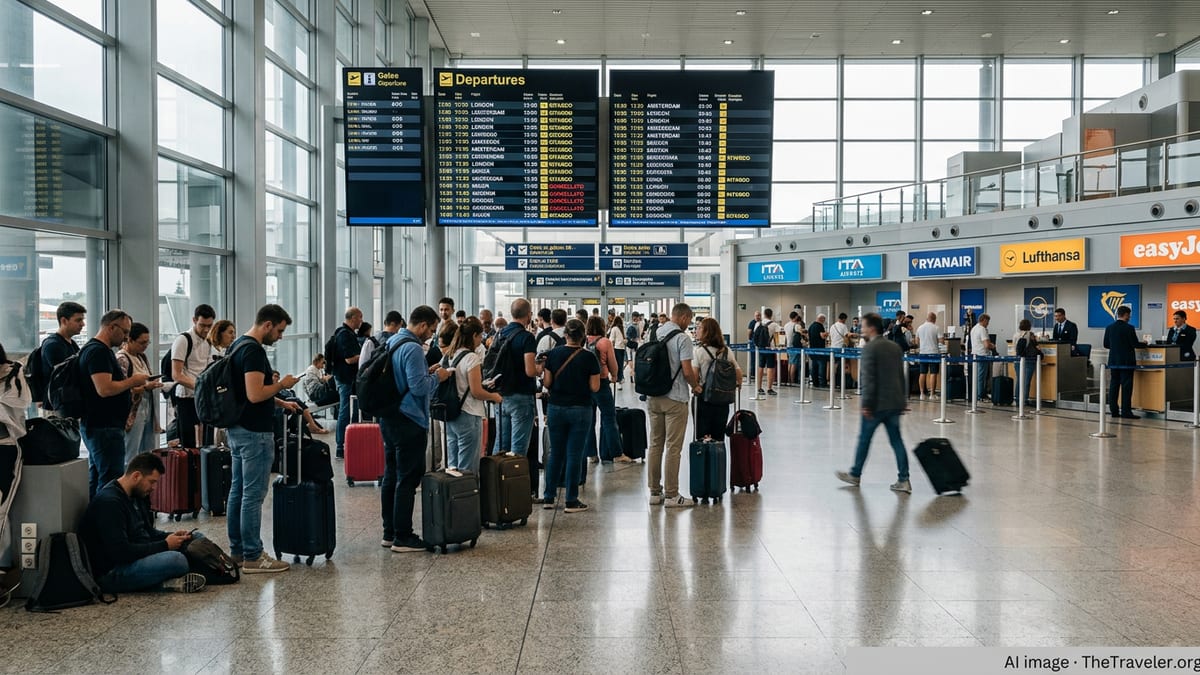
Knock-on Turmoil Across Italy and Northern Europe
The latest figures, drawn from airport and airline operational updates on March 6, show disruption clustered around Italy’s main gateways in Rome and Milan, with spillover at hubs in London and Amsterdam. The tally of 172 delayed flights and 15 outright cancellations reflects a patchwork of operational challenges that have been building across European skies over the past week.
At Rome Fiumicino and Milan’s twin airports of Malpensa and Linate, ITA Airways has continued to battle schedule instability following a series of recent strike-related and staffing issues that forced the carrier to cancel about half of its flights during a nationwide air transport walkout on February 26. While operations have formally resumed, recovery has been uneven, leaving aircraft and crew out of position and tightening turnaround times at already busy terminals.
The shockwaves have not been limited to Italian carriers. Ryanair’s dense web of intra-European routes means even modest delays at Italian airports can quickly cascade into late departures from London, Amsterdam and other northern gateways. Lufthansa and easyJet, both heavily exposed at major continental hubs, are also reporting a higher-than-usual number of late-running rotations as they work around congested airspace and tight ground-handling capacity.
For travelers, the result is a familiar pattern of rolling delays, longer queues at security and check-in, and a scramble for rebookings on peak departures between Italy, the United Kingdom and the Netherlands.
Milan Malpensa Hit by Cancellations and Long Delays
Milan Malpensa, one of Italy’s busiest international gateways, has emerged as a particular hotspot in the current disruption cycle. On March 6, the airport reported 19 cancellations linked largely to long haul services, alongside a cluster of delayed short haul and European flights. While many of the cancellations have involved non-European airlines, the knock-on impact has rippled across the schedules of ITA Airways, Ryanair, Lufthansa and easyJet aircraft that share the same stands, runways and ground resources.
The strain at Malpensa comes on the heels of earlier disruption this week, when weather and congestion further north in Europe pushed back arrival and departure slots. Airport performance data already show Malpensa operating with slim punctuality margins, and any spike in late arrivals quickly feeds into turnaround delays for outbound services, particularly on low cost routes where aircraft typically operate multiple sectors a day.
Travel agents in Milan report that passengers heading to London, Amsterdam and other major hubs have been especially hard hit, with early morning delays rippling into afternoon and evening waves. On several Italy to UK and Italy to Netherlands rotations on March 5 and March 6, delays have run well beyond an hour, forcing missed connections and rebookings onto already crowded services.
With Malpensa acting as a critical bridge between Italy and northern Europe, even a limited number of cancellations and late departures can distort the wider network, magnifying the overall count of disrupted flights across the region.
London and Amsterdam Feel the Pressure
London’s main airports and Amsterdam Schiphol, two of Europe’s busiest transfer hubs, have been grappling with their own congestion issues this week as weather patterns and airspace restrictions have forced airlines to tweak routings and schedules. Recent disruption data from European air travel monitors point to more than a thousand combined delays and cancellations across England, France, Germany, the Netherlands and Switzerland on March 5, underscoring the fragile state of the wider network.
Against this backdrop, flights linking London and Amsterdam with Rome and Milan have been particularly vulnerable. ITA Airways and Lufthansa services connecting Italian cities via London Heathrow, London Gatwick and Frankfurt have recorded elevated average delays in recent days, while easyJet and Ryanair operations from London to Italian leisure destinations have also slipped behind schedule.
At Amsterdam Schiphol, already operating close to capacity during peak hours, even small disruptions on inbound flights from Italy can lead to ground holds and longer waits for departing passengers. Airlines have been juggling aircraft swaps and short-notice gate changes as they try to keep connections intact for travelers bound for onward destinations in Scandinavia, North America and the eastern Mediterranean.
For many passengers, the result has been a patchwork travel day that begins with a delayed departure from Rome or Milan, followed by tight or missed connections in London or Amsterdam and the prospect of overnight stays or rerouting.
Strikes, Weather and Tight Capacity Behind the Numbers
While the disruption visible on March 6 appears scattered across multiple airports and carriers, aviation experts point to a familiar combination of underlying pressures. Recent strike action in Italy’s air transport sector has left lingering imbalances in crew rosters and aircraft positioning for ITA Airways and ground-handling providers, even after the formal stoppages ended.
At the same time, a stormy start to the year in northern Europe has periodically constrained operations at major hubs such as Amsterdam and London, forcing airlines including Ryanair, Lufthansa and easyJet to build extra buffer time into schedules or thin out frequencies on some routes. When those adjustments coincide with high seasonal demand and constrained capacity on runways, stands and air traffic control, the system offers little room for recovery once delays start to accumulate.
Low cost carriers are particularly exposed because of their quick-turn model, under which an aircraft may be scheduled to operate multiple short haul legs in a single day with minimal turnaround time. A single late arrival from Rome or Milan in the morning can therefore trigger a chain of delays that extends across several countries by evening.
Industry analysts note that the current pattern of relatively modest cancellation numbers paired with a high volume of delayed flights suggests airlines are prioritizing keeping services operating, even if late, rather than proactively trimming schedules. That can be positive for passengers who manage to travel on the same day, but it increases the likelihood of missed connections and longer total journey times.
What Travelers Through Italy Should Expect Now
With disruption still working its way through March schedules, passengers booked on ITA Airways, Ryanair, Lufthansa, easyJet and other carriers to or from Rome, Milan, London and Amsterdam over the coming days should prepare for possible last-minute changes. Airlines and airport authorities continue to urge travelers to check their flight status frequently, including on the morning of departure, and to allow extra time at the airport for check-in, security and potential gate changes.
Under European passenger rights rules, travelers whose flights are significantly delayed or cancelled may be entitled to meals, accommodation and, in some cases, financial compensation, depending on the cause of the disruption and the length of the delay. However, eligibility can be complex and is typically assessed case by case, leaving many passengers uncertain about what support they can claim.
For now, the 172 delays and 15 cancellations recorded across Italy and its main European links on March 6 are the latest sign that the continent’s air travel system remains finely balanced. Any combination of local strikes, weather problems and capacity constraints can still tip that balance, turning a routine travel day into a prolonged ordeal for thousands of passengers moving through Rome, Milan, London, Amsterdam and beyond.