

More news on this day
Air travel across Italy is expected to face significant disruption on Friday, April 10, as a four-hour nationwide air traffic control strike coincides with a busy spring travel period and prompts preemptive schedule changes by airlines.
Get the latest news straight to your inbox!
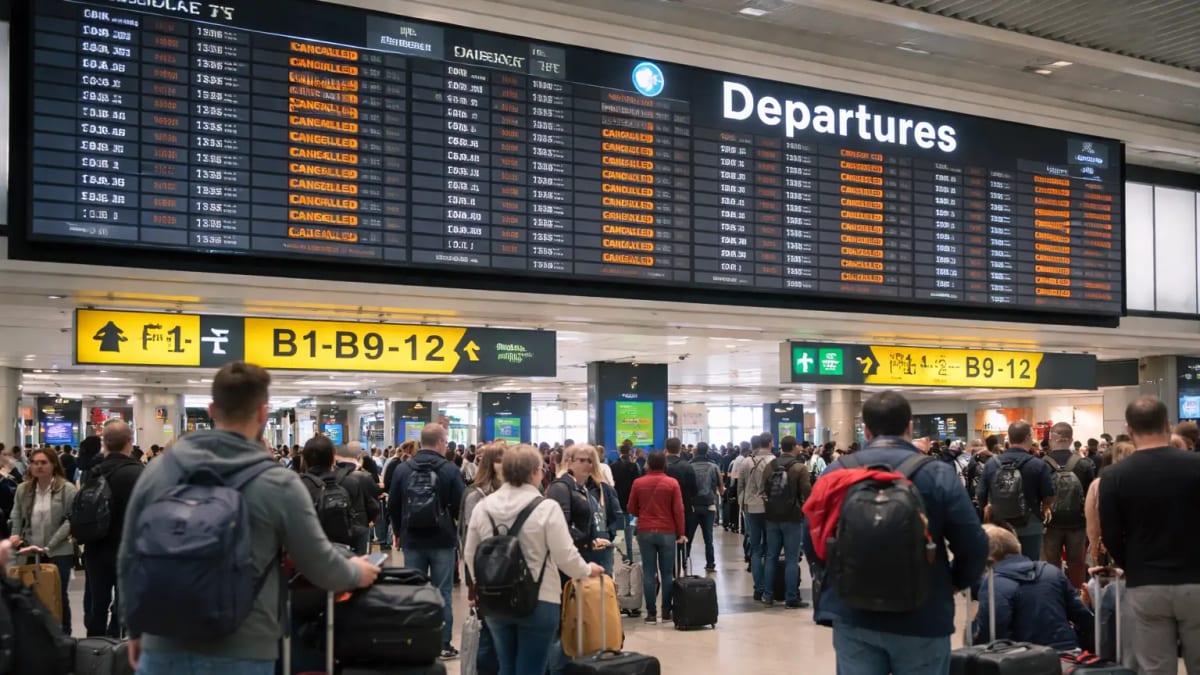
Four-Hour Walkout Targets Core Air Traffic Control Window
Publicly available notices from ENAV, Italy’s air navigation service provider, confirm that air traffic control personnel are due to stage a four-hour strike on Friday, April 10, from 13:00 to 17:00 local time. The action, registered in Italy’s official strike calendar, is described as a national walkout affecting ENAV staff, alongside parallel actions at key control centers and selected airports.
Airport advisories, including information released by Olbia Costa Smeralda Airport, underline that the stoppage falls squarely in the afternoon peak, a period that typically handles a high volume of domestic and European short-haul services. Although the formal strike lasts four hours, experience from previous ENAV walkouts suggests that disruption can begin earlier in the day and continue into the evening as airlines reshuffle schedules and aircraft rotations.
Reports compiled by specialist aviation and travel risk platforms indicate that the strike will focus on air traffic management rather than airline staff. That means its impact is likely to be felt across multiple carriers using Italian airspace rather than being confined to a single airline or alliance.
Major Hubs Rome, Milan and Naples Braced for Disruption
Strike notices reviewed by travel advisories point to particular pressure on Italy’s largest air traffic control facilities. ENAV documentation highlights local actions at the Rome area control center, which oversees traffic to and from Rome Fiumicino and Ciampino, and at Milan’s air traffic control units, as well as a separate action linked to Naples Capodichino.
Recent coverage from travel industry outlets notes that these combined stoppages are expected to affect both overflights that merely transit Italian airspace and flights departing from or arriving at major hubs including Rome, Milan and Naples. Travelers connecting through these airports in the afternoon window are considered at heightened risk of missed connections and rolling delays as spacing between aircraft is increased and flow restrictions are applied.
Smaller regional airports are not exempt. Notices from Sardinian gateway Olbia Costa Smeralda, for instance, warn of possible delays and cancellations during the strike period, underscoring that the action is national in scope. However, the degree of impact at each airport will depend on local staffing levels, airline decisions and the mix of domestic versus international traffic scheduled in the affected hours.
Minimum Service Guarantees Will Limit, Not Eliminate, Impact
Italian legislation governing industrial action in essential services requires that a minimum level of air traffic service be maintained, including for certain protected domestic routes and for overflights. ENAV’s strike announcement reiterates that indispensable services will be guaranteed in line with current regulations, a provision designed to safeguard core connectivity and critical flights.
Airport notices reference so-called guaranteed time bands in the morning and evening, typically including early peak hours and later evening periods, during which normal operations must largely be preserved. For April 10, information posted by at least one Italian airport indicates that morning and evening windows outside the 13:00 to 17:00 strike slot will be protected by these legal requirements.
Even with these safeguards, historical data on Italian air traffic control strikes, summarized in recent analyses by European air traffic management bodies, show that four-hour walkouts can generate substantial air traffic flow management delays. When staffing is reduced, capacity at control centers and towers is lowered, leading regulators to impose departure and en-route restrictions that ripple across the wider European network.
Airlines Adjust Schedules and Offer Flexibility
In the days leading up to the strike, travel alert bulletins and airline communications have pointed to preemptive schedule changes as carriers attempt to contain the impact. Advisory posts shared by major transatlantic airlines, for example, describe temporary travel waivers for customers ticketed to or through Italian airports on April 9 and April 10, allowing rebooking within a defined window without change fees.
Industry-focused publications report that carriers operating dense short-haul networks into Italy, including low-cost operators and European flag airlines, are reviewing afternoon rotations. Common mitigation steps include rescheduling flights into the morning guaranteed time band, consolidating lightly booked services, or proactively canceling selected frequencies to avoid last-minute disruption on the day.
Because the strike affects air traffic control rather than specific airlines, travelers may see a patchwork of responses across different carriers. Some may operate significantly reduced schedules during the core strike window, while others aim to maintain more services but accept a higher risk of knock-on delays if airspace capacity is heavily constrained.
What Travelers Should Do If Flying on April 10
Travel guidance from aviation advisory platforms consistently recommends that passengers with flights touching Italy on April 10 monitor their bookings closely and be prepared for schedule changes. Same-day updates are most likely to be communicated through airline apps, text alerts and airport departure boards as operators react to real-time capacity decisions from air traffic management authorities.
Travel risk analysts advise that passengers scheduled to depart during the 13:00 to 17:00 local window consider, where possible, moving to flights in the protected morning or late evening bands. Those with onward connections in other European hubs are encouraged to allow extra buffer time, as delays departing Italy may cascade into missed onward departures.
For travelers who cannot adjust their plans, building additional time into transfers, avoiding tight self-made connections between separate tickets, and traveling with carry-on luggage where feasible can all reduce vulnerability to disruption. Publicly available commentary on past industrial actions in Italy suggests that, while many services do operate, the day of a strike often proves unpredictable, with localized bottlenecks and last-minute operational decisions.