

More news on this day
Hundreds of passengers were left stranded across Italy on Monday as a wave of delays and cancellations hit major airports in Rome, Milan, Venice and Naples, disrupting at least 277 flights and forcing airlines including Lufthansa, ITA Airways, Ryanair, Qatar Airways, easyJet and British Airways to scramble contingency plans.
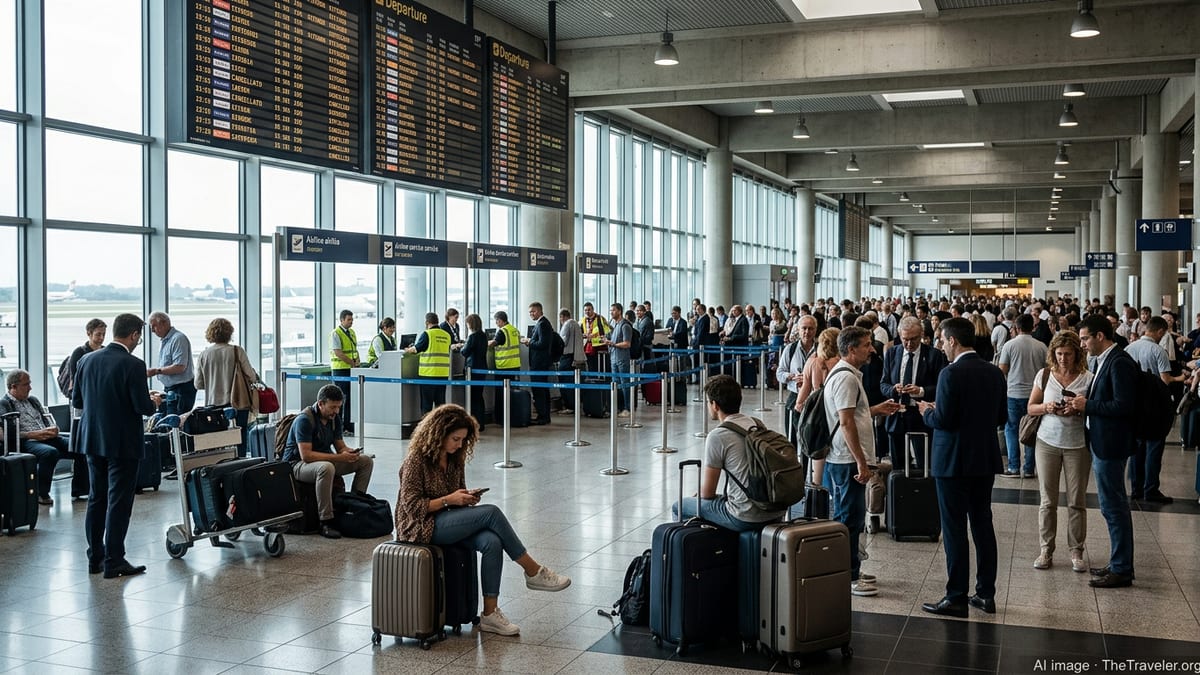
Strike Turmoil Brings Italy’s Air Network to a Crawl
The disruption unfolded against the backdrop of a nationwide general strike that has slowed transport and public services across Italy, with aviation among the hardest hit sectors. Trade unions representing ground handlers, airport staff and some air traffic workers called the 24 hour walkout to press for higher wages and improved staffing levels, directly affecting key tourist and business hubs.
By midday, operational data showed a sharp spike in delayed departures and arrivals from Leonardo da Vinci Fiumicino and Ciampino in Rome, Milan Malpensa and Linate, Venice Marco Polo and Naples Capodichino. While only 25 flights had been outright cancelled, more than ten times that number were operating late, leaving departure boards filled with red and orange alerts and departure lounges packed with anxious travelers.
The strike came during an already fragile period for European aviation, with carriers warning that chronic air traffic control bottlenecks and tight staffing at major hubs have reduced their ability to absorb even short term shocks. Monday’s Italian action quickly rippled through the wider network, affecting connections to London, Frankfurt, Paris, Doha and other long haul gateways.
Airport operators in Rome and Milan said they had activated emergency plans, deploying additional customer service teams and urging passengers to arrive early and check their flight status repeatedly throughout the day, but acknowledged that staffing levels at security, check in and baggage handling were significantly below normal.
Passengers Stranded as Delays Pile Up
Inside terminals, the human impact of the disruption was immediately visible. Long queues formed at airline service desks as travelers tried to rebook missed connections, secure hotel vouchers or retrieve luggage from cancelled flights. Families returning from winter holidays and business travelers heading to key meetings were among those stuck in limbo.
At Rome Fiumicino, where international services by ITA Airways, Lufthansa and Qatar Airways anchor the long haul schedule, passengers reported waiting hours for information as rolling delays extended into the afternoon. Some short haul departures to European cities pushed back repeatedly, with crew and aircraft displaced by earlier disruptions elsewhere in the network.
Milan Malpensa and Linate saw similar scenes. Budget carriers easyJet and Ryanair faced particularly acute pressure on their dense intra European schedules, as a single late inbound aircraft could trigger a chain reaction of knock on delays across multiple destinations. For many travelers, the result was an unplanned night in airport hotels or a scramble to find scarce rail and bus alternatives already strained by the wider national strike.
In Venice and Naples, where tourism plays a central role in the local economy, hoteliers and tour operators expressed concern that repeated bouts of disruption risk undermining confidence just as advanced bookings for the spring and early summer season begin to build.
Major Airlines Grapple With Operational Fallout
The disruption cut across airline business models, affecting full service and low cost carriers alike. ITA Airways, which uses Rome Fiumicino as its primary hub, worked to consolidate lightly booked flights and reroute passengers onto remaining services where possible. The airline warned of residual delays even after the strike period formally ends as aircraft and crews are repositioned.
Ryanair and easyJet, which operate extensive point to point networks from Italian bases, were among those reporting the largest volume of delayed sectors. Their operations depend on tight turnaround times and high aircraft utilization, making them particularly vulnerable when airport services such as ground handling or refuelling run at reduced capacity.
Long haul operators were not spared. Qatar Airways and British Airways both saw schedules between Italy and their home hubs disrupted, raising the risk of missed onward connections for travelers bound for North America, Africa and Asia. Lufthansa, which relies on Italian feed to its Frankfurt and Munich hubs, reported schedule adjustments on select flights as it balanced capacity with slot and crew constraints.
Industry analysts noted that while the number of outright cancellations remained relatively contained compared with other recent European disruptions, the scale of delays significantly eroded operational resilience, resulting in mounting costs for airlines and frayed tempers among passengers.
Regulatory Protections and What Travelers Can Expect
Under European passenger rights rules, many travelers caught up in Monday’s chaos are entitled to assistance that can include meals, refreshments, hotel accommodation and rebooking on the next available flight. Compensation, however, depends on the cause of disruption and whether it is deemed within an airline’s control, a threshold that can be complex when national strikes are involved.
Consumer advocates in Italy urged passengers to keep all boarding passes and receipts, document the timing of announcements and gate changes, and submit claims directly to airlines rather than relying solely on intermediaries. They stressed that even when cash compensation is not applicable, carriers still have clear obligations to offer care and rerouting.
Travel advisers recommended that those due to fly into or out of Italy in the coming days build additional buffer time into itineraries, particularly if they have onward connections, cruises or non refundable hotel stays. With crews out of position and maintenance windows compressed by extended operations, airlines warned that knock on delays could persist beyond the formal end of the strike.
Several carriers also reiterated that passengers who booked via third party platforms should ensure that contact details held on file are up to date, enabling automated rebooking notifications and alternative routing options to be shared quickly when schedules change at short notice.
Tourism Industry Braces for Wider Impact
Italy’s tourism sector, a cornerstone of the national economy, is watching the latest aviation turmoil with unease. Rome, Milan, Venice and Naples collectively serve as gateways for millions of international visitors each year, and repeated shocks to air connectivity risk diverting travelers toward competing Mediterranean destinations perceived as more reliable.
Local tourism boards said they are working closely with airports and airlines to reassure visitors that Italy remains open and eager to welcome them, emphasizing that most flights are still operating despite the highly visible disruptions. However, they acknowledged that images of crowded terminals and stranded passengers could dampen spontaneous city break bookings and last minute business travel.
Hotel associations in Rome and Milan reported a spike in same day bookings linked to disrupted flights, providing a short term boost in occupancy but complicating staffing and inventory planning. In Venice and Naples, where many visitors arrive on carefully timed itineraries that link flights, trains and cruise departures, even a few hours’ delay can force costly changes to broader travel plans.
With labor groups signaling that further industrial action remains possible if contract talks stall, aviation stakeholders across Italy are under pressure to find longer term solutions to staffing and capacity challenges. For now, airlines and passengers alike face another reminder of how quickly Europe’s tightly interwoven air network can snarl when a key country like Italy hits pause, even for a single day.