

More news on this day
Jacada Travel has launched a new impact fund aimed at directing a portion of its revenues into social and environmental projects, expanding the UK-based tour operator’s efforts to position luxury travel as a driver of positive change.
Get the latest news straight to your inbox!
New Fund Builds on Positive Impact Strategy
Publicly available information on Jacada Travel’s sustainability work indicates that the newly unveiled impact fund sits alongside the company’s existing Positive Impact Collection and community initiatives. The London-based operator, which specializes in bespoke trips across Africa, Asia, Latin America and other regions, has spent recent years reshaping its business around responsible tourism and measurable outcomes for people and nature.
Reports on Jacada’s sustainability approach show that the brand already evaluates partner properties and experiences against criteria such as community benefit, climate action and conservation, with a focus on aligning travel spending with the United Nations Sustainable Development Goals. The fund is positioned as another tool within this broader framework, designed to consolidate giving and provide more predictable support to projects on the ground.
By formalizing its giving into an impact fund structure, Jacada Travel is seeking to move from ad hoc philanthropic activity to a more systematic model that can be tracked over time. This approach reflects a wider trend in the high-end travel sector, where operators increasingly use structured funds and partnerships to demonstrate accountability and reduce the risk of superficial sustainability claims.
The fund also complements the company’s history of investing in carbon-related initiatives and community projects, signaling an intent to link guest journeys more directly to long-term positive outcomes in host destinations.
Focus on Community, Climate and Conservation
Details of Jacada’s existing impact framework suggest that the fund will likely prioritize projects that reflect three recurring pillars in the company’s sustainability work: community wellbeing, climate mitigation and biodiversity conservation. These themes already underpin the Positive Impact Collection, which highlights properties and experiences that channel tourism revenue into local solutions.
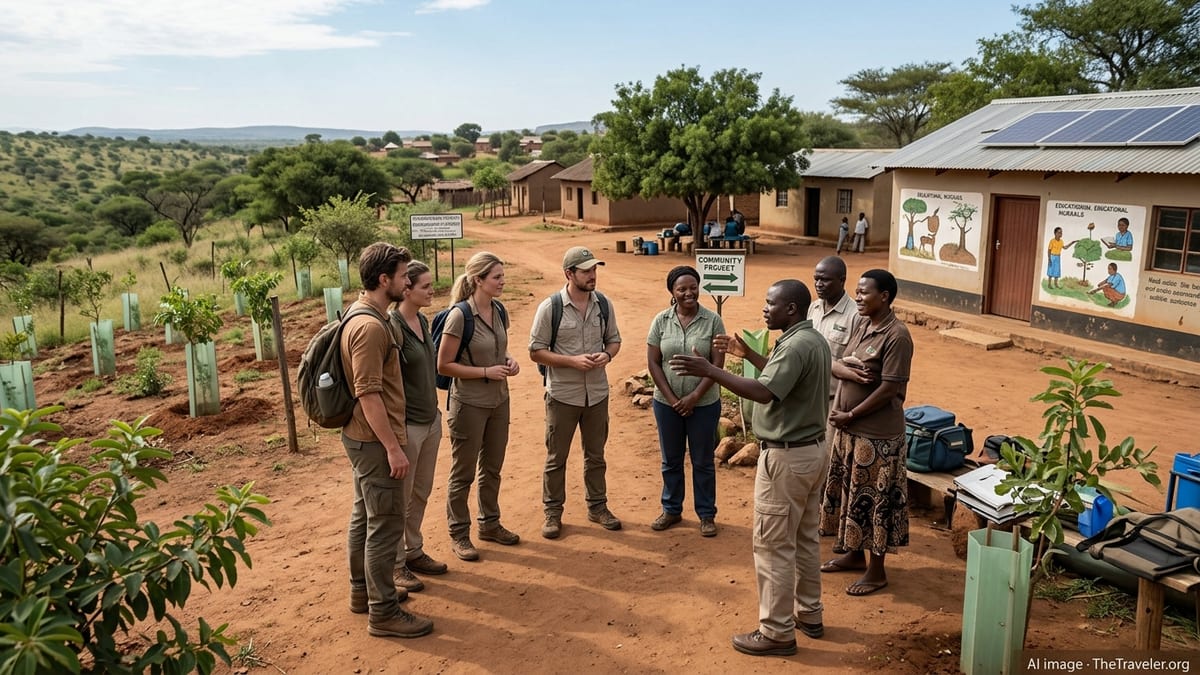
Examples highlighted in independent coverage of Jacada’s partners include initiatives such as reforestation programs in ecologically sensitive landscapes, education and skills training for local residents, and support for wildlife protection in protected areas. While specific allocations under the new fund have not been itemized in public documents, the company’s track record indicates that similar categories of projects are expected to benefit.
Industry observers note that tying funding priorities to established sustainability pillars can help travelers understand how their spending is used. For Jacada, the impact fund offers a way to show how trip revenues translate into specific outcomes, whether through scholarships, habitat restoration, community-owned tourism enterprises or climate-focused interventions like carbon measurement and reduction efforts.
The fund is also expected to interact with existing partner networks, including conservation organizations and local nonprofits, which already implement many of the on-the-ground programs associated with Jacada’s itineraries.
Traveler Contributions and Transparency Expectations
Information from previous initiatives suggests that Jacada Travel intends for the impact fund to be partly fueled by company contributions linked to trip bookings, potentially supplemented by optional guest donations. This model is increasingly common among specialist tour operators seeking to align commercial performance with measurable impact in destination communities.
Travelers who book with Jacada are typically seeking highly tailored itineraries, often involving remote lodges, private guiding and exclusive experiences. The impact fund structure offers an additional narrative for this audience, connecting premium travel with tangible social and environmental benefits such as local employment opportunities, youth programs or landscape restoration.
Transparency is likely to be a key test of the initiative’s credibility. Recent industry analysis indicates that travelers are becoming more skeptical of broad sustainability claims and are instead looking for evidence of outcomes, such as the number of community projects supported, progress on emissions accounting or hectares of habitat protected. Regular reporting on the fund’s distribution and results would align with these expectations and reinforce Jacada’s positioning as a specialist in responsible luxury travel.
Observers point to the company’s existing practice of sharing information about its Positive Impact Collection and partner initiatives as a foundation for future disclosures related to the fund. Consolidated reporting would allow travelers, partners and industry peers to evaluate how effectively the fund channels resources into long-term change.
Partnerships Strengthen Impact Ambitions
Jacada Travel’s impact fund is emerging within a broader ecosystem of partnerships that support its sustainability agenda. The company is a member of collaborative platforms focused on climate action, wildlife welfare and responsible tourism, and has aligned itself with sector-wide commitments that set benchmarks for ethical operations and decarbonization.
Coverage of Jacada’s industry affiliations highlights involvement with initiatives that promote ethical wildlife experiences, climate action planning and peer learning among travel businesses. These collaborations give the operator access to external expertise on topics ranging from carbon accounting to community engagement, which can inform how the impact fund is structured and where funds are directed.
By working with partners that already manage conservation and community projects, Jacada can route fund contributions into programs that have local governance structures and monitoring systems in place. This reduces the risk of fragmented giving and supports continuity for long-running initiatives such as youth education schemes, reforestation projects or community-owned tourism ventures.
Industry analysts suggest that such partnerships are increasingly important as travelers and regulators call for more rigorous evidence of positive impact. The fund therefore functions not only as a financial mechanism but also as a signal of Jacada’s intent to participate in collaborative, science-informed approaches to sustainable tourism.
Positioning Within a Shift Toward Regenerative Travel
The launch of Jacada Travel’s impact fund comes as the luxury travel segment is paying closer attention to concepts such as regenerative tourism, which emphasizes leaving destinations better than they were before visitors arrived. Awards programs and professional rankings increasingly recognize agencies that embed measurable impact into their core business, rather than treating philanthropy as an add-on.
Jacada has already attracted recognition in this space for its Positive Impact Collection and the integration of sustainability into itinerary design. The creation of a dedicated impact fund strengthens that positioning, providing a focal point for future evaluations of the brand’s performance on social and environmental metrics.
For destinations that depend heavily on high-value, low-volume tourism, the emergence of operator-led impact funds can offer a more resilient source of support than one-off donations. Long-term funding streams can help local partners plan multi-year projects, invest in staff and infrastructure, and respond to climate or biodiversity challenges that unfold over extended periods.
As travelers weigh the environmental cost of long-haul journeys against the benefits of well-managed tourism, mechanisms like Jacada Travel’s impact fund are likely to play a growing role in purchase decisions. While the effectiveness of the fund will ultimately be judged on transparent reporting and on-the-ground outcomes, its launch underscores how quickly expectations are shifting around what a luxury trip should deliver for local communities and the natural world.