

More news on this day
Indonesia’s busiest tourist corridors between Jakarta, Bali, and Lombok are on the cusp of major change as sovereign wealth fund Danantara accelerates plans to integrate flag carrier Garuda Indonesia, low-cost arm Citilink, and Pelita Air into a single state airline holding as early as the first half of 2026, raising big questions for global travelers eyeing trips across the archipelago.
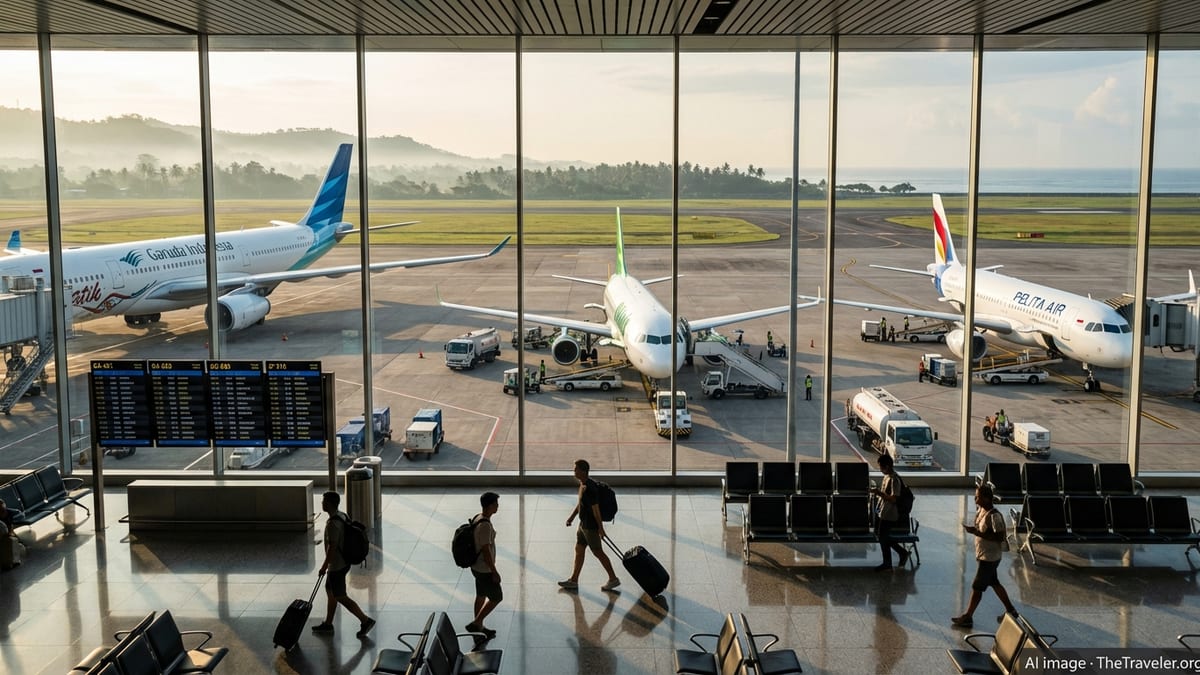
New State Airline Holding Targets Early 2026 Launch
Danantara Indonesia, the country’s sovereign wealth fund, confirmed this week that it is working to complete a new holding company for state-owned airlines by the first half of 2026. Under the structure, Garuda Indonesia will sit at the top as parent, with Citilink and Pelita Air as subsidiaries. Officials say the timeline for legal completion is the first quarter of 2026, with operational integration to follow in phases.
The move is framed as a push to streamline a fragmented state aviation portfolio and shore up Garuda’s long-strained finances. By consolidating three airlines that now overlap on popular leisure routes such as Jakarta–Denpasar and Jakarta–Lombok, Danantara aims to cut duplication, improve aircraft utilization, and provide a clearer segmentation between full service and low-cost products.
For travelers, the immediate impact will likely be behind the scenes. Schedules, booking platforms, and loyalty rules are expected to evolve gradually rather than overnight. However, once the holding is in place and systems begin to merge, passengers on the Jakarta–Bali and Bali–Lombok corridors should start to see more coordinated schedules and, potentially, new connection options that blend Garuda’s full-service offering with Citilink and Pelita’s growing domestic networks.
Danantara executives stress that the integration is part of a broader mandate to improve national connectivity, not just rescue a struggling flag carrier. With tourism a strategic priority and Bali still Indonesia’s global shop window, ensuring reliable, competitively priced capacity into Ngurah Rai International Airport and onward to Lombok and eastern islands is central to the plan.
Single Booking System and Shared Fleets on Key Tourist Routes
One of the most significant promised changes is a single booking and customer-management system across Garuda, Citilink, and Pelita Air. Danantara officials say they are working toward unified reservations, mileage accrual, registration, and even the ability to switch seats across brands on shared routes. In practice, that could mean a traveler who booked Jakarta–Bali on Garuda might be reprotected on Citilink or Pelita during disruptions without complex reissuing.
Fleet sharing is another cornerstone of the integration. The holding company is expected to pool aircraft and assign them dynamically across routes based on demand, rather than keeping strict walls between brands. On high-demand periods for Jakarta–Denpasar, for example, Garuda may deploy additional narrowbodies sourced from Citilink, while Pelita’s expanding Airbus fleet could be rotated into peak-season flights serving Bali and Lombok gateways.
Industry analysts note that this flexibility is particularly important as Garuda and Citilink still have dozens of grounded aircraft awaiting maintenance. Danantara has injected fresh capital to return those jets to service by 2026, and a common fleet strategy is seen as crucial to optimizing which aircraft go back first and where they are deployed. Leisure-heavy routes that anchor Indonesia’s tourism economy are obvious priorities.
Travelers should be prepared for some short-term friction as systems are aligned. Mixed operating carriers on a single itinerary, last-minute equipment swaps, and evolving fare rules are all possible during the transition. At the same time, the long-term promise is a more coherent network where a single search shows combined options across the three airlines, reducing the need to juggle separate bookings when connecting from Jakarta to Bali and onward to Lombok or Komodo-region airports.
Loyalty Programs, Fares, and Service Levels Under Review
With Garuda Indonesia at the center of the new holding, its loyalty program and service standards are expected to anchor the wider group. Danantara has signaled that service transformation and improved customer experience are key pillars of Garuda’s restructuring, alongside financial and operational fixes. Bringing Citilink and Pelita under the same umbrella will likely trigger a rethinking of status recognition, mileage earning and redemption, and lounge access across brands.
International travelers connecting into Indonesia on partner airlines should watch closely for announcements on how the integrated group will handle onward domestic sectors. A harmonized mileage scheme could make it more attractive to book Jakarta–Bali or Jakarta–Lombok legs through Garuda’s global partners, rather than shopping tickets separately on low-cost carriers. However, until details are confirmed, passengers should not assume that all domestic segments will automatically earn miles or confer elite benefits.
On pricing, the new structure raises the prospect of more rational fare competition on trunk routes. With three state-controlled airlines coordinating schedules and capacity, the intense price wars that previously eroded margins may ease, particularly on high-traffic holiday periods into Bali. That could stabilize yields for the airlines but may translate into less aggressive last-minute bargains, especially around peak seasons such as European summer and year-end holidays.
Service levels will likely remain differentiated across brands, with Garuda positioned as full service, Citilink as low cost, and Pelita serving niche and charter-heavy segments. Yet group-wide standards on reliability, digital tools, and complaint handling are expected to converge. Travelers who have experienced inconsistent service between Indonesian carriers may find a more unified approach once the integration matures.
Operational Risks and What Travelers Should Do Now
Behind the integration headlines, Garuda and Citilink remain in the middle of a complex financial turnaround. Danantara has taken a controlling stake in Garuda and committed substantial capital injections, but the airline is still working to reverse heavy losses and reactivate grounded aircraft. Delays in maintenance, global shortages of spare parts, and prior debt overhang mean that operational reliability will not improve overnight.
During 2025, the group grounded a significant share of its fleet due to maintenance and cash-flow constraints, putting pressure on capacity during peak travel windows. While new funds are earmarked to return aircraft to the skies by 2026, travelers planning trips in late 2025 and early 2026 should continue to build in buffer time for connections, especially when relying on tight same-day links from long-haul arrivals in Jakarta onto Bali or Lombok flights.
Experts advise booking earlier than usual for major Indonesian holidays and global peak seasons, opting for through-tickets where possible to secure better protection in case of disruption. Travelers should also pay attention to aircraft changes and carrier codes as the integration proceeds, since a flight sold under one brand may ultimately be operated by another member of the new holding, with different baggage rules and in-flight service.
For now, the safest approach for long-haul visitors is to treat 2026 as a transition year. The Jakarta–Bali and Jakarta–Lombok corridors are unlikely to lose capacity altogether, but schedules may shift, and some lesser-used frequencies could be consolidated as Danantara chases efficiency. Checking itineraries regularly and allowing some flexibility in routing will help soften any turbulence during the overhaul.
Outlook for Bali, Lombok, and Wider Archipelago Connectivity
Indonesia’s tourism officials are betting that a leaner, better coordinated state airline group will ultimately strengthen air links not only to Bali, but also to secondary destinations such as Lombok, Labuan Bajo, and eastern island gateways that depend on reliable feeder traffic from Jakarta and Denpasar. Citilink and Pelita have been earmarked to expand into under-served domestic markets, while Garuda focuses on strategic international and premium routes.
If Danantara’s plan succeeds, travelers could see more seamless multi-stop itineraries that combine an international arrival into Jakarta or Bali with onward hops to beach, diving, and trekking hotspots that now require awkward point-to-point connections. Shared fleets and unified scheduling should make it easier to time those links and reduce long layovers that have historically discouraged deeper exploration of the archipelago.
However, consolidation alone will not fix structural issues such as high maintenance and financing costs, or bottlenecks at key airports. Analysts warn that political pushback, labor concerns, and execution risks could slow or complicate the merger, with knock-on effects for planned capacity growth. Global travelers should therefore view the promised integration benefits as a medium-term story rather than an immediate guarantee.
For visitors planning 2026 and 2027 trips, the message is to stay informed. Announcements about the new holding’s launch, unified booking tools, and updated loyalty rules are likely to emerge in stages over the coming months. Those developments will shape how effortless it becomes to string together Jakarta, Bali, Lombok, and beyond on a single, interoperable state airline platform across Indonesia’s vast island chain.