

More news on this day
Air travel across Indonesia was thrown into fresh turmoil on February 22, 2026, as airports in Jakarta, Makassar and Surabaya reported 25 flight cancellations and 325 delays affecting passengers on Batik Air, Garuda Indonesia, Citilink, Lion Air and several other domestic carriers.
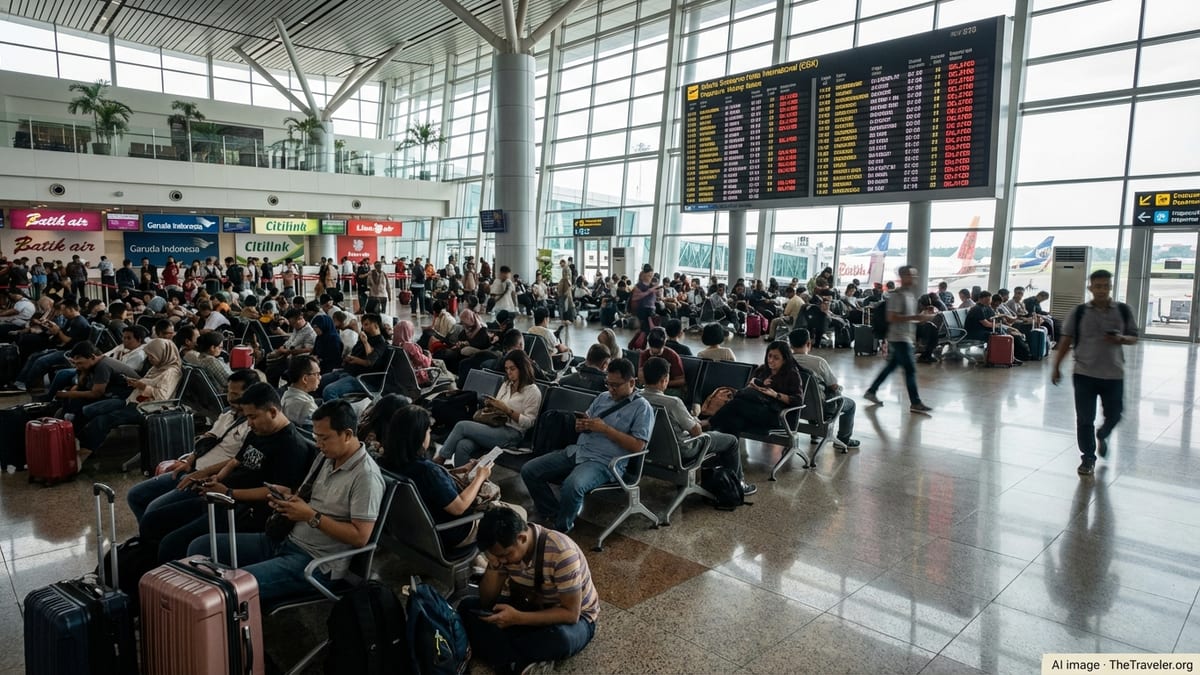
Major Indonesian Hubs Buckle Under New Wave of Disruptions
The latest disruption has concentrated on three of the country’s busiest hubs: Jakarta’s Soekarno Hatta International Airport, Makassar’s Sultan Hasanuddin International Airport and Surabaya’s Juanda International Airport. Together, they form the backbone of Indonesia’s domestic air network, feeding traffic to secondary cities and popular tourism gateways.
Data compiled from airport operations and airline movement logs on Saturday show a combined total of 25 cancellations and 325 delays across these three hubs alone. The figures add to a pattern of recurrent operational turbulence that has dogged the Indonesian aviation sector since the start of 2026, with several recent days already marked by triple-digit disruption totals.
While overall traffic levels remain robust, terminals in all three cities experienced heavy crowding as passengers queued for check-in, rebooking and compensation. Real-time departure boards at Soekarno Hatta and Juanda showed long columns of flights pushed back by 30 minutes to several hours, with ripple effects felt on subsequent rotations throughout the day.
Airport officials have characterised the situation as a “managed disruption,” noting that safety-critical operations such as air traffic management and ground handling remain intact. However, they have acknowledged that the sheer volume of delayed departures is stretching customer-service teams and infrastructure to the limit.
Batik Air Again Among the Hardest Hit Carriers
Batik Air has emerged once more as one of the most heavily affected airlines in this latest episode of travel chaos. The full-service member of the Lion Air Group has recently faced heightened scrutiny from passengers and analysts after a separate incident this week in which it grounded 57 flights nationwide, heavily impacting hubs including Jakarta, Makassar and Surabaya.
On Saturday, Batik Air accounted for a significant share of both cancellations and delays on trunk routes linking Jakarta with Makassar and Surabaya, as well as on feeder services to cities in Sumatra and eastern Indonesia. Flight performance data for several Batik Air services on these corridors already show elevated rates of schedule changes and late arrivals over the past two months, underscoring the fragility of current operations.
Industry observers suggest that the airline is grappling with a combination of tight aircraft utilisation, maintenance scheduling and exposure to congested time slots at Soekarno Hatta. Each delay on a high-frequency route such as Makassar to Jakarta has the potential to cascade through the network, especially when aircraft are turned around quickly between sectors.
Passengers affected by the latest disruption report a mix of relatively short delays of under an hour and more severe hold-ups that have forced missed connections or late-night arrivals at destination airports. Many say they received rebooking options, but complain of slow communication and long lines at transfer and customer-care desks.
Garuda Indonesia, Citilink and Lion Air Also Caught in the Gridlock
National flag carrier Garuda Indonesia and its low-cost subsidiary Citilink have not been spared. Both carriers operate dense schedules on the Jakarta to Surabaya and Jakarta to Makassar corridors, with many flights timed to feed into morning and evening banks of domestic and regional connections.
Operational data indicate that Garuda and Citilink together recorded dozens of delayed departures on these routes on Saturday, along with a handful of cancellations as aircraft and crews fell behind schedule. While on-time performance for some Garuda services remains stronger than that of certain competitors, a spate of recent days with mass delays has tested the carrier’s reputation for reliability.
Lion Air, Indonesia’s largest low-cost carrier by fleet size, is also prominent on the disruption lists, with its extensive point-to-point network leaving it vulnerable whenever congestion builds at a major hub. With large numbers of Lion Air flights funnelling through Jakarta and Surabaya, even minor ground-handling bottlenecks can leave aircraft waiting for gates, baggage loading or pushback clearance.
Other carriers, including Super Air Jet, Indonesia AirAsia and smaller regional operators, are experiencing secondary impacts in the form of slot swaps, retimed departures and ground delays while they navigate the same saturated terminals and airspace. For passengers, the airline badge on the boarding pass is offering limited protection from broader systemic pressure.
Passengers Face Hours-Long Waits and Confusing Rebooking Options
For travelers at the three main hubs, the situation on the ground has been characterised by uncertainty and long waits rather than outright shutdown. At Soekarno Hatta, departure halls in Terminals 2 and 3 saw long queues form from early morning as delays compounded, with some passengers reporting waiting more than three hours before being given firm updated departure times.
In Makassar, Sultan Hasanuddin’s departure lounge areas filled early with travelers attempting to reach Jakarta, Surabaya, Bali and eastern Indonesian destinations. With multiple delayed waves of flights, available seating became scarce and many passengers sat on the floor or near charging points as they followed updates on overhead screens and airline apps.
Surabaya’s Juanda International Airport, a critical link for East Java and the broader Indonesian archipelago, also reported busy scenes. Families returning from school holidays and business travelers heading to Jakarta described confusing information, with some gate announcements contradicting app notifications or airline text messages.
While most airlines are offering free rebooking within certain date ranges and limited refreshments vouchers for those facing significant delays, consumer groups argue that many passengers are still unsure of their rights. Language barriers, the complexity of multi-leg itineraries and reliance on third-party online travel agencies add layers of difficulty when disruptions unfold at short notice.
Weather, Congestion and Tight Scheduling Blamed for Ongoing Instability
Airlines and airport operators cite a blend of operational and environmental factors behind the recurring disruption pattern. Seasonal heavy rains and thunderstorms across parts of Java and Sulawesi have periodically reduced runway capacity and forced temporary suspensions of ground operations for safety reasons.
At the same time, Indonesia’s domestic aviation market has rebounded strongly, with many carriers pushing aircraft and crew utilisation close to their limits to meet pent-up demand. This leaves little margin in daily schedules; once a morning departure is delayed, catching up later in the day becomes challenging without cancelling flight sectors outright.
Soekarno Hatta, already one of Asia’s busiest airports, continues to struggle with airside and terminal congestion during peak bank periods. Departure and arrival flows for domestic carriers are tightly packed, meaning a brief weather or technical hold can quickly translate into long queues of aircraft awaiting take-off or gate access.
Air traffic control authorities have urged airlines to build more slack into schedules and to coordinate closely on slot usage, particularly for trunk routes such as Jakarta to Makassar and Jakarta to Surabaya that are already operating at very high frequencies.
Authorities and Airlines Issue Fresh Travel Advisories
In response to Saturday’s disruption, several airlines have renewed public advisories urging passengers to arrive at airports well ahead of departure and to monitor their flight status closely via official apps and customer channels. The Lion Air Group, which includes Lion Air and Batik Air, has in recent months highlighted the operational risks posed by adverse weather and other force majeure events and reminded travelers of available options for rescheduling or refunds when flights are significantly affected.
Garuda Indonesia and Citilink have similarly encouraged passengers to allow additional travel time to and from major airports, warning that heavy traffic on access roads combined with last-minute gate changes can compound stress during days of disrupted operations. They are also recommending that passengers traveling on important business or international connections build longer layovers into their itineraries where possible.
Airport operators in Jakarta, Makassar and Surabaya have stepped up coordination with ground-handling companies to improve baggage delivery and turnaround times for aircraft that do operate close to schedule. Public announcements in terminals now more frequently reference the possibility of “operational adjustments” throughout the day, signalling that sudden changes in weather or traffic volume can trigger further delays.
Despite these efforts, passenger advocates continue to call for clearer, standardized communication of rights and remedies when disruptions occur, including simple explanations of entitlement to meals, hotel rooms or refunds after lengthy delays or cancellations.
Wider Regional Pattern of Flight Chaos Adds to Pressure
The latest figures from Indonesia arrive against a backdrop of broader regional instability in flight operations across Asia. In recent weeks, airports in Jakarta, Bali, Surabaya and Makassar have been hit by separate days in which airlines collectively logged hundreds of delays and double-digit cancellations, often within a single 24-hour window.
Beyond Indonesia’s borders, major Asian hubs such as Singapore and key Chinese gateways including Shanghai and Beijing have also recorded spikes in cancellations and delayed departures this month. In several instances, Indonesian carriers such as Garuda and Citilink, along with regional partners from China and Southeast Asia, have been involved in cross-border disruption events linked to weather, airspace congestion and knock-on operational issues.
This broader pattern is putting additional pressure on Indonesian airlines that rely heavily on tight regional connections, especially for passengers transiting Jakarta en route to destinations in East Asia, Australia and the Middle East. When schedules falter at home or abroad, recovery options can be limited, particularly on routes with constrained frequency or high load factors.
Aviation analysts warn that without structural improvements to scheduling resilience, contingency planning and communication, passengers in Indonesia may face further waves of disruption during upcoming peak travel periods such as school breaks and religious holidays.
Travel Advice for Passengers Navigating Indonesia’s Skies
For travelers planning to pass through Jakarta, Makassar or Surabaya in the coming days, industry experts recommend building flexibility into itineraries wherever possible. That includes allowing additional time for connections, avoiding extremely tight onward links and considering earlier flights on key routes to create a buffer against afternoon and evening knock-on delays.
Passengers are advised to check their flight status repeatedly in the hours before departure and to ensure their contact details are correctly registered with airlines so they receive real-time notifications. Those booking through online travel agents are encouraged to confirm which company is responsible for handling changes or refunds if disruption strikes.
Where budgets allow, travelers connecting to long-haul international services from Jakarta may wish to schedule overnight stops rather than relying on same-day domestic feed flights, particularly during the current period of heightened operational volatility. While this adds cost and time, it can significantly reduce the risk of missing important onward journeys.
As Indonesian aviation authorities and airlines work to stabilise performance after a string of difficult weeks, passengers moving through Jakarta, Makassar and Surabaya are likely to remain on alert. Saturday’s 25 cancellations and 325 delays underline how quickly disruption can escalate in one of the world’s most complex and fast-growing domestic aviation markets.