

More news on this day
Jamaica is confronting a complex recovery in the wake of Hurricane Melissa, the Category 5 storm that tore across the island on October 28, 2025, leaving lives, infrastructure and key tourism zones in tatters.
Three months on, the country is shifting from emergency response to reconstruction, and its vital tourism sector has become both a barometer of national resilience and a central engine of economic revival.
Travel agents, tour operators and destination management companies are now playing an outsized role in steering travelers back to Jamaica, securing much-needed bookings and helping to restore confidence in one of the Caribbean’s flagship destinations.
More News
- TSA Rolls Out $45 ConfirmID Fee for Travelers Without REAL ID at Security
- Flying Blue Launches February 25% Promo Rewards on Transatlantic and Regional Routes
- United Fast-Tracks Starlink Wi‑Fi Across Fleet, Free for MileagePlus Members
A Historic Storm Leaves Tourism Nerve Centers Scarred
Hurricane Melissa is widely regarded by local analysts as the most catastrophic hurricane to have ever impacted Jamaica, with the south-western and western corridors bearing the brunt of the storm. These are not only agricultural heartlands but also the anchor points of Jamaica’s tourism map: Negril’s famed Seven Mile Beach, the resort-dense Montego Bay area, sections of the south coast, and the broader network that links to Ocho Rios. Resort infrastructure, coastal roads, small guesthouses and excursion operators across these zones suffered damage ranging from cosmetic to severe.
Early assessments from regional health and emergency agencies show the broader scale of disruption. Hundreds of health facilities across the Caribbean were damaged, with more than one hundred in Jamaica alone. Power and water outages, road blockages and flooding compounded the challenges for hotels and attractions trying to reopen. For days and in some cases weeks, images of flooded communities, twisted piers and shuttered beachfront properties dominated international news, raising immediate concerns among travelers with upcoming bookings.
At the same time, human losses and social impacts were stark. Dozens of deaths across the region, including in Jamaica, and tens of thousands of displaced residents underscored the hurricane’s human cost. International organizations highlighted children and vulnerable communities as particularly affected, with damaged schools, disrupted health services and destroyed crops threatening long-term wellbeing. Against that backdrop, the question facing policymakers was not simply how to get tourists back, but how to rebuild in a way that supports communities whose livelihoods depend heavily on visitor spending.
The Tourism Ministry emphasized early on that recovery of the sector could not come at the expense of local needs. Even as hotel chains rolled out reopening timelines, the government and industry leaders stressed that tourism’s restart must dovetail with broader reconstruction efforts, including housing repairs, public utilities restoration and environmental rehabilitation along rivers, beaches and mangroves.
Economic Stakes: Tourism as a Lifeline in the Recovery Phase
Tourism is a cornerstone of Jamaica’s economy, directly accounting for around a tenth of national output and, when indirect and induced effects are considered, linking to well over a third of gross domestic product. Jobs in hotels, restaurants, transportation, entertainment, agriculture and construction are all tethered to visitor demand. Hurricane Melissa’s direct hit on major resort regions therefore translated almost overnight into an economic shock, with authorities estimating that more than 40 percent of overall economic activity was affected in some way.
The dual blow to tourism and agriculture is particularly acute. Many of the same parishes that host all-inclusive resorts and boutique villas also supply fresh produce, seafood and other inputs to the hospitality industry. Melissa flattened fields, uprooted trees and damaged fishing infrastructure, adding supply constraints to the demand-side shock created by canceled trips. Hotel kitchens, already coping with staff displacement and logistics disruptions, faced rising costs and uncertain supply chains just as they tried to reopen.
For small and medium tourism enterprises, the stakes are existential. Independent guesthouses, villa rentals, local tour operators, craft vendors and community-based attractions often lack large cash reserves or comprehensive insurance. Weeks of closure and refund requests can rapidly erode their financial position. Industry associations report that many such businesses are surviving on a mix of government support, emergency lending and, critically, the ability of travel agents and tour partners to redirect or reschedule bookings rather than lose them entirely.
Government officials, including Prime Minister Andrew Holness, have framed the recovery of tourism as central to stabilizing public finances and social programs. With a strong emphasis on fiscal prudence in recent years, Jamaica has more room than in past crises to fund reconstruction. Yet sustained foreign exchange inflows from tourism remain vital for servicing debt, paying for imports and supporting the reconstruction of roads, hospitals and schools damaged by the storm. Each flight that lands full, and each cruise call that returns to the schedule, now carries heightened macroeconomic significance.
Travel Agents at the Frontline of Restoring Confidence
As the immediate shock of Hurricane Melissa gave way to questions about future travel, global and regional travel agents emerged as crucial intermediaries between anxious clients and Jamaica’s tourism providers. In key source markets such as the United States, Canada and the United Kingdom, agencies reported surges in calls from travelers seeking clarity on whether to proceed with winter and spring trips, modify itineraries or cancel altogether.
Travel professionals with long-standing relationships on the island quickly became trusted voices. Drawing on direct contact with hotel partners, destination management companies and local tourism boards, they were able to provide up-to-date information about which areas were operational, which properties had reopened, and what conditions visitors could realistically expect on the ground. This granular, property-specific knowledge helped differentiate between heavily impacted regions and those where tourism infrastructure rebounded more quickly.
Many agencies adopted flexible policies to help cushion the blow. Where resorts or airlines issued waivers, agents facilitated date changes rather than outright cancellations, keeping revenue in the pipeline for Jamaican suppliers. Some packaged-tour operators re-routed clients from hardest-hit parishes to less-affected resort zones or to properties that had resumed full services. For group travel, including weddings and incentive trips, agents worked behind the scenes to renegotiate contracts, protect deposits and secure alternative venues or dates.
Digital communication channels amplified these efforts. Agents and tour operators used social media, newsletters and webinars to share images and reports from reopened hotels, re-launched excursions and revitalized beaches, countering the narrative of total devastation. First-hand accounts from early post-Melissa visitors, as well as from tourism workers and local celebrities engaged in relief efforts, provided powerful testimonials that Jamaica remained a welcoming and rewarding destination, even as reconstruction continued in some communities.
Government Strategy: Balancing Safety, Reopening and Resilience
Jamaica’s authorities have stressed that the transition from emergency response to recovery must prioritize safety, health and climate resilience. In the health sector, a significant share of facilities damaged during Melissa have already resumed services, though many are operating under strain. Partnerships with international agencies are helping to restore diagnostic capacity, bolster disease surveillance and expand psychosocial support for residents and front-line workers affected by the storm.
For tourism, this focus on safety translates into strict standards for reopening. Hotels, guesthouses and attractions in affected regions are required to meet building, sanitation and service benchmarks before welcoming guests. Inspections cover structural integrity, water quality, waste management and the functionality of key systems such as electricity and communications. This approach slows the pace of reopening in some areas but aims to ensure that returning visitors are not exposed to unnecessary risk.
Climate-resilient infrastructure has also come to the fore. The performance of facilities previously upgraded under resilience programs has reinforced the case for building back stronger rather than merely replacing what was lost. Properties that invested in elevated structures, improved drainage, reinforced roofs and independent power and water systems fared better during the hurricane and were among the first to resume operations. The government is now encouraging the wider sector to adopt similar standards, attaching resilience conditions to some public support and financing schemes.
Financially, Jamaica has moved to leverage catastrophe bonds, contingency funds and international climate finance to support reconstruction. Officials have underscored that these mechanisms are not a substitute for robust private insurance coverage within the tourism industry, but they do provide a buffer that can help sustain recovery programs and maintain essential services. For travel agents marketing Jamaica, the existence of a clear and well-funded recovery framework is an important reassurance to convey to clients.
On the Ground: What Visitors Can Expect Post-Melissa
As winter high season progresses into 2026, the visitor experience in Jamaica reflects a mix of normalcy and visible recovery work, depending on the location. Major gateways such as Montego Bay’s international airport and Kingston have restored core operations, although some travelers may still encounter occasional schedule adjustments, particularly for regional connections and domestic transfers to more remote airstrips.
In well-established resort corridors that sustained less direct damage, many properties are operating close to normal levels, with beaches groomed, pools open and most restaurants and amenities functioning. Excursions to popular attractions in Ocho Rios and along the north coast have largely resumed, though a handful of sites remain temporarily closed for repairs or safety upgrades. Travel agents encourage clients to check with their providers about any itinerary changes, especially for river-based or hiking excursions where trail and riverbank stabilization is ongoing.
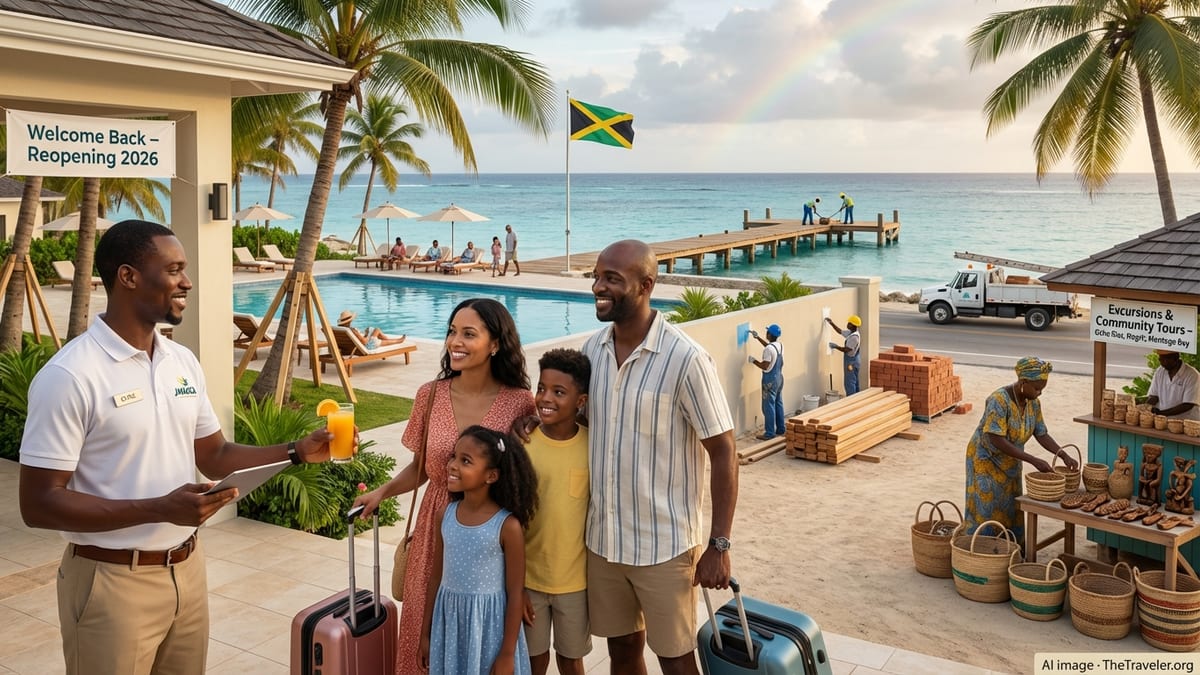
In the hardest-hit southwestern and western pockets, travelers may notice more extensive reconstruction activity. Roadworks, utility repairs and rebuilding of small businesses are a common sight. Some boutique hotels and villas are still in phased reopening, perhaps operating with fewer rooms available or with certain facilities, such as spas or secondary restaurants, reopening later in the year. Guests in these areas are invited, often explicitly, to see their presence as contributing directly to local livelihoods at a sensitive time.
Across the island, tourism officials have reiterated that disaster preparedness protocols have been sharpened. Accommodation providers are required to brief guests on emergency procedures, evacuation routes and communication channels in the unlikely event of another severe weather system during their stay. While this can be disconcerting for some visitors, agents frame these measures as evidence of Jamaica’s commitment to safety and transparency in a region increasingly exposed to climate-related risks.
Partnerships, Community Tourism and the Path to Inclusive Recovery
One of the defining features of Jamaica’s post-Melissa tourism recovery has been a renewed focus on partnerships that extend beyond traditional resort operations. Community-based tourism initiatives, which connect visitors with local guides, homestays, farms and cultural experiences, are being highlighted by both the Jamaica Tourist Board and international travel advisors as a way to disperse economic benefits more evenly across the island.
In parishes where agriculture and tourism intersect, farm-to-table experiences, culinary tours and rural excursions are being reimagined to showcase resilience and regeneration. Some farms damaged by flooding are opening their gates to visitors curious about climate-smart agriculture and disaster recovery in practice. Travel agents are incorporating these experiences into itineraries for environmentally conscious travelers who want to contribute directly to local rebuilding while enjoying immersive cultural encounters.
Large hotel groups, for their part, are expanding corporate social responsibility programs that support housing repair, school rehabilitation and skills training for displaced workers. In collaboration with local NGOs and community leaders, they are channeling donations, volunteer hours and in-kind support into projects that strengthen social safety nets. Travel advisors are increasingly highlighting these initiatives as a differentiator for clients choosing between destinations or resort brands, positioning Jamaica as a place where a vacation can have tangible positive spillovers.
Looking ahead, industry stakeholders view travel agents as pivotal in sustaining this more inclusive model of tourism. By carefully curating experiences, communicating the realities of recovery and steering demand toward responsible operators, agents can help ensure that the rebound in visitor numbers translates into broad-based gains rather than a narrow return to pre-storm patterns.
Outlook: Bookings Trend Up as Jamaica Sells Resilience
Booking trends for late 2026 and into 2027 suggest a gradual but discernible recovery in demand for Jamaican vacations. Key source markets show solid interest for summer and next winter’s high season, particularly in segments such as family travel, weddings and honeymoons, and premium all-inclusive stays. Some travelers are seizing opportunities presented by promotional offers and flexible booking policies introduced in the wake of Melissa to stimulate demand.
Travel agents note that a subset of clients is explicitly motivated by a desire to support Jamaica’s recovery, echoing patterns seen after previous disasters in other destinations. For these travelers, messaging that emphasizes respect for local communities and environments, rather than “disaster tourism,” is critical. Agents and tourism boards are careful to avoid any impression of capitalizing on hardship, instead framing visits as a way to inject income and visibility into a recovering economy while enjoying the island’s natural beauty and cultural richness.
The government’s messaging, including recent comments by the prime minister in international fora, consistently underscores both vulnerability and preparedness. Officials highlight investments in resilient infrastructure, disaster risk financing and institutional frameworks designed to accelerate reconstruction. In the tourism context, this narrative of preparedness and learning from Melissa is being woven into marketing campaigns that present Jamaica not just as a sun-and-sea escape but as a destination actively confronting the realities of climate change.
For travel professionals, the challenge is to translate that macro-level story into clear, practical information for clients: where it is best to go, when, under what conditions and with which safeguards. As they do so, they remain among the most influential actors in determining how quickly and how evenly Jamaica’s tourism engine roars back to life.
FAQ
Q1. Is it currently safe to travel to Jamaica after Hurricane Melissa?
Yes. Core tourism corridors and major airports have resumed operations, and authorities require that properties meet safety and service standards before reopening. Travelers should remain informed through their agents and follow any local advisories while on the island.
Q2. Which areas of Jamaica were most affected, and should visitors avoid them?
The south-western and western regions, including parts of the south coast and Negril-Montego Bay corridor, sustained the heaviest damage. Many facilities there are already operating, but some are still in phased reopening. Rather than avoiding these areas outright, visitors should consult their travel agent about specific properties and excursions.
Q3. How have travel agents helped sustain Jamaica’s tourism recovery?
Travel agents have managed rebookings, guided clients away from the most disrupted properties, shared real-time information from local partners and promoted flexible policies that convert potential cancellations into postponed trips, preserving crucial revenue for Jamaican businesses.
Q4. Are health services functioning adequately for visitors?
Yes. Most health facilities have resumed operations, and international partners continue to support the health system’s recovery. Major hospitals and clinics serving tourism areas are open, although some facilities elsewhere on the island are still undergoing repairs.
Q5. Will my experience be very different from visiting Jamaica before the hurricane?
In many resort areas your stay will feel largely familiar, with fully functioning hotels and attractions. You may, however, notice ongoing reconstruction in some communities, and certain excursions or small businesses may have modified services or limited capacity.
Q6. What should I discuss with my travel agent before booking?
Ask about the current status of your chosen hotel or villa, any remaining infrastructure issues in that area, the flexibility of change or cancellation policies, and the availability of travel insurance that covers weather-related disruptions.
Q7. Are there opportunities for visitors to support local recovery efforts?
Yes. Many hotels, community tourism groups and charities run programs that channel funds or volunteer time into housing repairs, school rehabilitation and livelihood support. Travel agents can help identify reputable initiatives and experiences that benefit local communities.
Q8. How has the hurricane affected prices for trips to Jamaica?
Prices vary by season and property. Some resorts have introduced promotional rates and value-added packages to stimulate demand, while underlying costs for utilities and supplies have risen in some areas. Overall, Jamaica remains competitively priced relative to other Caribbean destinations.
Q9. What happens if another storm threatens while I am in Jamaica?
Hotels and tour operators follow established emergency protocols, including briefings for guests, designated shelter areas and coordination with national authorities. Travelers should follow guidance from their accommodation, monitor official advisories and ensure they have comprehensive travel insurance.
Q10. Why is returning to Jamaica important for the country’s recovery?
Tourism is a major source of jobs, foreign exchange and government revenue. Each visitor supports not only hotel and airline workers but also farmers, fishers, guides, entertainers and small business owners. Responsible travel, guided by informed agents, helps accelerate Jamaica’s broader economic and social recovery from Hurricane Melissa.