

More news on this day
Japan is aligning with China, the United States and Australia in a new international initiative that aims to combat overtourism and accelerate sustainable travel policies across 100 of the world’s most heavily visited destinations by 2030.
Get the latest news straight to your inbox!
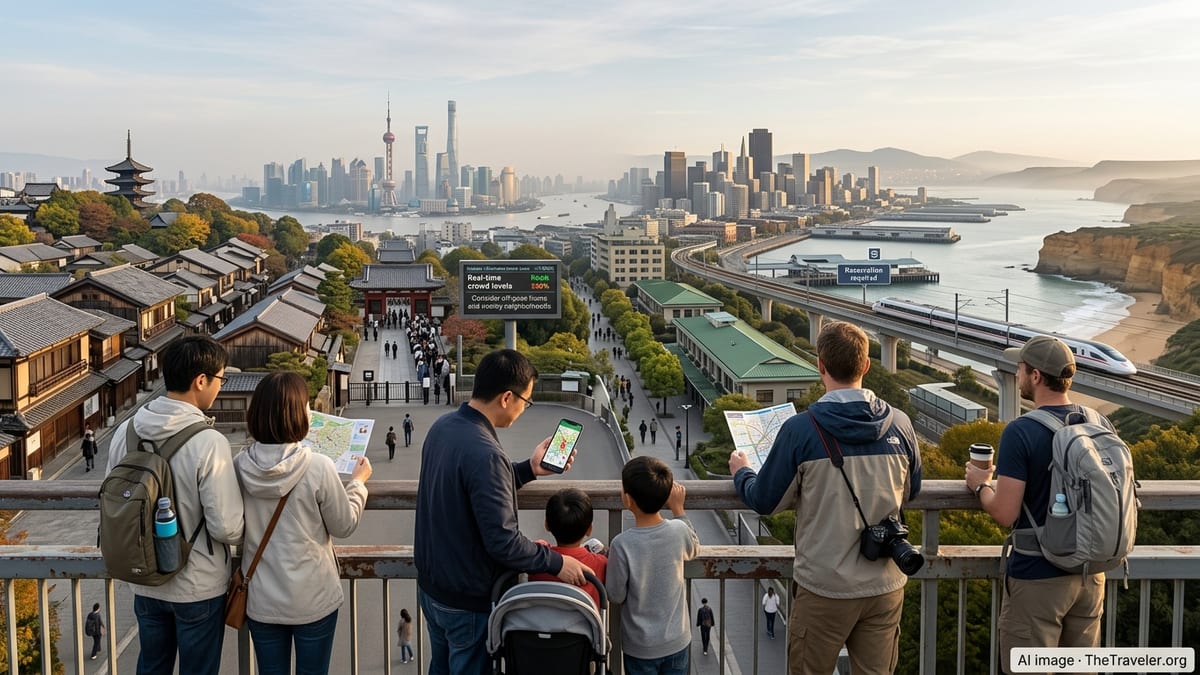
A Coordinated Response to Crowded Destinations
The new initiative, framed by participating governments and industry bodies as a response to mounting pressure on popular hotspots, draws on existing global sustainability frameworks tied to the 2030 Agenda for Sustainable Development and emerging tourism roadmaps. Publicly available information shows that international arrivals have almost fully returned to or exceeded pre‑pandemic levels, intensifying long‑standing concerns about congestion, infrastructure strain and environmental impacts in high‑profile locations.
Reports on global tourism trends indicate that international tourist numbers are projected to reach close to 1.8 billion by 2030, renewing focus on how destinations manage visitor flows rather than simply chasing volume growth. The four-country collaboration places overtourism management on the same level as climate and biodiversity targets, positioning tourism policy as a lever for cutting emissions and protecting local communities while preserving economic benefits.
According to published coverage from multilateral tourism bodies, issues such as housing pressure in city centers, damage to fragile ecosystems and cultural dilution remain central flashpoints in the overtourism debate. By explicitly targeting 100 key destinations, the new initiative seeks to focus resources where visitor volumes and local sensitivities most sharply intersect, from urban heritage districts to island ecosystems and national parks.
The coordination between Japan, China, the United States and Australia is being presented as complementary to work by organizations such as UN Tourism and the OECD, which have long urged governments to treat overtourism as a structural challenge rather than an isolated problem in a handful of famous cities.
Shared Targets for 2030 Across 100 Destinations
At the core of the initiative is a shared 2030 framework designed to guide national and local authorities as well as private operators. Public documentation describing the plan indicates that the group aims to introduce measurable limits on visitor pressure, including seasonal capacity thresholds, emissions reduction targets linked to transport and accommodation, and benchmarks for tourism’s contribution to local livelihoods.
The focus on 100 destinations reflects broader projections that growth will remain concentrated in a relatively small number of global hotspots. Industry analyses show that major cities, coastal resorts and heritage hubs capture a disproportionate share of international arrivals, heightening the urgency of proactive management. The new framework is expected to encourage these destinations to adopt long‑term carrying‑capacity plans, from crowd management in historic quartiers to route diversification that spreads visitors across wider regions.
Reports indicate that participating countries intend to align their tourism targets with climate and biodiversity commitments for 2030, referring to goals such as reducing transport-related emissions and expanding protected areas. While implementation will depend on national and local legislation, the four-country pact is framed as a political and technical platform through which data and methodologies can be shared, helping destinations calculate realistic limits and build scenarios for year‑round visitor distribution.
Observers of international tourism policy note that this structure mirrors shifts already seen in climate diplomacy, where countries set national targets but rely on shared monitoring tools and peer review. The overtourism initiative aims to replicate that model in the travel sector, using comparable indicators on congestion, community sentiment and ecological stress to track progress across the 100 destinations.
Japan’s Balancing Act Between Growth and Livability
Japan’s participation reflects a domestic debate that has sharpened as inbound tourism rebounded. Publicly available data show that the country has recorded strong tourism recovery, with marquee sites such as Kyoto, Tokyo and mountain resort regions experiencing renewed crowding, particularly during peak blossom and autumn foliage periods. Local media coverage has highlighted tensions around residential neighborhoods overwhelmed by visitor numbers, waste management and pressure on public transport.
Japanese national and municipal authorities have in recent years introduced a series of measures associated with sustainable tourism, including promoting lesser‑known regions, experimenting with tourist levies in some areas and revising rules around short‑term rentals. The new international initiative provides a context for expanding these efforts, placing Japan’s policies within a shared framework that emphasizes both destination stewardship and visitor education.
Analysts of Japan’s tourism strategy observe that the government has simultaneously set ambitious long‑term visitor targets and talked more openly about the risks of overtourism. Participation in a cooperative framework with China, the United States and Australia allows Japan to present its domestic reforms as part of a larger regional and global response, while tapping into comparative data on what has worked in other markets facing similar pressures.
Regional tourism organizations in Japan have already been piloting approaches such as timed entry to popular temples, real‑time crowd information for major sites and incentive campaigns steering travelers toward rural communities. The new initiative is expected to prioritize such tools and give them a stronger role in long‑term planning for the 2030 horizon.
China, the United States and Australia Bring Scale and Testing Grounds
China’s involvement underscores the scale of the challenge and opportunity. Before the pandemic, the country was both a leading source of outbound travelers and home to some of the world’s most visited domestic destinations. Reports on China’s tourism plans for the coming decade point to renewed investment in high‑speed rail, national parks and cultural heritage, accompanied by rhetoric around eco‑civilization and low‑carbon growth. The new overtourism initiative offers a channel for embedding those themes into practical visitor‑management strategies across popular scenic areas and historic districts.
For the United States, the initiative intersects with efforts to modernize national park management, balance urban visitor economies and address climate implications of long‑haul travel. Public planning documents and analyses by industry bodies describe experiments with reservation systems for heavily trafficked parks, dynamic pricing models and partnerships aimed at accelerating sustainable aviation fuel uptake. By participating in a coordinated approach to 100 destinations, US authorities can compare models with partners and refine tools that separate high‑value, low‑impact travel from mass congestion.
Australia brings its own portfolio of testbeds, from heavily visited coastal zones and reef systems to remote cultural and wilderness destinations. Policy reports highlight an increasing emphasis on First Nations partnerships, regional dispersal and nature-based tourism aligned with conservation goals. Within the overtourism initiative, Australian destinations are likely to serve as case studies for how remote and regional areas can harness growing demand while avoiding the boom‑and‑bust cycles associated with unmanaged inflows.
Collectively, the four countries represent a substantial share of global tourism flows, aviation connectivity and marketing influence. Policy observers suggest that aligned messaging from these outbound and inbound powerhouses, particularly on visitor behavior and destination choice, could reshape what travelers view as desirable and responsible by 2030.
From Volume to Value: Shifting Traveler Behavior and Industry Models
Beyond governmental cooperation, the initiative places strong emphasis on changing how the tourism industry and travelers themselves measure success. Trade publications and trend reports increasingly describe a pivot from volume to value, with destinations prioritizing longer stays, higher local spending and lower environmental footprints over simple arrival counts.
The four-country framework is expected to encourage measures such as visitor education campaigns, transparent reporting on crowding and environmental indicators, and incentives for off‑season and off‑path travel. This approach mirrors other recent international campaigns that seek to open up lesser‑known destinations and reduce pressure on iconic landmarks. Travel intermediaries and online platforms are viewed as essential partners in redirecting demand and communicating new norms.
Sustainable tourism analysts argue that overtourism solutions must extend from city halls and national parks to booking engines and airline route planners. By tying commitments to a specific timeline and a defined set of 100 destinations, the initiative provides a concrete canvas for experiments in pricing, product design and data‑sharing. Industry stakeholders are already exploring tools such as real‑time congestion alerts, sustainability scoring systems and packages that bundle visits to flagship sites with experiences in neighboring communities.
As international travel continues to rebound, the collaboration between Japan, China, the United States and Australia will be closely watched as a test of whether coordinated policies, shared data and aligned messaging can convert long‑discussed ideas about overtourism into trackable progress by 2030.