

More news on this day
Japan is rapidly overhauling its tourism model as visitor numbers hit repeated records, expanding overtourism countermeasures and regional travel initiatives with a goal of managing tourism across 100 priority areas by 2030.
Get the latest news straight to your inbox!
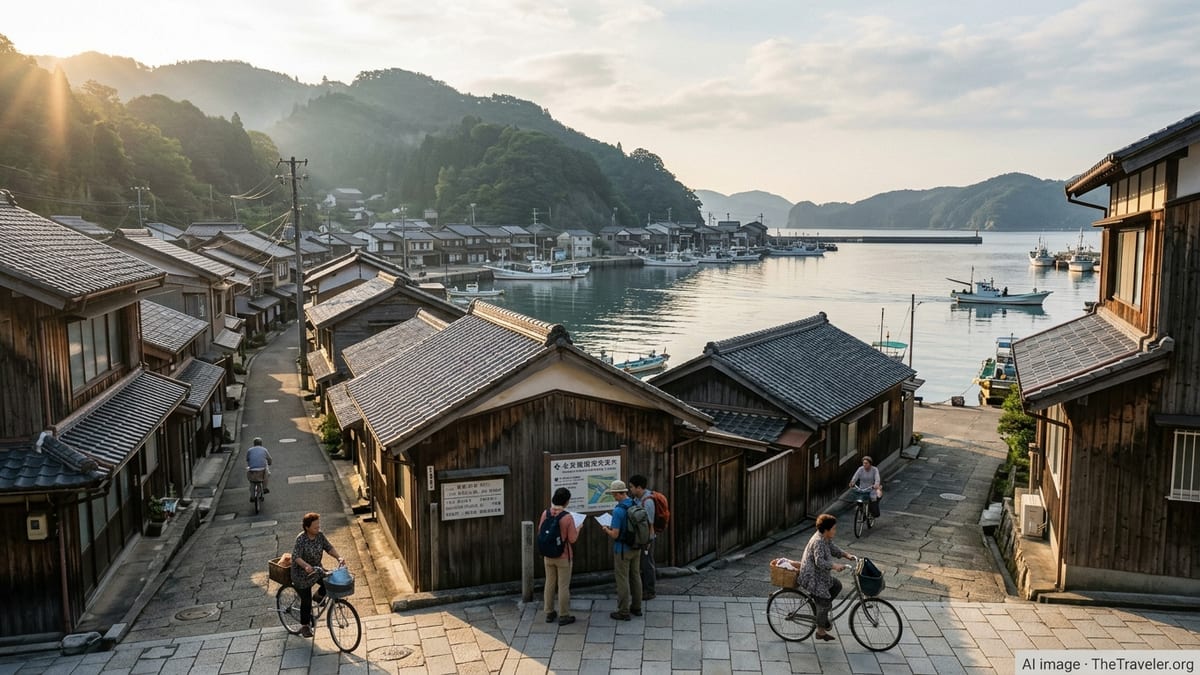
From Tourism Boom to Managed Growth
Visitor numbers to Japan have surpassed pre-pandemic records, driven in part by a weak yen and pent-up demand, according to recent travel and government statistics. Inbound arrivals are already in the high thirty-million range annually, while spending has climbed into the multi-trillion yen bracket. Policymakers now frame tourism as a core strategic industry, comparable in export value to some of Japan’s largest manufacturing sectors.
At the same time, the concentration of visitors in a handful of hotspots has strained local infrastructure and daily life. Publicly available data from the Japan Tourism Agency indicates that around 70 percent of foreign visitors still focus on the three major metropolitan areas around Tokyo, Osaka and Nagoya, with iconic sites such as Kyoto and Mount Fuji experiencing visible crowding and resident pushback. Overtourism has shifted from a fringe concern to a mainstream policy challenge.
In response, national strategy documents and budget allocations point to a transition from volume-focused growth to “quality” tourism that balances economic benefits with livability. Targets for 2030 remain ambitious, with goals of welcoming around 60 million foreign visitors and lifting their total spending to approximately 15 trillion yen, but these objectives are now explicitly tied to regional revitalization and sustainability.
Recent coverage of ministerial meetings in Tokyo shows that tourism planning is increasingly integrated with broader regional development efforts. The government is working on a new Tourism Nation Promotion Basic Plan, expected by the mid-2020s, that places overtourism mitigation and visitor dispersal alongside traditional promotion campaigns.
Expanding Overtourism Countermeasures to 100 Areas
Japan is moving from ad hoc measures in a few crowded spots to a structured nationwide response. Reports from domestic and regional media indicate that the country is scaling its overtourism countermeasure program from fewer than 50 locations to around 100 areas over the coming years. These zones include both world-famous destinations and emerging sites that are beginning to feel pressure from rapid visitor growth.
Funding has been stepped up to match the broader scope. Recent budgets for the Japan Tourism Agency show record allocations, with supplementary spending earmarked specifically for overtourism responses. These resources support initiatives such as real-time congestion monitoring, multilingual visitor guidance, staffed information points and the redesign of traffic flows around popular attractions.
In several destinations, authorities are experimenting with time-based entry management, advance reservations and targeted price adjustments to spread demand across the day and year. Publicly available information highlights new viewing areas near Mount Fuji, measures around central Kyoto’s historic streets, and local ordinances in busy urban districts such as Shinjuku in Tokyo as examples of attempts to manage behavior and reduce friction with residents.
The 100-area framework is designed not only to protect overburdened sites but also to create a structured dataset of what works. By applying similar monitoring metrics and evaluation criteria across dozens of locations, tourism planners aim to refine best practices that can be scaled quickly when new destinations face sudden surges in popularity.
Driving Regional Exploration Beyond the Big Three
While overtourism is most visible in a limited number of districts, much of Japan still has capacity and appetite for more visitors. Analyses by economic research institutes and tourism think tanks underline a stark contrast between congested hubs and under-visited regions across Tohoku, Shikoku, Sanin, and parts of Kyushu and Hokkaido.
Current policy places strong emphasis on “geographical dispersion,” with the 2030 tourism targets explicitly linked to regional revitalization. Travel industry leaders have publicly argued that Japan’s main challenge is distribution rather than absolute numbers, pointing out that the country’s transport network and hospitality base can support more travelers if itineraries extend beyond Tokyo, Osaka and Kyoto.
To promote regional exploration, Japan is accelerating campaigns that showcase lesser-known prefectures, local heritage corridors and nature-focused routes. There is growing promotion of onsen towns in rural areas, small coastal communities, inland mountain villages and mid-sized cities with traditional craft and food cultures. The government’s destination development programs, including projects to refine high-value experiences in rural areas, are intended to encourage longer stays and higher spending outside major cities.
Publicly available information from airlines and rail operators shows how transport networks are being used to underpin this shift. Expanded services to regional airports, tourism-oriented train passes that favor local lines, and charter or tour-bus models for wide-area routes are designed to make it easier for international visitors to add a second or third region to their trips.
Smarter Travel Through Data and Digital Tools
Japan is increasingly turning to data and technology to guide travelers away from bottlenecks and toward lesser-known experiences. Tourism agencies, local governments and private operators are investing in systems that combine real-time congestion data, booking trends, payment information and social media signals to anticipate where pressure will build.
Academic research using Japanese regional data shows that high-resolution demand analysis can help predict flows and test scenarios, particularly in under-visited prefectures that want to grow tourism without replicating the problems seen in Kyoto or central Tokyo. These studies highlight the potential of decision-support tools that recommend optimal combinations of marketing, capacity management and infrastructure investment.
On the traveler side, mobile apps and multilingual websites are being upgraded to highlight crowd levels, suggest alternative destinations and promote off-peak visits. Some regional tourism platforms already display live information on queue times or parking availability, allowing visitors to adjust plans on the go. Emerging public-private collaborations in major cities are also experimenting with push notifications that nudge visitors toward nearby museums, shopping streets or parks that can comfortably absorb more people.
Industry strategies for the rest of the decade frequently reference “data-driven tourism,” with companies outlining plans to use analytics not only to increase sales but also to fine-tune itineraries that respect local capacity. This approach supports Japan’s broader ambition to become an advanced tourism destination where digital tools improve both visitor experience and resident quality of life.
Sustainable Tourism and Community-Centered Experiences
A core message in Japan’s new tourism narrative is that growth must benefit local communities first. Official strategy documents and international forums increasingly spotlight sustainable tourism principles, from safeguarding cultural sites to protecting natural environments and ensuring that revenue reaches small businesses.
In many rural areas, community-based tourism models are being promoted as blueprints for the future. These include farm-stay villages, traditional townscapes maintained through guesthouse income, and coastal or mountain communities that host small-group nature and cultural experiences. Such initiatives are framed as ways to keep younger residents in the region by creating jobs linked to hospitality, guiding and food production.
Environmental considerations are also gaining prominence. Destination management plans refer to carrying-capacity assessments for fragile ecosystems, improvements to public transport access to reduce car dependence, and waste management upgrades around popular outdoor spots. The shift from short photo-stop visits to longer, experience-based stays is seen as a way to justify better infrastructure while diluting the pressure of day-trip surges.
By 2030, Japan envisions a tourism landscape in which 100 key areas across the country are actively managed for sustainability, balancing high-quality visitor experiences with livable communities. For travelers planning their next adventure, this means a growing array of options to explore regions beyond the usual circuit, supported by clearer information, smarter routing and experiences that connect more directly with local culture and landscapes.