

More news on this day
Japan’s domestic air network is facing fresh disruption as major carriers including All Nippon Airways, Japan Airlines and Skymark cancel nearly a dozen flights, interrupting links to Hakodate, Tokyo Haneda, Yakushima and other regional destinations at the height of a busy spring travel period.
Get the latest news straight to your inbox!
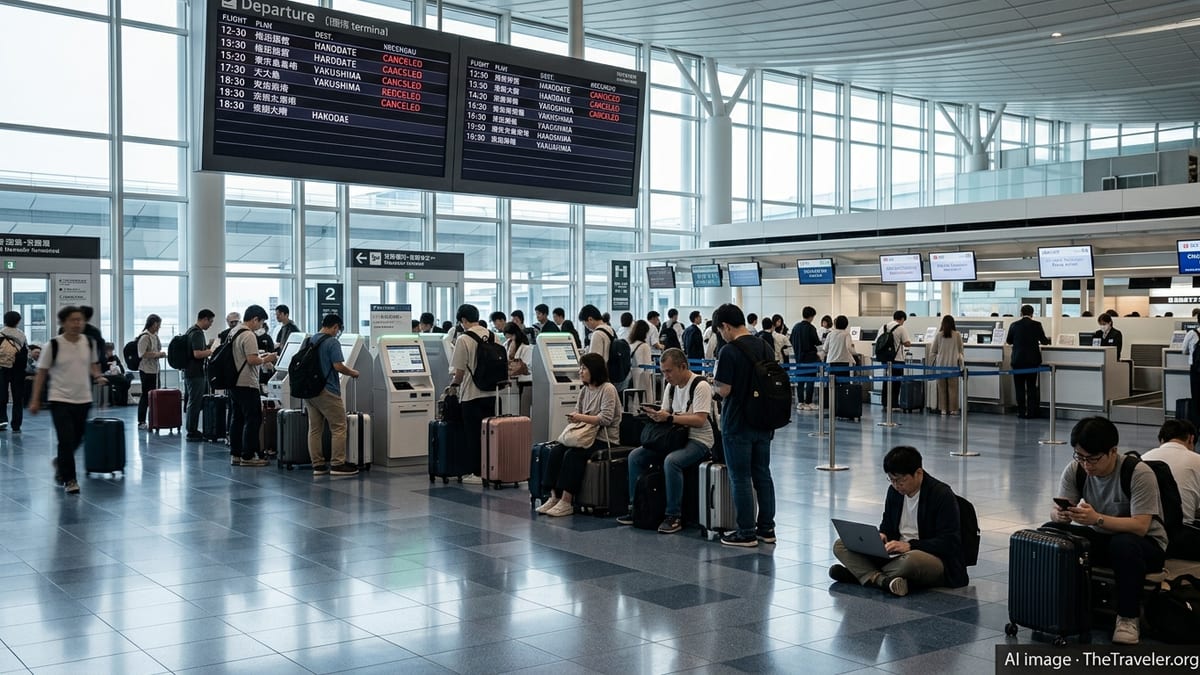
Weather Triggers Cancellations Across Major Carriers
Recent operational updates from Japanese carriers indicate that a bout of adverse weather has forced the cancellation of multiple domestic flights, particularly on routes connecting Tokyo Haneda with northern and southern regional airports. Publicly available flight status boards and local media coverage on March 22 and March 23 show that All Nippon Airways, Japan Airlines and Skymark have each scrubbed services, collectively amounting to nearly a dozen cancellations in a single operational window.
The disruptions are concentrated around airports known for their exposure to fast-changing conditions, including Hakodate in Hokkaido and Yakushima in Kagoshima Prefecture. Strong winds, low clouds and periods of heavy rain are cited in airport weather reports and aviation tracking platforms as key factors reducing visibility and safe landing margins, leading airlines to pare back their schedules.
Tokyo’s Haneda Airport, a critical hub for both business and leisure travelers, is again emerging as a focal point of knock-on disruption. When weather deteriorates over regional fields such as Hakodate or Yakushima, carriers often preemptively cancel or delay Haneda departures to avoid midair diversions or extended holding patterns, tightening capacity on already busy domestic corridors.
Operational data for this spring already show tight utilization of aircraft and crews following the strong rebound in demand for Japan travel. This means that even a limited wave of weather-related cancellations can have outsized effects on same-day rebooking options and onward domestic connections.
Routes to Hakodate, Haneda and Yakushima See Particular Strain
Hakodate, one of Hokkaido’s key gateways, has been among the most affected by the latest disruptions. According to published coverage from Japanese news outlets and airport operations summaries, several flights linking Hakodate with other domestic cities were withdrawn from the schedule over the weekend, including services that would normally funnel passengers through Tokyo Haneda and Sapporo.
At Tokyo Haneda, timetable adjustments are affecting both originating and connecting travelers. Flight status snapshots on March 22 highlight a cluster of cancellations among departures to northern and southern regional airports, with Japan Airlines and All Nippon Airways adjusting domestic rotations to maintain safety margins and minimize the risk of aircraft and crew being stranded at smaller fields with limited support infrastructure.
Further south, Yakushima’s small island airport is also experiencing cancellations and frequency reductions. The island relies heavily on short domestic hops from Kagoshima and other Kyushu gateways, and historical schedules published by Japan Airlines already show that the Yakushima route can be vulnerable to seasonal reductions and weather-related adjustments. When several flights disappear from a single day’s operation, visitors can face a full extra day’s delay before the next available seat.
Skymark, which operates a number of key domestic routes including links into major hubs and resort destinations, is likewise trimming selected services. Airline fare and schedule documents for the current season illustrate how closely Skymark balances aircraft deployment across Kobe, Nagoya, Okinawa and other high-demand routes, leaving little slack when weather forces last-minute cancellations.
Impact on Travelers During Peak Spring Demand
The timing of the latest cancellations is particularly sensitive. Late March traditionally marks the beginning of the spring travel surge in Japan, with domestic tourists heading to cherry blossom viewing spots, students and workers relocating for the new academic and corporate year, and international visitors using domestic connections to reach secondary cities and islands.
Reports from online traveler forums and social media over the weekend describe passengers confronted with full or nearly full alternative flights out of Haneda, making same-day rerouting difficult. In some instances, travelers attempting to connect from long-haul arrivals into domestic legs have had to opt for overnight stays in Tokyo or regional hubs when onward flights to cities such as Hakodate or smaller Kyushu destinations were cancelled.
Publicly available commentary from frequent travelers also highlights that Japanese domestic airlines, while generally flexible when cancellations occur for operational reasons, have limited options when multiple carriers are affected at once. Seats on competitor airlines can sell out quickly, and surface transport such as shinkansen or long-distance ferries becomes a crucial fallback, especially for routes where rail offers a realistic alternative.
Travel demand indicators, including recent discussions on rising fares and strong load factors on Tokyo routes, suggest that the domestic network is already running close to capacity in late March. As a result, even a relatively small number of cancellations can cascade into longer waits and more complex itineraries for affected passengers.
How Airlines Are Managing Rebookings and Schedule Adjustments
Public guidance on airline websites and booking portals outlines a familiar playbook for dealing with disruption: passengers on cancelled flights are typically offered free changes to later services on the same route, refunds, or in some cases rerouting to nearby airports where transport connections are available. However, the specific options can vary depending on whether the cancellation is attributed to weather or to airline operational factors.
For major carriers such as All Nippon Airways and Japan Airlines, their extensive domestic networks offer multiple daily frequencies on trunk routes linking Tokyo with larger cities. This often allows same-day reaccommodation when there is remaining capacity, particularly between Tokyo Haneda and destinations like Sapporo, Fukuoka or Osaka. In contrast, thinner routes, including links to smaller airports in Hokkaido or island destinations like Yakushima, can have only a handful of daily flights, narrowing the window for quick recovery.
Skymark and other domestic-focused airlines publish seasonal fare and schedule documents that emphasize advance-purchase discounts and tightly planned rotations. During disruption events, these carriers may have fewer spare aircraft or crew available to add extra sections, which means passengers are more reliant on standard scheduled flights resuming as conditions improve.
According to recent domestic travel commentaries, travelers in Japan are increasingly advised to track real-time information through airline apps and airport displays, rather than relying solely on printed itineraries. Same-day notifications can be crucial in securing earlier rebooking slots before they are taken by other disrupted passengers.
What Travelers Should Watch in the Coming Days
Forecasts for late March indicate that unsettled weather may persist over parts of northern and southern Japan, raising the possibility of further short-notice cancellations on regional routes. While conditions can improve quickly, aviation observers note that airports like Hakodate, as well as smaller fields in Kyushu and the Nansei Islands, are particularly susceptible to strong crosswinds and low ceilings that can disrupt approach procedures.
Travelers planning domestic hops to or from Tokyo Haneda in the next several days should therefore build additional buffer time into their itineraries, especially if they are making tight connections from international arrivals. Publicly available planning advice for Japan travel often recommends that inbound visitors overnight in Tokyo before continuing on to remote destinations, precisely to manage the risk of weather-related schedule changes.
Passengers headed for Yakushima and other island destinations are also encouraged by local tourism organizations and travel planners to consider alternate routes, including ferry services, during periods of unreliable flight operations. Although ferries can take considerably longer than short-haul flights, they can add resilience for itineraries that cannot easily be delayed by 24 hours or more.
As Japan’s spring tourism season gathers pace, the latest round of cancellations serves as a reminder that even in a country known for punctual transport, weather remains an unpredictable factor. Close monitoring of airline announcements, flexible planning and awareness of alternative transport modes will be essential tools for travelers navigating Japan’s domestic network in the days ahead.