

More news on this day
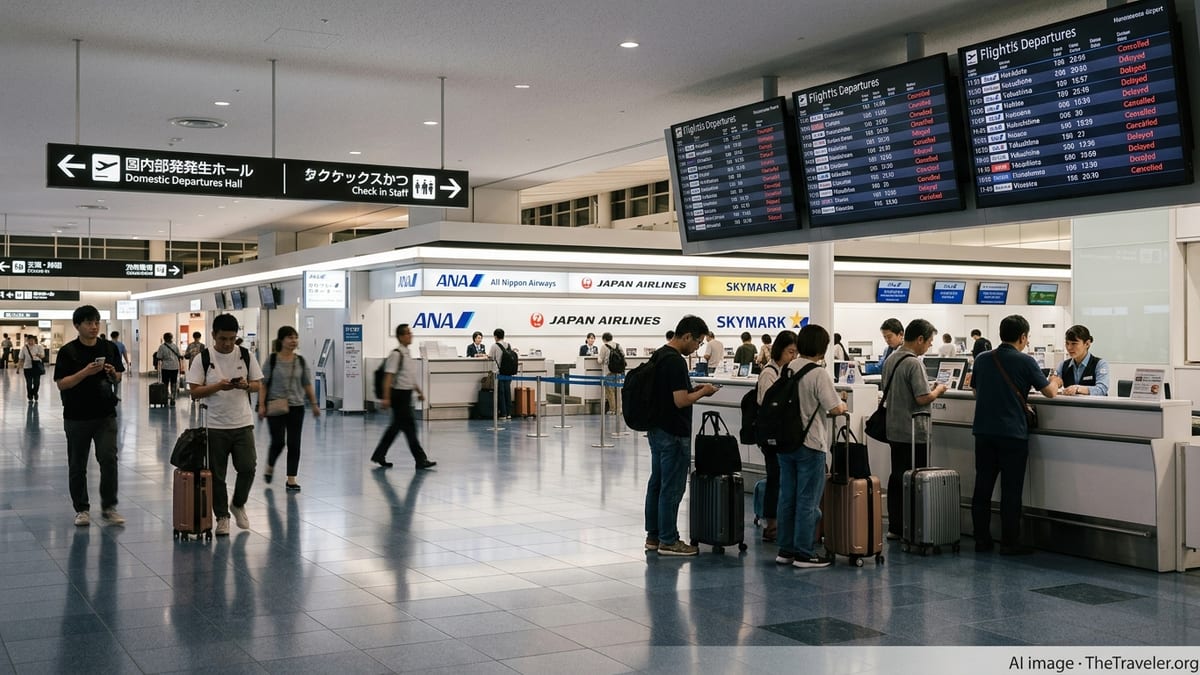
Travelers heading across Japan in late March 2026 are facing fresh disruption as major carriers All Nippon Airways (ANA), Japan Airlines (JAL), Skymark Airlines, and several regional operators cancel or adjust nearly a dozen flights, affecting key routes to Hakodate, Tokyo Haneda, Yakushima, and other popular destinations just as the busy spring travel season begins.
Get the latest news straight to your inbox!
What Is Behind the Latest Wave of Cancellations
Publicly available airline schedules and operational updates for late March 2026 indicate that several Japanese carriers have trimmed or cancelled a small but notable number of domestic services. The disruptions are concentrated around the change from winter to summer timetables at the end of March, a period when airlines across Japan routinely rebalance capacity in response to demand, slot availability, and aircraft rotation needs.
Published timetables show that Japan Airlines has already been planning seasonal reductions on some domestic routes through March 28, 2026, as part of its wider winter schedule. Similar network adjustments by ANA and regional partners appear to have converged with localized operational issues, resulting in a cluster of cancellations on routes touching Hakodate in Hokkaido, Tokyo’s Haneda Airport, and island destinations such as Yakushima in Kagoshima Prefecture.
For travelers, the impact is less about the overall scale of cuts and more about timing and connectivity. Even a handful of flight cancellations can cause missed connections, longer travel times, and last minute rebookings during a period when aircraft are already heavily booked for cherry blossom season and school holidays.
Key Routes Affected: Hakodate, Haneda, Yakushima, and Beyond
Hakodate, a major gateway to southern Hokkaido, features prominently in the latest changes. Network documents on JAL’s domestic schedule for winter 2025 to March 2026 highlight seasonal adjustments that reduce frequencies around smaller Hokkaido airports and reroute some services via Hakodate. Against this backdrop, cancellations on select Hakodate flights in the final days of the winter timetable add strain to an already finely balanced regional network.
Tokyo Haneda, Japan’s busiest domestic hub, is another focus. Haneda’s tightly controlled slots and dense schedules mean that the removal of even a few flights can ripple through connections, affecting travelers transferring between long haul services and domestic legs. Reports from recent traveler accounts point to isolated cancellations and time changes on Haneda links with cities such as Kushiro and other Hokkaido and Kyushu points, occasionally forcing detours via Sapporo or alternative airports.
Farther south, Yakushima is particularly sensitive to schedule adjustments. As a remote island reliant on a mix of regional jets and turboprops, Yakushima’s air links have limited redundancy. When a single daily or near daily service is cancelled, options to rebook can quickly narrow, sometimes requiring travelers to route via Kagoshima or change their travel dates entirely. Similar challenges can arise at other remote islands in Kagoshima and Okinawa prefectures when flights are consolidated or pulled close to the seasonal schedule change.
How Major Carriers Are Adjusting Their Domestic Networks
The current pattern of cancellations is unfolding alongside broader network reshaping by Japan’s main airlines. Japan Airlines has published detailed plans for its fiscal 2025 winter schedule and has outlined the transition into the 2026 summer season, including increased frequencies on certain leisure routes and seasonal reductions on others. These adjustments, which cover routes such as Sapporo to Hakodate and various Kagoshima and Okinawa island services, demonstrate how capacity is being shifted toward stronger demand corridors.
ANA and its affiliated brands are also refining their domestic offerings while managing the wind down of Air Japan’s long haul operations at the end of March 2026. While Air Japan primarily serves international routes from Narita, its phaseout requires careful aircraft and crew reassignment across the wider ANA Group, which can indirectly influence how domestic rotations are scheduled around Haneda and regional gateways.
Low cost and hybrid carriers such as Skymark are simultaneously updating their own summer 2026 timetables from March 29, 2026. Skymark’s schedules from Haneda to key cities including Sapporo, Kobe, and Fukuoka show dense daily operations that leave limited slack in the system. When irregular operations or maintenance events coincide with seasonal timetable changes, carriers sometimes respond by cancelling a small set of flights rather than risking wider knock on delays across their networks.
What Travelers Need to Check Right Now
For visitors planning trips to Japan in late March and early April 2026, particularly those targeting cherry blossom viewing or multi city itineraries, the most immediate priority is to verify domestic flight details directly with airlines or booking platforms. Travelers with tickets touching Hakodate, Haneda connections to remote regions, or flights to and from Yakushima should review their itineraries for any schedule changes, cancellations, or aircraft swaps around the March 28 to March 29 timetable boundary.
Published fare rules for Japan’s legacy carriers typically provide a mix of rebooking and refund options when flights are cancelled by the airline. In practice, options can depend heavily on seat availability on the same day and on nearby dates, especially on island and regional routes with limited frequency. Travelers who act quickly when notified of changes generally have a better chance of securing alternative same day services or more convenient routings.
Those relying on domestic segments to connect with long haul flights at Haneda should build extra time into their plans where possible. With some domestic frequencies being trimmed or adjusted, same day minimum connection times can feel tighter, and any disruption on a feeder flight may complicate onward travel. Checking airport, airline, and weather updates in the 24 hours leading up to departure is especially important during seasonal transitions when operational pressure tends to increase.
Short Term Disruption, Long Term Demand
The latest cancellations come at a time when demand for travel within Japan remains robust, driven by a mix of domestic tourism, inbound international visitors, and corporate travel recovering toward pre pandemic patterns. Airlines are working to match this demand while also navigating airport slot constraints at Haneda, variable regional demand, and the operational complexity of serving a vast network of islands and smaller airports.
Industry observers note that while the number of affected flights is relatively small compared with total daily departures, the impact is magnified on routes with few alternatives, such as Yakushima and smaller Hokkaido airports. For global travelers planning multi stop journeys that include Hakodate, Tokyo, and remote nature destinations, these adjustments are a reminder that domestic segments deserve as much attention as international legs when it comes to monitoring schedules and building in flexibility.
As Japan’s carriers finalize their summer 2026 schedules and absorb the latest operational changes, travelers can expect ongoing fine tuning rather than large scale cuts. For now, staying alert to airline notifications, routinely checking reservation details, and considering backup routes where feasible are the most practical steps for minimizing disruption during this period of heightened schedule volatility.