

More news on this day
At least 20 transpacific flights to and from Japan were cancelled on Monday, triggering a fresh wave of disruption across some of the world’s busiest long‑haul routes and snarling travel plans for passengers bound for New York, Newark, Boston, Atlanta, Guam and other key cities on both sides of the Pacific.
Major Carriers Scrap Services as Disruption Spreads
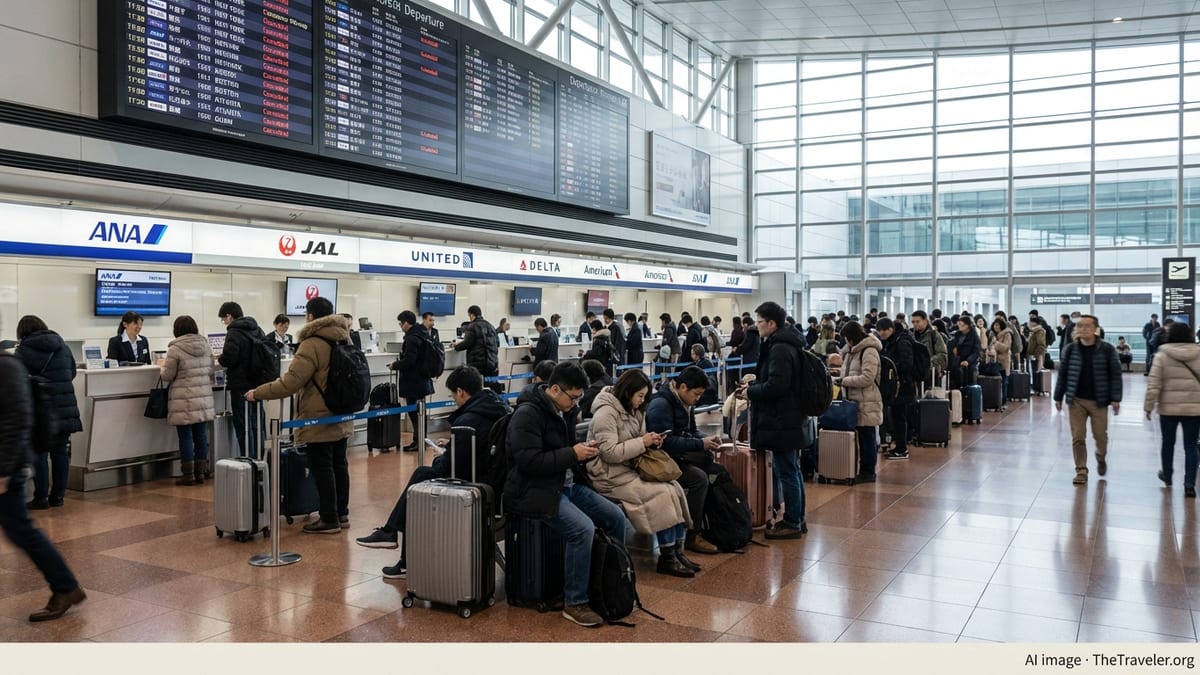
Flag carriers All Nippon Airways and Japan Airlines joined United Airlines, Delta Air Lines, American Airlines and several regional operators in cancelling services linking Japan with the United States and its Pacific territories, according to airline advisories and live schedule data on Monday. The cancellations, which affected routes from Tokyo’s Haneda and Narita airports and Osaka Kansai, hit both outbound and inbound sectors, immediately tightening already busy winter schedules.
The wave of disruption centered on long haul services that form the backbone of business and leisure connectivity between Japan and North America. Flights linking Tokyo with New York’s John F. Kennedy and Newark Liberty, Boston, and Atlanta, as well as services to Guam and other Pacific gateways, were among those withdrawn from Monday’s rosters, forcing thousands of travelers onto later departures or entirely new routings.
While airlines did not immediately release a consolidated tally, schedule changes across major booking systems indicated that at least 20 flights touching Japanese soil were withdrawn over a 24 hour period. Aviation analysts noted that the figure is likely to understate the total impact once knock on effects such as missed connections and aircraft repositioning are fully factored in.
The cancellations came as carriers across the transpacific market are operating with tight fleets and high load factors, limiting their ability to quickly absorb disruptions. For many passengers, especially those traveling on peak weekend and early week departures, the loss of a single rotation on a trunk route can translate into delays of a full day or more.
Key Japan US Routes Hit From Tokyo and Osaka
Among the highest profile cancellations were services linking Tokyo with the northeastern United States, a corridor that has seen strong demand from corporate travelers and tourists since Japan fully reopened to international travel. Japan Airlines and All Nippon Airways each pulled at least one rotation between Tokyo and the New York area, while US partners United, Delta and American removed additional flights from their schedules between hubs in Japan and New York, Newark and Boston.
Flights between Japan and Atlanta, an important connecting hub for the southeastern United States, were also caught up in the disruption. Delta, which uses Atlanta as its primary domestic and Latin American gateway, cancelled at least one Japan bound service, creating a ripple effect for onward passengers relying on same day connections to smaller US cities.
Services to Guam, a popular destination for Japanese leisure travelers and a strategic link for US military and business traffic in the Western Pacific, also saw cancellations. Both Japanese and US carriers trimmed operations on the route, temporarily reducing capacity on what is typically a high demand corridor for short haul international traffic out of Tokyo and Osaka.
Airline operations teams spent much of Monday juggling departure times and aircraft assignments to protect remaining services. In some cases, widebody aircraft were reassigned from secondary routes to preserve capacity on the most critical Japan US city pairs, while thinner markets faced downgrades or temporary suspensions.
Passengers Face Long Waits, Rebookings and Limited Options
For travelers already en route or preparing to depart, the sudden cancellations translated into lengthy queues at check in counters and customer service desks at Haneda, Narita, Kansai and affected US airports. Passengers reported waiting hours to secure new itineraries as airlines worked through backlogs, with priority generally given to those with imminent connections or essential travel.
With many transpacific flights operating near full in the peak winter season, rebooking options were often limited. Some passengers heading from Japan to the US East Coast were rerouted through West Coast gateways such as Los Angeles and San Francisco, adding several hours to travel times and, in some cases, necessitating overnight stops. Others were offered seats later in the week as airlines sought to balance demand with reduced capacity.
Families returning from vacations, students heading back to US universities after midterm breaks and business travelers facing deadline sensitive meetings were among those scrambling to adjust plans. Social media posts from major Japanese airports showed crowded departure halls, with passengers clustered around flight information screens as cancellations updated in real time.
Travel agents reported a surge in calls from customers looking for alternative routings, including through third country hubs in South Korea and Southeast Asia. However, the combination of high demand and short notice meant that many of the most attractive alternative options also filled quickly, pushing some travelers to postpone trips altogether.
Airlines Issue Waivers and Urge Passengers to Check Status
In response to the scale of Monday’s disruptions, carriers moved to relax fare rules and change penalties for affected itineraries. All Nippon Airways, Japan Airlines, United, Delta and American each activated or expanded flexible travel policies, allowing passengers booked on cancelled Japan US and Japan Guam services to rebook without change fees, and in some cases without fare differences when moving within a specified time window.
Airlines urged customers holding tickets to or from Tokyo, Osaka, New York, Newark, Boston, Atlanta and Guam to monitor flight status before leaving for the airport. Many carriers highlighted the importance of using mobile apps and text alerts to receive real time updates, noting that gate and departure time changes were continuing throughout the day as operations teams worked to consolidate flights.
Some frequent flyer program rules were temporarily eased, with carriers indicating that affected passengers would still earn mileage and status credits on rebooked journeys even when rerouted through different hubs or partner airlines. However, travelers were cautioned that seat assignments, special meal requests and paid upgrades might not carry over automatically to new flights.
Airport operators in Japan and the United States reinforced airlines’ calls for proactive planning. Terminal announcements and information boards emphasized that passengers should arrive with extra time for check in and security screening, given the possibility of longer lines and last minute gate changes associated with the compressed flight schedule.
Operational and Weather Challenges Behind the Disruption
Behind the cancellations lay a mix of operational constraints and challenging winter weather patterns that have tested airline resilience across the North Pacific corridor. The latest disruption coincided with a strong winter system affecting parts of the northeastern United States, complicating operations at major East Coast hubs that serve as endpoints for Japan bound services. Severe conditions at airports such as New York’s JFK and Newark triggered ground delays and deicing bottlenecks, prompting airlines to proactively thin schedules to preserve safety margins.
At the same time, carriers operating in and out of Japan are contending with tight aircraft utilization as they rebuild long haul networks that were scaled back during the pandemic. Many airlines have limited spare widebody capacity, meaning a single weather related delay can cascade across multiple routes if crews and aircraft are left out of position. The decision to cancel certain rotations outright, rather than attempt to operate heavily delayed flights, reflects a strategy of focusing on schedule integrity for the remainder of the network.
Operational experts note that transpacific routes are especially vulnerable to disruption because of their length and the narrow window for same day connections. When a flight between Tokyo and the US East Coast is delayed beyond a certain threshold, knock on effects can compromise crew duty time limits and aircraft maintenance schedules, making cancellation and next day rebooking the safer and more manageable option.
The situation was compounded by seasonal crosswinds and air traffic management constraints across parts of the North Pacific, which can force airlines to adjust planned flight paths and altitudes. These changes sometimes increase flying times and fuel burn, leaving even less slack in already tight operating plans.
Knock On Effects for Asia Pacific and Domestic Networks
The impact of Monday’s Japan centered cancellations extended well beyond the affected long haul legs. Domestic flights within Japan that feed international services, as well as regional connections across East and Southeast Asia, also felt the strain as airlines reshuffled aircraft and crew. Some short haul departures from Tokyo and Osaka were delayed or downgraded to smaller aircraft so that widebodies could be reserved for key intercontinental routes.
For travelers connecting in Japan from other parts of Asia, the disruption created additional uncertainty. Passengers originating in cities such as Seoul, Taipei, Bangkok and Singapore who had planned same day onward journeys to the United States via Tokyo or Osaka were in many cases moved to alternate routings that bypassed Japan altogether, often through rival hubs in South Korea or the Middle East.
Within Japan, business travelers heading between major domestic centers reported full or near full flights as residents who had planned to travel abroad opted to remain within the country or switch to domestic destinations at short notice. Tourism stakeholders in regional Japanese cities expressed concern that a prolonged period of transpacific disruption could dampen inbound visitor numbers during what is typically a busy late winter and early spring travel window.
Aviation analysts warned that the full network impact could take several days to work through, even if weather conditions and operational reliability improve quickly. Aircraft and crews must be carefully repositioned, routine maintenance windows respected and crew rest periods protected before airlines can fully restore normal schedules.
What Affected Travelers Can Do Now
Travel specialists advise passengers caught up in the latest Japan related cancellations to act quickly but methodically. The most important step is to confirm the current status of booked flights through official airline channels and to avoid relying solely on screenshots or itinerary emails that may not reflect real time changes. Where possible, using airline apps and direct messaging can shorten wait times compared to calling general reservations lines during peak disruption periods.
For travelers who have flexibility, voluntarily moving trips by a day or two can open up more rebooking options and reduce the risk of further delays. Many airlines are waiving change fees and, in some cases, fare differences for travel that stays within a defined date range and routing zone. Passengers should carefully review the specific conditions of each carrier’s waiver, particularly those related to origin and destination airports and the deadline for making changes.
Those with fixed commitments, such as international conferences, medical appointments or family events, may wish to explore alternate routings through secondary hubs or via partner carriers, even if that means longer total journey times. While such options often involve additional connections, they can provide a crucial path to reaching key destinations such as New York, Boston or Atlanta when nonstop Japan links are heavily disrupted.
Travel insurance policies may also come into play, depending on the reason for cancellation and the specific coverage purchased. Policies that include trip interruption or delay benefits can help offset the cost of extra accommodation, meals and ground transportation when travelers are stranded far from home. Experts caution, however, that documentation such as airline cancellation notices and itemized receipts will be essential when filing claims.
Outlook for Recovery on Japan US and Pacific Routes
Looking ahead, airlines serving Japan and North America expect to gradually restore normal operations once weather systems over the northeastern United States ease and aircraft and crew rotations are rebalanced. Most carriers are signaling that they aim to operate full schedules later in the week, provided no new weather or operational shocks emerge across the transpacific network.
Nonetheless, travelers are likely to feel lingering effects for several days. Residual delays, last minute aircraft swaps and occasional additional cancellations remain possible as airlines work through backlogs of displaced passengers. Aviation planners note that recovery on complex long haul networks is rarely instantaneous, especially when storms intersect with peak travel periods and already tight fleet plans.
For Japan, which has been working to solidify its position as a premier gateway between Asia and North America, the latest disruption is a reminder of the vulnerability of even the most sophisticated aviation systems to severe weather and operational constraints an ocean away. Industry observers say that continued investment in real time communication, flexible ticketing policies and coordinated contingency planning across alliance partners will be key to managing future shocks.
In the meantime, passengers booked on upcoming flights between Japan and major US cities such as New York, Newark, Boston and Atlanta, as well as those bound for Guam and other Pacific points, are being urged to stay informed and to build additional time into their travel plans as airlines work to steady one of the world’s busiest and most strategically important long haul corridors.