

More news on this day
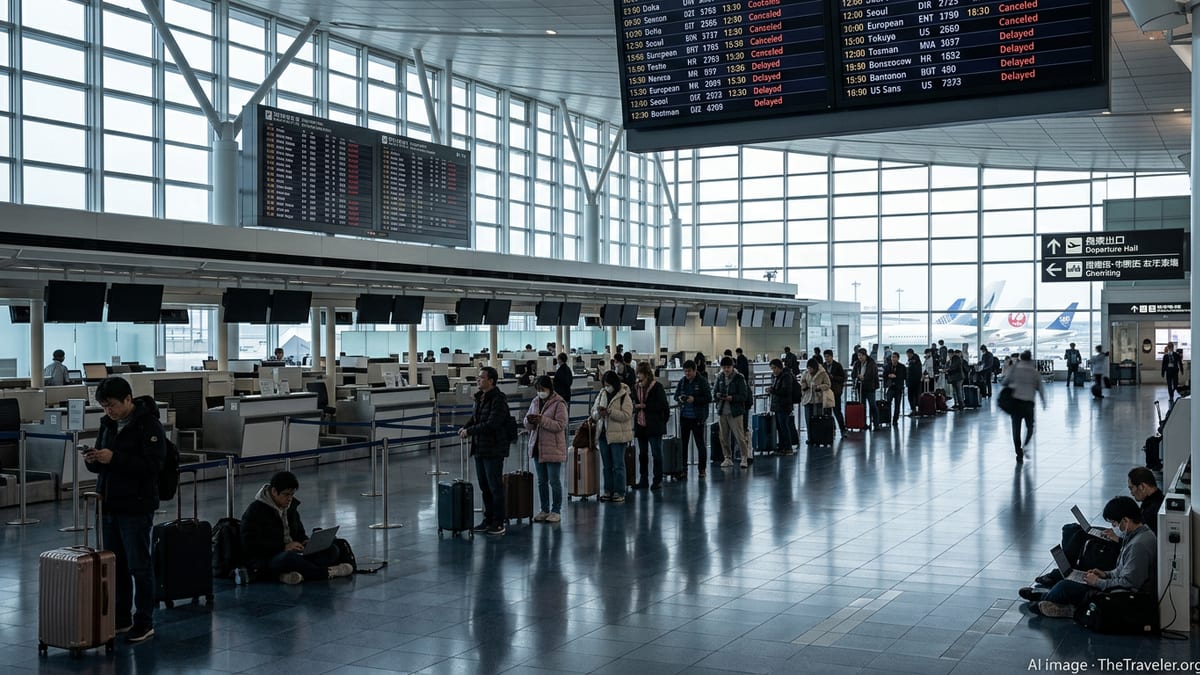
International air travel to and from Japan faced fresh turmoil this week as more than 20 flights were canceled across major gateways including Tokyo, Osaka, Fukuoka and Okinawa, with services operated by Qatar Airways, Delta Air Lines, Korean Air, All Nippon Airways and other carriers abruptly pulled from schedules.
Middle East Airspace Crisis Reaches Japanese Gateways
The latest wave of cancellations is tied to the ongoing closure and restriction of key Middle Eastern airspace, which has forced major global airlines to ground or reroute long haul services. Qatar Airways, which has temporarily suspended most operations through Doha, has been unable to operate several Japan bound and Japan originating flights that normally connect via its Gulf hub, affecting travelers departing from Tokyo and Osaka and those attempting to reach Japan from Europe, Africa and the Americas.
With Doha effectively cut off as a connecting point, itineraries that once relied on smooth one stop journeys between Japan and cities such as London, Paris, New York and Johannesburg are now fragmented or impossible. Passengers with upcoming trips reported receiving short notice messages advising them that flights between Kansai International Airport near Osaka and Doha, as well as some Tokyo departures, have been canceled outright or converted into open vouchers pending alternative arrangements.
The shock has been compounded by tight capacity on remaining routes. As Qatar Airways shifted to a limited repatriation schedule and suspended much of its global network, travelers in Japan scrambled to secure seats on other long haul carriers. Many found that alternative options via Southeast Asia or Europe were already heavily booked or priced far above normal seasonal averages.
Delta, Korean Air and ANA Trim Japan Services
The disruption is not limited to Gulf based operators. Delta Air Lines has implemented selective cancellations and consolidated services on some Japan routes as it rebalances aircraft and crews affected by the conflict driven airspace closures. While the United States carrier continues to operate core transpacific flights, some Japan connections that depended on onward links through the Middle East or to secondary Asian cities have been withdrawn from sale or removed from the daily schedule.
Korean Air has also been adjusting its networks, with cancellations of services that feed traffic between Japan and the Middle East, Europe and Africa. Flights linking Japanese cities such as Fukuoka and Osaka to Seoul have been reduced on certain days, limiting onward options for passengers hoping to bypass the Gulf by transiting through Korea to reach long haul destinations.
All Nippon Airways, one of Japan’s two major full service carriers, has issued multiple operational updates in recent days citing a combination of airspace restrictions, aircraft rotation challenges and knock on delays from congested alternative routings. While domestic services are largely intact, a series of international and regional flights involving Tokyo, Osaka and Okinawa have been canceled or retimed, creating a patchwork of gaps in the timetable and contributing to the tally of more than 20 cancellations involving foreign and Japanese airlines.
Tokyo, Osaka, Fukuoka and Okinawa See Patchy Schedules
At Tokyo’s Haneda and Narita airports, passengers arriving for long planned trips have encountered departure boards speckled with cancellations to key hubs. Flights that typically link Japan with the Middle East and then on to Europe and Africa are among the worst hit. In several cases, aircraft scheduled to operate outbound sectors from Tokyo never arrived, having been grounded at earlier points in their rotations because of the airspace closures.
Osaka’s Kansai International Airport has seen a particularly sharp impact due to its role as a popular gateway for travelers connecting via Gulf and Korean hubs. Canceled Osaka Doha services on Qatar Airways, along with reduced capacity on regional connections into Seoul and other Asian cities, have left tourists and business travelers facing long rebooking queues at airline counters and call centers. Local travel agents report a surge in last minute changes as passengers attempt to reroute via North America or Southeast Asia instead.
Further south, Fukuoka and Naha Airport in Okinawa have experienced a mix of outright cancellations and rolling delays. While many of the affected flights are technically international segments or positioning legs for widebody aircraft, the knock on effects are being felt by domestic passengers as carriers shuffle planes and crews to maintain priority trunk routes between Tokyo and Osaka. Short haul services within Japan have been squeezed at peak times, and some holidaymakers heading to Okinawa beaches have found their departures canceled or moved to less convenient hours.
Travelers Face Long Lines, Limited Alternatives and Rising Costs
For travelers caught in the middle of the disruption, the practical challenges are immediate. Many passengers holding Qatar Airways tickets originating in Japan have reported being offered refunds or rebooking on partners where space permits, but availability is limited on popular dates. Some have spent hours at airport service desks in Tokyo and Osaka attempting to secure new itineraries via European or Asian carriers that still have open seats to their final destinations.
Delta and Korean Air customers affected by canceled or significantly changed flights are being advised to use airline apps and official customer service channels to request fee waivers, travel credits or alternative routings. However, call center wait times have stretched as disruption spreads across regions, with staff fielding queries not only about Japan services but also about flights connecting through Europe and the Middle East. In many cases, travelers are being rebooked days later than planned or routed through multiple extra stops.
Prices on remaining long haul seats out of Japan have climbed quickly as demand concentrates on a smaller pool of operating flights. Travel consultants in Tokyo report that economy class fares to Western Europe and North America on unaffected carriers are selling out far in advance, while some last minute tickets are now several times higher than typical early March levels. Budget conscious travelers are opting to postpone or cancel nonessential trips rather than absorb the additional cost.
What Passengers Flying To or From Japan Should Do Now
Airlines and travel experts are urging passengers with upcoming travel involving Japan to monitor their reservations closely in the coming days. Even if a flight currently appears on time in booking systems, schedules remain subject to rapid change as airspace restrictions shift and carriers adjust their operations. Travelers are encouraged to register for text or app notifications from their airline so they receive cancellation and rebooking messages as quickly as possible.
Those ticketed on Qatar Airways, Delta, Korean Air or All Nippon Airways are advised to review the latest change and refund policies published by each carrier and, where possible, to consider flexible travel dates. Passengers with tight connections or time sensitive travel such as business meetings or major family events may want to proactively seek rerouting away from affected corridors, even if it involves an extra stop or overnight stay, to improve their chances of reaching their destination on schedule.
For tourists planning trips to Tokyo, Osaka, Fukuoka, Okinawa and other Japanese destinations over the next several weeks, the message from industry insiders is to build more buffer time into itineraries and avoid same day critical connections between long haul and domestic flights. While Japan’s airports and airlines remain open and many services are still operating, the continuing ripples from the Middle East airspace crisis mean that travelers should be prepared for last minute adjustments and stay flexible as the situation evolves.