

More news on this day
Travelers across Japan are facing mounting disruption as Qatar Airways and its partners Japan Airlines (JAL), All Nippon Airways (ANA) and regional carrier Air Do cancel and reroute more than 20 flights, affecting key routes to Tokyo, Osaka, Fukuoka, Hokkaidō, Yakushima and other popular destinations.
Get the latest news straight to your inbox!
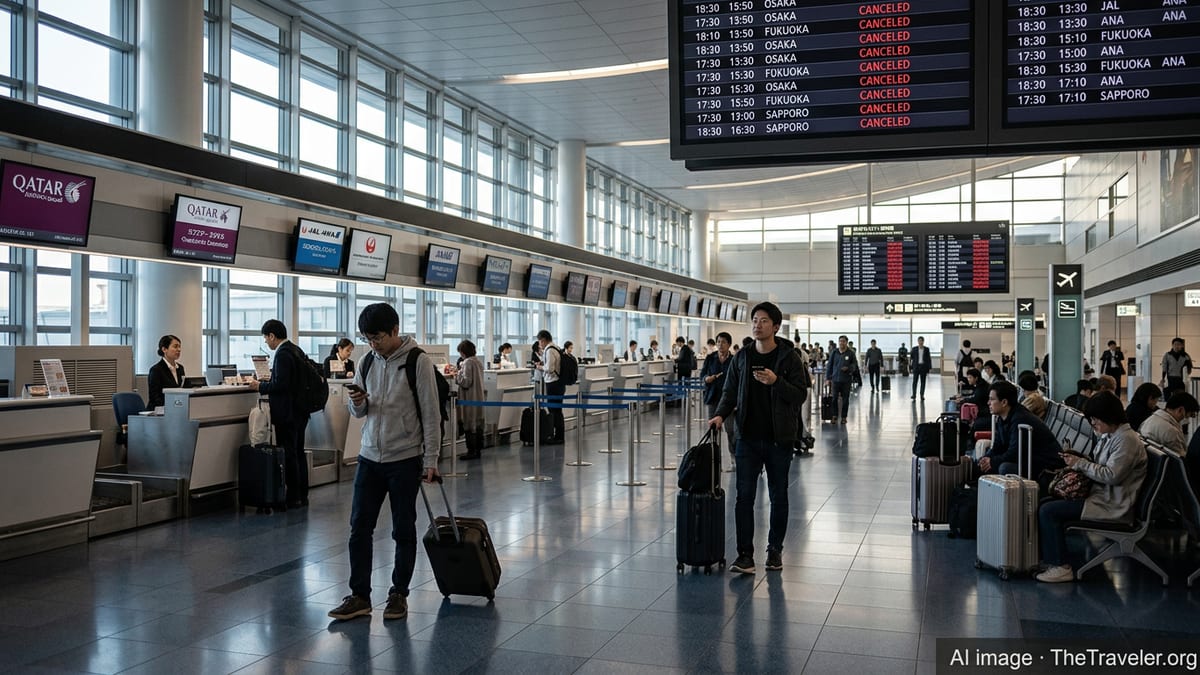
Wave of Cancellations Hits Major Japan Gateways
The latest round of schedule changes has created a patchwork of cancellations and last minute rebookings across several of Japan’s busiest airports, including Tokyo’s Haneda and Narita, Osaka’s Kansai and Itami, and Fukuoka in Kyushu. International services linking these hubs to Doha and onward long haul connections have been particularly affected, as Qatar Airways adjusts operations in response to regional security concerns and partner schedule cuts.
Japan Airlines has scrapped multiple Doha Haneda rotations, impacting passengers booked on through itineraries sold by Qatar Airways but operated by JAL. In several cases, travelers report that the Japan domestic or Doha Tokyo segment was canceled first by JAL, while Qatar Airways’ own systems continued to show earlier legs as operating, adding to confusion at check in and during online rebooking.
All Nippon Airways and affiliated brands are also revising flying programs, trimming some frequencies on domestic links that feed international traffic. Combined with disruption at partner hubs, this has left some passengers to or from Japan facing broken connections and overnight delays, especially on itineraries involving Osaka Kansai and Sapporo New Chitose in Hokkaidō.
While the number of outright cancellations remains modest compared with peak pandemic levels, the impact on individual trips is significant. Many of the affected flights are once daily services or thin domestic links, where a single cancellation can wipe out an entire day’s connectivity for towns and islands reliant on air access.
Regional Routes to Hokkaidō and Yakushima Under Strain
Beyond the headline international cuts, disruption is rippling deep into Japan’s regional network. Air Do, which focuses on routes connecting Hokkaidō with Tokyo and other mainland cities, has pulled some frequencies and consolidated services, forcing passengers onto fewer, more crowded flights. Travelers heading for Sapporo, Asahikawa and smaller Hokkaidō airports are reporting limited same day alternatives when flights are dropped at short notice.
On the southern end of the archipelago, links to remote islands such as Yakushima are also feeling the strain as major carriers tweak their domestic schedules to match weaker inbound demand and disrupted long haul flows. Even when a Yakushima service itself is operating, missed connections from international arrivals into Tokyo or Osaka can leave visitors stranded on the mainland, facing rebooking fees or extra hotel nights.
Tour operators and hotel owners in both Hokkaidō and Yakushima say they are seeing a rise in last minute cancellations and date changes from overseas guests who can no longer reach their destination on the original travel day. For small properties whose winter and spring seasons depend heavily on a narrow window of international tourism, one or two disrupted flights can translate into a noticeable hit on occupancy and revenue.
Domestic travelers are not immune either. Business passengers relying on tight turns between regional cities and major hubs report being pushed onto inconvenient routings and red eye departures, as airlines prioritize operational resilience over network breadth until the situation stabilizes.
What Affected Passengers Are Being Offered
Qatar Airways is offering a mix of refunds, free date changes and rerouting options for customers whose journeys touch Japan and are directly impacted by canceled or heavily delayed flights. Travelers with tickets in mid to late March are being advised to monitor their booking status closely, as conditions and eligibility windows for fee free changes may shift as the disruption evolves.
Where JAL or ANA operate a leg on a Qatar Airways issued ticket, the precise remedy can depend on whether the cancellation is initiated by the operating carrier or by Qatar Airways itself. In practice, this means some passengers are being asked to work with the airline that sold the ticket, while others are being redirected to the airline actually flying the segment, adding an extra layer of complexity for those unfamiliar with codeshares and joint ventures.
Reports from affected travelers suggest that rebooking onto alternative routings via Seoul, Shanghai or other Asian hubs is possible in many cases, but often involves longer travel times and scarce premium cabin availability. Some passengers with fixed travel dates are opting to request full refunds and purchase entirely new itineraries on other carriers, despite higher fares, to avoid the uncertainty of rolling schedule updates.
For domestic sectors within Japan, options are typically limited to same carrier rebooking on a later flight or a refund for the canceled segment. However, where a domestic leg is part of a larger international ticket, any change can trigger a full itinerary repricing, so passengers are being urged to confirm the financial implications before accepting seemingly simple adjustments.
Advice for Travelers Headed to or from Japan
With schedules in flux and more than 20 flights involving Qatar Airways, JAL, ANA and Air Do already canceled or significantly altered, travelers planning trips to Japan in the coming weeks should take a more active approach to managing their bookings. Checking flight status directly on both the marketing carrier and operating carrier’s websites has become essential, especially for itineraries that mix international and domestic segments.
Experts recommend reconfirming flights at least 72 hours and again 24 hours before departure, paying particular attention to changes in departure times, flight numbers or aircraft types that can signal deeper adjustments. Those with tight connections in Tokyo, Osaka or Fukuoka may wish to build in longer layovers where possible, or consider overnighting at the hub to reduce the risk of missed onward flights.
Travel insurance that covers schedule disruption and additional accommodation costs can provide an extra safety net, though policies vary widely in how they treat cancellations linked to regional security issues or airspace closures. Policyholders are encouraged to keep detailed records of cancellation notices, boarding passes and receipts for any extra expenses, as insurers often require extensive documentation before processing claims.
Passengers bound for regional destinations such as Hokkaidō’s ski resorts or Yakushima’s hiking trails should factor potential domestic disruption into their plans, allowing at least one buffer day at the start or end of their trip. In some cases, alternative surface transport or short haul domestic carriers may offer a workable backup if mainline flights are pulled at short notice.
Outlook for Spring Travel Across Japan
The timing of the disruption is particularly sensitive, coming just as Japan enters the busy spring travel season anchored by school holidays and the cherry blossom period. Airlines had been counting on solid demand to key cities such as Tokyo, Osaka and Fukuoka, as well as tourism hotspots across Hokkaidō and the southern islands, to support their broader recovery plans and new route launches.
With regional tensions still high and airspace conditions subject to rapid change, network planners at Qatar Airways, JAL, ANA and Air Do are expected to keep a conservative stance over the next few weeks. This could mean further tweaks to frequencies and aircraft deployment, even on routes that remain in operation, as carriers test demand and preserve flexibility to react to any fresh constraints.
Industry analysts note that once security risks ease, capacity can return relatively quickly on trunk routes linking Japan with the Middle East and other long haul markets. The more fragile piece of the puzzle is the domestic and regional layer that connects smaller cities and islands, where thinner margins and limited spare aircraft make it harder for airlines to absorb prolonged volatility.
For now, travelers with imminent plans to or from Japan are being urged to stay informed, flexible and prepared for last minute changes. While most flights are still operating, the cascading effect of more than 20 cancellations across multiple carriers shows how quickly the country’s finely tuned aviation network can be disrupted, even without the sweeping border closures seen earlier in the decade.